
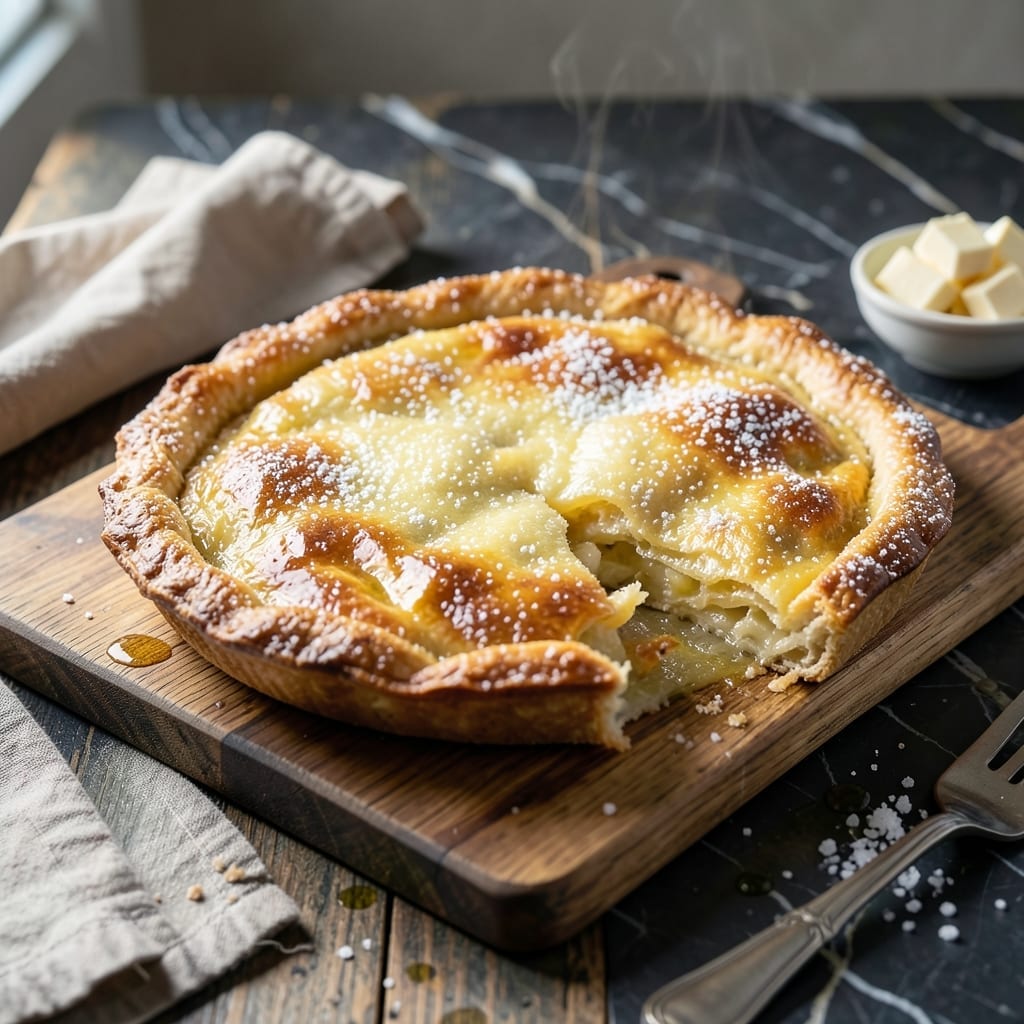
Achieving a perfectly flaky crust comes down to cold butter and precise layering. This method ensures every bite delivers that satisfying shatter.
The secret lies in keeping ingredients ice-cold during preparation. With this technique, you’ll create buttery layers that separate beautifully in the oven.
Ingredients for Recipe for Flaky Crust
Eight ingredients transform into layers of buttery perfection with precise technique and care.
| Ingredient | Amount | Notes |
|---|---|---|
| All-Purpose Flour 🌾 | 2 ½ cups | Chilled in freezer for 30 minutes |
| Unsalted Butter 🧈 | 1 cup | Ice-cold, cut into small cubes |
| Ice Water 💧 | ½ cup | Plus 1 tbsp as needed |
| Kosher Salt 🧂 | 1 tsp | Diamond Crystal preferred |
| Granulated Sugar 🍚 | 1 tbsp | Optional, for slight sweetness |
| White Vinegar 💧 | 1 tbsp | Prevents gluten overdevelopment |
| Egg 🥚 | 1 whole | For egg wash on top crust |
| Heavy Cream 🥛 | 2 tbsp | Optional for richer crust |
The butter is non-negotiable here. European-style unsalted with higher fat content (82% or more) delivers superior flakiness—Plugrá or Kerrygold are excellent choices. Keep it ice-cold; if it starts to soften, return it to the freezer for 10 minutes. The flour should be all-purpose, but avoid self-rising. Chilling the flour for 30 minutes before starting prevents the butter from melting prematurely during mixing.
Out of vinegar? Lemon juice at the same amount works equally well to tenderize the dough. For a richer crust, replace the ice water with vodka (the alcohol creates extra flakiness and evaporates during baking). If you must use salted butter, reduce the added salt by half. The egg wash can be skipped, but it adds a beautiful golden sheen to the finished crust.
The dough can rest in the refrigerator for up to 2 days or freeze for 3 months (thaw overnight in the fridge before using). Once baked, the crust keeps at room temperature in an airtight container for 3 days, though it’s best enjoyed fresh from the oven.
Why You’ll Love This Recipe
- Five Ingredients: That’s it—flour, butter, ice water, salt, and a pinch of sugar. Honestly, I keep all of them on hand already.
- Buttery Layers: The cold butter creates those golden, crispy flakes that shatter with every bite.
- Endless Uses: I’ve used this crust for pies, tarts, even savory galettes. Between us, it’s my secret weapon for potlucks.
- Freezer Friendly: I make a double batch and freeze the extras. One less thing to stress about when company drops by.
Step-by-Step Instructions for Flaky Crust
Master these precise techniques to create the buttery, layered texture that defines exceptional pastry.
Step 1: Prepare and Chill the Dry Ingredients
Measure out the 2.5 cups All-Purpose Flour and place it in the freezer for 30 minutes to ensure it’s ice-cold. Cold ingredients are the foundation of flakiness, as they prevent the unsalted butter from melting prematurely and maintain distinct layers in the dough.
In a large mixing bowl, combine the chilled flour with the 1 tsp Kosher Salt, 1 tbsp Granulated Sugar, and 1 tbsp White Vinegar. Whisk these together until evenly distributed. The vinegar inhibits gluten formation, which keeps the crust tender rather than tough.
Step 2: Cut in the Cold Butter
Add the 1 cup Unsalted Butter, which should be cut into ½-inch cubes and kept ice-cold. Using a pastry cutter or your fingertips, work the butter into the flour mixture until the texture resembles coarse crumbs with pea-sized butter pieces visible throughout.
This step is critical: the butter must remain in distinct pieces. If it melts or becomes fully incorporated, the layers won’t form properly during baking. Stop when you see flakes of butter coated in flour—this ensures the steam from the butter will create those coveted flaky layers as it bakes.
Step 3: Add Ice Water Gradually
Create a well in the center of the flour-butter mixture and add 0.5 cup Ice Water, 1 tablespoon at a time, mixing gently with a fork or your fingers. The goal is to just bring the dough together—it should be shaggy and slightly crumbly, not smooth or sticky. Overworking the dough will develop gluten, resulting in a tough crust.
If the dough still feels dry after adding the full 0.5 cup, add 1 additional tablespoon of ice water as needed. Press the dough together lightly with your hands. It should hold when squeezed but still appear rough. This minimal handling preserves the butter layers.
Step 4: Rest and Roll the Dough
Divide the dough into two equal portions, flatten each into a disc, and wrap them tightly in plastic wrap. Refrigerate for at least 1 hour or up to 24 hours. Chilling relaxes the gluten and allows the butter to firm up, making the dough easier to roll out and preventing shrinkage during baking.
When ready to use, roll out one disc on a lightly floured surface to the desired thickness, typically ⅛ inch for pies or tarts. Rotate the dough 90 degrees after each roll to maintain an even shape and prevent sticking. Use a light touch to avoid pressing the butter into the flour, which would compromise the flakiness.
Step 5: Apply Egg Wash and Bake
For a golden, glossy finish, whisk together the 1 whole Egg and 2 tbsp Heavy Cream to create an egg wash. Brush this mixture lightly over the rolled-out dough just before baking. The egg wash adds richness and color, enhancing the visual appeal of the finished crust.
Bake in a preheated oven according to your specific recipe’s temperature and time. The crust is done when it’s deep golden brown and crisp to the touch. The layers should be visible and separate easily, revealing the flaky, buttery texture that shatters perfectly with each bite.
Pro Tips For Making Recipe For Flaky Crust
- Chill the Butter: Cut the butter into small cubes and refrigerate for 15 minutes before mixing—I learned this the hard way after my first few crusts turned out tough instead of flaky.
- Use Ice Water: Fill a glass with water and ice cubes, then measure from that—cold water keeps the butter from melting too soon, which is non-negotiable for flakiness.
- Don’t Overwork It: Mix just until the dough comes together, even if it looks shaggy—resist the urge to knead or it’ll turn out dense instead of light.
- Rest Before Rolling: Let the dough sit in the fridge for at least 30 minutes before rolling—this relaxes the gluten and makes it easier to handle, plus it guarantees a better texture.
Dietary Considerations for recipe for flaky crust
Gluten-Free Adaptation
For a gluten-free version, replace the All-Purpose Flour with a 1:1 gluten-free baking blend like King Arthur Measure for Measure. Add 1 tsp xanthan gum to help bind the dough. The texture will be slightly different but still flaky. 💪
Vegan Modifications
Use cold coconut oil or vegan butter (like Miyoko’s) instead of unsalted butter. Replace the egg wash with 2 tbsp plant-based milk or melted coconut oil for brushing. The layers will still form beautifully with these swaps.
Dairy-Free Option
Substitute the unsalted butter with cold dairy-free butter such as Earth Balance. Ensure all other ingredients are dairy-free, including the heavy cream in the egg wash, which can be replaced with coconut cream. The crust will still achieve flakiness with proper chilling.
Nut-Free Considerations
This recipe is naturally nut-free, but always check labels on your flour and butter to avoid cross-contamination. If using a gluten-free blend, verify it’s processed in a nut-free facility. For extra safety, use Certified Nut-Free brands like Hodgson Mill. 💡
Lower-Carb Version
For a lower-carb crust, try replacing 1 cup of All-Purpose Flour with almond flour. The texture will be denser, but the buttery flavor remains. Pair with 1 extra tbsp ice water to compensate for the dryness of almond flour.
Sugar-Free Adjustments
Simply omit the 1 tbsp Granulated Sugar—it’s optional in the original recipe. The crust will still brown nicely due to the butter and egg wash. For a touch of sweetness without sugar, add ½ tsp vanilla extract to the ice water.
Frequently Asked Questions
Why is cold butter so important?
Cold butter creates steam during baking, which forms distinct layers. If it melts prematurely, the dough becomes dense instead of flaky. Keep it ice-cold until baking for best results.
Can I use a food processor for mixing?
Yes, pulse the flour and butter until pea-sized crumbs form. Be careful not to over-process, as this can warm the butter. Transfer to a bowl to add water by hand.
How do I fix a tough crust?
Toughness comes from overworked gluten. Next time, handle the dough minimally and use 1 tbsp vinegar to tenderize it. Chill the dough thoroughly between steps.
What’s the best way to roll out the dough?
Use a lightly floured surface and rotate the dough 90 degrees after each roll. Roll from the center outward to maintain even thickness. Avoid pressing too hard to preserve the layers.
Nutrition Facts

- BBQ Sausage Recipe Oven: Smoky Depth Without the Grill - September 28, 2026
- BBQ Chicken Bowl Recipe Rice: Smoky Sweetness Over Fluffy Grains - September 28, 2026
- Beef Cutlet Recipe Ideas: Crispy Breaded Patties With Bold Seasonings - September 28, 2026