
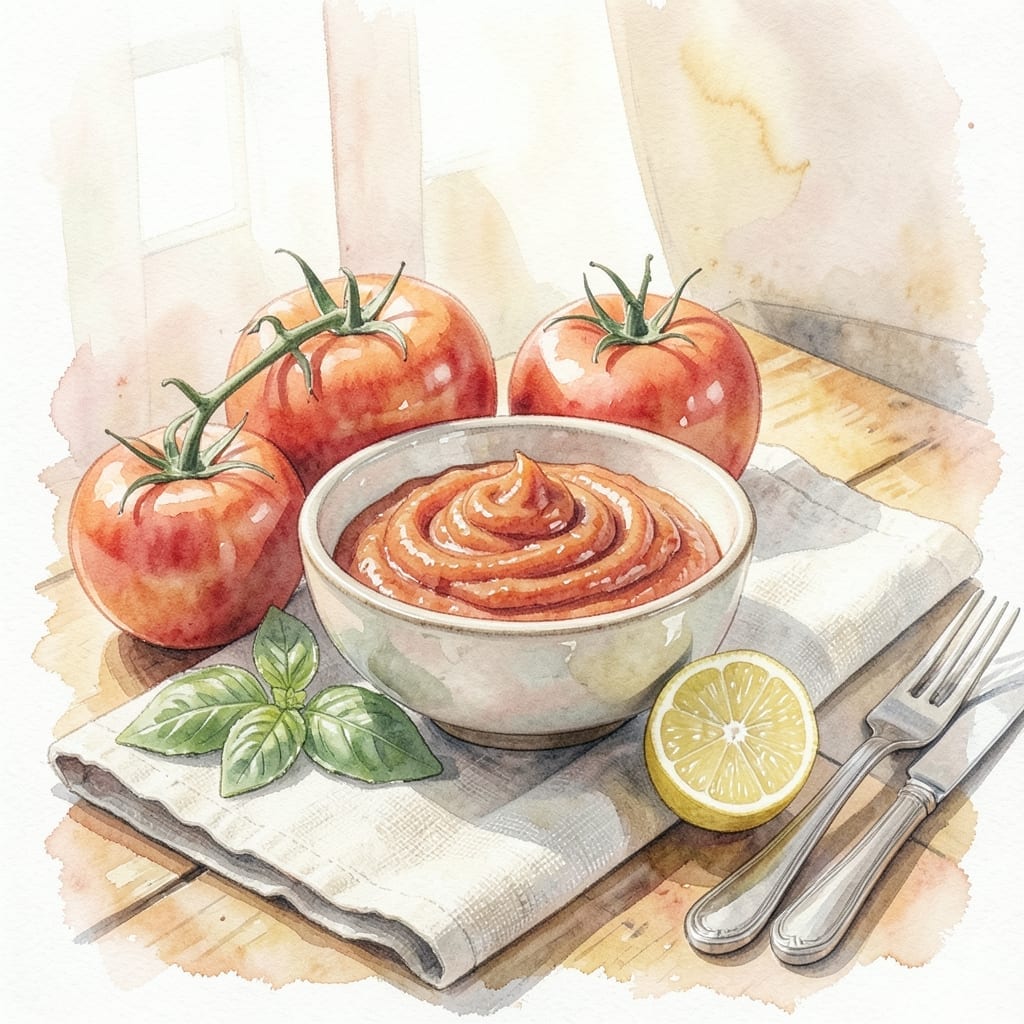
This homemade tomato paste delivers a depth of flavor that store-bought versions simply can’t match. The slow reduction process intensifies the natural sweetness and umami of fresh tomatoes, creating a rich, concentrated base for countless dishes.
I developed this method to capture peak tomato flavor at its best, transforming fresh produce into a pantry staple that lasts for months. The key is patience—allowing the tomatoes to cook down slowly until they reach that perfect thick, spreadable consistency.
What you’ll end up with is a vibrant red paste packed with intense tomato flavor, free from preservatives or additives. It’s ideal for sauces, stews, braises, or anywhere you want to add a boost of umami richness to your cooking.
Make a large batch and store it for whenever inspiration strikes. Here’s how to get started.
Ingredients for Recipe for Homemade Tomato Paste
Eight ingredients transform fresh tomatoes into a rich, concentrated pantry essential with intense flavor.
| Ingredient | Amount | Notes |
|---|---|---|
| Roma Tomatoes 🍅 | 8 lb | Ripe, cored and quartered |
| Extra-Virgin Olive Oil 🫒 | ¼ cup | High-quality for richness |
| Sea Salt 🧂 | 2 tsp | Fine grain preferred |
| Fresh Basil Leaves 🌿 | ½ cup | Loosely packed, optional |
| Garlic Cloves 🧄 | 6 cloves | Peeled and smashed |
| Lemon Juice 🍋 | 2 tbsp | Freshly squeezed for brightness |
| Granulated Sugar 🍚 | 1 tbsp | Optional, balances acidity |
| Black Pepper 🌶️ | ½ tsp | Freshly ground preferred |
The tomatoes are everything here. Roma tomatoes are ideal for their low water content and meaty texture—look for vibrant red, firm fruit at farmers markets or well-stocked grocery stores. Avoid overripe or bruised ones (they’ll add sour notes). If you can’t find Romas, San Marzano canned tomatoes (drained) work in a pinch, but fresh is best for that bright, pure flavor.
No fresh basil? Dried oregano at half the amount adds a similar depth. The olive oil can be any high-quality extra-virgin—I use California Olive Ranch for its fruity notes. If you’re skipping sugar, a pinch of baking soda (yes, really) helps neutralize acidity. The lemon juice is non-negotiable though—freshly squeezed only for that bright finish.
Store the finished paste in airtight jars. It keeps in the fridge for up to 2 weeks, or freeze in ice cube trays for 6 months. Once frozen, transfer cubes to bags—perfect for adding a spoonful to sauces or stews whenever needed.
Why You’ll Love This Recipe
- One-Pot Wonder: I just toss the Roma tomatoes, garlic, and basil in a pot with olive oil and let it simmer down—no fancy equipment needed.
- Umami Bomb: That slow-cooked garlic and tomato combo? Ridiculously rich, with a depth store-bought can’t touch.
- Pantry MVP: Honestly, I use this in pasta, stews, even as a pizza base—it’s my secret weapon for flavor.
- Budget Stretch: A big batch costs pennies compared to cans, and it freezes beautifully for months.
Step-by-Step Instructions for Homemade Tomato Paste
Here’s the method. Straightforward, tested, works every time.
Step 1: Prepare and Roast the Roma Tomatoes
Preheat your oven to 325°F. Core and quarter all 8 lb Roma Tomatoes, removing any tough stems. Spread them on two large rimmed baking sheets, ensuring they’re in a single layer with some space between pieces for proper air circulation.
Drizzle with 0.25 cup Extra-Virgin Olive Oil and sprinkle evenly with 2 tsp Sea Salt and 0.5 tsp Black Pepper. Toss gently to coat. Roast for 2-2.5 hours, stirring every 30 minutes, until the tomatoes are deeply concentrated and most of their liquid has evaporated.
Step 2: Blend the Roasted Tomatoes
Transfer the roasted tomatoes and all their juices to a food processor or high-powered blender. Add the 6 cloves Garlic Cloves, 2 tbsp Lemon Juice, and 1 tbsp Granulated Sugar. The sugar helps balance the acidity as the tomatoes cook down further.
Pulse until smooth. For an ultra-silky texture, strain the mixture through a fine-mesh sieve to remove seeds and skins. This step ensures your final paste is velvety and uniform, perfect for spreading or cooking.
Step 3: Simmer to Concentrate the Paste
Pour the purée into a large, heavy-bottomed pot. Cook over medium-low heat, stirring frequently with a wooden spoon to prevent scorching. The mixture will thicken significantly as the moisture evaporates—this process takes 1.5-2 hours.
You’ll know it’s ready when the paste is reduced by about 75% and has a deep, brick-red color. It should pull away from the sides of the pot and leave a trail when you drag a spoon through it. Stir in the 0.5 cup Fresh Basil Leaves at the very end for a fresh, aromatic finish.
Step 4: Cool and Store the Paste
Spread the hot paste onto a clean baking sheet to cool completely. This helps it set slightly and makes it easier to portion. Once cool, transfer to airtight containers. It will keep in the refrigerator for up to 2 weeks or in the freezer for 6 months.
For convenient use, divide the paste into 2-tablespoon portions in ice cube trays before freezing. Pop out the frozen cubes and store them in a sealed bag—perfect for adding a burst of umami to sauces, stews, or braises whenever needed.
Pro Tips For Making Recipe For Homemade Tomato Paste
- Slow Simmer Longer: I learned this the hard way—rushing the reduction gives you watery paste. Let those Roma tomatoes cook down at least 2-3 hours on low heat until they’re thick and brick-red.
- Seed the Tomatoes: Sounds tedious, but removing the seeds and excess gel first cuts your cook time by half and prevents a bitter aftertaste.
- Salt in Stages: Add a pinch of sea salt early to draw out moisture, then adjust again at the end—tomatoes vary wildly in natural sweetness.
- Skip the Basil Early: Fresh basil turns bitter if cooked too long. Stir it in during the last 10 minutes, or better yet, add it fresh when using the paste later.
Health Benefits of This Dish
Rich in Lycopene
Tomatoes are one of the best sources of lycopene, a powerful antioxidant that gives them their vibrant red color. A 2-tablespoon serving of this paste provides a concentrated dose that may help reduce the risk of heart disease and certain cancers. I love knowing I’m getting more from less. 💪
Vitamin C Boost
Fresh tomatoes are packed with vitamin C, and the cooking process actually makes it more bioavailable. This paste gives you a flavorful way to boost your immune system. Just 1 tablespoon provides about 10% of your daily needs.
Low-Calorie Flavor
This paste adds intense flavor without many calories—about 15 calories per tablespoon. It’s perfect for those watching their weight but unwilling to compromise on taste. I use it to add depth to soups and sauces without guilt.
Fiber-Rich Goodness
Tomatoes contain both soluble and insoluble fiber, which aids digestion. The concentration process means you get more fiber per serving than in fresh tomatoes. A 2-tablespoon portion provides about 1 gram of fiber. 🌱
Potassium Source
This paste is a good source of potassium, an essential mineral that helps regulate blood pressure. A single serving delivers about 5% of your daily potassium needs, supporting heart and muscle function.
No Additives
Unlike store-bought versions, this homemade paste contains no preservatives or additives. You control the ingredients—just pure tomato flavor with a touch of olive oil and herbs. I appreciate knowing exactly what’s in my food.
Nutrition Facts
Frequently Asked Questions
Can I use regular tomatoes instead of Roma?
Yes, but Roma tomatoes are ideal due to their low water content. Regular tomatoes will work but may require 1-2 extra hours of cooking to achieve the same thickness.
How do I know when it’s thick enough?
The paste is ready when it pulls away from the pot sides and leaves a visible trail when you drag a spoon through it. This typically happens after reducing by 75%.
Can I skip the straining step?
You can, but straining removes seeds and skins for a smoother texture. Without straining, your paste will be slightly chunkier but still flavorful.
What’s the best way to freeze it?
Portion into 2-tablespoon amounts in ice cube trays, freeze solid, then transfer to a sealed bag. This makes it easy to grab exactly what you need.

- BBQ Sausage Recipe Oven: Smoky Depth Without the Grill - September 28, 2026
- BBQ Chicken Bowl Recipe Rice: Smoky Sweetness Over Fluffy Grains - September 28, 2026
- Beef Cutlet Recipe Ideas: Crispy Breaded Patties With Bold Seasonings - September 28, 2026