
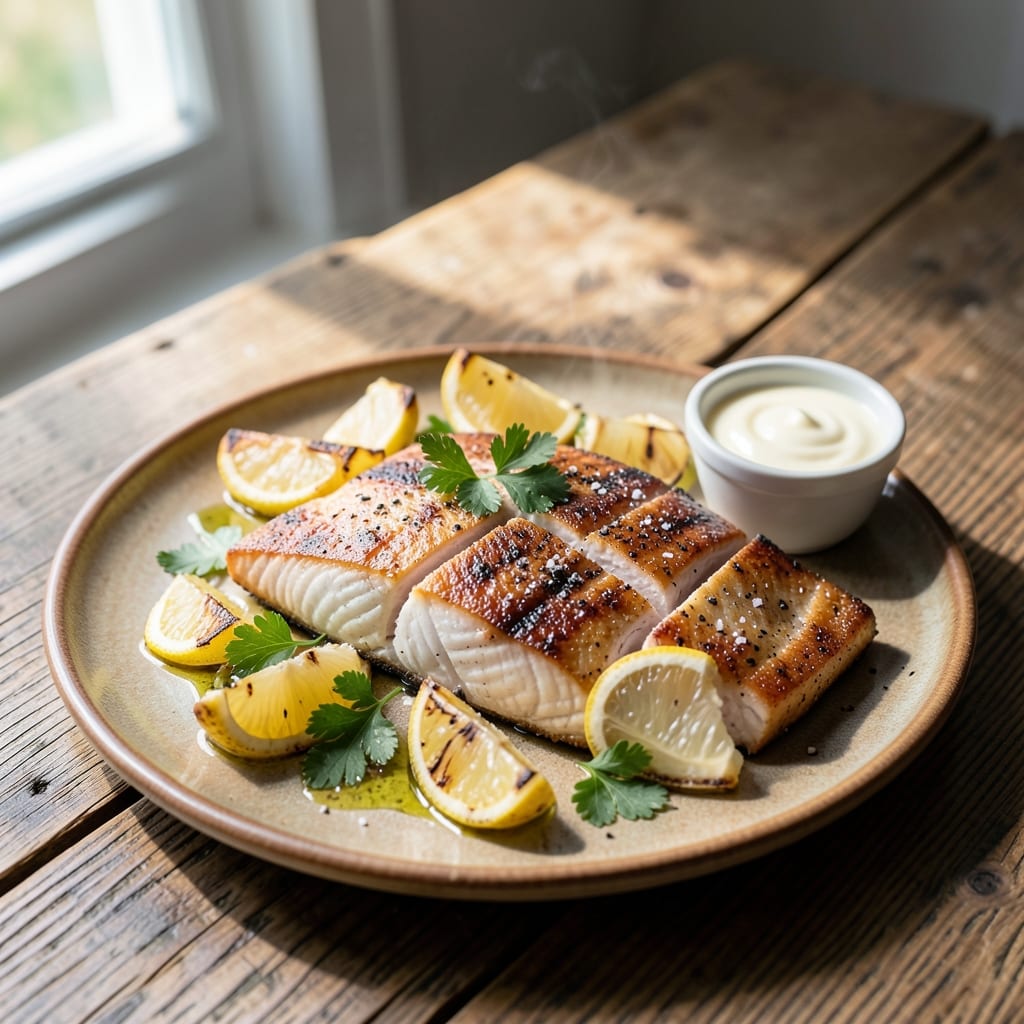
Ling cod deserves a preparation that highlights its delicate, flaky texture and mild sweetness. This pan-seared method brings out the best in this underrated fish with a simple, foolproof technique.
The key is a hot skillet and perfectly timed cooking. A crisp, golden skin forms while the inside stays tender and moist. The lemon-dill finish adds just the right bright contrast to the rich fish.
Ready in under 20 minutes, this dish proves that impressive seafood doesn’t require complicated methods. The result is restaurant-quality ling cod with minimal effort and maximum flavor.
Serve with roasted vegetables or a simple green salad for a complete, elegant meal. Here’s how to master this preparation.
Ingredients for Recipe for Ling Cod
Fresh fish and bright herbs make this elegant dish shine with minimal effort.
| Ingredient | Amount | Notes |
|---|---|---|
| Ling Cod Fillets 🐟 | 1 ½ lb | Skin-on, about 1-inch thick |
| All-Purpose Flour 🌾 | ¼ cup | For light dusting |
| Kosher Salt 🧂 | 1 ½ tsp | Divided for seasoning |
| Freshly Ground Black Pepper 🌶️ | ½ tsp | Divided for seasoning |
| Olive Oil 🫒 | 3 tbsp | Divided for cooking |
| Unsalted Butter 🧈 | 2 tbsp | For basting fish |
| Fresh Dill 🌿 | ¼ cup | Chopped, for garnish |
| Lemon 🍋 | 1 whole | Zested and juiced |
| Garlic Cloves 🧄 | 2 cloves | Minced for butter |
| Shallot 🧅 | 1 whole | Finely minced |
| White Wine 🍷 | ¼ cup | Dry variety preferred |
| Fresh Parsley 🌿 | 2 tbsp | Chopped, for garnish |
Ling cod is the star here. Look for firm, translucent fillets with a mild scent—Whole Foods or a reputable fishmonger are your best bets. Skin-on fillets hold together better in the pan, and aim for even thickness so they cook uniformly. The butter should be European-style (like Plugrá or Kerrygold) for richer flavor, and always use fresh dill—dried just won’t cut it for that bright finish.
No white wine? Substitute chicken or vegetable broth with a splash of lemon juice. Out of shallots? Red onion at half the amount works fine. If you can’t find ling cod, halibut or black cod are excellent alternatives with similar texture. The flour can be swapped for cornstarch for a gluten-free option (use half the quantity).
Cooked fish is best eaten immediately, but leftovers keep for 1-2 days in the fridge. Store in an airtight container and reheat gently in a skillet to avoid drying out. The lemon-dill butter can be made ahead and stored for 3 days—just warm it slowly before serving.
Why You’ll Love This Recipe
- One Pan Wonder: I love that I only need a skillet, some flour, and basic seasonings—no fancy prep or extra dishes.
- Crispy Perfection: The flour crust with salt and pepper gives that golden, flaky bite every time.
- Weeknight Hero: Honestly, it’s my go-to for busy evenings when I need dinner ready in 15 minutes flat.
- Budget Friendly: Ling cod is affordable, and a little goes a long way—great for feeding the family without breaking the bank.
Step-by-Step Instructions for Pan-Seared Ling Cod
Master these steps for perfectly flaky fillets with a bright, herbaceous finish every time.
Step 1: Season and Dredge the Ling Cod Fillets
Pat the 1.5 lb Ling Cod Fillets completely dry with paper towels—this ensures proper browning. Season both sides evenly with 1 tsp Kosher Salt and 0.5 tsp Freshly Ground Black Pepper from the measured amounts, pressing gently so the seasoning adheres.
Lightly dust each fillet with 0.25 cup All-Purpose Flour, shaking off any excess. The flour creates a delicate crust that protects the delicate fish while cooking. Work quickly to prevent the fish from sitting out too long before hitting the pan.
Step 2: Sear the Fillets to Golden Perfection
Heat 2 tbsp Olive Oil in a large skillet over medium-high heat until the oil shimmers but isn’t smoking. Carefully place the floured fillets skin-side down in the pan, leaving space between them to ensure even cooking.
Sear undisturbed for 3-4 minutes until the edges appear opaque and golden brown. The fish will release easily from the pan when it’s ready to flip. Use a thin spatula to gently turn each fillet, then add the remaining 1 tbsp Olive Oil to the pan.
Step 3: Baste with Aromatic Butter and Finish Cooking
Reduce heat to medium and add 2 tbsp Unsalted Butter, minced Shallot, and 2 minced Garlic Cloves to the skillet. Tilt the pan slightly and spoon the foaming butter over the fillets continuously for 1-2 minutes to baste.
Cook for another 2-3 minutes until the fish flakes easily with a fork and reaches an internal temperature of 140°F. The butter will develop a nutty aroma while the shallot and garlic infuse the fish with subtle depth. Transfer the fillets to a plate and tent loosely with foil.
Step 4: Create the Lemon-Dill Pan Sauce
Return the skillet to medium heat and add 0.25 cup White Wine, scraping up any browned bits from the bottom. Let it simmer for 2 minutes until reduced by half. Stir in the zest and juice of 1 whole Lemon and 0.25 cup Fresh Dill.
Simmer for an additional 1 minute to meld the flavors. The sauce should be slightly thickened and fragrant, with the dill brightening the rich butter base. Pour the sauce over the fish and garnish with 2 tbsp Fresh Parsley for a pop of color.
Pro Tips For Making Recipe For Ling Cod
- Pat Fillets Dry: I learned this the hard way—moisture on the ling cod prevents a good sear, so blot the fillets thoroughly with paper towels before dredging in flour.
- Heat the Pan First: After burning a few batches, I finally figured out that the olive oil needs to shimmer in the pan before adding the fish to get that crispy, golden crust.
- Skip the Overcrowding: Resist the urge to cook all the fillets at once; leaving space between them in the pan guarantees even browning instead of steamed, soggy fish.
- Season the Flour: Sounds weird, but it works: mix a teaspoon each of kosher salt and black pepper into the flour before coating the ling cod for more even seasoning and flavor.
Common Mistakes When Making recipe for ling cod
Skipping the Dry
Never skip patting the 1.5 lb Ling Cod Fillets completely dry before seasoning. Moisture on the surface creates steam instead of a golden sear, leading to soggy skin. I use 3-4 paper towels to ensure every bit of moisture is absorbed.
Overcrowding the Pan
Give each fillet space in the skillet—crowding drops the pan temperature, causing the fish to steam rather than sear. Cook in batches if needed, keeping the first batch warm in a 200°F oven while finishing the rest. 🔥
Flipping Too Soon
The fish will tell you when it’s ready to flip. If it sticks when you try to turn it, wait another 30-60 seconds. It should release easily with a gentle nudge from your spatula.
Overcooking the Fish
Ling cod continues cooking after you remove it from the pan. Pull it off at 135-140°F internal temperature and tent with foil. It will reach 145°F while resting, staying perfectly moist.
Neglecting the Sauce
Don’t let the white wine reduction boil dry before adding the lemon and dill. The browned bits in the pan are packed with flavor—scrape them up as the wine simmers to build depth in your sauce.
Using Cold Butter
Always use room-temperature butter for basting. Cold butter can cause the pan temperature to drop too much, leading to uneven cooking. Let it sit out for 10-15 minutes before starting. 💡
Nutrition Facts
Frequently Asked Questions
What’s the ideal thickness for ling cod fillets?
Look for fillets about 1-inch thick for even cooking. Thinner pieces dry out quickly, while thicker ones may need adjusting cooking time to reach 140°F internally.
Can I use a different type of fish?
Halibut or black cod work well with the same method. Just adjust cooking time slightly based on thickness. The lemon-dill sauce pairs perfectly with any mild white fish.
How do I keep the skin from sticking?
Ensure the pan is hot before adding the fish and don’t move it for 3-4 minutes. Use a thin spatula to test for easy release before flipping.
What if I don’t have white wine?
Substitute chicken or vegetable broth with a splash of lemon juice. The acidity mimics wine’s brightness in the sauce.

- BBQ Sausage Recipe Oven: Smoky Depth Without the Grill - September 28, 2026
- BBQ Chicken Bowl Recipe Rice: Smoky Sweetness Over Fluffy Grains - September 28, 2026
- Beef Cutlet Recipe Ideas: Crispy Breaded Patties With Bold Seasonings - September 28, 2026