
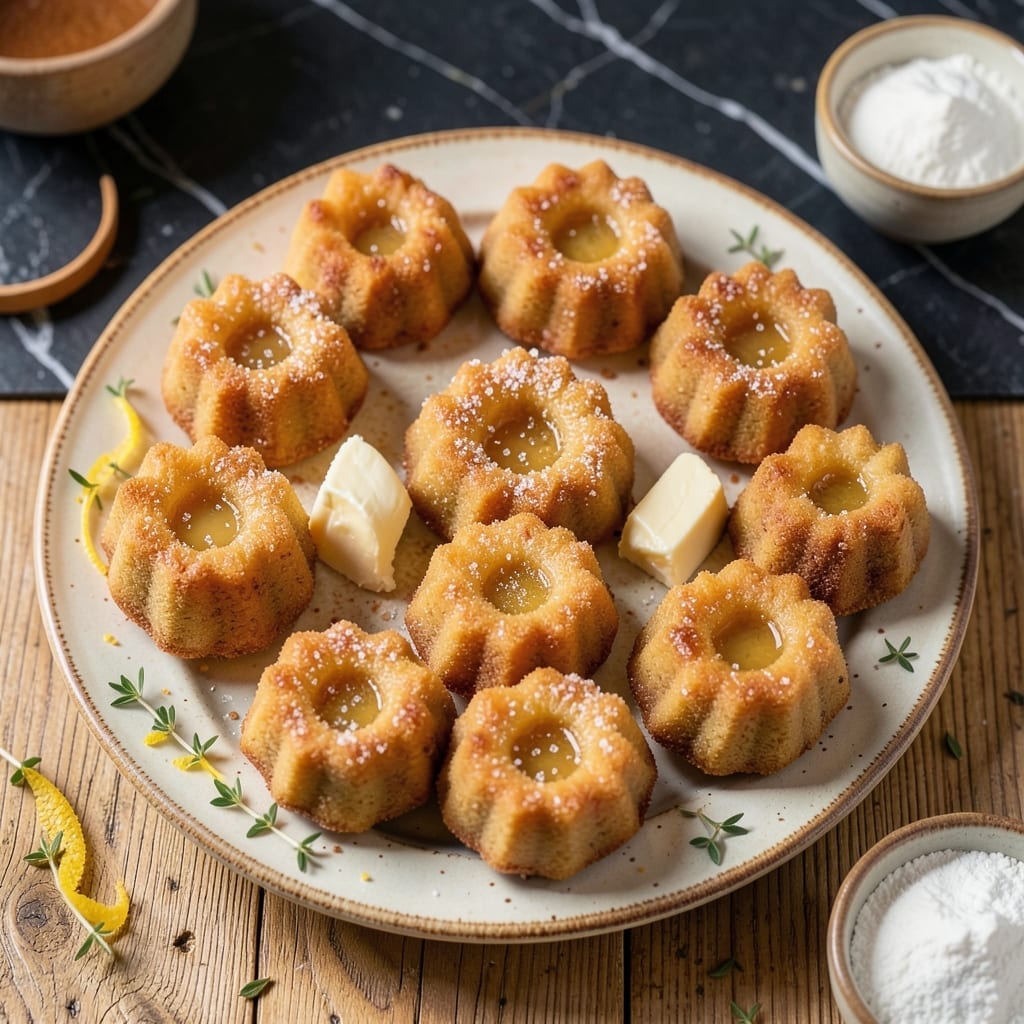
These mini bundt cakes deliver moist, tender crumbs with endless flavor possibilities. A proven technique ensures perfect texture every time, with a golden crust and soft interior that stays fresh for days.
Customize with citrus zest, chocolate chips, or spices to create your ideal bite. The compact size bakes evenly at high heat, producing professional results in under 30 minutes.
Ingredients for Recipe for Mini Bundt Cakes
A dozen mini cakes require pantry staples plus a few fresh items. Simple yet precise.
| Ingredient | Amount | Notes |
|---|---|---|
| All-Purpose Flour 🌾 | 2 cups | Sifted for even texture |
| Granulated Sugar 🍚 | 1 ½ cups | Fine grain for smooth batter |
| Unsalted Butter 🧈 | 1 cup | Softened to room temperature |
| Large Eggs 🥚 | 4 whole | Room temperature preferred |
| Baking Powder 🧂 | 2 tsp | Fresh for optimal rise |
| Baking Soda 🧂 | ½ tsp | Balances acidity in batter |
| Salt 🧂 | ½ tsp | Enhances all flavors |
| Vanilla Extract 💧 | 2 tsp | Pure for best flavor |
| Sour Cream 🥛 | ¾ cup | Full-fat for moisture |
| Whole Milk 🥛 | ¼ cup | Adds tenderness to crumb |
| Lemon Zest 🍋 | 1 tbsp | Optional for citrus variation |
| Cinnamon 🌿 | 1 tsp | Ground, for spice variation |
The butter and eggs must be at room temperature—this ensures a smooth, emulsified batter. Land O’Lakes butter is reliable for consistency, but any high-quality unsalted butter works. For flour, King Arthur or Gold Medal all-purpose deliver consistent results. Avoid overmixing once the dry ingredients are added to maintain the tender crumb promised in the introduction.
No sour cream? Full-fat Greek yogurt at the same quantity works well. For a dairy-free version, coconut cream can substitute (though the flavor will shift slightly). The milk can be swapped for buttermilk for extra tenderness, or almond milk if avoiding dairy. Lemon zest can be replaced with orange or lime zest for different citrus notes. Cinnamon can be swapped for nutmeg or cardamom depending on preference.
Store cakes in an airtight container at room temperature for up to 3 days. For longer storage, freeze unfrosted cakes for up to 3 months. Thaw at room temperature before serving. The batter itself keeps in the fridge for 24 hours if needed.
Why You’ll Love This Recipe
- One Bowl Wonder: I just mix the flour, sugar, butter, eggs, and baking powder in a single bowl—no fancy equipment, no fuss.
- Buttery Richness: The melted unsalted butter gives these little cakes a warm, golden flavor that’s honestly hard to resist.
- Party Ready: I’ve served these at brunch, birthdays, even just because—everyone always goes back for seconds.
- Freezer Friendly: Bake a double batch, stash the extras, and you’ve got a sweet treat ready whenever a craving hits.
Step-by-Step Instructions for Mini Bundt Cakes
Master these steps to achieve perfectly moist mini bundt cakes with a tender crumb every time.
Step 1: Prepare the Dry Ingredients
In a medium bowl, whisk together the 2 cups all-purpose flour, 2 tsp baking powder, 0.5 tsp baking soda, and 0.5 tsp salt. Sifting the flour first ensures a smooth batter without lumps. I always whisk for 30 seconds to evenly distribute the leavening agents—this guarantees consistent rise across all cakes.
If using the spice variation, add the 1 tsp cinnamon to the dry mixture. The fine texture of ground cinnamon blends seamlessly into the flour, creating an even distribution of warm spice throughout each bite.
Step 2: Cream the Butter and Sugar
In a large mixing bowl, beat the 1 cup unsalted butter and 1.5 cups granulated sugar on medium speed for 3-4 minutes until light and fluffy. The mixture should double in volume and turn pale yellow. This creaming process incorporates air, which is essential for the cakes’ tender texture.
Use room-temperature butter—it should dent when pressed but not be greasy. Cold butter won’t cream properly, resulting in dense cakes. Scrape the bowl occasionally to ensure even mixing.
Step 3: Incorporate Wet Ingredients
Add the 4 whole large eggs one at a time, mixing well after each addition. Then blend in the 2 tsp vanilla extract, 0.75 cup sour cream, and 0.25 cup whole milk. The sour cream adds moisture and richness, while the milk ensures a smooth batter.
If using the citrus variation, stir in the 1 tbsp lemon zest at this stage. The oils in the zest infuse the batter with bright, fresh flavor. Mix just until combined—overmixing develops gluten, which can make the cakes tough.
Step 4: Combine and Bake
Gradually add the dry ingredients to the wet mixture, folding gently with a spatula until no flour streaks remain. The batter will be thick but pourable. Divide it evenly among greased mini bundt pans, filling each cavity ⅔ full to allow for rising.
Bake at 350°F for 18-22 minutes, or until a toothpick inserted into the center comes out clean. The edges should pull away slightly from the pan, and the tops should spring back when lightly touched.
Step 5: Cool and Finish
Let the cakes cool in the pans for 10 minutes before inverting them onto a wire rack. This brief rest allows them to set, preventing crumbling. Cool completely before glazing or dusting with powdered sugar.
The result should be mini bundt cakes with a delicate, moist crumb and a golden-brown exterior. The texture stays tender for days when stored in an airtight container at room temperature.
Pro Tips For Making Recipe For Mini Bundt Cakes
- Room Temp Butter: Pull your unsalted butter out 1-2 hours before baking—creaming it properly with sugar traps air for a lighter crumb, and I learned this the hard way after my first dense, sad mini bundts.
- Grease Every Nook: Use a pastry brush to coat the mini bundt pan’s crevices thoroughly with butter, then dust with flour. After losing half a batch to the pan, I finally realized those intricate designs need extra attention.
- Don’t Overmix: Stir the batter just until the flour disappears—overmixing develops gluten, and your cakes will turn out tough instead of tender. I was skeptical until I tried it and saw the difference.
- Rotate the Pan: Halfway through baking, turn the pan 180 degrees to guarantee even browning, especially if your oven has hot spots. Sounds simple, but it actually changes the outcome.
Common Mistakes When Making Perfect Results
Overmixing the Batter
Once you add the dry ingredients, fold them in gently—just until the flour disappears. Overmixing develops the gluten, which makes your cakes dense instead of tender. I use a silicone spatula and count 10-12 folds to combine everything perfectly. 💡
Incorrect Pan Preparation
Mini bundt pans have intricate designs that require thorough greasing. Use baking spray with flour (like Baker’s Joy) or brush every crevice with melted butter, then dust with flour. Skipping this step often leads to cakes sticking and breaking when removed.
Using Cold Ingredients
Your butter, eggs, and sour cream must be at room temperature. Cold butter won’t cream properly, and cold eggs can cause the batter to curdle. I take my ingredients out 1-2 hours before baking to ensure they’re fully tempered.
Overfilling the Pans
Fill each cavity only ⅔ full to allow space for rising. Overfilling causes the batter to spill over, creating a messy oven and unevenly baked cakes. A cookie scoop helps portion the batter evenly.
Skipping the Cooling Step
Let the cakes cool in the pan for exactly 10 minutes before inverting. Too soon and they’ll crumble; too long and they’ll stick. I set a timer to avoid guessing.
Ignoring Oven Hot Spots
Rotate your pans halfway through baking if your oven has uneven heat. This ensures all cakes bake at the same rate. Check for doneness at 18 minutes—a toothpick should come out clean. 🔥
Frequently Asked Questions
What pan works best for these?
A mini bundt pan with 6-12 cavities is ideal. Non-stick works best, but thoroughly grease any pan with baking spray. Avoid regular muffins pans—they won’t create the signature ridged shape.
Can I make these ahead of time?
Yes! Bake and cool completely, then store unfrosted in an airtight container for up to 3 days. For longer storage, freeze for up to 3 months and thaw at room temperature.
How do I know when they’re done?
Insert a toothpick into the center—it should come out clean. The edges will pull slightly from the pan, and tops will spring back when touched. Check at 18 minutes.
Can I use a box mix for this?
Yes, but adjust the batter consistency. Box mixes are thicker, so add 2-3 tablespoons milk to reach a pourable consistency before baking.
Nutrition Facts

- BBQ Sausage Recipe Oven: Smoky Depth Without the Grill - September 28, 2026
- BBQ Chicken Bowl Recipe Rice: Smoky Sweetness Over Fluffy Grains - September 28, 2026
- Beef Cutlet Recipe Ideas: Crispy Breaded Patties With Bold Seasonings - September 28, 2026