
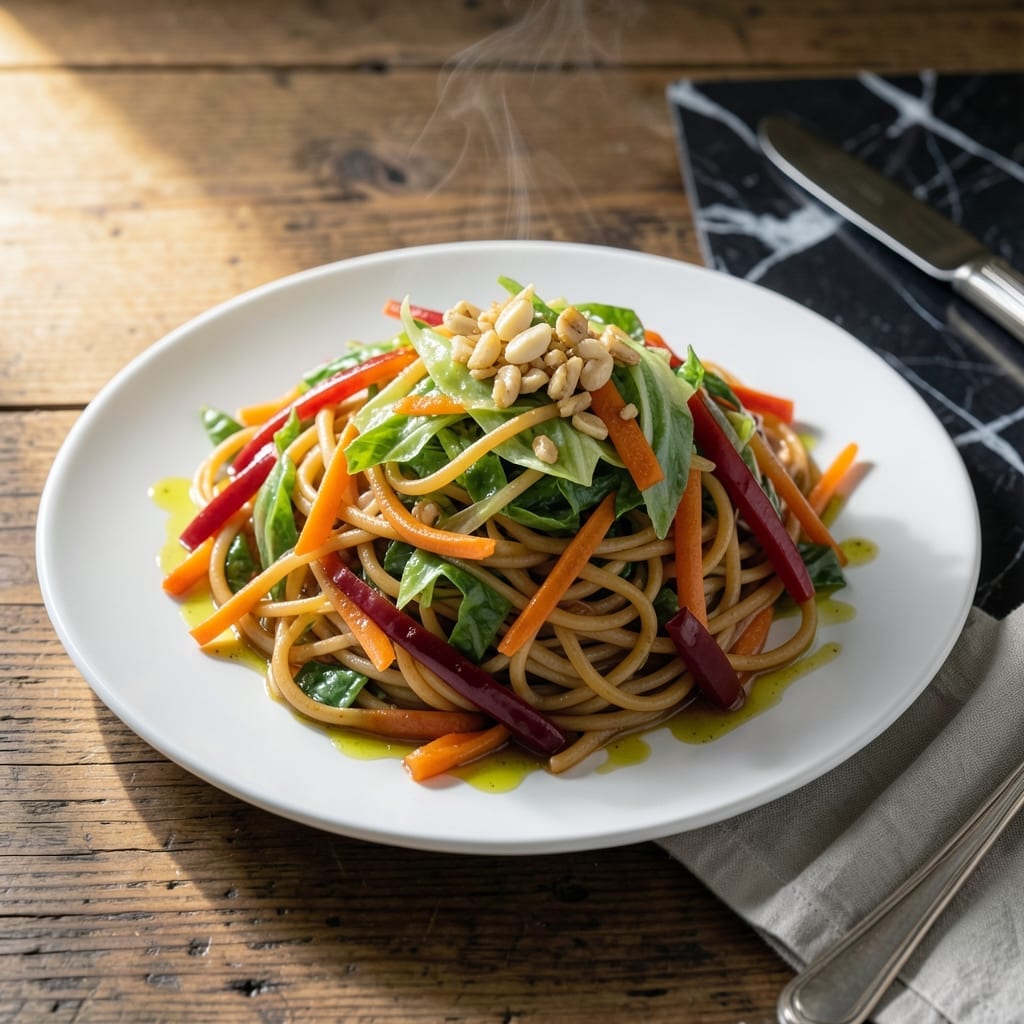
This stir-fry transforms humble ingredients into something extraordinary. I developed it for busy weeknights when only quick meals work.
The secret is high heat and perfect timing—just 15 minutes from start to finish. Cabbage stays crunchy while noodles absorb the savory sauce.
What emerges is a dish with satisfying texture contrast and layers of flavor. The cabbage softens slightly but retains its bite, balanced by tender noodles.
Serve it as a side or light main. This method delivers consistent results every time.
Ingredients for Recipe for Noodles and Cabbage
Transform humble pantry staples into a vibrant, texture-rich stir-fry in minutes.
| Ingredient | Amount | Notes |
|---|---|---|
| Egg Noodles 🍜 | 8 oz | Dried, cooked al dente |
| Green Cabbage 🥬 | 4 cups | Thinly shredded for texture |
| Carrots 🥕 | 2 whole | Julienned for color contrast |
| Red Bell Pepper 🌶️ | 1 whole | Thinly sliced, seeds removed |
| Garlic Cloves 🧄 | 4 cloves | Minced for aromatic base |
| Fresh Ginger Root 🌿 | 1 tbsp | Finely grated, peeled |
| Soy Sauce 🫒 | 3 tbsp | Low-sodium preferred for balance |
| Sesame Oil 🫒 | 1 tbsp | Toasted for depth of flavor |
| Rice Vinegar 🍚 | 1 tbsp | For acidity to brighten |
| Brown Sugar 🍯 | 1 tsp | Light or dark variety |
| Vegetable Oil 🫒 | 2 tbsp | High smoke point for stir-frying |
| Green Onions 🧅 | 3 whole | Thinly sliced for garnish |
| Sesame Seeds 🌾 | 1 tsp | Toasted for garnish |
| Red Pepper Flakes 🔥 | ½ tsp | Optional for heat adjustment |
The cabbage is critical here—Napa or green variety both work, but ensure it’s fresh with crisp leaves (wilted cabbage turns mushy). For noodles, fresh egg noodles from an Asian market elevate texture, but dried works in a pinch. Trader Joe’s carries affordable pre-shredded cabbage if time is tight. The ginger and garlic should be freshly grated and minced, respectively; pre-minced versions lack intensity.
No soy sauce? Tamari or coconut aminos are acceptable substitutes, though flavor profiles will shift slightly. Honey at half the amount can replace brown sugar, but keep it vegetarian. For heat, sriracha or chili oil can stand in for red pepper flakes. If avoiding gluten, swap egg noodles for rice noodles and use tamari instead of soy sauce.
Stir-fry leftovers keep for 3-4 days in the fridge but lose crispness. Reheat in a skillet over high heat to revive texture. Freezing isn’t recommended—noodles turn soggy. Prep all ingredients before cooking; this dish moves fast once the heat is on.
Why You’ll Love This Recipe
- One Pot Wonder: I toss everything in a single pan—egg noodles, cabbage, and those bright red bell peppers—so cleanup’s a breeze.
- Garlic Lovers’ Dream: The garlic cloves turn sweet and fragrant, making the whole house smell like a cozy kitchen should.
- Weeknight Rescue: Honestly, it’s my go-to when I need dinner fast but still crave something hearty.
- Budget Friendly: A head of cabbage and a bag of noodles stretch farther than you’d think—my wallet thanks me every time.
Step-by-Step Instructions for Noodles and Cabbage
This method ensures a quick, vibrant stir-fry with perfect texture every time.
Step 1: Prepare and Cook the Noodles
Bring a large pot of salted water to a rolling boil. Add the 8 oz Egg Noodles and cook according to package instructions until al dente, about 7-8 minutes. You want them firm to the bite, as they’ll finish cooking in the stir-fry.
Drain the noodles in a colander and rinse briefly under cold water to stop the cooking process. Toss them with 1 tablespoon of the Vegetable Oil to prevent sticking, then set aside. This step keeps the noodles separate and ready for the wok.
Step 2: Stir-Fry the Aromatics and Vegetables
Heat the remaining 1 tablespoon Vegetable Oil in a wok or large skillet over high heat until shimmering. Add the 4 cloves Garlic Cloves and 1 tbsp Fresh Ginger Root, stirring constantly for 30 seconds until fragrant but not browned.
Immediately add the 4 cups Green Cabbage, 2 whole Carrots, and 1 whole Red Bell Pepper. Stir-fry for 4-5 minutes until the vegetables are tender-crisp and the cabbage begins to wilt. The carrots and bell pepper should retain a slight bite for texture contrast.
Step 3: Combine Noodles and Sauce
Reduce heat to medium-high and add the cooked noodles to the wok. Pour in the 3 tbsp Soy Sauce, 1 tbsp Sesame Oil, 1 tbsp Rice Vinegar, 1 tsp Brown Sugar, and 0.5 tsp Red Pepper Flakes. Toss everything together for 2-3 minutes until the noodles are evenly coated and heated through.
The sauce should glaze the noodles and vegetables lightly. If the mixture seems dry, add a splash of water and toss again. The sugar will caramelize slightly, adding depth to the savory flavors.
Step 4: Garnish and Serve
Remove from heat and stir in the 3 whole Green Onions, reserving a small handful for garnish. Transfer to a serving platter and sprinkle with the remaining green onions, 1 tsp Sesame Seeds.
Serve immediately while hot. The dish should have a balance of chewy noodles, crisp-tender vegetables, and a glossy, umami-rich sauce with a hint of heat from the red pepper flakes. The sesame seeds and green onions add a fresh, nutty finish.
Pro Tips For Making Recipe For Noodles And Cabbage
- Salt the Noodles: Boil egg noodles in well-salted water—about 1 tablespoon per quart. I learned this the hard way after too many bland bites.
- Shred Cabbage Thin: Slice the green cabbage as thin as you can (1/8-inch strips). It cooks faster and absorbs the garlic flavor better.
- Don’t Overcook Veggies: Add carrots and bell pepper first, then cabbage last—it only needs 3-4 minutes to soften but stay crisp.
- Toast the Garlic: Cook minced garlic in oil for 30 seconds before adding veggies. Sounds simple, but it actually changes the outcome.
Troubleshooting Perfect Results
Soggy Noodles
If your noodles turn out mushy, you likely overcooked them initially. Cook them 1 minute less than package directions, then shock in cold water. I always taste-test a strand before draining—it should have a slight bite. 💡
Mushy Cabbage
Cabbage loses its crunch when overcrowded in the pan. Stir-fry in batches if needed, using a large wok or skillet. Keep the heat at high and stir constantly for even cooking. Fresh, crisp cabbage is key—wilted heads won’t hold up.
Bland Flavor
Boost flavor by blooming the garlic and ginger in oil before adding vegetables. Don’t skip the sesame oil—it adds depth. Taste before serving and adjust with extra soy sauce or a pinch of brown sugar as needed.
Dry Stir-Fry
If the dish seems dry, add a splash of water or broth and toss. The sauce should lightly coat the noodles. I often reserve ¼ cup of the noodle cooking water for this purpose—it helps bind everything together.
Burnt Garlic
Garlic burns easily over high heat. Stir constantly and remove it from the pan if it starts to brown too quickly. I recommend mincing it finely so it cooks evenly without scorching. 🔥
Uneven Cooking
Cut all vegetables uniformly for even cooking. Julienne the carrots and slice the bell pepper thinly. This ensures everything finishes at the same time, with that perfect tender-crisp texture.
Nutrition Facts
Frequently Asked Questions
Can I use a different type of noodle?
Yes! Rice noodles or udon work well for gluten-free versions. For extra nutrition, try whole wheat or chickpea noodles. Just adjust cooking times as needed.
How do I keep the cabbage crisp?
Stir-fry in small batches over high heat for just 4-5 minutes. Overcrowding the pan steams rather than sears, making it mushy.
What can I add for extra protein?
Toss in cooked chicken, shrimp, or tofu with the noodles at the end. For vegans, edamame or tempeh pairs perfectly.
Can I make this ahead of time?
Prep veggies in advance, but cook just before serving for best texture. Leftovers keep 3-4 days in the fridge but lose some crunch.

- BBQ Sausage Recipe Oven: Smoky Depth Without the Grill - September 28, 2026
- BBQ Chicken Bowl Recipe Rice: Smoky Sweetness Over Fluffy Grains - September 28, 2026
- Beef Cutlet Recipe Ideas: Crispy Breaded Patties With Bold Seasonings - September 28, 2026