
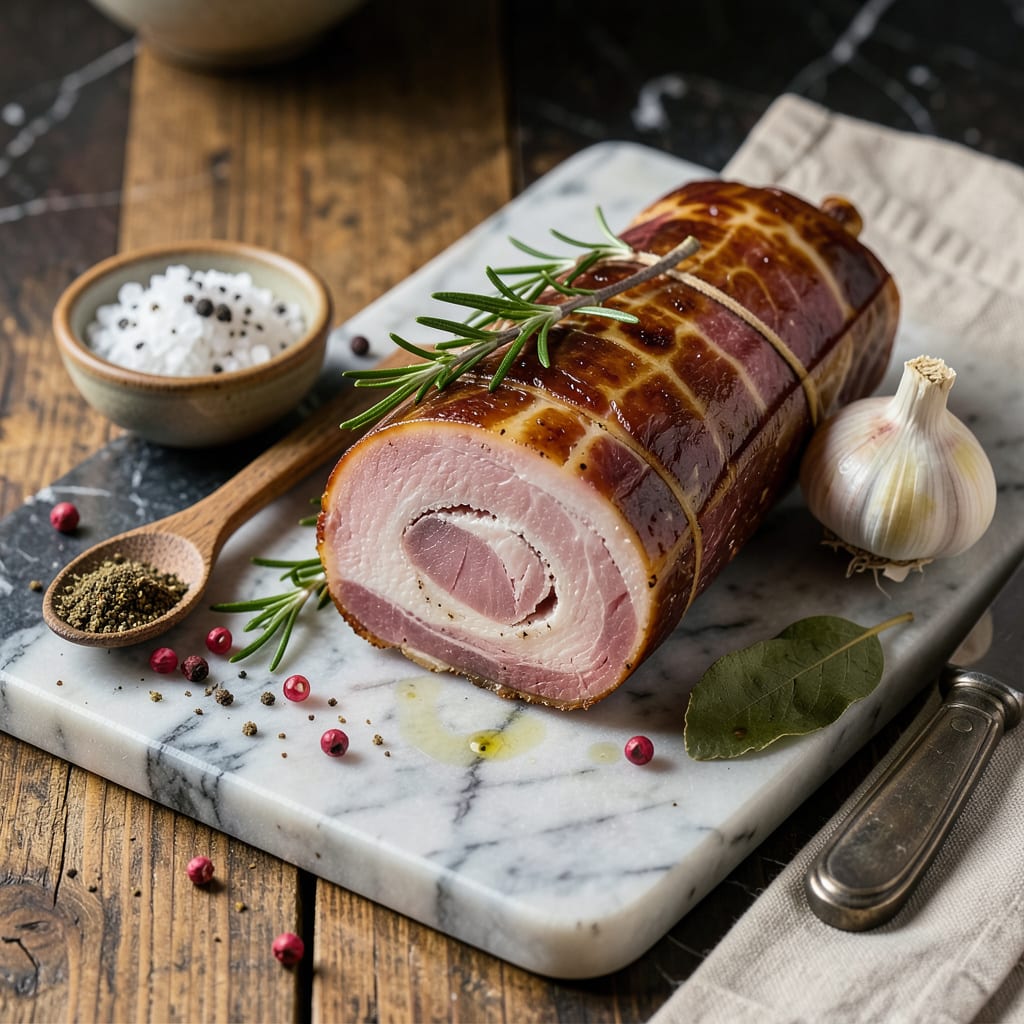
Pancetta is made by curing pork belly with salt, black pepper, and spices like nutmeg or fennel for 1-2 weeks, then air-drying for another 3-4 weeks. The result is rich, savory Italian cured meat perfect for cooking or thin-slicing.
Creating pancetta at home transforms simple pork belly into a gourmet ingredient through precise curing techniques. The process relies on salt to draw out moisture while spices infuse deep, complex flavors that develop during the drying phase. I’ve found that controlling humidity levels between 60-70% and maintaining consistent airflow are critical for achieving that signature silky texture and concentrated taste. 🔥
What sets homemade pancetta apart is the ability to customize spice blends—try adding juniper berries or orange zest for unique variations. The curing stage isn’t just about preservation; it’s where the magic happens as enzymes break down proteins, tenderizing the meat while building layers of umami. ✨
💡 In This Article
- How Curing and Drying Transform Pork Belly into Pancetta
- Essential Tools and Ingredients for Homemade Pancetta Success
How Curing and Drying Transform Pork Belly into Pancetta
The transformation begins with osmotic pressure—when salt meets pork belly, it creates an environment where water molecules rush out of the meat cells to balance the concentration. This isn’t just drying; it’s a cellular-level exchange where 3-5% of the meat’s weight is lost as moisture in the first 24-48 hours.
The salt also breaks down muscle proteins, turning tough fibers into that signature silky texture we crave. 🔥
Here’s where science meets tradition: nitrates (like Prague Powder #2) play dual roles. They prevent botulism by inhibiting bacterial growth while reacting with myoglobin to develop that rosy pink hue. Without them, pancetta would turn grayish-brown.
The spice blend—typically 1 part nutmeg to 2 parts black pepper—doesn’t just add flavor; its oils penetrate the meat during the 7-14 day cure, creating complex aromatic compounds through enzymatic reactions. ✨
Air drying at 50-60°F with 60-70% humidity is where texture magic happens. Too dry and the exterior hardens before the interior cures; too humid and mold risks develop. Proper airflow creates a pellicle—a tacky surface layer that allows moisture to evaporate evenly while concentrating flavors.
This phase reduces water activity to 0.90 Aw, the sweet spot where harmful bacteria can’t thrive but beneficial enzymes keep working. 💫
The spice ratios matter more than you think. Traditional Italian recipes use fennel seeds not just for anise notes but because their essential oils contain anethole, which binds to fat molecules during curing. This creates a flavor release mechanism—when you cook pancetta later, those fat-soluble compounds bloom at 275°F+, filling your kitchen with intoxicating aromas.
🌟
What most home curers miss is the resting period after drying. Letting pancetta hang for an extra 3-5 days at cooler temps (45°F) allows flavors to equalize throughout the meat. This is when the salt fully distributes and the spice oils migrate from the surface inward. The result?
Every thin slice delivers consistent flavor from edge to center. ⚡
Compare this to commercial pancetta: mass-produced versions often use phosphates to speed moisture loss and liquid smoke for flavor. But artisanal methods—like rubbing the belly with red wine before curing—develop deeper maillard precursors. When you sear homemade pancetta, those compounds create a caramelization that store-bought can’t match.
The difference is measurable: homemade typically has 18-22% protein versus commercial’s 15-18% due to slower moisture removal. 💛

- BBQ Sausage Recipe Oven: Smoky Depth Without the Grill - September 28, 2026
- BBQ Chicken Bowl Recipe Rice: Smoky Sweetness Over Fluffy Grains - September 28, 2026
- Beef Cutlet Recipe Ideas: Crispy Breaded Patties With Bold Seasonings - September 28, 2026