
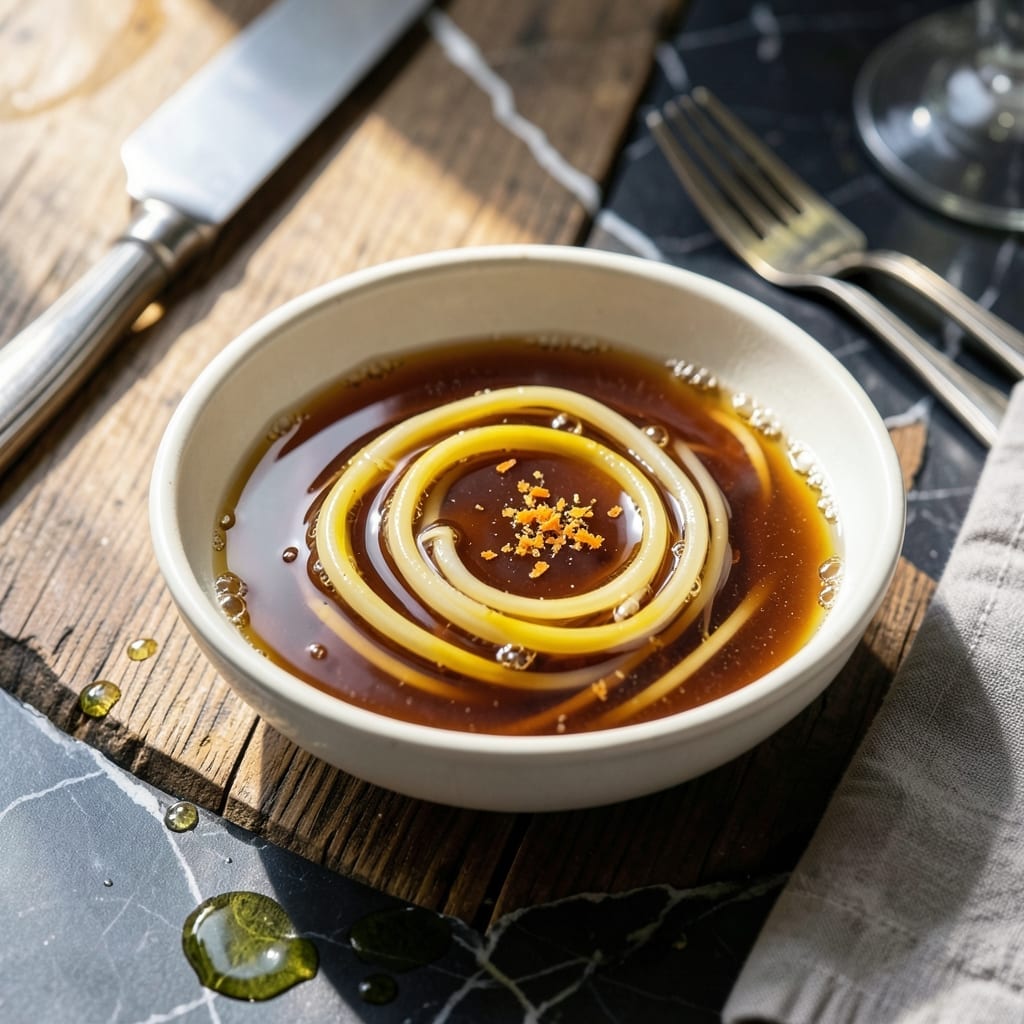
This tangy, versatile sauce brings Japanese flavors to any dish with minimal effort. A perfect balance of citrus and umami, it elevates everything from dumplings to grilled proteins.
No cooking required—just combine fresh ingredients and let them meld. Store in the fridge for up to a month, ready to brighten any meal.
Ingredients for Recipe for Ponzu Sauce
Nine simple ingredients come together for this bright citrus umami sauce with no cooking required.
| Ingredient | Amount | Notes |
|---|---|---|
| Fresh Yuzu Juice 🍋 | ½ cup | Or substitute lime juice |
| Fresh Lemon Juice 🍋 | ¼ cup | Freshly squeezed preferred |
| Soy Sauce 🫒 | ½ cup | Low-sodium for balance |
| Rice Vinegar 💧 | ¼ cup | Unseasoned variety |
| Mirin 🍶 | 2 tbsp | Sweet rice wine |
| Dashi Stock 🍜 | ¼ cup | Vegan dashi if needed |
| Kombu Strip 🌿 | 1 piece | 2-inch square, optional |
| Bonito Flakes 🐟 | 1 tbsp | Omit for strict vegan |
| Granulated Sugar 🍚 | 1 tsp | Dissolved in warm water |
The citrus is non-negotiable here. Fresh yuzu juice is ideal and available at Asian markets or online, but a mix of lime and lemon works beautifully (yuzu is a hybrid of both). San-J makes a solid vegan soy sauce if you want to avoid fish-based dashi. For the dashi itself, kombu-only versions are vegan and still deliver that essential umami depth.
No yuzu? Use equal parts lime and lemon juice. Mirin can be replaced with 1 tbsp sugar plus 1 tbsp water. If you can’t find kombu, a small piece of dried shiitake mushroom soaked in hot water works as a substitute. The bonito flakes are traditional but can be omitted entirely for a fully vegan version without much impact.
This keeps beautifully in the fridge for 1 month. The flavors actually improve after 24 hours as they meld together. Store in a glass jar with a tight lid, and give it a good shake before each use since the ingredients may separate over time.
Why You’ll Love This Recipe
- Mix and Forget: Honestly, it’s just whisking yuzu, lemon, soy, vinegar, and mirin—no cooking, no fuss.
- Bright Zing: The yuzu and lemon hit first, then the soy and mirin smooth it into that addictive tangy-sweet depth.
- Pairs with Everything: I drizzle it on sashimi, toss it with noodles, or use it as a marinade—never sits unused.
- Keeps for Weeks: One batch lasts me a month in the fridge, so I’m always ready for last-minute flavor.
Step-by-Step Instructions for Ponzu Sauce
This straightforward method ensures balanced citrus and umami flavors every time.
Step 1: Combine the Citrus and Vinegar Base
In a medium saucepan, whisk together the 0.5 cup Fresh Yuzu Juice, 0.25 cup Fresh Lemon Juice, 0.25 cup Rice Vinegar, and 2 tbsp Mirin. The combination of yuzu and lemon creates a bright, complex citrus foundation that defines this sauce.
Bring the mixture to a gentle simmer over medium heat. You’ll notice the aromas become more pronounced as it warms—this is the citrus oils activating. Simmer for 2-3 minutes to allow the flavors to meld slightly before adding the remaining ingredients.
Step 2: Incorporate Umami-Rich Components
Add the 0.5 cup Soy Sauce and 0.25 cup Dashi Stock to the saucepan. The soy sauce contributes saltiness and depth, while the dashi stock adds a subtle, savory backbone that rounds out the acidity from the citrus.
Stir in the 1 piece Kombu Strip and 1 tbsp Bonito Flakes. These ingredients infuse the sauce with authentic Japanese umami. The kombu will soften as it simmers, releasing its briny, oceanic notes, while the bonito flakes will dissolve, adding a smoky, meaty complexity.
Step 3: Sweeten and Simmer to Perfection
Dissolve the 1 tsp Granulated Sugar in a small amount of warm water, then add it to the saucepan. The sugar balances the acidity and saltiness, creating a harmonious flavor profile. Stir well to ensure it distributes evenly throughout the sauce.
Reduce the heat to low and let the sauce simmer gently for 10-12 minutes. Avoid boiling, as this can cause the flavors to become harsh or unbalanced. You’ll know it’s ready when the liquid has reduced slightly and the flavors have deepened, with the kombu and bonito fully infusing their essence into the sauce.
Step 4: Strain and Cool for Optimal Flavor
Remove the saucepan from heat and let it cool for 5 minutes. This allows the flavors to settle and the residual heat to finish the infusion process. The kombu strip will have released all its flavor by now and can be discarded.
Strain the sauce through a fine-mesh sieve into a clean bowl or jar to remove the bonito flakes and any remaining kombu pieces. Press gently on the solids to extract all the liquid, but avoid squeezing, which can make the sauce bitter.
Let the ponzu sauce cool completely to room temperature before using or storing. The flavors will continue to develop as it cools, resulting in a well-balanced, aromatic sauce ready to elevate your dishes.
Pro Tips For Making Recipe For Ponzu Sauce
- Balance the Citrus: Yuzu juice can be intense—mix it with lemon juice in a 2:1 ratio to mellow the flavor without losing that signature brightness.
- Reduce the Mirin: Simmer the mirin for 2-3 minutes first to cook off the alcohol, or your sauce will taste raw and harsh instead of smooth and syrupy.
- Skip the Bottled: Fresh yuzu and lemon juice are non-negotiable here; bottled versions taste flat and ruin the sauce’s vibrancy—I learned this the hard way.
- Rest Before Serving: Let the sauce sit for at least 30 minutes after mixing so the flavors meld—sounds weird, but it actually changes the outcome.
Perfect Pairings for recipe for ponzu sauce
Seafood Pairings
Drizzle this sauce over fresh oysters or raw sashimi-grade fish for a bright, citrusy finish. It also works beautifully with grilled shrimp skewers—toss them in 2 tbsp of the sauce before serving. I love how it enhances the natural sweetness of seafood. 💛
Dumpling Dipping
Use as a dipping sauce for gyoza or pork dumplings. Mix 1 part ponzu with 1 part soy sauce and add a dash of sesame oil for extra depth. The acidity cuts through the richness of fried dumplings perfectly.
Grilled Proteins
Brush onto grilled chicken or beef skewers during the last minute of cooking for a tangy glaze. For teriyaki-style bowls, drizzle over sliced steak with rice and steamed veggies. The citrus notes balance the savory flavors beautifully.
Salad Dressing
Whisk 3 tbsp ponzu with 1 tbsp olive oil and a pinch of black pepper for a light, zesty salad dressing. It’s amazing on cucumber or daikon radish salads. I often add a sprinkle of toasted sesame seeds for crunch.
Noodle Enhancer
Toss cold soba noodles with 2 tbsp ponzu, 1 tsp grated ginger, and 1 sliced scallion for a refreshing summer dish. The sauce clings to the noodles, adding layers of flavor without overpowering them.
Frequently Asked Questions
Can I use lime juice instead of yuzu?
Use equal parts lime and lemon juice as a substitute. The combination mimics yuzu’s unique citrus profile beautifully.
How long does homemade ponzu last?
It stays fresh in the fridge for 1 month. Store in a glass jar with a tight lid. The flavors actually improve after 24 hours as they meld.
Can I make this vegan?
Yes! Simply omit the bonito flakes and use kombu-only dashi. A piece of dried shiitake mushroom soaked in hot water works as a substitute too.
What if my sauce is too salty?
Balance it by adding more citrus juice or a touch of sugar. Start with 1 tbsp at a time until the flavor is just right.
Nutrition Facts

- BBQ Sausage Recipe Oven: Smoky Depth Without the Grill - September 28, 2026
- BBQ Chicken Bowl Recipe Rice: Smoky Sweetness Over Fluffy Grains - September 28, 2026
- Beef Cutlet Recipe Ideas: Crispy Breaded Patties With Bold Seasonings - September 28, 2026