
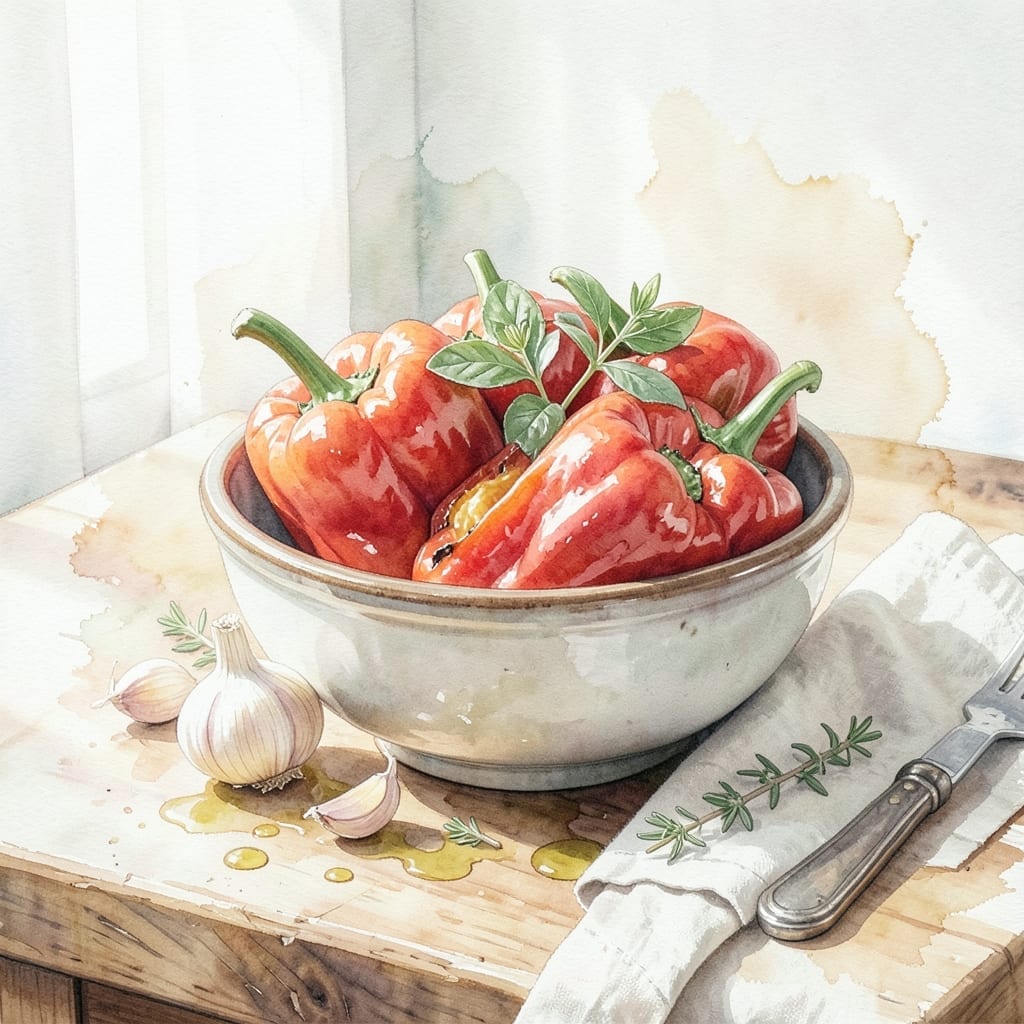
There’s a simple magic in transforming fresh bell peppers into something deeply flavorful with just heat and time.
Roasting brings out their natural sweetness while adding a smoky depth that raw peppers simply can’t match. The process is straightforward—high heat, a little oil, and patience allow the edges to char beautifully.
You’ll end up with tender, blistered peppers that are perfect as a side or a base for other dishes. Their caramelized flavor pairs well with almost anything, from salads to sandwiches.
This method delivers consistent results with minimal effort, making it a reliable technique for any home cook.
Ingredients for Recipe for Roasted Bell Peppers
Fresh bell peppers, oil, and a few aromatic touches create this flavorful dish with ease.
| Ingredient | Amount | Notes |
|---|---|---|
| Bell Peppers 🌶️ | 4 whole | Mixed colors preferred for presentation |
| Extra-Virgin Olive Oil 🫒 | 3 tbsp | Divided for coating and finishing |
| Sea Salt 🧂 | 1 tsp | Flaky variety for texture |
| Freshly Ground Black Pepper 🌶️ | ½ tsp | Coarse grind preferred |
| Garlic Cloves 🧄 | 4 cloves | Lightly crushed, skin on |
| Fresh Thyme Sprigs 🌿 | 4 sprigs | Optional for aromatic depth |
| Fresh Rosemary Sprigs 🌿 | 2 sprigs | Optional for aromatic depth |
| Balsamic Vinegar 💧 | 1 tbsp | Aged for complexity |
| Red Pepper Flakes 🔥 | ¼ tsp | Adjust to spice preference |
| Lemon Zest 🍋 | 1 tsp | Finely grated for brightness |
| Smoked Paprika 🌶️ | ½ tsp | Enhances charred flavor |
The bell peppers are the foundation here. Choose firm, glossy peppers with unblemished skin for even roasting. Organic options from Whole Foods or local farmers markets often have superior flavor. Mix colors for visual appeal—red, yellow, and orange varieties caramelize beautifully. If using green peppers, add them 5-10 minutes earlier as they take longer to soften.
No fresh herbs? Dried thyme or rosemary at one-third the amount works in a pinch. Short on olive oil? Avocado oil handles the high heat well. For extra depth, add a splash of soy sauce or tamari before roasting. If you prefer a touch of sweetness, a drizzle of maple syrup after roasting complements the smoky notes (frozen works in a pinch).
Roasted peppers keep well in the fridge for 4-5 days in an airtight container. They also freeze beautifully for up to 3 months—just thaw and pat dry before using. The flavor intensifies over time, making leftovers even more delicious.
Why You’ll Love This Recipe
- One Pan Wonder: Honestly, it’s just tossing pepper slices with olive oil, salt, and garlic—then letting the oven do the work.
- Caramelized Magic: The edges get sweet and jammy while the garlic mellows into something ridiculously good.
- Meal Prep MVP: I roast a big batch on Sunday and use them in sandwiches, pasta, or straight from the fridge all week.
- Budget Keeper: Bell peppers are cheap, especially in season, and this turns them into something I crave daily.
Step-by-Step Instructions for Roasted Bell Peppers
This method guarantees perfectly charred, tender peppers with concentrated sweetness and smoky depth.
Step 1: Prepare and Season the Bell Peppers
Remove the stems, seeds, and membranes from the 4 whole Bell Peppers and cut them into even 1-inch strips. I like to keep the pieces uniform so they cook at the same rate. Arrange them on a large baking sheet in a single layer, ensuring they don’t overlap—this prevents steaming and encourages caramelization.
Drizzle the peppers with 2 tbsp Extra-Virgin Olive Oil (reserving 1 tbsp for later) and sprinkle evenly with 1 tsp Sea Salt, 0.5 tsp Freshly Ground Black Pepper, 1 tsp Lemon Zest, and 0.5 tsp Smoked Paprika. Toss gently to coat, then spread them back into a single layer. The smoked paprika adds that signature depth that complements the natural sweetness of the peppers.
Step 2: Add Aromatics and Initial Roast
Scatter the 4 cloves Garlic Cloves (lightly crushed with skin on) and 4 sprigs Fresh Thyme Sprigs over the peppers. If using, add the 2 sprigs Fresh Rosemary Sprigs as well. These aromatics will infuse the peppers as they roast, creating layers of flavor without overpowering the dish.
Place the baking sheet in the center rack of a preheated 425°F oven. Roast for 15 minutes, then carefully flip the peppers using a spatula. You should see the edges beginning to darken and blister—this is the caramelization process starting, which brings out their natural sugars.
Step 3: Finish Roasting with Balsamic Glaze
After flipping, drizzle the 1 tbsp Balsamic Vinegar and the remaining 1 tbsp Extra-Virgin Olive Oil over the peppers. Sprinkle with 0.25 tsp Red Pepper Flakes for a subtle heat. Return to the oven and roast for another 10-15 minutes until the peppers are deeply charred at the edges and tender throughout.
The balsamic vinegar will reduce slightly, creating a glossy glaze that enhances the peppers’ natural sweetness. The red pepper flakes add a gentle warmth that balances the dish. Keep an eye on them during these final minutes—they can go from perfectly charred to burnt quickly.
Step 4: Rest and Serve
Remove the baking sheet from the oven and discard the garlic cloves, thyme, and rosemary sprigs. The garlic will have mellowed and sweetened during roasting, and its essence will have infused the peppers beautifully. Let the peppers rest for 5 minutes on the baking sheet—they’ll continue to cook slightly from the residual heat.
Transfer to a serving dish while still warm. The peppers should have a glossy sheen from the balsamic glaze and a deep, smoky aroma. Serve as a side dish, in sandwiches, or as part of a charcuterie board. The flavors will intensify as they cool slightly, so they’re delicious served warm or at room temperature.
Pro Tips For Making Recipe For Roasted Bell Peppers
- Char the Skins: Roast at 450°F until skins blacken in spots—about 20-25 minutes. I learned this the hard way: pale peppers taste raw, no matter how long they’ve been in the oven.
- Slice Evenly: Cut peppers into 1-inch strips so they cook at the same rate. Sounds fussy, but uneven pieces mean half are burnt while the other half steam.
- Skip the Overcrowding: Give them space on the tray—if they’re packed tight, they’ll steam instead of roast. After burning three batches, I finally figured out this was the culprit.
- Add Garlic Late: Toss minced garlic with the peppers after roasting, not before. My grandmother swore by this, and she was right: it keeps the garlic from turning bitter.
Perfect Pairings for This recipe for roasted bell peppers
Side Dish Ideas
These peppers pair beautifully with grilled chicken or seared steak, where their sweetness balances savory proteins. I love serving them alongside quinoa or couscous to soak up the balsamic glaze. A sprinkle of feta cheese adds a tangy contrast. 🥗
Bread and Cheese
For a Mediterranean vibe, serve with warm pita bread and hummus. The charred edges of the peppers complement creamy cheeses like burgoo or goat cheese on a charcuterie board. I often add them to bruschetta with fresh basil.
Wine Pairings
A crisp Sauvignon Blanc from New Zealand cuts through the smokiness with its citrus notes. For red lovers, a light Pinot Noir from Oregon works wonderfully. I prefer Kim Crawford Sauvignon Blanc for its bright acidity. 🍷
Salad Enhancements
Toss cooled peppers into arugula or spinach salads with shaved Parmesan and toasted pine nuts. Their sweetness contrasts nicely with bitter greens. A drizzle of lemon vinaigrette enhances the flavors beautifully.
Nutrition Facts
Frequently Asked Questions
What’s the best oven temperature for roasting?
Use 425°F for ideal charring and caramelization. This high heat ensures the edges blister beautifully while keeping the flesh tender. Lower temperatures won’t achieve the same smoky depth.
Can I use frozen peppers instead?
Fresh works best, but frozen peppers can be used if thawed and patted dry first. They may release more moisture, so extend roasting time by 5-10 minutes for proper charring.
How do I prevent them from getting soggy?
Avoid crowding the baking sheet – space them in a single layer. Also, flip halfway through the 25-30 minute cooking time to ensure even browning and moisture evaporation.
When should I add the balsamic vinegar?
Drizzle it during the final 10-15 minutes of roasting. Adding it too early can cause burning, while this timing allows it to reduce into a glossy glaze.

- BBQ Sausage Recipe Oven: Smoky Depth Without the Grill - September 28, 2026
- BBQ Chicken Bowl Recipe Rice: Smoky Sweetness Over Fluffy Grains - September 28, 2026
- Beef Cutlet Recipe Ideas: Crispy Breaded Patties With Bold Seasonings - September 28, 2026