
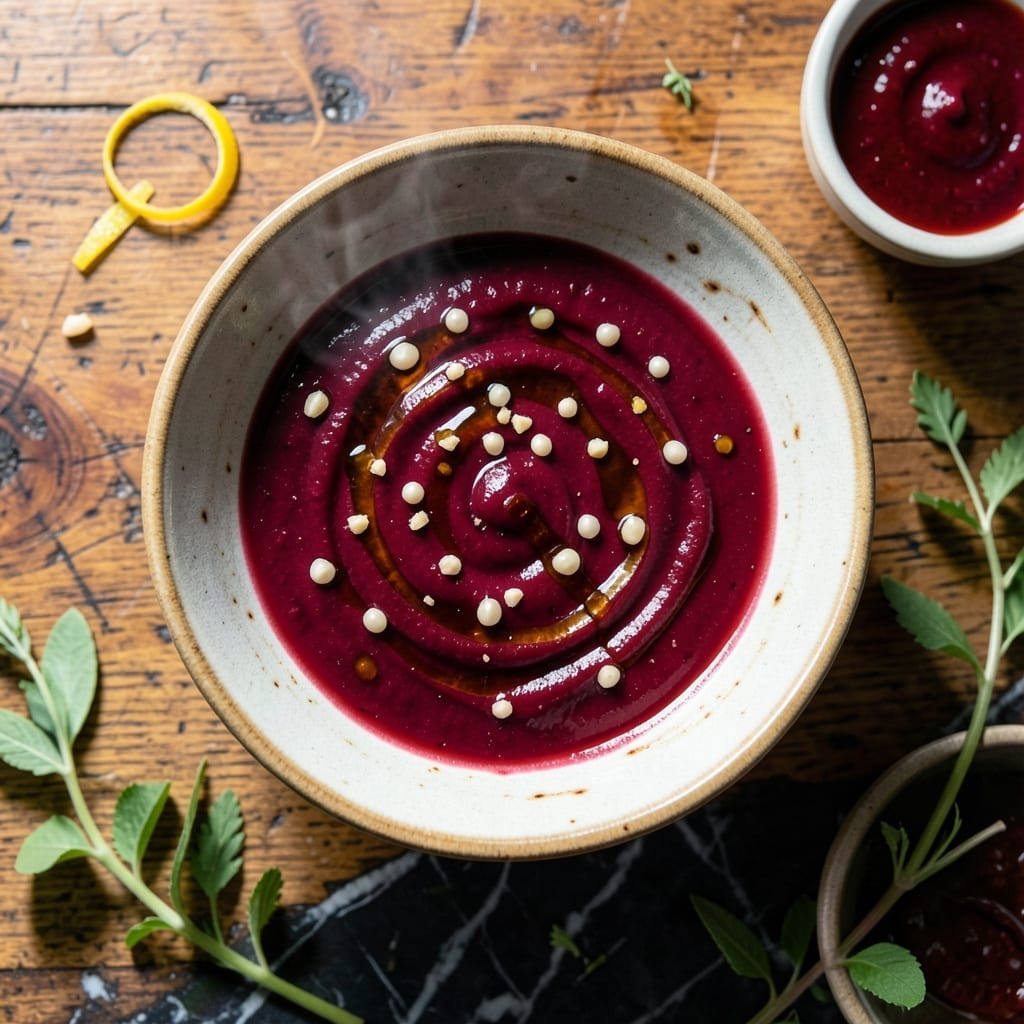
This red wine vinegar dressing delivers a bright, tangy punch that transforms any salad. The perfect balance of acidity and richness creates an emulsion that clings beautifully to greens.
With just a few pantry staples and 5 minutes of effort, you’ll have a professional-quality dressing ready to elevate your meals. Store in the fridge for up to two weeks.
Ingredients for Recipe for Salad Dressing with Red Wine Vinegar
A handful of pantry staples creates this bright, tangy dressing in minutes.
| Ingredient | Amount | Notes |
|---|---|---|
| Red Wine Vinegar 🍷 | ⅓ cup | Good quality for best flavor |
| Extra-Virgin Olive Oil 🫒 | ¾ cup | High quality, fruity finish |
| Dijon Mustard 🟡 | 1 tbsp | Smooth, not grainy variety |
| Maple Syrup 🍁 | 1 tbsp | Or substitute agave nectar |
| Garlic Cloves 🧄 | 2 cloves | Minced or pressed fresh |
| Shallot 🧅 | 1 whole | Finely minced for mild bite |
| Sea Salt 🧂 | ½ tsp | Fine grain for even distribution |
| Black Pepper 🌶️ | ¼ tsp | Freshly cracked preferred |
| Dried Oregano 🍃 | ¼ tsp | Optional for herbal note |
The vinegar sets the tone here. Look for a good red wine vinegar—imported Italian or Spanish brands like Colavita or Mantova have that perfect sharpness without harshness. The olive oil should be something you’d happily drizzle on bread (I splurge on California Olive Ranch for dressings). Fresh garlic and shallot are non-negotiable—they add depth that dried just can’t match.
No red wine vinegar? Apple cider vinegar works in a pinch, but it’s fruitier. Skip the honey and stick with maple syrup or agave to keep it vegan. Dijon mustard is ideal, but regular yellow mustard at half the amount gets you close. The shallot can be swapped for red onion, just use half as much. For extra richness, a pinch of nutritional yeast adds a nice umami kick.
This keeps beautifully for 2 weeks in the fridge. The flavors meld and mellow over time—day two is often better than day one. Shake before each use since the ingredients will separate. For longer storage, freeze in ice cube trays (it won’t emulsify as well after thawing, but still tastes great).
Why You’ll Love This Recipe
- five-minute fix: I just whisk the vinegar, oil, mustard, maple, and garlic in a jar—no chopping, no fuss.
- Punch of flavor: The sharp vinegar and sweet maple balance so well it turns plain greens into something I crave.
- Dressing for days: This keeps in the fridge for a week, so I can drizzle it on salads, grains, or roasted veggies anytime.
- Pantry hero: Every ingredient is already in my kitchen, and it costs pennies compared to store-bought bottles.
Step-by-Step Instructions for Salad Dressing With Red Wine Vinegar
Here’s my foolproof method for creating a perfect, creamy emulsion every time.
Step 1: Prepare the Aromatic Base
Finely mince the 1 whole Shallot until you have about 2 tablespoons of fine dice. I like to soak these in the 0.33 cup Red Wine Vinegar for 10 minutes—this mellows the shallot’s sharp bite while infusing the vinegar with subtle allium flavor.
Meanwhile, mince or press the 2 cloves Garlic Cloves. Fresh garlic is non-negotiable here; the pre-minced stuff lacks the vibrant punch needed to balance the vinegar’s acidity. Add this to the shallot-vinegar mixture after the 10 minutes have passed.
Step 2: Create the Emulsion Foundation
In a medium bowl, combine the 1 tbsp Dijon Mustard with the 1 tbsp Maple Syrup. The mustard acts as your primary emulsifier, while the maple syrup adds depth and counters the vinegar’s sharpness. Whisk these together until smooth and slightly thickened.
Now add the 0.33 cup Red Wine Vinegar with its shallot and garlic infusion. The acidity will thin the mixture slightly, but this is exactly what you want. Whisk vigorously for 20-30 seconds until the mixture appears uniform and slightly opaque.
Step 3: Slowly Incorporate the Oil
Here’s the technique that ensures a stable emulsion: drizzle the 0.75 cup Extra-Virgin Olive Oil in a very thin, steady stream while whisking constantly. Start with just a few drops at a time, then gradually increase to a thin stream as the emulsion begins to form.
You’ll notice the dressing start to thicken and turn a pale, creamy color. If it separates at any point, stop adding oil and whisk more vigorously until it comes back together. This process should take 3-4 minutes total. Use a good quality oil here—the flavor really shines through.
Step 4: Season and Adjust to Taste
Add the 0.5 tsp Sea Salt, 0.25 tsp Black Pepper, and 0.25 tsp Dried Oregano. The oregano adds a subtle herbal note that complements the dressing’s brightness. Whisk these in thoroughly and taste.
At this point, you might want to adjust the balance. If it’s too sharp, add a touch more maple syrup. If it needs more body, whisk in a bit more mustard. The dressing should coat the back of a spoon but still be pourable. Let it sit for 5 minutes to allow the flavors to meld before using.
Pro Tips For Making Recipe For Salad Dressing With Red Wine Vinegar
- Whisk Vigorously: I learned this the hard way—drizzle the olive oil in slowly while whisking hard to emulsify the dressing, or it’ll separate before you even toss the salad.
- Mince the Garlic Fine: Skip the garlic press if you want, but make sure it’s minced to tiny bits so it distributes evenly and doesn’t overpower a single bite.
- Balance the Sweetness: Maple syrup can be heavy-handed; start with half the amount, taste, and add more if needed—you can’t take it out once it’s in.
- Use Room-Temp Oil: Cold olive oil thickens and resists blending; let it sit out for 10 minutes first for a smoother, more cohesive dressing.
Storing and Reheating This Recipe
Refrigerator Storage
Transfer your dressing to a clean glass jar or bottle with a tight-fitting lid—I prefer swing-top bottles for easy pouring. It will keep beautifully in the fridge at 40°F or below for up to 2 weeks. The flavors actually improve after 24-48 hours as they meld together. ❄️
Shake Before Use
Natural separation is normal with homemade emulsions. Simply shake vigorously for 10-15 seconds before each use to reincorporate the oil and vinegar. If it’s particularly thick, let it sit at room temperature for 10 minutes before shaking.
Freezing Option
For longer storage, freeze in ice cube trays for up to 3 months. Once frozen, transfer cubes to a freezer bag. Note that thawed dressing may not emulsify as perfectly, but it’s still delicious for cooking or marinades.
Room Temperature
Never leave your dressing at room temperature for more than 2 hours. The garlic and shallot create a food safety risk if left unrefrigerated. Always return the jar to the fridge immediately after use.
Reviving Separation
If your dressing separates completely, don’t discard it! Simply vigorously whisk in 1 tsp warm water or mustard to help re-emulsify. This often brings it back to its creamy consistency.
Labeling Tip
I recommend labeling your jar with the date made. With all the vinegar and oil, it’s easy to forget how old it is. Use a permanent marker or label maker for clarity. 💡
Frequently Asked Questions
Can I use balsamic vinegar instead of red wine?
Yes, but expect a sweeter, darker flavor. Balsamic’s thicker texture and caramel notes will change the profile, so reduce sweetener by half. The tangy brightness of red wine vinegar is unique, though!
Why did my dressing separate?
Separation happens if oil was added too quickly or not whisked enough. Fix it by whisking in 1 tsp warm water or extra mustard to rebind the emulsion. Shake well before each use.
How can I make it creamier without dairy?
Blend in 1-2 tbsp tahini or 1 tbsp aquafaba for a richer texture. Both add body while keeping it vegan. Whisk thoroughly for best results.
Is it safe to leave out overnight?
No—garlic and shallot can spoil at room temperature. Always refrigerate within 2 hours of making. For picnics, use an insulated cooler with ice packs.
Nutrition Facts

- BBQ Sausage Recipe Oven: Smoky Depth Without the Grill - September 28, 2026
- BBQ Chicken Bowl Recipe Rice: Smoky Sweetness Over Fluffy Grains - September 28, 2026
- Beef Cutlet Recipe Ideas: Crispy Breaded Patties With Bold Seasonings - September 28, 2026