
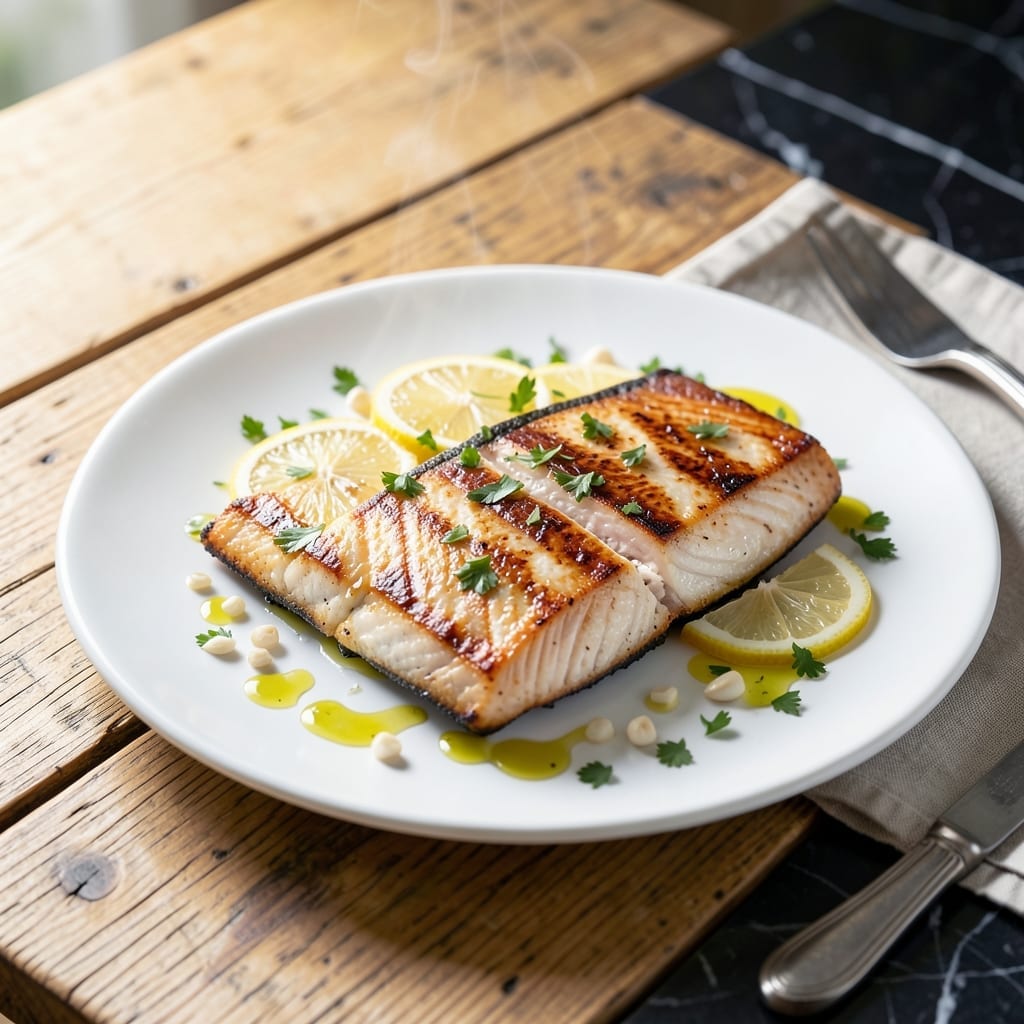
This striped bass recipe delivers flaky, tender fish with a bright lemon-herb finish that highlights the fish’s natural sweetness. The key is precise cooking to maintain its delicate texture.
I’ve perfected a method that ensures the fish stays moist while developing a subtle crust. A simple pan-sear followed by a finish in the oven guarantees even cooking without overpowering the mild flavor.
The lemon-herb butter sauce adds a vibrant touch, complementing the fish’s clean taste. It’s a dish that feels restaurant-worthy but is surprisingly straightforward to prepare at home.
Serve it with roasted vegetables or a light salad for a meal that’s elegant yet approachable. Here’s how to get it right every time.
Ingredients for Recipe for Striped Bass
Elegant yet simple ingredients create this flaky white fish with bright citrus and herbs.
| Ingredient | Amount | Notes |
|---|---|---|
| Striped Bass Fillets 🐟 | 1 ½ lb | Skin-on, boneless, about 1-inch thick |
| Unsalted Butter 🧈 | ½ cup | Divided for cooking and sauce |
| Extra-Virgin Olive Oil 🫒 | 2 tbsp | For pan-searing fish |
| Garlic Cloves 🧄 | 3 cloves | Minced finely for sauce |
| Fresh Lemon Juice 🍋 | ¼ cup | About 2-3 lemons |
| Lemon Zest 🍋 | 1 tbsp | From 1-2 lemons |
| Fresh Parsley 🌿 | ¼ cup | Finely chopped for garnish |
| Fresh Dill 🌿 | 2 tbsp | Chopped for sauce |
| Fresh Thyme Sprigs 🌿 | 3 sprigs | Leaves stripped for sauce |
| Kosher Salt 🧂 | 1 tsp | Diamond Crystal preferred |
| Freshly Ground Black Pepper 🌶️ | ½ tsp | For seasoning both sides |
| All-Purpose Flour 🌾 | ¼ cup | For light dusting before searing |
| Dry White Wine 🍷 | ¼ cup | Sauvignon Blanc or Pinot Grigio |
The striped bass quality is non-negotiable. Wild-caught from a reputable seafood counter ensures the cleanest flavor and firmest texture. Ask for skin-on fillets about 1-inch thick—they hold up better to cooking. Whole Foods or local fishmongers are reliable sources. If buying pre-portioned, ensure the fillets are uniform in thickness for even cooking. The butter should be high-fat European-style for superior richness in the sauce.
No fresh herbs? Dried at one-third the quantity works in a pinch, but fresh is ideal. White wine can be replaced with additional lemon juice and a splash of fish stock. If avoiding wine entirely, vermouth adds similar depth. The flour dusting is optional but helps create that subtle crust—cornstarch can substitute for a gluten-free version. Don’t skip the lemon zest; it adds essential aromatic brightness.
Cook the fish immediately after purchasing for best texture. The sauce can be made 1 day ahead and reheated gently. Leftovers keep in the fridge for 2-3 days, though the fish is best served fresh. Store raw bass in the coldest part of your refrigerator, uncovered, and use within 24 hours for optimal quality.
Why You’ll Love This Recipe
- Under 20 Minutes: I can have this striped bass on the table faster than ordering takeout. Just sear the fillets in butter and olive oil, then finish with garlic and lemon.
- Buttery Lemon Burst: Honestly, the combo of melted butter, garlic, and that fresh lemon squeeze over flaky bass is ridiculously good.
- Weeknight Hero: It’s my go-to for busy evenings—impressive enough for guests but simple enough for a Tuesday. (Yes, even on a Tuesday night)
- Minimal Cleanup: One pan, a spatula, and a lemon squeezer. That’s all I’m washing after this meal.
Step-by-Step Instructions for Striped Bass
Master the technique for perfectly cooked fish with crisp skin and delicate, flaky flesh.
Step 1: Prepare and Season the Fillets
Pat the striped bass fillets completely dry with paper towels. This is non-negotiable—moisture prevents proper searing and crisp skin development. Season both sides evenly with the kosher salt and freshly ground black pepper, pressing gently to adhere.
Lightly dust the skin side with all-purpose flour, tapping off any excess. The flour creates a fine crust that enhances crispiness without overpowering the delicate fish flavor. Let the seasoned fillets rest at room temperature for 10 minutes while you prepare the pan.
Step 2: Sear the Fillets Skin-Side Down
Heat extra-virgin olive oil in a large skillet over medium-high heat until it shimmers but does not smoke. Carefully place the fillets skin-side down in the hot oil. Press down gently with a fish spatula for the first 30 seconds to ensure full contact with the pan.
Cook undisturbed for 4-5 minutes until the skin is golden brown and crisp and the edges appear opaque. Resist the urge to peek—premature movement disrupts the crust formation. The fish will release easily from the pan when properly seared.
Step 3: Flip and Finish Cooking
Add 2 tablespoons of unsalted butter to the pan, then carefully flip the fillets. Cook for an additional 2-3 minutes until the fish is opaque throughout and flakes easily when tested with a fork. The internal temperature should reach 145°F.
Transfer the cooked fillets to a warm plate, skin-side up, to preserve crispness. Tent loosely with foil to maintain warmth while you prepare the sauce in the same pan.
Step 4: Create the Lemon-Herb Sauce
Reduce heat to medium and add the minced garlic cloves to the pan. Sauté for 30 seconds until fragrant but not browned. Pour in dry white wine and simmer for 2 minutes until reduced by half, scraping up any browned bits.
Stir in the remaining unsalted butter, fresh lemon juice, lemon zest, fresh dill, and leaves stripped from fresh thyme sprigs. Cook for 1 minute until the butter melts and the sauce emulsifies. Taste and adjust seasoning if needed.
Step 5: Plate and Garnish
Spoon the lemon-herb sauce over the striped bass fillets. Garnish with finely chopped fresh parsley for a pop of color and freshness. The acidity from the lemon juice balances the richness of the butter, while the herbs add aromatic complexity.
Serve immediately while the fish is hot and the skin remains crisp. Each bite should deliver tender, flaky fish with bright, vibrant sauce that complements rather than overpowers the natural sweetness of the striped bass.
Pro Tips For Making Recipe For Striped Bass
- Pat Fillets Dry: Use paper towels to thoroughly dry the striped bass fillets before cooking—this guarantees a crispy skin and prevents splattering when they hit the hot pan.
- Hot Pan First: Heat the olive oil in your skillet until it shimmers but doesn’t smoke, then add the butter so it foams but doesn’t burn. I learned this the hard way after ruining two fillets in a lukewarm pan.
- Don’t Overcrowd: Cook the fillets in batches if needed—crowding the pan steams the fish instead of searing it, and you’ll end up with soggy skin.
- Zest the Lemon: Along with the juice, add a teaspoon of lemon zest to the butter and garlic for a brighter, more layered flavor that actually changes the outcome.
Wine and Beer Pairings for recipe for striped bass
White Wine Pairings
A crisp Sauvignon Blanc from New Zealand cuts through the butter sauce beautifully with its bright acidity and citrus notes. I love Kim Crawford for its grapefruit and lime profile that matches the lemon in this dish. 🍷
Light Red Options
For red wine lovers, a chilled Pinot Noir from Oregon works surprisingly well. Try Domaine Drouhin—its earthy notes and bright acidity won’t overpower the delicate fish. Serve slightly cooler than room temperature.
Sparkling Choices
A dry sparkling wine like Prosecco or Cava offers effervescence that cleanses your palate between bites. The bubbles enhance the flaky texture. I recommend La Marca Prosecco for its consistent quality and approachable price point.
Craft Beer Pairings
A light Belgian-style witbier with citrus and coriander notes complements the lemon-herb sauce perfectly. Blue Moon or Hoegaarden are widely available options. The wheat base adds a subtle creaminess that pairs well with the butter. 🍺
Non-Alcoholic Options
For non-drinkers, sparkling lemonade with fresh mint provides a refreshing alternative. The citrus mirrors the dish’s flavors while the bubbles offer that palate-cleansing effect. I make mine with Meyers lemons for extra brightness.
Nutrition Facts
Frequently Asked Questions
What’s the best way to ensure crispy skin?
Pat fillets completely dry and press gently with a spatula for the first 30 seconds of cooking. Cook undisturbed over medium-high heat for 4-5 minutes until golden.
Can I use a different type of fish?
Yes! Try branzino, black sea bass, or halibut with the same method. Adjust cooking time based on thickness. Thinner fillets may need just 2-3 minutes per side.
How do I know when it’s done?
The fish should reach an internal temp of 145°F and flake easily with a fork. Opaque edges and crisp skin are visual cues. Never overcook—it’s ready when it releases from the pan.
Can I make the sauce ahead?
Prepare sauce up to 1 day ahead and reheat gently over low heat. Avoid boiling to prevent separating. Stir in fresh herbs just before serving.

- BBQ Sausage Recipe Oven: Smoky Depth Without the Grill - September 28, 2026
- BBQ Chicken Bowl Recipe Rice: Smoky Sweetness Over Fluffy Grains - September 28, 2026
- Beef Cutlet Recipe Ideas: Crispy Breaded Patties With Bold Seasonings - September 28, 2026