
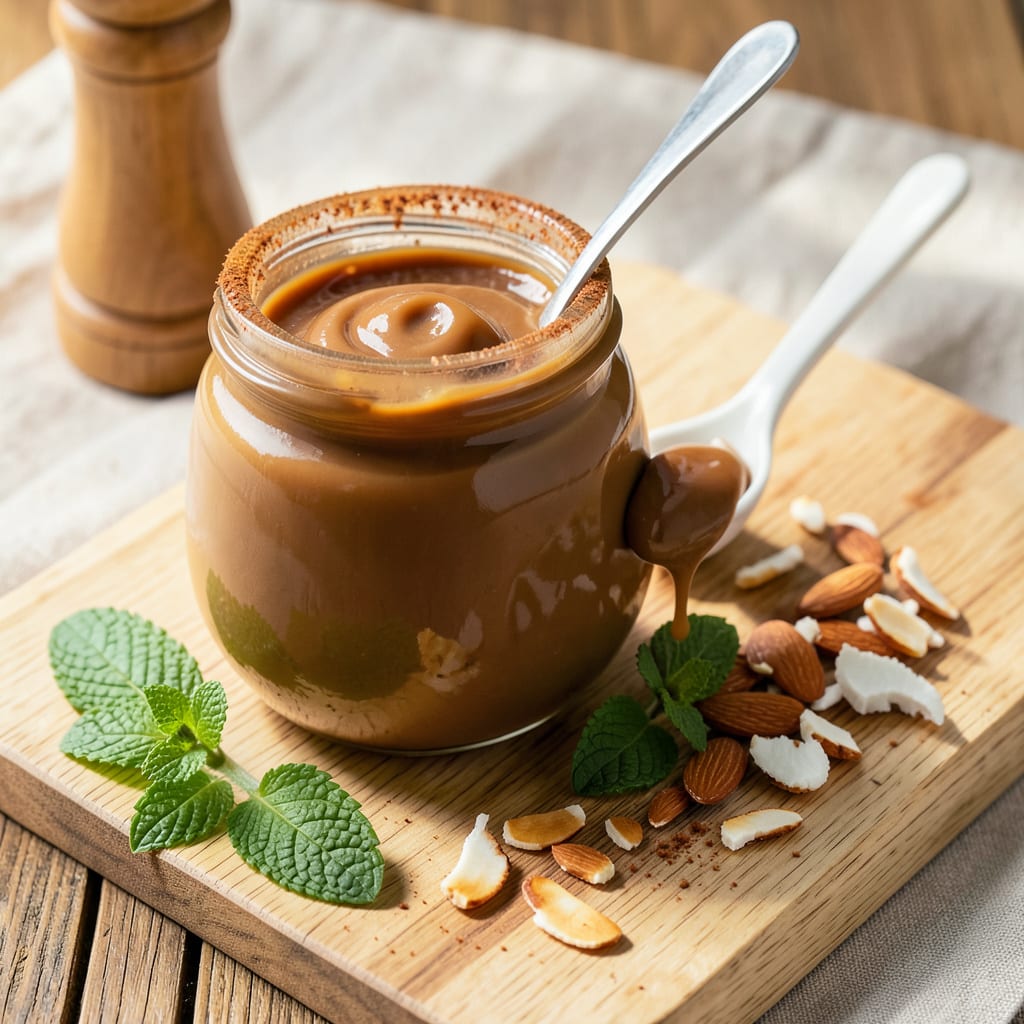
Combine 2 cups of warm unsweetened almond milk with 1/4 cup powdered erythritol and 1 tablespoon butter, then simmer until reduced by half. This creates a rich, creamy sugar-free substitute perfect for desserts and coffee.
This method transforms simple ingredients into a velvety, concentrated base that mimics traditional sweetened condensed milk. The butter provides essential fat for body and mouthfeel, while the erythritol delivers sweetness without spiking blood sugar. 🔥 I’ve found this works exceptionally well in recipes where you need that signature caramelized richness—think keto fudge, sugar-free tres leches cake, or even as a luxurious coffee additive that won’t derail your dietary goals.
What’s particularly clever about this approach is how the reduction process intensifies the natural nuttiness of almond milk, creating depth of flavor that plain dairy alternatives often lack. The simmering time allows the sweetener to fully dissolve and integrate, preventing that grainy texture you sometimes get with sugar substitutes. ✨
💡 In This Article
- How Sugar-Free Condensed Milk Achieves Creamy Texture
- Best Uses for Homemade Sugar-Free Condensed Milk
How Sugar-Free Condensed Milk Achieves Creamy Texture
The magic happens through controlled reduction and fat emulsification. When you simmer almond milk, the water content evaporates at 212°F, concentrating the remaining solids by about 50%. This mimics traditional condensed milk’s thickness, but without dairy’s casein proteins.
The butter’s milkfat (about 80% fat content) creates tiny droplets that suspend evenly throughout the liquid, preventing separation. 🔥
Erythritol plays a crucial role beyond sweetness. Unlike granulated sweeteners, powdered erythritol dissolves completely at 140°F, integrating seamlessly into the liquid matrix. Its molecular structure (C₄H₁₀O₄) is about 70% as sweet as sucrose by weight, allowing precise sweetness control without aftertaste.
The reduction process also develops subtle caramel notes through Maillard reactions between the milk proteins and sweetener. ✨
Here’s what most don’t realize: the butter’s phospholipids act as natural emulsifiers. These molecules have hydrophilic heads and hydrophobic tails that bridge water and fat molecules. As the mixture reduces, they form stable micelle structures that maintain the creamy mouthfeel even when cooled.
This is why your final product won’t separate like some homemade nut milks do. 🌟
The simmering time (typically 20-30 minutes) allows for two critical transformations. First, the almond milk’s natural pectin (about 0.5-1% concentration) thickens as water evaporates. Second, the butterfat undergoes partial crystallization, creating that signature “body” you expect from condensed milk. The result is a viscosity measuring around 2,500-3,000 cP—similar to commercial condensed milk’s consistency. ⚡
Temperature control is everything. Keeping the simmer at 180-190°F prevents scorching while allowing steady reduction. Too hot and the almond milk proteins can coagulate; too cool and you’ll need excessive time for proper thickening. The butter’s smoke point (300°F) gives you a safe buffer, but constant stirring is key to even heat distribution. 💫
For comparison, traditional condensed milk achieves its texture through 60% sugar content acting as a preservative and thickener. This sugar-free version replicates that effect through the combined action of reduced liquid volume, emulsified fats, and the sweetener’s hygroscopic properties. The end product should coat the back of a spoon and drip slowly in thick ribbons.
💛

- BBQ Sausage Recipe Oven: Smoky Depth Without the Grill - September 28, 2026
- BBQ Chicken Bowl Recipe Rice: Smoky Sweetness Over Fluffy Grains - September 28, 2026
- Beef Cutlet Recipe Ideas: Crispy Breaded Patties With Bold Seasonings - September 28, 2026