
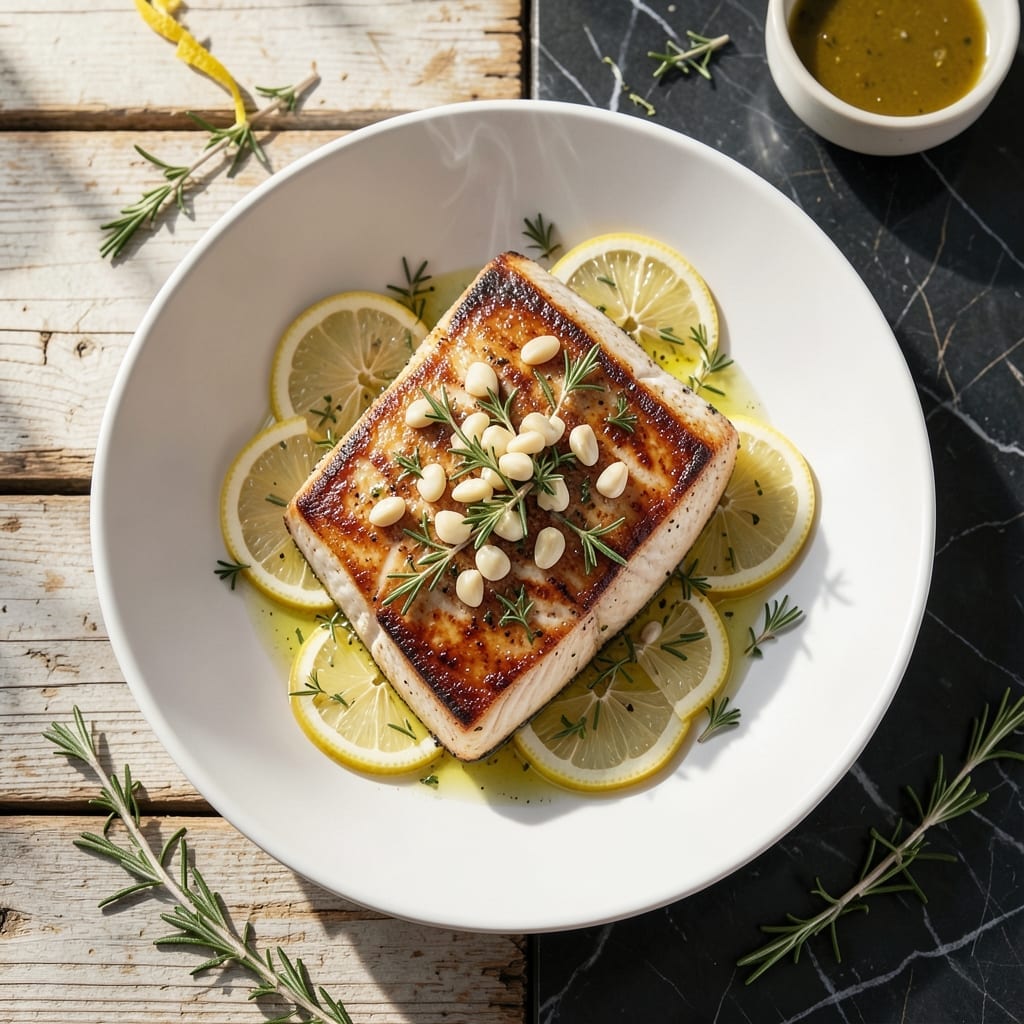
This baked swordfish transforms simple ingredients into a restaurant-quality main course with minimal effort. The oven does most of the work, sealing in moisture while developing rich flavor.
You’ll achieve tender, flaky fish infused with bright lemon and aromatic herbs. Perfect for an elegant weeknight dinner or special occasion.
Ingredients for Recipe for Swordfish Baked
Restaurant-quality fish requires just these fresh, flavorful ingredients for an elegant meal.
| Ingredient | Amount | Notes |
|---|---|---|
| Swordfish Steaks 🐟 | 1 ½ lb | Skin-on or skinless, about 1-inch thick |
| Extra-Virgin Olive Oil 🫒 | 3 tbsp | Divided for fish and herbs |
| Fresh Lemon 🍋 | 1 whole | Zested and juiced |
| Garlic Cloves 🧄 | 4 cloves | Minced or thinly sliced |
| Fresh Thyme Sprigs 🌿 | 6 sprigs | Leaves stripped from stems |
| Fresh Rosemary Sprigs 🌿 | 2 sprigs | Finely chopped |
| Dijon Mustard 🟡 | 1 tbsp | For a tangy crust |
| Kosher Salt 🧂 | 1 tsp | Diamond Crystal preferred |
| Freshly Ground Black Pepper 🌶️ | ½ tsp | Coarse grind preferred |
| Dry White Wine 🍷 | ¼ cup | For deglazing and moisture |
| Unsalted Butter 🧈 | 2 tbsp | Melted for finishing |
| Fresh Parsley 🌿 | ¼ cup | Chopped, for garnish |
The swordfish is the star here—opt for wild-caught from a reputable seafood counter at Whole Foods or your local fishmonger. Look for steaks with vibrant color and no fishy odor. Thickness matters: aim for uniform 1-inch cuts to ensure even cooking. If the skin is on, ask them to scale it for you. The herbs should be fresh and fragrant, not wilted or browned.
No fresh thyme or rosemary? Dried herbs work at one-third the amount, but fresh is ideal for that bright, aromatic punch. Out of dry white wine? Substitute with seafood stock or additional lemon juice. The Dijon mustard adds a subtle tang—whole-grain mustard can be used for a rustic texture. For a dairy-free finish, swap the butter for extra-virgin olive oil.
Swordfish is best cooked fresh but can be stored in the fridge for 1-2 days before cooking. Leftovers (if any!) keep for 2-3 days in an airtight container. The herb mixture can be prepped a day ahead—store it covered in the fridge. Always bring the fish to room temperature before baking for even cooking.
Why You’ll Love This Recipe
- One Pan Wonder: I toss the swordfish with olive oil, lemon, and thyme on a single sheet pan—cleanup takes seconds.
- Zesty Garlic Punch: The garlic and lemon combo gives the fish a bright, bold kick that’s honestly irresistible.
- Dinner Party Star: I serve this for guests, and it always feels fancy without the fuss.
- Leftovers? Yes Please: The flavors deepen overnight, so tomorrow’s lunch tastes even better.
Step-by-Step Instructions for Baked Swordfish
Here is the method. Straightforward, tested, works every time.
Step 1: Prepare the Lemon-Herb Marinade
In a small bowl, combine the zest and juice from the fresh lemon with 1 tbsp Dijon mustard, 2 tbsp extra-virgin olive oil, the minced garlic cloves, and 1 tsp kosher salt. Finely chop the fresh rosemary sprigs and strip the leaves from the fresh thyme sprigs, then add them to the bowl.
Whisk the mixture until fully emulsified. The marinade should be fragrant with a balance of citrus brightness and herbal depth. This step infuses the swordfish with layered flavors while the acidity helps tenderize the dense flesh.
Step 2: Marinate and Prep the Swordfish
Pat the 1.5 lb swordfish steaks dry with paper towels. Place them in a shallow dish or baking pan and pour the marinade over, turning to coat evenly. Let them marinate at room temperature for 15-20 minutes—no longer, as the acid can begin to “cook” the fish.
While the fish marinates, preheat your oven to 400°F. Position a rack in the upper third of the oven to ensure even browning. Line a baking sheet with parchment paper or lightly grease it with some of the remaining 1 tbsp extra-virgin olive oil to prevent sticking.
Step 3: Bake the Swordfish to Flaky Perfection
Transfer the swordfish steaks to the prepared baking sheet, shaking off any excess marinade. Discard the used marinade to avoid cross-contamination. Bake for 10-12 minutes, or until the fish reaches an internal temperature of 145°F and flakes easily when tested with a fork.
The steaks should turn opaque and develop a light golden crust from the mustard and herbs. Avoid overbaking—swordfish becomes dry and tough when cooked beyond 145°F. If your steaks are thicker than 1 inch, add 1-2 minutes to the cooking time.
Step 4: Create the Wine-Butter Pan Sauce
Transfer the swordfish to a serving platter and tent loosely with foil to keep warm. Place the baking sheet on the stovetop over medium heat. Add the 0.25 cup dry white wine and scrape up any browned bits with a wooden spoon. Let the wine reduce by half, about 2-3 minutes.
Whisk in the 2 tbsp unsalted butter until melted and fully incorporated. The sauce should be glossy and lightly coat the back of a spoon. Pour this pan sauce over the swordfish steaks just before serving.
Step 5: Garnish and Serve Immediately
Sprinkle the 0.25 cup fresh parsley over the swordfish, using your fingers to rain it evenly across the steaks. The parsley adds a fresh, vibrant contrast to the rich, buttery sauce. Serve the swordfish immediately while hot, accompanied by the pan sauce spooned over each portion.
The ideal serving temperature is just above 140°F, when the fish is at its most tender and moist. Pair with a crisp white wine or lemon wedges for those who prefer an extra citrus note.
Pro Tips For Making Recipe For Swordfish Baked
- Dry the Steaks: Pat the swordfish steaks thoroughly dry with paper towels before seasoning. I learned this the hard way—wet fish steams instead of searing, and you’ll end up with a bland, soggy result.
- High Oven Heat: Preheat your oven to 425°F or higher. Swordfish needs a hot oven to cook through without drying out, and anything lower leaves it tough and rubbery.
- Don’t Overcrowd: Give each steak at least an inch of space on the baking sheet. Crowding traps steam, and your fish will poach instead of roast—skip the sadness and leave room.
- Zest the Lemon: Use the zest along with the juice for a brighter, more complex flavor. Sounds weird, but it works: the oils in the peel add a depth that juice alone can’t.
Regional Styles of These Flavors
Mediterranean Style
In Greece, they often bake swordfish with olive oil, oregano, and capers for a briny, herb-forward dish. I love adding Kalata olives and a sprinkle of feta cheese just before serving. The saltiness pairs beautifully with the rich fish. 💛
Sicilian Influence
Sicilian cooks layer swordfish with tomato sauce, potatoes, and black olives in a casserole dish. The potatoes absorb the tomato and fish juices, creating a hearty one-pan meal. I use San Marzano tomatoes for authentic flavor.
Provençal Approach
In Provence, swordfish is baked with a herbes de Provence blend, white wine, and fennel fronds. The anise-like fennel complements the fish’s natural sweetness. I add sliced fennel bulb to the baking dish for extra texture.
Spanish Twist
Spanish cooks often top swordfish with romesco sauce, a smoky blend of roasted red peppers and almonds. I spread a thin layer on the fish before baking and drizzle more on top when serving. 🔥
North African Flavors
Moroccan-style swordfish features cumin, coriander, and preserved lemon. I mix these spices with olive oil for a paste that coats the fish. The preserved lemon adds a unique tangy depth.
Frequently Asked Questions
What temperature should the oven be set to?
Preheat your oven to 400°F for perfect results. This high heat ensures a golden crust while keeping the interior moist and flaky. Position the rack in the upper third for even browning.
How do I know when it’s done?
The fish is ready when it reaches an internal temperature of 145°F and flakes easily with a fork. This typically takes 10-12 minutes for 1-inch thick steaks. Avoid overbaking to prevent dryness.
Can I use frozen swordfish?
Yes, but thaw it completely in the refrigerator overnight first. Pat it dry thoroughly before marinating to ensure the seasoning adheres properly. Never cook from frozen, as it leads to uneven cooking.
What’s the best way to prevent sticking?
Line your baking sheet with parchment paper or lightly grease it with 1 tbsp olive oil. This creates a non-stick surface and makes cleanup easier. The fish will release cleanly when done.
Nutrition Facts

- BBQ Sausage Recipe Oven: Smoky Depth Without the Grill - September 28, 2026
- BBQ Chicken Bowl Recipe Rice: Smoky Sweetness Over Fluffy Grains - September 28, 2026
- Beef Cutlet Recipe Ideas: Crispy Breaded Patties With Bold Seasonings - September 28, 2026