
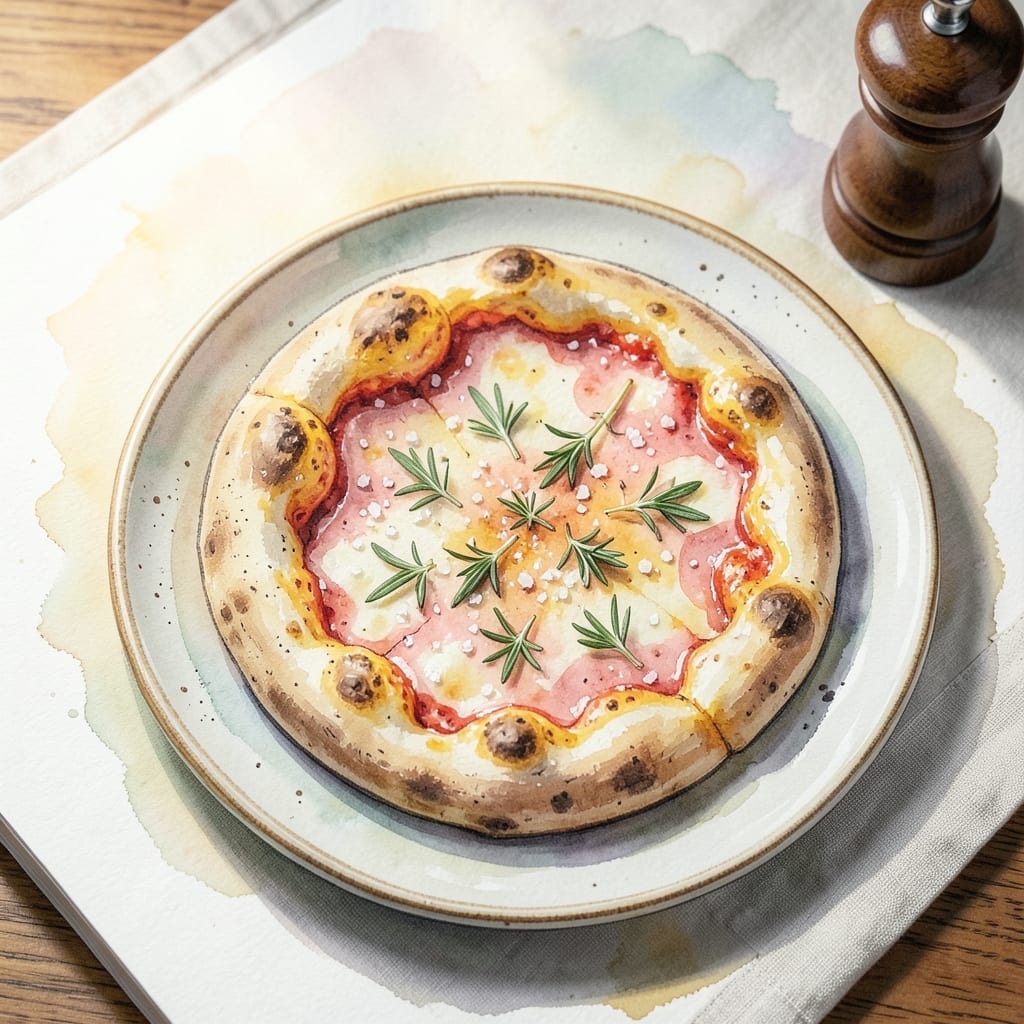
Achieving a crispy thin pizza crust at home requires precision and the right technique. This method delivers a base that shatters at the edges while maintaining a tender chew.
The dough comes together with just five basic ingredients and rests briefly before rolling. A hot oven and preheated baking surface create the ideal conditions for that signature crispy texture.
Baking at high heat ensures the crust develops color and structure quickly. The result is a perfectly thin base that holds toppings without sagging, with just the right amount of chew.
This recipe transforms ordinary pizza night into something extraordinary. The crust serves as the perfect foundation for any topping combination you choose.
Ingredients for Recipe for Thin Pizza Crust
Five essential ingredients craft a thin, crispy crust with chewy edges at home.
| Ingredient | Amount | Notes |
|---|---|---|
| Bread Flour 🌾 | 2 ½ cups | High protein for chewiness |
| Active Dry Yeast 🍞 | 1 tsp | Proofed in warm water |
| Sea Salt 🧂 | 1 tsp | Fine grain for even distribution |
| Extra-Virgin Olive Oil 🫒 | 2 tbsp | For dough elasticity |
| Warm Water 💧 | 1 cup | 110-115°F for yeast activation |
| Cornmeal 🌽 | 2 tbsp | For dusting baking surface |
| All-Purpose Flour 🌾 | ¼ cup | For dusting work surface |
| Honey 🍯 | 1 tsp | Optional, enhances browning |
The flour is critical here. Bread flour with its higher protein content develops the gluten structure needed for that perfect chew. King Arthur is a reliable brand available at most supermarkets. For yeast, SAF Instant Yeast or Fleischmann’s Active Dry both work well—just ensure it’s fresh (check the expiration date). The olive oil should be a quality extra-virgin for best flavor, but any neutral oil will do in a pinch.
No bread flour? Use all-purpose flour plus 1 tsp vital wheat gluten per cup. Short on yeast? You can use half the amount of instant yeast with no proofing required. For a slightly sweeter crust, increase the honey to 2 tsp. The warm water temperature is non-negotiable—too hot kills the yeast, too cold won’t activate it. A kitchen thermometer ensures precision.
The dough can rest in the fridge for up to 24 hours (covered tightly) for enhanced flavor development. Baked crusts keep at room temperature for 2 days in an airtight container, though they’re best served fresh. For freezing, par-bake the crusts and store for up to 1 month.
Why You’ll Love This Recipe
- One Bowl Wonder: I mix the bread flour, yeast, salt, and olive oil right in one bowl—no fancy equipment, just my hands and a little warm water.
- Crispy Perfection: The thin crust gets this incredible snap with every bite, and that hint of olive oil in the dough makes it taste like a real pizzeria.
- Endless Toppings: I’ve loaded it with everything from fresh mozzarella to leftover veggies, and it holds up beautifully—breakfast, lunch, or midnight snack.
Step-by-Step Instructions for Thin Pizza Crust
Master the technique for a perfectly crisp base with chewy edges every time.
Step 1: Activate the Yeast and Prepare Wet Ingredients
In a small bowl, combine the 1 cup Warm Water with the 1 tsp Active Dry Yeast and 1 tsp Honey. Stir gently and let it sit for 5-7 minutes until the mixture becomes foamy and cloudy. This visual confirmation means the yeast is active and ready to work.
I use 110-115°F water because anything hotter will kill the yeast, while cooler water won’t activate it properly. The honey provides a small amount of sugar to feed the yeast, ensuring a good rise.
Step 2: Mix and Knead the Dough
In a large mixing bowl, combine the 2.5 cups Bread Flour and 1 tsp Sea Salt. Create a well in the center and pour in the yeast mixture and 2 tbsp Extra-Virgin Olive Oil. Use a wooden spoon to mix until a shaggy dough forms.
Turn the dough out onto a surface dusted with the 0.25 cup All-Purpose Flour. Knead for 8-10 minutes until the dough is smooth and elastic. Bread flour’s high protein content gives the crust its chewy texture, while the olive oil adds flexibility and flavor.
You’ll know it’s ready when the dough springs back slowly when pressed with a finger. This elasticity is key for rolling thin without tearing.
Step 3: Let the Dough Rise
Place the dough in a lightly oiled bowl, cover with a damp towel, and let it rise in a warm, draft-free place for 1-2 hours, or until doubled in size. I like to place it near a sunny window or on top of the fridge for consistent warmth.
This resting period allows the gluten to relax, making the dough easier to roll out thinly. The yeast will also develop more complex flavors during this time. Don’t rush this step—proper rising is essential for texture and flavor.
Step 4: Shape and Pre-Bake the Crust
Preheat your oven to 475°F. Punch down the risen dough and divide it into portions based on your desired pizza size. On a surface dusted with 2 tbsp Cornmeal, roll each portion out to ⅛-inch thickness for an authentically thin crust.
The cornmeal prevents sticking while adding a subtle crunch to the finished crust. Transfer the rolled dough to a baking sheet or pizza peel dusted with more cornmeal.
For extra crispiness, pre-bake the crust for 5 minutes before adding toppings. Look for the edges to just begin turning light golden brown—this ensures the base will stay crisp even after adding sauce and toppings.
Pro Tips For Making Recipe For Thin Pizza Crust
- Proof the Yeast: Always activate your yeast in warm water (110°F) with a pinch of sugar first—I learned this the hard way after wasting flour on dough that never rose.
- Use Bread Flour: Skip all-purpose flour; bread flour’s higher protein content gives your thin crust that perfect chewy bite.
- Roll It Thin: Resist the urge to eyeball it—roll the dough to ⅛-inch thickness or less for a crispy, cracker-like base.
- Preheat the Pan: Heat your baking sheet or pizza stone in the oven for 10 minutes before adding the crust—this guarantees an even, golden finish without soggy spots.
Regional Styles of This Recipe
New York Style
For a classic New York thin crust, roll your dough to ⅛-inch thickness and bake at 500°F on a preheated pizza stone. The high heat creates a crisp base that still folds without breaking. I use King Arthur bread flour for that authentic chew. 🗺️
Neapolitan Approach
Neapolitan thin crust demands 00 flour and a hotter oven—550°F minimum. The dough should be stretched by hand to 1/16-inch thickness at the center, with a slightly thicker rim. Bake for just 60-90 seconds for authentic char.
Chicago Thin
Chicago’s version is crispier than Neapolitan but not as thin as New York. Roll to 1/8-inch thickness and bake at 475°F for 12-15 minutes. The secret is pressing the dough into a well-oiled pan before baking.
Roman Style
Roman thin crust, called pizza al taglio, is baked in rectangular trays. Roll to 1/8-inch thickness and bake at 450°F until golden. The longer bake time develops a cracker-like crispness. Cut into squares for serving.
California Thin
The West Coast version often uses whole wheat flour for a nuttier flavor. Roll to ⅛-inch thickness and bake at 475°F for 10-12 minutes. I like to add 1 tsp honey to the dough for subtle sweetness. ✨
Nutrition Facts
Frequently Asked Questions
Why use bread flour instead of all-purpose?
Bread flour has higher protein content, creating more gluten for that perfect chewy texture. All-purpose works in a pinch but won’t develop the same structure.
Can I make the dough ahead of time?
Yes! Let it rise in the fridge for up to 24 hours for deeper flavor. Bring to room temperature before rolling for easier handling.
What if my crust isn’t crispy enough?
Pre-bake at 475°F for 5 minutes before adding toppings. Also ensure your baking surface is preheated for maximum crispness.
How thin should I roll the dough?
Aim for ⅛-inch thickness for classic thin crust. Use a rolling pin for evenness, or stretch by hand for a rustic shape.

- BBQ Sausage Recipe Oven: Smoky Depth Without the Grill - September 28, 2026
- BBQ Chicken Bowl Recipe Rice: Smoky Sweetness Over Fluffy Grains - September 28, 2026
- Beef Cutlet Recipe Ideas: Crispy Breaded Patties With Bold Seasonings - September 28, 2026