
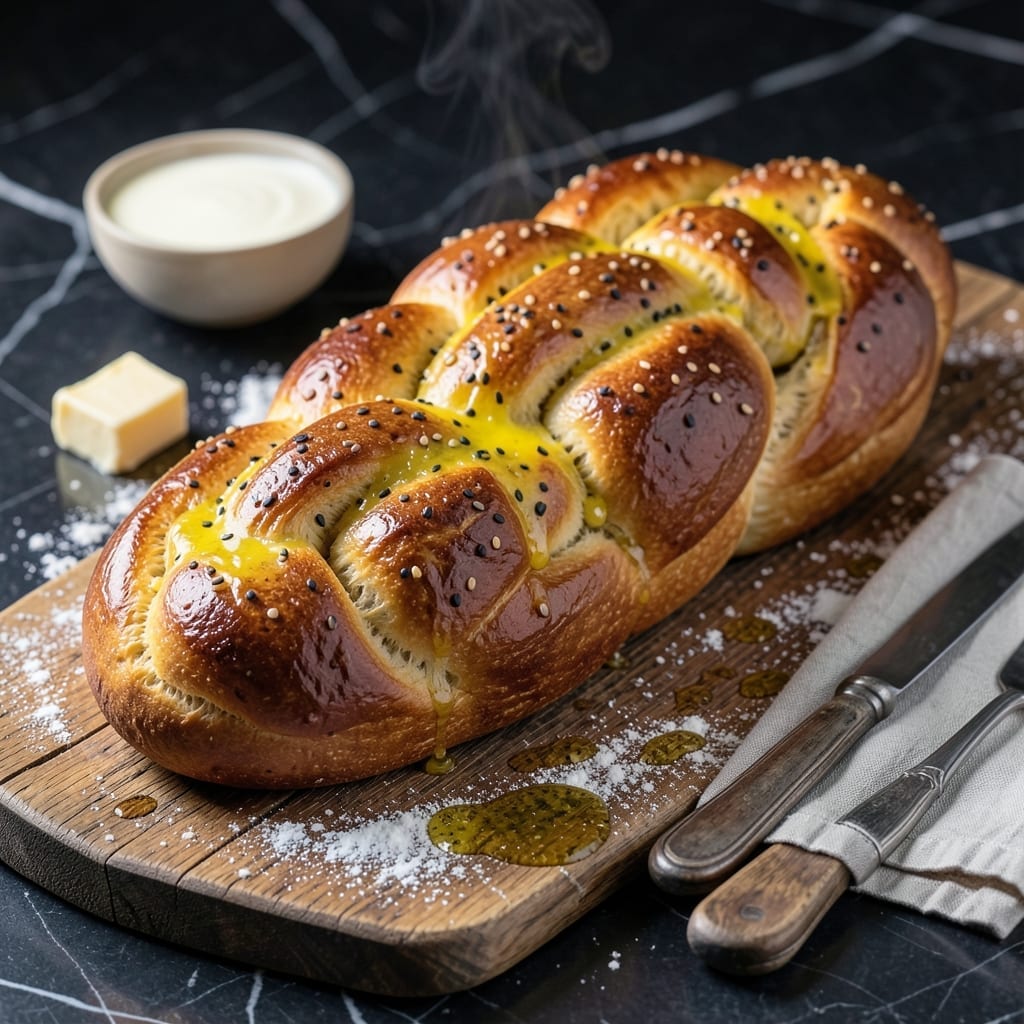
This traditional Greek Easter bread brings sweetness and symbolism to your holiday table. The braided loaf, enriched with eggs and butter, carries centuries of meaning in every golden strand.
Mastering tsoureki requires patience as the dough rises twice before baking to perfect texture. The result is a tender, slightly sweet bread with a golden crust, ready to be shared with loved ones.
Ingredients for Recipe for Tsoureki Bread
Rich dough with eggs and butter makes this golden braided loaf unforgettable. Simple pantry staples, extraordinary result.
| Ingredient | Amount | Notes |
|---|---|---|
| All-Purpose Flour 🌾 | 5 cups | Plus extra for dusting |
| Granulated Sugar 🍚 | ¾ cup | For sweetness in dough |
| Large Eggs 🥚 | 4 whole | Divided, 3 for dough 1 for wash |
| Unsalted Butter 🧈 | ¾ cup | Melted and cooled |
| Whole Milk 🥛 | 1 cup | Warm, about 110°F |
| Active Dry Yeast 🍞 | 2 ¼ tsp | 1 packet, proofed in milk |
| Vanilla Extract 🌿 | 2 tsp | Pure extract preferred |
| Orange Zest 🍊 | 1 tbsp | Freshly grated from 1 orange |
| Ground Cinnamon 🌶️ | 1 tsp | For warm spice flavor |
| Ground Cardamom 🌿 | ½ tsp | Authentic Greek flavor |
| Salt 🧂 | 1 tsp | Fine sea salt preferred |
| Mahlep 🌿 | ½ tsp | Optional, traditional spice |
| Dyed Red Eggs 🥚 | 3 whole | For traditional braiding |
| Sesame Seeds 🌾 | 2 tbsp | For sprinkling on top |
The flour is the foundation here. King Arthur all-purpose is my go-to for consistent results, but any quality brand works. Yeast freshness is non-negotiable—check the expiration date. Fleischmann’s or Red Star are reliable. For the butter, Plugrá or Kerrygold give that rich, European-style flavor that makes the crumb tender (worth the splurge).
No whole milk? 2% works in a pinch, but avoid skim—too watery. Out of cardamom? Additional cinnamon or mace can stand in. Mahlep is traditional but hard to find—skip it or order online. The dyed eggs are symbolic, but you can use plain eggs if you’re short on time (just hard-boil and dye them the night before).
Dough rises best in a warm, draft-free spot. Store cooled loaves wrapped at room temp for 2-3 days, or freeze for 1 month. Slice before freezing for easy toasting later.
Why You’ll Love This Recipe
- One Bowl Magic: I love that this tsoureki comes together in a single bowl—just mix the flour, sugar, eggs, butter, and milk, and let the dough do its thing.
- Buttery Richness: The combination of unsalted butter and whole milk gives it that tender, slightly sweet crumb that’s irresistible.
- Holiday Ready: Between us, this is my go-to for Easter morning or any celebration where I want to impress without stressing.
- Budget Stretcher: Honestly, the ingredients are pantry staples I already have, so it’s a fancy-tasting bread that won’t break the bank.
Instructions
Here’s the method I use to create this beautiful braided loaf with perfect texture and flavor.
Step 1: Activate the Yeast and Prepare the Dough
Start by warming the whole milk to about 110°F—it should feel just warm to the touch, not hot. Stir in the active dry yeast and a pinch of the granulated sugar to help it activate. Let this sit for 5-10 minutes until the mixture becomes frothy and bubbly. This is your visual cue that the yeast is alive and ready to work.
In a large mixing bowl, combine the all-purpose flour, remaining granulated sugar, salt, ground cinnamon, ground cardamom, and mahlep. I like to whisk these dry ingredients together first to ensure even distribution of the spices. These warm, aromatic flavors are what make this bread so distinctive.
Step 2: Mix and Knead the Dough
Create a well in the center of the dry ingredients and add the melted and cooled unsalted butter, 3 large eggs, vanilla extract, and orange zest. Pour in the activated yeast mixture and stir everything together with a wooden spoon until a shaggy dough forms. The orange zest adds a bright note that balances the richness of the butter and eggs.
Turn the dough out onto a lightly floured surface and knead for 8-10 minutes until it becomes smooth and elastic. You’ll know it’s ready when you can poke the dough with your finger and it springs back slowly. If the dough feels too sticky, add a little more all-purpose flour, but avoid adding too much—this bread should be slightly tacky. The kneading process develops the gluten, which gives the bread its structure and chew.
Step 3: Let the Dough Rise
Place the kneaded dough in a lightly greased bowl, cover it with a clean kitchen towel, and let it rise in a warm, draft-free spot for 1.5 to 2 hours, or until it has doubled in size. I like to turn my oven on to its lowest setting for a few minutes, then turn it off and place the bowl inside to create an ideal rising environment.
This first rise is crucial for developing the bread’s tender texture. The dough should look puffy and feel light when gently pressed. If your kitchen is cool, it might take a bit longer—just be patient and let the yeast do its work.
Step 4: Shape and Braid the Tsoureki
Once the dough has risen, punch it down gently to release the air and divide it into 3 equal portions. Roll each portion into a long rope, about 20 inches in length. Lay the ropes parallel to each other and pinch the ends together at one side. Carefully braid the ropes, keeping the tension even to create a neat, uniform loaf.
Gently tuck the dyed red eggs into the braids as you go, spacing them evenly along the length. The eggs should be snug but not so tight that they’ll burst during baking. This step is where the bread gets its traditional Easter look. Transfer the braided loaf to a parchment-lined baking sheet.
Step 5: Second Rise and Bake
Cover the loaf loosely with a kitchen towel and let it rise again for 45-60 minutes, or until it looks puffy and nearly doubled in size. Preheat your oven to 350°F during the last 15 minutes of rising. Brush the loaf with the remaining large egg beaten with a tablespoon of water, then sprinkle the sesame seeds evenly over the top. This egg wash gives the bread its signature golden shine.
Bake for 30-35 minutes, or until the loaf is deep golden brown and sounds hollow when tapped on the bottom. If the top begins to brown too quickly, tent the loaf with aluminum foil to prevent over-browning. The internal temperature should read 190°F when fully baked. Let the tsoureki cool on a wire rack for at least 20 minutes before slicing. This cooling period allows the bread to set and makes it easier to slice cleanly.
Pro Tips For Making Recipe For Tsoureki Bread
- Knead Longer: I learned this the hard way—tsoureki dough needs a full 10-12 minutes of kneading to develop that silky, elastic texture. Anything less and your bread will be dense instead of light and fluffy.
- Warm Your Milk: Sounds weird, but it works: heat the whole milk to about 110°F before mixing with yeast. Cold milk slows activation, and I’ve ruined batches by skipping this step.
- Soften Butter Properly: Resist the urge to microwave the butter—leave it out for 1-2 hours until it’s soft but still holds its shape. Melty butter makes greasy dough that won’t rise right.
- Check Oven Temp: After burning three loaves, I finally figured out my oven runs hot. Use an oven thermometer and bake at 350°F, not the dial setting, for even browning.
Flavor Customization for This Recipe
Citrus Infusion
For a brighter twist, add 1 tbsp lemon zest alongside the orange zest. The combination creates a vibrant citrus profile that cuts through the richness. I love how this variation makes the bread feel lighter and more refreshing. 🍋
Spice Enhancements
Boost the warm spices by increasing the cinnamon to 1½ tsp and adding ¼ tsp nutmeg. This creates a deeper, more complex flavor that’s perfect for cooler weather. The nutmeg adds a subtle earthiness.
Chocolate Swirl
For a decadent treat, roll out each dough rope and spread with 2 tbsp Nutella before braiding. The chocolate melts into the bread, creating a gooey surprise in every bite. Kids especially love this version.
Nutty Crunch
Add ½ cup chopped walnuts or almonds to the dough during the final kneading stage. Toast the nuts first for maximum flavor. The texture contrast is amazing, and it adds a protein boost.
Honey Glaze
Instead of sesame seeds, brush the baked loaf with 2 tbsp honey diluted with 1 tbsp warm water. This creates a sticky, sweet glaze that makes the bread irresistible. Let it cool slightly before slicing.
Floral Notes
Infuse the milk with 1 tbsp dried rose petals while warming it. Strain before using, and you’ll get a subtle floral aroma that’s traditional in some Greek versions. It pairs beautifully with the orange zest. 🌸
Frequently Asked Questions
Can I make this without eggs?
Substitute each egg with ¼ cup unsweetened applesauce plus 1 tsp baking powder. The texture will be denser but still delicious. Note that the traditional red egg braiding won’t work with this version.
Why did my dough not rise?
Old yeast or milk too hot are common culprits. Always check yeast expiration and ensure milk is 110°F max. A warm rising spot (like an oven with light on) also helps.
How do I store leftovers?
Wrap cooled loaves tightly in plastic and keep at room temperature for 2-3 days. For longer storage, freeze slices in a ziplock bag for up to 1 month. Toast to refresh before serving.
Can I skip the braiding step?
Yes! Shape the dough into a simple round loaf or rolls. Bake for 25-30 minutes at 350°F. The flavor remains the same, though the traditional look will differ.
Nutrition Facts

- BBQ Sausage Recipe Oven: Smoky Depth Without the Grill - September 28, 2026
- BBQ Chicken Bowl Recipe Rice: Smoky Sweetness Over Fluffy Grains - September 28, 2026
- Beef Cutlet Recipe Ideas: Crispy Breaded Patties With Bold Seasonings - September 28, 2026