
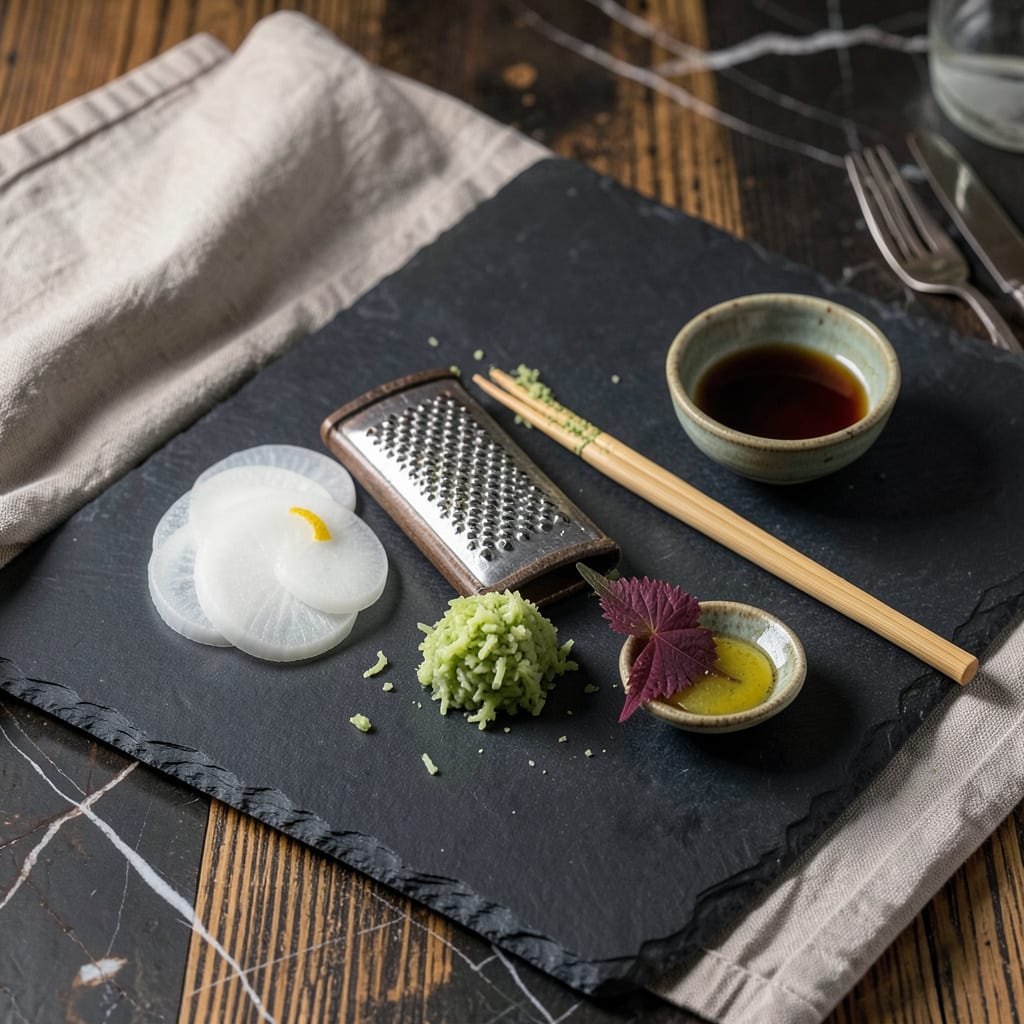
Authentic wasabi is made from grated wasabi rhizome, water, and sometimes a pinch of salt. For a quick alternative, mix powdered wasabi with water to form a thick paste, adjusting intensity to taste. Fresh wasabi loses potency in 15 minutes, so serve immediately.
What sets authentic wasabi apart is its delicate balance of heat and sweetness—unlike the harsh burn of horseradish-based substitutes. 🔥 The rhizome’s natural enzymes activate when grated, creating that signature nose-clearing sensation that fades quickly. I always recommend using a sharkskin grater for the finest texture, as it releases the rhizome’s oils more effectively than metal graters.
For home cooks, powdered wasabi offers convenience without sacrificing too much flavor complexity. The key is using cold water (never hot) to preserve the volatile compounds that give wasabi its unique character. What surprises many is how quickly the flavor evolves—freshly grated wasabi starts mildly sweet before building to its peak intensity within minutes. ✨
💡 In This Article
- How Traditional Wasabi Paste Is Made in Japan
- Quick Wasabi Substitutes and Storage Tips
How Traditional Wasabi Paste Is Made in Japan
The authentic process begins with selecting mature wasabi rhizomes, typically harvested after 18-24 months of growth in cool, shaded mountain streams. The best specimens have a firm texture and vibrant green color under the skin.
Japanese chefs prefer using a sharkskin grater (samegawa oroshigane) because its rough surface creates the perfect friction to rupture cell walls without generating excess heat that would destroy delicate flavor compounds. 🔥
Grating technique matters as much as the tool. The rhizome is grated in circular motions with light pressure, producing a paste with the consistency of thick cream.
Traditional methods call for using water at precisely 50-55°F—cold enough to preserve the volatile allyl isothiocyanate compounds that create wasabi’s signature heat, but not so cold that it inhibits enzyme activity. The paste is then left to rest for 5-7 minutes to allow full flavor development before serving.
What makes fresh wasabi special is its complex flavor profile that evolves in stages. The initial taste is surprisingly sweet and vegetal, followed by a building heat that peaks about 30 seconds after consumption before dissipating completely.
This contrasts sharply with commercial wasabi products (which are mostly horseradish and mustard) that deliver an immediate, lingering burn. The fresh version’s heat comes from natural enzymes breaking down sinigrin into allyl isothiocyanate, a process that completes within 15 minutes of grating. ✨
Temperature control remains critical throughout the process. In professional kitchens, the grated paste is often kept on a bed of crushed ice to slow the enzymatic reactions. The ideal serving temperature is 45-50°F, where the heat is most pronounced but the sweet, floral notes remain detectable.
Above 60°F, the volatile compounds begin degrading rapidly, which is why authentic wasabi is always served immediately after preparation.
The rhizome’s quality affects the final product dramatically. Premium wasabi from Shizuoka Prefecture (Japan’s main growing region) contains about 1.2-1.5% allyl isothiocyanate by weight, compared to just 0.3-0.5% in most commercial products. This concentration difference explains why fresh wasabi delivers such intense aroma and clean heat without the harshness associated with substitutes.
The plant’s natural sugars also caramelize slightly during grating, adding subtle sweetness to balance the pungency. 🌟
For comparison, most “wasabi” served outside Japan contains less than 5% actual wasabi, with the remainder being horseradish, mustard, and green dye. The real version costs significantly more—about $80-120 per pound for fresh rhizomes versus $5-10 per pound for powdered substitutes—but delivers an entirely different sensory experience that’s worth seeking out for special occasions.

- BBQ Sausage Recipe Oven: Smoky Depth Without the Grill - September 28, 2026
- BBQ Chicken Bowl Recipe Rice: Smoky Sweetness Over Fluffy Grains - September 28, 2026
- Beef Cutlet Recipe Ideas: Crispy Breaded Patties With Bold Seasonings - September 28, 2026