
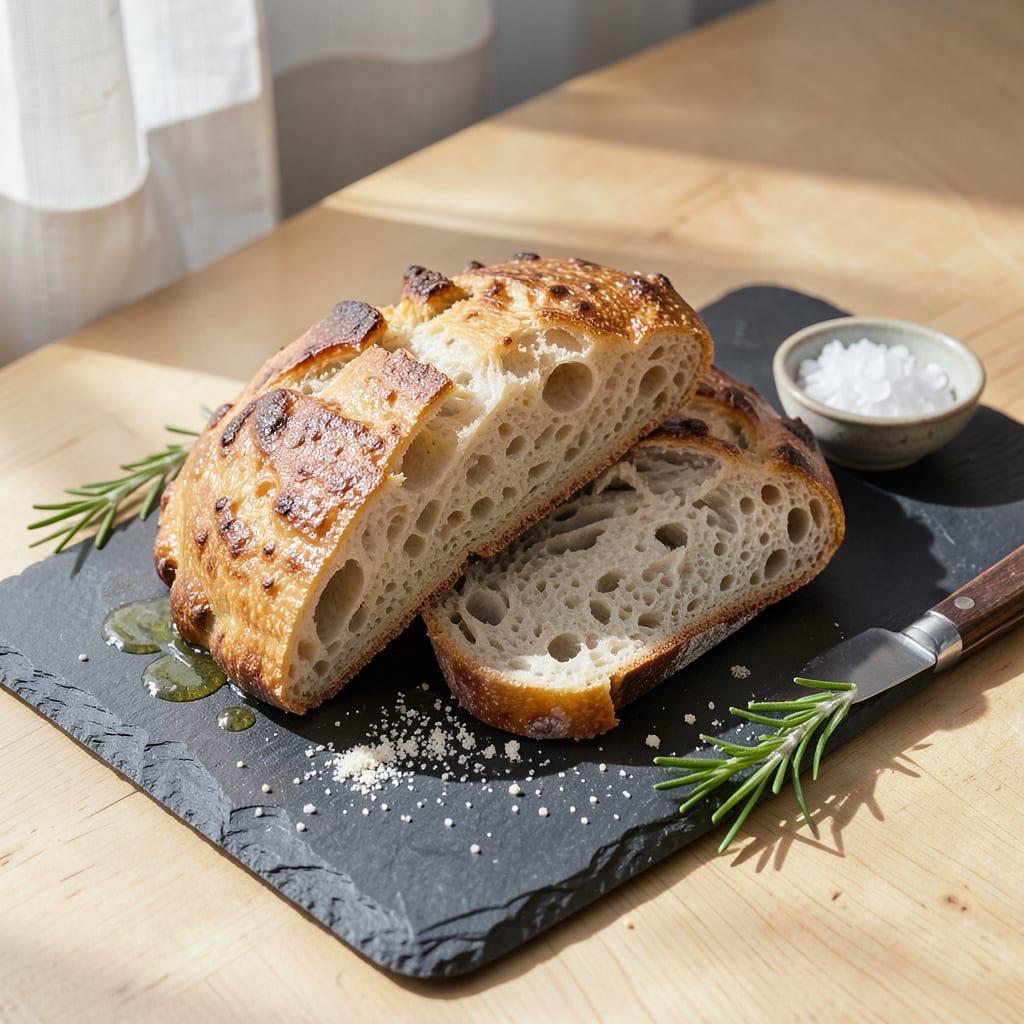
Water bread requires just flour, water, salt, and yeast. Mix, knead until smooth, let rise for 1-2 hours, then bake at 400°F (200°C) for 25-30 minutes until golden. No oil or dairy needed for this crispy, rustic loaf.
This minimalist approach creates what I call a “lean dough” system—where the absence of fat actually enhances the bread’s signature characteristics. The high hydration level (typically 70-75%) creates those beautiful irregular holes in the crumb, while the long fermentation develops complex flavors without any enriching ingredients. 🔥
What’s fascinating is how this technique connects to ancient baking traditions. Many European peasant breads relied on this exact formula because it was affordable and practical. The secret lies in proper kneading to develop gluten strength, which compensates for the lack of fat in the dough structure.
💡 In This Article
- How Fermentation Transforms Simple Water Bread Dough
- Variations and Serving Ideas for Homemade Water Bread
How Fermentation Transforms Simple Water Bread Dough
The magic starts when yeast meets water and flour. Yeast cells activate immediately upon contact with warm water (105-110°F is ideal), consuming sugars in the flour and producing carbon dioxide. This gas gets trapped in the gluten network, creating those air pockets we love in bread.
Without fat to tenderize the dough, the gluten strands develop more fully during kneading, resulting in a chewier texture that’s perfect for rustic loaves. ✨
Hydration levels play a crucial role in this transformation. A typical water bread dough contains 70-75% water by weight, which creates a slack, sticky dough that requires longer fermentation. This high moisture content allows enzymes to break down starches more completely, producing more fermentable sugars.
The extended fermentation time (typically 2-4 hours at room temperature) lets flavors develop deeply, creating complex notes that simple doughs usually lack. 🔥
What’s happening chemically during this process is fascinating. As yeast ferments, it produces organic acids that lower the dough’s pH. This acidification strengthens the gluten network while simultaneously breaking down proteins into flavorful amino acids. The result is a bread with remarkable depth of flavor despite having no enriching ingredients.
The crust develops through Maillard reactions during baking, where proteins and sugars interact at high temperatures to create that golden-brown color and nutty aroma. 💫
The absence of fat means the dough behaves differently during baking. Without oil to lubricate the gluten strands, the bread structure becomes more rigid, allowing for better oven spring. This is why water bread often develops a thicker, crispier crust compared to enriched breads.
The steam created by the high water content in the dough also contributes to that perfect crunchy exterior while keeping the interior moist and open. ⚡
Temperature control becomes especially important with lean doughs. The ideal fermentation temperature ranges between 75-78°F. Cooler temperatures slow yeast activity, allowing for longer fermentation and more flavor development, while warmer temperatures speed up the process but may produce less complex flavors.
This is why many bakers use a “cold proof” method, fermenting the dough in the refrigerator for 12-24 hours to maximize flavor potential. 🌟
The final texture comes from how these elements interact during baking. As the dough hits the hot oven, the water content rapidly converts to steam, causing the bread to expand quickly. The high heat (400°F or higher) sets the crust before the structure can collapse, creating that perfect balance between crisp exterior and airy interior.
This is why preheating your oven and using a baking stone or steel makes such a dramatic difference in the final product. 💛
What makes this process so rewarding is watching how these basic ingredients transform through time and temperature. The same flour, water, salt, and yeast that start as a shaggy mass become a fragrant, golden loaf with a crisp crust and open crumb.
It’s a testament to how fundamental baking science can create extraordinary results from the simplest components. ✨

- BBQ Sausage Recipe Oven: Smoky Depth Without the Grill - September 28, 2026
- BBQ Chicken Bowl Recipe Rice: Smoky Sweetness Over Fluffy Grains - September 28, 2026
- Beef Cutlet Recipe Ideas: Crispy Breaded Patties With Bold Seasonings - September 28, 2026