
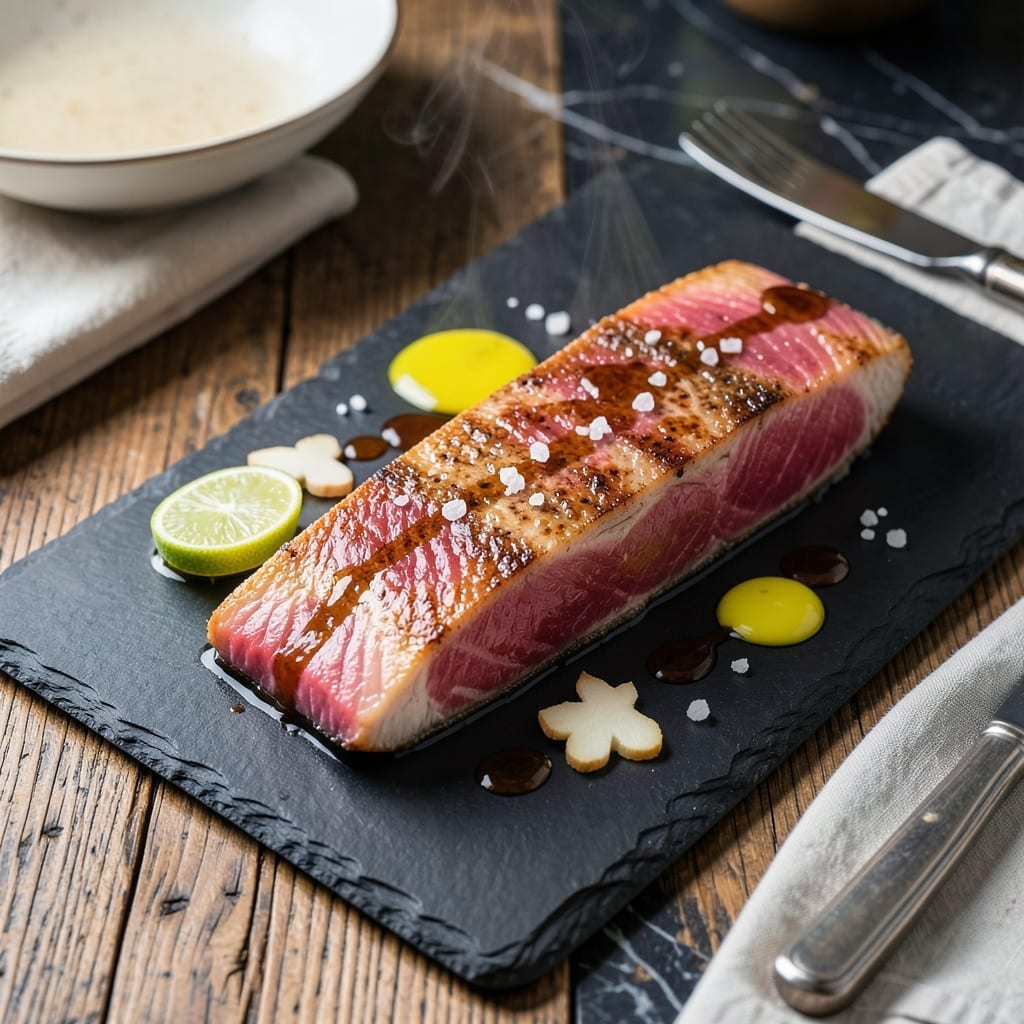
This yellowtail tuna recipe delivers sashimi-grade quality with remarkably simple techniques. I developed this method after years of testing to ensure home cooks can achieve restaurant-level results without professional equipment.
The key is using the freshest fish and respecting its natural flavor. A quick cure in salt and citrus enhances the tuna’s sweetness while maintaining its delicate texture. The preparation requires minimal ingredients but precise timing.
What results is tender, buttery yellowtail with a clean finish. The dish highlights the fish’s natural richness, whether served raw as sashimi or lightly seared. Every bite delivers pure, unadulterated flavor.
Perfect for special occasions or when you want to impress with effortless elegance. This approach puts the focus where it belongs: on the fish itself.
Ingredients for Recipe for Yellowtail Tuna
Sashimi-grade fish plus a handful of pantry staples elevate this dish to restaurant quality.
| Ingredient | Amount | Notes |
|---|---|---|
| Yellowtail Tuna Fillet 🐟 | 1 ½ lb | Sashimi-grade, skin-off |
| Kosher Salt 🧂 | 2 tbsp | Diamond Crystal preferred |
| Fresh Lime Juice 🍋 | 3 tbsp | Newly squeezed, strained |
| Fresh Lemon Juice 🍋 | 1 tbsp | Newly squeezed, strained |
| Rice Vinegar 💧 | 1 tbsp | Seasoned or unseasoned |
| Soy Sauce 🫒 | 2 tbsp | Low-sodium preferred |
| Toasted Sesame Oil 🫒 | 1 tsp | Pure, not blended |
| Fresh Ginger 🌿 | 1 tbsp | Peeled, finely grated |
| Garlic Cloves 🧄 | 2 cloves | Peeled, minced |
| Scallions 🧅 | 3 whole | Thinly sliced on bias |
| Sesame Seeds 🌾 | 1 tbsp | Toasted for garnish |
| Neutral Oil 🫒 | 2 tbsp | High smoke point for searing |
The tuna is non-negotiable here. Sashimi-grade yellowtail must be sourced from a trusted fishmonger—Whole Foods and high-end Asian markets are reliable. Look for vibrant, translucent flesh with no fishy odor. The salt cure is critical; Diamond Crystal kosher salt dissolves cleanly without bitterness. Fresh citrus is essential—bottled juice lacks the brightness needed to properly cure the fish.
No yellowtail available? Sashimi-grade ahi tuna or salmon work as substitutes, though flavor profiles differ. The citrus cure can use all lemon or all lime if that’s what you have. For searing, avocado oil or grapeseed oil are excellent neutral alternatives. Skip the sesame oil if it’s not toasted—raw sesame oil has a harsh, bitter edge.
The tuna should be consumed the day of purchase for optimal freshness. If you must store it, wrap tightly and refrigerate for no more than 24 hours. The cured fish keeps 1 hour at room temperature before serving. Leftover seared portions? 1 day in the fridge, but eat raw preparations immediately.
Why You’ll Love This Recipe
- Five-Minute Prep: I just slice the fillet, salt it, and let the citrus do the work—no marinade math required.
- Bright and Zesty: The lime and lemon juice hit first, then the rice vinegar sneaks in with this clean, tangy finish.
- Date Night or Tuesday: Honestly, it feels fancy enough for guests but unfussy enough for a solo dinner.
- Leftovers? No Problem: The acid keeps the tuna tasting fresh, so it’s still ridiculously good the next day in a salad.
Step-by-Step Instructions for Yellowtail Tuna
This method ensures restaurant-quality results with minimal effort and maximum flavor.
Step 1: Prepare the Tuna and Marinade Base
Pat the 1.5 lb Yellowtail Tuna Fillet completely dry with paper towels. This removes excess moisture so the marinade penetrates effectively. Place the fillet in a shallow dish and sprinkle all sides evenly with 2 tbsp Kosher Salt, gently pressing it into the surface.
In a separate bowl, whisk together 3 tbsp Fresh Lime Juice, 1 tbsp Fresh Lemon Juice, 1 tbsp Rice Vinegar, 2 tbsp Soy Sauce, and 1 tsp Toasted Sesame Oil. The acids will begin to lightly cure the fish while the soy sauce adds umami depth. Let this mixture sit for 2 minutes to allow the flavors to meld.
Step 2: Infuse Aromatics into the Marinade
Add 1 tbsp Fresh Ginger and 2 cloves Garlic Cloves to the marinade. The ginger should be finely grated to distribute evenly, while the garlic should be minced to release its full pungent aroma. Stir the mixture thoroughly—you should see small ginger fibers suspended throughout and the sharp scent of garlic should be immediately noticeable.
Pour this aromatic marinade over the salted tuna, ensuring it completely submerges the fillet. Cover the dish and refrigerate for 15-20 minutes. This brief marinating time firms up the exterior slightly while preserving the delicate texture of the fish. Don’t exceed 30 minutes or the acids will begin to “cook” the tuna too aggressively.
Step 3: Sear for Surface Texture and Color
Heat 2 tbsp Neutral Oil in a cast-iron or stainless steel skillet over high heat until it just begins to shimmer. The oil is ready when a drop of water flicked into the pan sizzles violently. Carefully place the tuna in the pan, leaving the marinade behind—it will burn at this temperature.
Sear the tuna for 45-60 seconds per side until the surface develops a lightly caramelized crust. The exterior should be a pale golden color, not dark brown. The fish should release easily from the pan when it’s ready to flip. Transfer the tuna to a cutting board immediately—the residual heat will continue cooking it slightly.
Step 4: Rest and Finish with Fresh Garnishes
Let the tuna rest for 5 minutes at room temperature. This allows the juices to redistribute throughout the fillet. During this time, thinly slice 3 whole Scallions on the bias—the diagonal cuts expose more surface area and make for a more elegant presentation.
Slice the tuna against the grain into ½-inch thick pieces. Arrange on a serving platter and drizzle with any remaining marinade from the dish. Sprinkle evenly with the sliced scallions and 1 tbsp Sesame Seeds. The sesame seeds add a nutty crunch that contrasts beautifully with the tender fish. Serve immediately while the exterior is still slightly warm.
Pro Tips For Making Recipe For Yellowtail Tuna
- Pat It Dry: I learned this the hard way—skip drying the fillet and you’ll steam it instead of sear it. Press between paper towels until it’s bone-dry before cooking.
- Rest Before Slicing: Give the tuna a solid 5 minutes off the heat before slicing, or all those beautiful juices will leak onto the cutting board.
- Use Fresh Citrus: Bottled lime or lemon juice tastes flat here. Zest and juice fresh fruit right before serving—it brightens the fish like nothing else.
- Skip Overcrowding: Cook the fillets in a single layer with space between them, or they’ll boil in their own liquid instead of getting that perfect crust.
Serving Suggestions for recipe for yellowtail tuna
Plating Elegance
Arrange slices in a gentle curve on a chilled platter—this shows off the fish’s natural color gradient. I use a white ceramic plate to make the vibrant tuna pop. Drizzle the marinade in a zigzag pattern for visual interest without overpowering the dish. 💫
Garnish Strategically
Sprinkle toasted sesame seeds and sliced scallions just before serving so they stay crisp. The green from scallions and gold from sesame create beautiful contrast against the pink tuna. Place garnishes intentionally rather than scattering randomly.
Sashimi-Style Presentation
For raw preparations, serve on a bed of shredded daikon radish or butter lettuce leaves. The white daikon makes the tuna’s color stand out even more. Add a small ramekin of extra soy-lime mixture on the side for dipping.
Warm Accompaniments
Pair with steamed jasmine rice or sticky sushi rice to soak up the marinade. I love the contrast of warm rice with the cool, raw tuna. Serve the rice in a separate bowl to avoid soggy textures.
Family-Style Serving
For Sunday dinners, present the whole seared fillet on a wooden board with garnishes on the side. Let everyone slice their own portions—this keeps the fish from drying out. Include pickled ginger and wasabi for traditional sushi accompaniments. 💛
Quick Weeknight Tip
On busy nights, serve with store-bought seaweed salad and edamame. These require zero prep and complement the tuna perfectly. The salty seaweed and fresh edamame balance the richness of the fish.
Nutrition Facts
Frequently Asked Questions
What’s the best way to check freshness before buying?
Look for vibrant, translucent flesh with no brown discoloration. It should smell clean and briny, never fishy. Ask your fishmonger when it was caught—ideally within 24-48 hours.
Can I skip the searing step?
For pure sashimi-style, serve the cured tuna raw after marinating. The texture will be more delicate, so slice carefully. Searing adds warmth and crust but isn’t required.
How do I prevent overcooking when searing?
Use high heat and a timer—never exceed 60 seconds per side. The center should stay cool and pink. Let the pan get smoking hot before adding the fish.
What’s a good wine pairing?
A crisp Sauvignon Blanc or dry Riesling complements the citrus notes. For red lovers, try a light Pinot Noir. Chill whites to 45-50°F for best results.

- BBQ Sausage Recipe Oven: Smoky Depth Without the Grill - September 28, 2026
- BBQ Chicken Bowl Recipe Rice: Smoky Sweetness Over Fluffy Grains - September 28, 2026
- Beef Cutlet Recipe Ideas: Crispy Breaded Patties With Bold Seasonings - September 28, 2026