
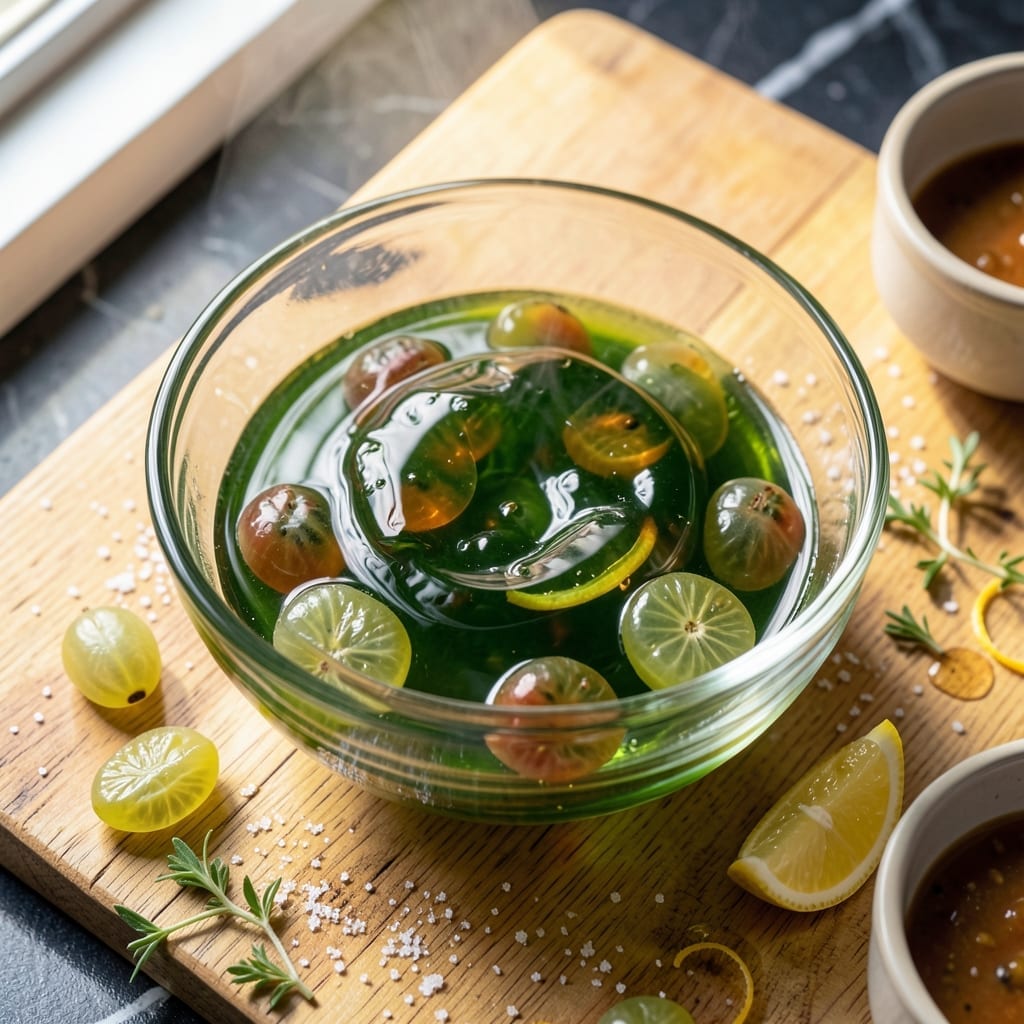
This gooseberry jelly strikes the perfect balance between tart and sweet, making it a versatile spread for any occasion.
I developed this recipe to capture the unique flavor of fresh gooseberries in a smooth, glossy jelly that pairs beautifully with toast or cheese boards. The process is straightforward, requiring just a few ingredients and simple techniques.
The result is a vibrant, jewel-toned jelly with a bright, tangy flavor that cuts through rich cheeses or complements warm, buttered bread. Its smooth texture and balanced sweetness make it a standout addition to any pantry.
With a shelf life of up to a year, this jelly is as practical as it is delicious, ready to elevate everyday meals and special gatherings alike.
Ingredients for Recipe Gooseberry Jelly
Seven simple components create this vibrant, jewel-toned tart-sweet spread for any occasion.
| Ingredient | Amount | Notes |
|---|---|---|
| Fresh Gooseberries 🍇 | 4 cups | Stems removed, rinsed thoroughly |
| Granulated Cane Sugar 🍚 | 3 cups | Organic preferred for clean flavor |
| Lemon Juice 🍋 | ¼ cup | Freshly squeezed, no bottled |
| Water 💧 | ½ cup | Filtered for best results |
| Pectin 🧂 | 1 ¾ oz | Powdered, for proper gelling |
| Citric Acid 🍋 | ½ tsp | Optional, enhances tartness |
| Vegan Butter 🧈 | 1 tsp | For greasing jars, optional |
The gooseberries are non-negotiable—fresh and firm yield the best flavor and pectin content. Look for them at farmers markets or specialty grocers like Whole Foods in late spring. Avoid overripe berries (they’ll be mushy and less tart). For sugar, organic cane sugar avoids the bitter aftertaste of some refined varieties. The pectin must be powdered; liquid won’t give the same clean set.
No fresh gooseberries? Frozen works perfectly—just thaw and drain well before using. Out of lemon juice? Lime juice at the same ratio maintains the acidity. If you can’t find pectin, use 1 additional cup of sugar and cook longer, but texture will differ. Citric acid boosts tartness if berries are too sweet (common with store-bought). Vegan butter is only for jar prep—skip entirely if preferred.
Unopened jelly keeps at room temperature for up to 1 year. Once opened, refrigerate and use within 3 months. Processed jars seal best with proper canning techniques, but a simple hot water bath works for small batches. Always check lids for a tight seal before storing long-term.
Why You’ll Love This Recipe
- Five-Minute Mix: I just toss the gooseberries, sugar, and pectin into the pot—no fancy prep, no fuss.
- Tart Meets Sweet: The sharp tang of fresh gooseberries balanced with just enough sugar makes it ridicously good on toast or cheese.
- Jars for Days: One batch gives me enough to gift, spread, and still have leftovers for months.
- Cheap Summer Treat: Gooseberries are abundant in summer, and a little sugar and pectin stretch them into something special.
Step-by-Step Instructions for Gooseberry Jelly
Master this precise process for a glossy, well-set spread with the perfect balance of sweet and tart.
Step 1: Prepare and Cook the Gooseberries
Place the 4 cups Fresh Gooseberries in a large, heavy-bottomed pot. Add the 0.5 cup Water and bring to a gentle simmer over medium heat. I use a potato masher to crush the berries as they soften, releasing their juices and pectin.
Continue cooking for 8-10 minutes, stirring occasionally, until the gooseberries have completely broken down and the mixture resembles a thick, chunky puree. The berries should lose their shape entirely, and the liquid should appear slightly syrupy. This step extracts maximum flavor and natural pectin from the fruit.
Step 2: Strain and Measure the Purée
Set a fine-mesh sieve over a large bowl and pour the cooked gooseberry mixture into it. Using a silicone spatula, press the mixture firmly against the sieve to extract all the juice and purée, leaving only the seeds and tough fibers behind. Discard the solids.
You should have approximately 3 cups of strained gooseberry purée. If you have slightly less, add a bit of water to reach this volume—consistent measurement is crucial for proper gelling. This smooth purée forms the base of your jelly, ensuring a silky texture without seed bits.
Step 3: Combine Ingredients and Bring to a Boil
Return the purée to the pot and stir in the 3 cups Granulated Cane Sugar, 0.25 cup Lemon Juice, 1.75 oz Pectin, and 0.5 tsp Citric Acid. The citric acid enhances the gooseberries’ natural tartness while the lemon juice adds brightness and aids in gelling.
Place the pot over high heat and bring to a full, rolling boil that cannot be stirred down. This vigorous boil is essential—it concentrates the sugars and activates the pectin. Stir constantly with a wooden spoon to prevent scorching, especially as the mixture thickens.
Step 4: Test for Doneness and Skim Foam
Once boiling, cook for 1 minute, then perform the gel test: place a small spoonful of jelly on a chilled plate (keep one in the freezer for this purpose). After 30 seconds, push the jelly with your finger—it should wrinkle slightly and hold its shape. If not, boil for another 1-2 minutes and retest.
As the jelly cooks, you may notice foam rising to the surface. Skim this off with a metal spoon for a clearer final product. The jelly should thicken noticeably as it approaches the proper consistency, coating the back of your spoon heavily.
Step 5: Jar and Seal the Jelly
Remove the pot from heat. If using, stir in the 1 tsp Vegan Butter to reduce foam. Let the jelly rest for 5 minutes to allow it to thicken slightly, which helps prevent the fruit from floating to the top of the jars.
Ladle the hot jelly into sterilized jars, leaving ¼-inch headspace. Wipe the rims clean, then seal with lids. Process in a water bath for 10 minutes to ensure shelf stability, or store in the refrigerator for up to 3 weeks. The jelly will fully set as it cools, achieving that perfect, spreadable consistency.
Pro Tips For Making Recipe Gooseberry Jelly
- Test for Ripeness: Squeeze a few gooseberries first—if they burst easily between your fingers, they’re ready. Underripe ones make tart jelly that needs extra sugar to balance.
- Simmer, Don’t Boil: Once the sugar and pectin go in, keep the heat at a gentle simmer. A rolling boil breaks down the berries too fast and can make the jelly cloudy.
- Strain Thoroughly: After cooking, press the berries through a fine-mesh sieve or jelly bag—no shortcuts. Skipping this leaves pulp in your jelly, and nobody wants chewy jam.
- Use a Candy Thermometer: I learned this the hard way—jelly won’t set properly if it doesn’t hit 220°F. Guessing by eye is how you end up with syrup instead of spreadable jelly.
Make-Ahead Tips for Leftovers
Prep Ahead Strategy
I always prep the gooseberries the night before by removing stems and rinsing them. Store in an airtight container in the fridge. This saves 15 minutes on jelly day and lets you start cooking immediately. The berries stay fresh for 24 hours this way. 💡
Sugar Mixture Prep
Measure and mix your 3 cups Granulated Cane Sugar and 1.75 oz Pectin the day before. Store in a sealed container to prevent moisture absorption. This ensures even distribution when added to the purée.
Jar Sterilization
Wash your jars and lids with hot, soapy water, then keep them hot in a 200°F oven until ready to fill. I place them on a baking sheet for 10-15 minutes. Hot jars prevent cracking when filled with boiling jelly.
Batch Timing
This recipe makes about 4 half-pint jars. I start the process 3 hours before I plan to jar, allowing time for cooking, testing, and resting. The jelly needs 5 minutes to thicken slightly before jarring.
Freezer Option
For quick use, ladle jelly into freezer-safe containers instead of jars. Leave ½-inch headspace and freeze for up to 6 months. Thaw overnight in the fridge before using. ❄️
Labeling Tip
Once cooled, label jars with the date and flavor. I use masking tape and a permanent marker. This helps track freshness, especially since unopened jelly lasts 1 year at room temperature.
Nutrition Facts
Frequently Asked Questions
Can I use frozen gooseberries instead of fresh?
Thaw and drain them well before using to remove excess liquid. Frozen berries work just as well for jelly.
How do I know when the jelly is done?
Use the gel test: place a spoonful on a chilled plate, wait 30 seconds, then push with your finger. It should wrinkle and hold its shape.
Why did my jelly not set properly?
This usually happens if the boil wasn’t vigorous enough or the pectin wasn’t fully activated. Always use a full rolling boil for 1 minute and measure ingredients precisely.
How long does homemade gooseberry jelly last?
Unopened jars keep for 1 year at room temperature. Once opened, refrigerate and use within 3 months.

- Pav Bhaji Recipe Food Lab: Mumbai Street Food Magic at Home - October 6, 2026
- Peach Jelly Recipe Without Pectin: Naturally Set Sweet Spread - October 6, 2026
- Pasta Salad Recipe With Zesty Italian Dressing: Bright Herb-Kissed Medley for Picnics - October 6, 2026