
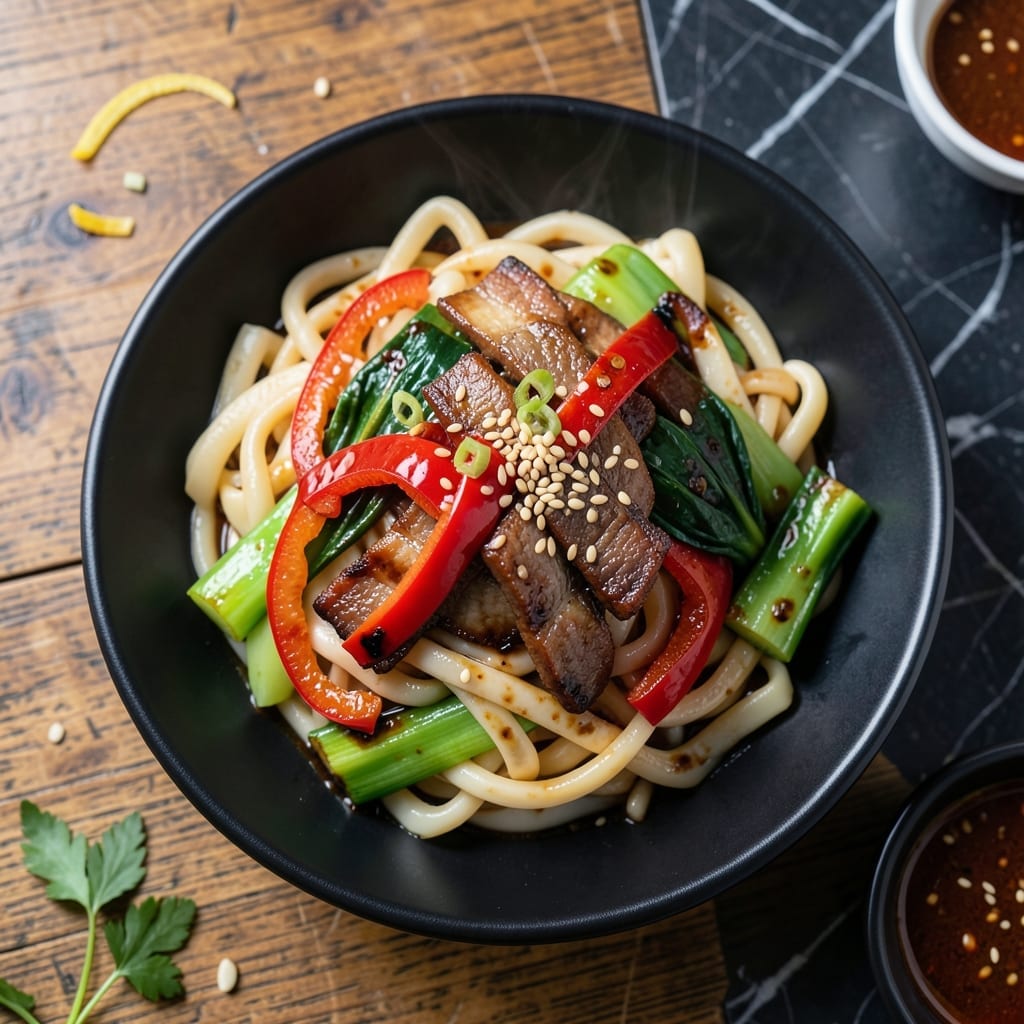
This stir-fried udon delivers chewy wheat noodles tossed in a savory sauce with fresh vegetables. The dish comes together quickly with minimal prep.
High heat ensures the noodles get slightly charred edges while staying tender. A simple soy-based sauce ties all the flavors together perfectly.
Ingredients for Recipe Stir Fry Udon Noodles
Chewy wheat noodles and crisp vegetables meet in this vibrant stir-fry with a rich soy-based sauce.
| Ingredient | Amount | Notes |
|---|---|---|
| Dried Udon Noodles 🍜 | 14 oz | Or 4 fresh udon noodle packages |
| Soy Sauce 🫒 | ⅓ cup | Low-sodium preferred for balance |
| Dark Soy Sauce 🫒 | 1 tbsp | For depth and color |
| Oyster Sauce 🫒 | 2 tbsp | Vegetarian oyster sauce if needed |
| Sesame Oil 🫒 | 1 tbsp | Toasted for best aroma |
| Rice Vinegar 💧 | 1 tbsp | Unseasoned variety recommended |
| Brown Sugar 🍚 | 1 tbsp | Light or dark works |
| Garlic Cloves 🧄 | 4 cloves | Minced finely for even flavor |
| Fresh Ginger 🌿 | 1 tbsp | Peeled and grated |
| Bell Peppers 🌶️ | 2 whole | Thinly sliced, any color |
| Carrots 🥕 | 2 whole | Julienned for quick cooking |
| Green Onions 🧅 | 4 whole | Sliced into 2-inch pieces |
| Neutral Cooking Oil 🫒 | 3 tbsp | High smoke point for stir-frying |
| Sesame Seeds 🌾 | 1 tbsp | Toasted for garnish |
| Red Pepper Flakes 🌶️ | ½ tsp | Adjust to heat preference |
The udon noodles are non-negotiable here. Look for dried or fresh wheat-based udon in the refrigerated section of Asian markets or well-stocked supermarkets. Avoid the frozen kind—they tend to get mushy. For authentic texture, fresh udon is ideal (often sold in vacuum-sealed packs), but dried works perfectly when boiled for 1 minute less than package instructions.
No oyster sauce? Hoisin or vegetarian oyster sauce works as a direct substitute. Missing dark soy? Add 1 tsp molasses to regular soy for color and depth. The ginger and garlic can be pre-minced in a pinch, but fresh makes a noticeable difference in flavor complexity. For the vegetables, swap in snap peas, mushrooms, or bok choy—whatever’s fresh and crisp.
Fresh noodles keep 1 week refrigerated, dried 6-12 months in a cool pantry. The sauce components (except fresh aromatics) last 3-6 months. Prep all ingredients before firing up the wok—stir-frying moves fast and doesn’t wait for chopping.
Why You’ll Love This Recipe
- I’ll be real: it tastes even better the next day, and the udon soaks up all that flavor overnight.
- One Pot Wonder: I toss everything into a single pan—udon, sauces, and sesame oil—and dinner’s ready before the noodles overcook.
- Umami Bomb: That combo of soy, dark soy, and oyster sauce hits different. Honestly, it’s the reason I make this twice a week.
- Weeknight Hero: Between us, it’s my backup plan for busy evenings. (Yes, even on a Tuesday night)
Step-by-Step Instructions for Stir Fry Udon Noodles
Master the wok technique and achieve perfectly chewy noodles with balanced Asian flavors every time.
Step 1: Prepare the Dried Udon Noodles and Aromatics
Begin by cooking the 14 oz dried udon noodles according to package directions until just al dente. Drain immediately and rinse under cold water to stop the cooking process and remove excess starch. This prevents the noodles from becoming mushy during stir-frying.
Meanwhile, finely mince the 4 cloves garlic cloves and peel and grate the 1 tbsp fresh ginger. Thinly slice the 2 whole bell peppers and julienne the 2 whole carrots into uniform matchsticks. Slice the 4 whole green onions into 2-inch pieces, separating the white and green parts. Have all ingredients prepped and within reach before heating the wok.
Step 2: Create the Stir-Fry Sauce Base
In a small bowl, whisk together the 0.33 cup soy sauce, 1 tbsp dark soy sauce, 2 tbsp oyster sauce, 1 tbsp sesame oil, 1 tbsp rice vinegar, and 1 tbsp brown sugar until the sugar fully dissolves. The dark soy sauce adds depth and color, while the rice vinegar provides a subtle tang to balance the richness.
Taste the mixture and adjust the balance if needed, but remember the flavors will concentrate when reduced in the wok. Set this sauce aside while you cook the vegetables, as the residual heat from the wok will warm it slightly when combined later.
Step 3: Stir-Fry the Vegetables with Precision
Heat 2 tbsp neutral cooking oil in a wok or large skillet over high heat until it shimmers. Add the minced garlic and grated ginger, stir-frying for 15-20 seconds until fragrant but not browned. Immediately add the bell peppers and carrots, tossing constantly with a spatula.
Cook for 3-4 minutes until the vegetables are tender-crisp but still vibrant in color. The high heat should create a slight char on some pieces, adding complexity to the dish. Push the vegetables to one side of the wok and add the remaining 1 tbsp neutral cooking oil to the empty space.
Step 4: Combine Noodles and Sauce for Final Cooking
Add the cooked udon noodles to the wok, breaking up any clumps with your spatula. Pour the prepared sauce over the noodles and vegetables. Toss everything together vigorously for 2-3 minutes until the noodles are evenly coated and the sauce has thickened slightly, clinging to each strand.
The noodles should be glossy and well-coated, with the vegetables distributed evenly throughout. If the mixture seems dry, add a splash of water and continue tossing. The high heat should create a slight caramelization on the noodles, enhancing their chewy texture.
Step 5: Finish and Garnish for Serving
Remove the wok from heat and stir in the 0.5 tsp red pepper flakes, adjusting to taste for heat preference. Transfer to a serving platter and sprinkle with the 1 tbsp sesame seeds and the reserved green onion tops. The sesame seeds add a nutty crunch, while the green onions provide a fresh, oniony bite.
Serve immediately while hot, as the noodles will continue to absorb the sauce as they cool. Each serving should have a generous portion of noodles, vegetables, and that rich, savory sauce that defines this dish.
Pro Tips For Making Recipe Stir Fry Udon Noodles
- Parboil the Noodles: Boil the dried udon for just 1-2 minutes less than package instructions—I learned this the hard way after ending up with mushy noodles that turned to paste in the wok.
- Heat the Wok First: Get your wok or pan screaming hot before adding oil, about 2-3 minutes on high. Sounds obvious, but I used to rush this and wondered why my stir fry tasted steamed instead of seared.
- Skip the Cold Sauce: Mix your soy sauce, dark soy sauce, and oyster sauce in a small bowl first and let it sit at room temp. Cold sauce straight from the fridge makes the noodles clump together.
- Finish with Sesame Oil: Drizzle the sesame oil at the very end, off the heat—about 1 teaspoon is plenty. Adding it earlier loses that fragrant punch, and I was skeptical until I tried it.
Storing and Reheating recipe stir fry udon noodles
Refrigerator Storage
Let this dish cool completely before transferring to airtight containers. It stays fresh in the fridge at 40°F or below for up to 3 days. The noodles may absorb more sauce over time, which I actually love. ❄️
Freezer Storage
For longer storage, freeze in portions using quart-size freezer bags. Squeeze out excess air to prevent freezer burn. It keeps well for up to 2 months. Thaw overnight in the fridge before reheating.
Stovetop Reheating
My preferred method: warm in a skillet over medium heat with 2 tbsp water. Cover and stir occasionally for 5-7 minutes until heated through. This revives the noodles beautifully. 🔥
Microwave Reheating
Place a single portion on a microwave-safe plate, sprinkle with 1 tsp water, and cover with a damp paper towel. Heat on high power for 2 minutes, stir, then repeat in 30-second intervals until hot.
Frequently Asked Questions
Can I use fresh noodles instead of dried?
Fresh udon works perfectly and actually cooks faster. Skip the boiling step and add them directly to the wok with the sauce. They’ll soften in 2-3 minutes of stir-frying.
How do I prevent the noodles from sticking?
Use high heat and keep everything moving constantly. Make sure your wok or skillet is very hot before adding ingredients, and don’t overcrowd the pan. A splash of water can help loosen things if needed.
What can I substitute for oyster sauce?
Hoisin sauce works as a direct swap, or use vegetarian oyster sauce. For a simpler option, mix 1 tbsp soy sauce with 1 tsp brown sugar to mimic the sweet-savory flavor.
Can I make this ahead of time?
Yes, but the noodles absorb sauce as they sit. Store components separately and combine just before reheating. It keeps well in the fridge for 2-3 days.
Nutrition Facts

- BBQ Sausage Recipe Oven: Smoky Depth Without the Grill - September 28, 2026
- BBQ Chicken Bowl Recipe Rice: Smoky Sweetness Over Fluffy Grains - September 28, 2026
- Beef Cutlet Recipe Ideas: Crispy Breaded Patties With Bold Seasonings - September 28, 2026