
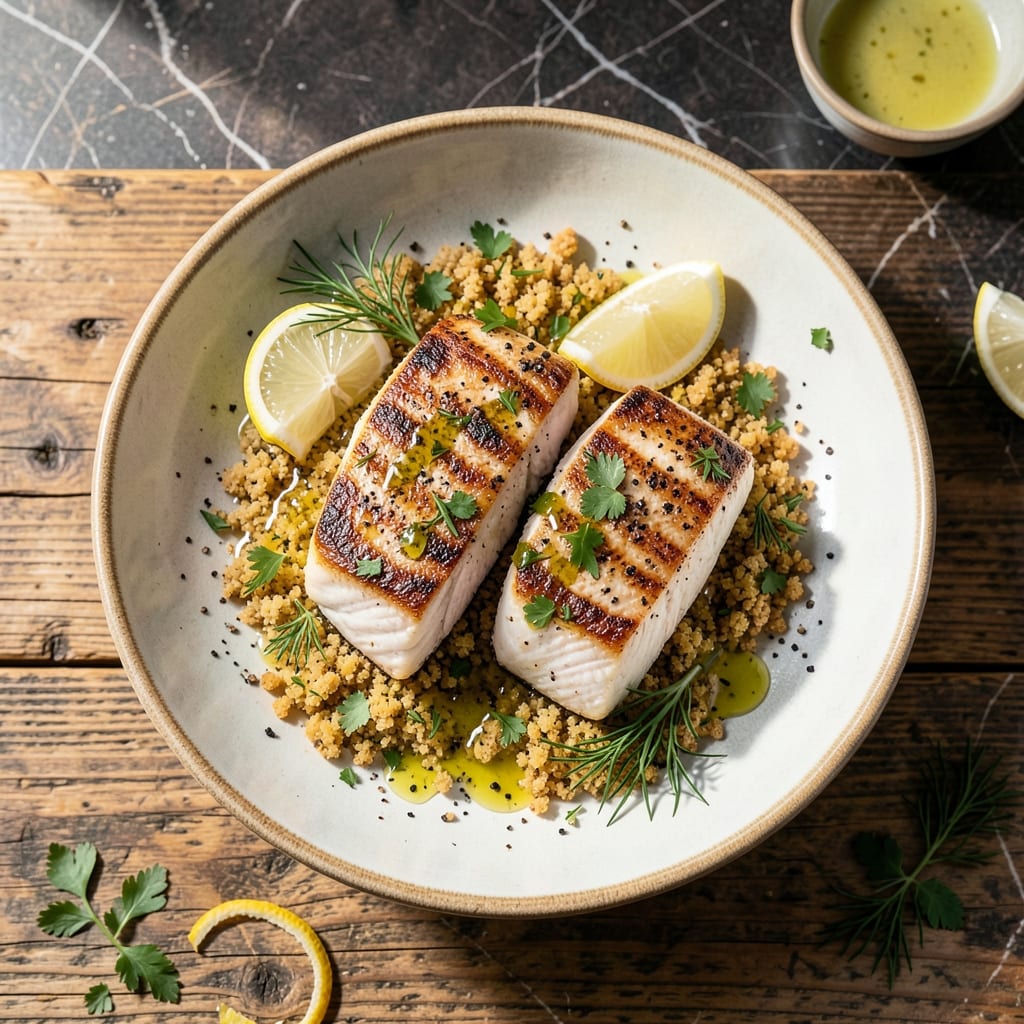
This professional method for swordfish steaks delivers restaurant-quality results with a simple yet impressive technique.
High heat sears the outside while keeping the inside tender and moist. A lemon-herb crust adds bright, aromatic flavor that complements the fish’s natural richness.
The key is precise timing—just 4-5 minutes per side on a properly heated grill or pan. This ensures a perfect crust without overcooking the delicate interior.
Serve immediately with the crust’s crisp texture and fresh herbs providing both visual appeal and a burst of flavor in every bite.
Ingredients for Recipe Swordfish Steaks
Restaurant-quality swordfish requires just a handful of premium ingredients for that perfect sear.
| Ingredient | Amount | Notes |
|---|---|---|
| Swordfish Steaks 🐟 | 1 ½ lb | 1-inch thick, skin removed |
| Extra-Virgin Olive Oil 🫒 | 3 tbsp | Divided for cooking and crust |
| Fresh Lemon Juice 🍋 | 3 tbsp | Freshly squeezed preferred |
| Lemon Zest 🍋 | 1 tbsp | Finely grated from 1 lemon |
| Fresh Parsley 🌿 | ¼ cup | Finely chopped, flat-leaf variety |
| Fresh Dill 🌿 | 2 tbsp | Finely chopped for crust |
| Fresh Thyme Leaves 🌿 | 1 tbsp | Stems removed before chopping |
| Garlic Cloves 🧄 | 3 cloves | Minced for maximum flavor |
| Dijon Mustard 🟡 | 1 tbsp | Smooth variety for binding |
| Kosher Salt 🧂 | 1 ½ tsp | Diamond Crystal preferred |
| Freshly Ground Black Pepper 🌶️ | 1 tsp | Coarse grind for texture |
| Panko Breadcrumbs 🍞 | ½ cup | Japanese-style for crispiness |
Optimal swordfish comes from reputable seafood markets or Whole Foods seafood counter. Look for steaks that are moist, translucent, and smell like the ocean—not fishy. 1-inch thickness is ideal for even cooking without drying out. The fresh herbs (parsley, dill, thyme) should be vibrant and aromatic. Avoid pre-chopped herbs—they lose potency quickly. Costco often carries high-quality frozen swordfish that thaws beautifully.
No fresh herbs? Dried herbs at one-third the amount work in a pinch, though fresh delivers superior bright flavor. Missing lemon zest? Lemon pepper seasoning can add citrus notes, but reduce added salt. Panko can be swapped for regular breadcrumbs, but the crust won’t be as crisp. For the mustard, whole-grain Dijon adds pleasant texture, though smooth is traditional for this application.
Swordfish steaks should be cooked immediately after seasoning. Leftovers keep for 2 days refrigerated, though best enjoyed fresh. The lemon-herb crust mixture can be prepped 1 day ahead—store covered in the fridge. For longer storage, freeze uncooked swordfish steaks wrapped tightly for up to 3 months.
Why You’ll Love This Recipe
- One Pan Wonder: I toss the swordfish in olive oil, lemon, and parsley, then sear it—cleanup is just the pan and a plate.
- Zesty Perfection: That hit of lemon zest and juice with the rich swordfish? Bright, fresh, and never boring.
- Dinner in 15: Honestly, I’ve had it on the table faster than it takes to argue with the kids about setting it.
- Leftovers? Yes Please: Cold swordfish steaks on salad the next day are my secret lunch upgrade.
Step-by-Step Instructions for Swordfish Steaks
Master the technique for perfectly seared swordfish with a vibrant lemon-herb crust.
Step 1: Prepare the Lemon-Herb Crust
In a medium bowl, combine the 0.5 cup Panko breadcrumbs, 0.25 cup Fresh Parsley, 2 tbsp Fresh Dill, 1 tbsp Fresh Thyme Leaves, 1 tbsp Lemon Zest, 3 cloves Garlic Cloves, 1 tbsp Dijon Mustard, 1.5 tsp Kosher Salt, and 1 tsp Freshly Ground Black Pepper. Mix thoroughly until all ingredients are evenly distributed and the herbs are fully incorporated into the breadcrumbs.
The mustard acts as a binder while the citrus zest brightens the herb mixture. This crust will create a golden, fragrant topping that complements the rich swordfish without overpowering it.
Step 2: Season and Coat the Swordfish
Pat the 1.5 lb Swordfish Steaks completely dry with paper towels. This crucial step ensures proper searing and prevents the crust from becoming soggy. Brush both sides of each steak lightly with 1 tbsp Extra-Virgin Olive Oil from the 3 tbsp Extra-Virgin Olive Oil.
Press the lemon-herb crust mixture firmly onto the top side of each swordfish steak, creating an even layer about ¼-inch thick. The crust should adhere well to the surface. Drizzle the remaining 2 tbsp Extra-Virgin Olive Oil over the crust to help it crisp during cooking.
Step 3: Sear the Swordfish to Perfection
Heat a grill pan or heavy skillet over medium-high heat until very hot. You want to hear a slight sizzle when you flick water onto the surface. Carefully place the swordfish steaks crust-side down in the pan. Cook undisturbed for 4-5 minutes until the crust is deep golden brown and crisp.
Gently flip the steaks and cook for an additional 3-4 minutes until the fish is opaque throughout and reaches an internal temperature of 145°F. The swordfish should flake easily when tested with a fork but still maintain its moisture.
Step 4: Finish and Serve
Transfer the swordfish steaks to a serving platter and let them rest for 2-3 minutes. This brief rest allows the juices to redistribute throughout the fish, ensuring each bite is tender and flavorful.
Drizzle the 3 tbsp Fresh Lemon Juice evenly over the steaks just before serving. The acidity cuts through the richness of the fish and enhances the herbal notes in the crust. Serve immediately while the crust is still crisp and the fish is at its peak temperature.
Pro Tips For Making Recipe Swordfish Steaks
- Sear High, Finish Medium: I learned this the hard way—crank the heat to high for the first 2 minutes per side to get that golden crust, then drop to medium to cook through without burning the lemon and parsley.
- Pat Steaks Dry: Sounds tedious, but drying the swordfish with paper towels before cooking prevents steaming and actually changes the outcome to a perfect sear.
- Skip the Overcrowding: Resist the urge to cook all steaks at once; give each at least an inch of space in the pan or they’ll steam instead of sear.
- Zest Before Juicing: My grandmother swore by this, and she was right: zest the lemon first, then juice it—it’s nearly impossible to do it the other way around.
Health Benefits of This Dish
Rich in Omega-3s
Swordfish is packed with omega-3 fatty acids, providing about 1,000mg per 6-ounce serving. These essential fats support heart health, reduce inflammation, and may lower blood pressure. I notice my energy levels feel more balanced when I include swordfish in my diet regularly. 💪
High-Quality Protein
Each serving delivers roughly 35 grams of protein, containing all nine essential amino acids. This lean protein helps build and repair tissues, making swordfish an excellent choice for active lifestyles. The protein digests easily, unlike some heavier meats.
Vitamin D Source
Swordfish naturally contains vitamin D, with one serving providing about 20% of your daily needs. This “sunshine vitamin” supports bone health and immune function. It’s especially valuable during winter months when sunlight exposure is limited.
B Vitamin Complex
This fish is rich in B vitamins, particularly B12, niacin, and B6. These nutrients play crucial roles in energy metabolism and nervous system health. Wild-caught swordfish often contains higher concentrations than farmed varieties.
Selenium Content
Swordfish provides selenium, a powerful antioxidant that protects cells from damage. A 6-ounce serving contains about 70mcg, which is over 100% of the daily value. This mineral also supports thyroid function and immune health. ✨
Low in Saturated Fat
Unlike many protein sources, swordfish is naturally low in saturated fat while still being rich in flavor. This makes it an excellent choice for those monitoring their cholesterol levels or following heart-healthy diets. The healthy fats in swordfish actually help improve cholesterol ratios.
Nutrition Facts
Frequently Asked Questions
How thick should the steaks be for even cooking?
For perfect results, use 1-inch thick steaks. This ensures the outside sears beautifully while the inside stays moist and cooks through evenly in the recommended 4-5 minutes per side.
Can I use a different type of breadcrumb?
Regular breadcrumbs work, but panko creates a crispier crust due to its coarser texture. If substituting, reduce the amount slightly as regular breadcrumbs are more compact.
What if the crust isn’t crispy enough?
Make sure your pan is very hot before adding the steaks and avoid moving them while cooking. Press the crust on firmly before cooking and drizzle with olive oil to help it brown.
How do I know when it’s fully cooked?
The fish should reach an internal temperature of 145°F and flake easily with a fork. The flesh will turn from translucent to opaque when done.

- BBQ Sausage Recipe Oven: Smoky Depth Without the Grill - September 28, 2026
- BBQ Chicken Bowl Recipe Rice: Smoky Sweetness Over Fluffy Grains - September 28, 2026
- Beef Cutlet Recipe Ideas: Crispy Breaded Patties With Bold Seasonings - September 28, 2026