
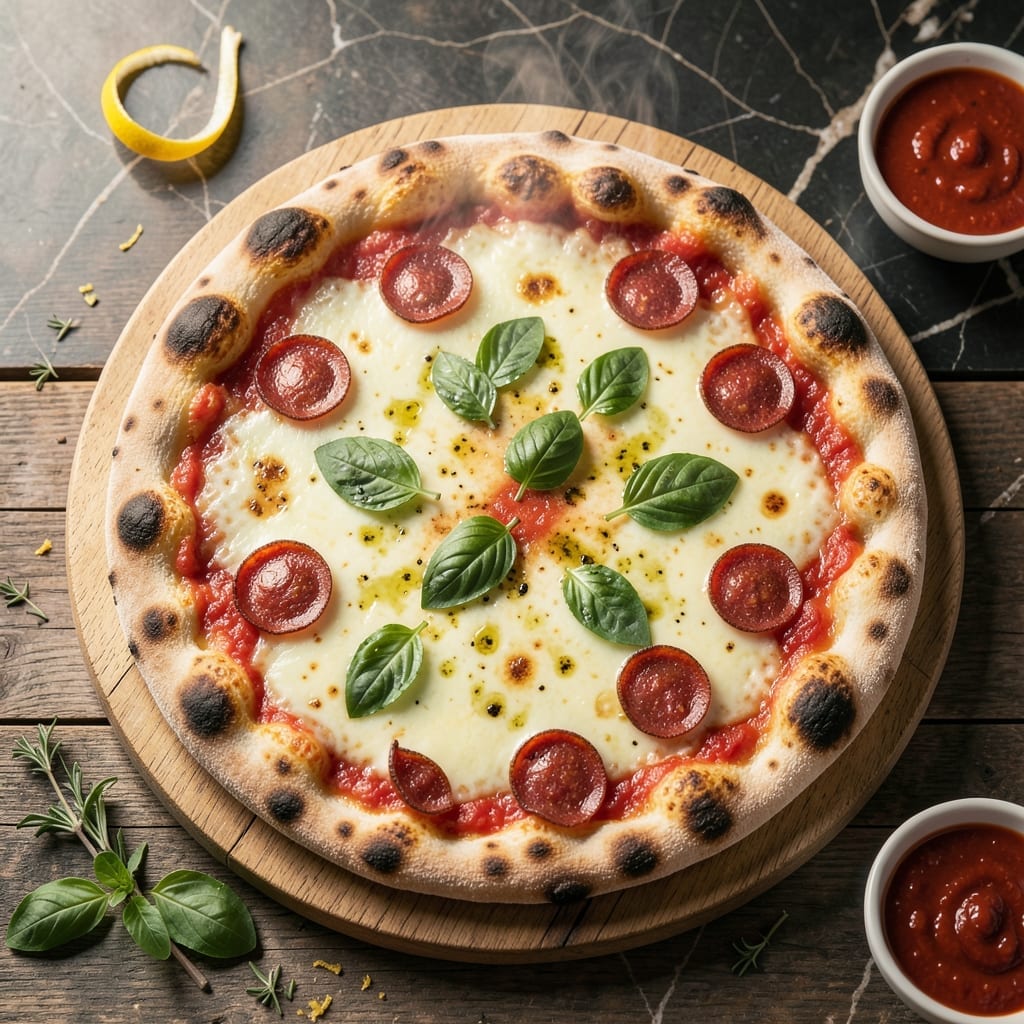
Achieving a crispy thin crust pizza at home is simpler than you might expect. This method delivers professional results without specialized equipment.
The secret lies in the dough preparation and baking technique. A high-temperature oven and minimal toppings ensure the base stays perfectly crispy while fully cooking through.
You’ll create a foundation so sturdy it holds up to bold flavors without becoming soggy. The thin layer of sauce and carefully selected toppings complement rather than overwhelm.
This approach transforms your kitchen into a pizzeria with every bite delivering that satisfying crunch. The process rewards precision over complexity.
Ingredients for Recipe Thin Crust Pizza
Precision ingredients deliver that professional pizzeria crispness at home with bold flavor balance.
| Ingredient | Amount | Notes |
|---|---|---|
| Bread Flour 🌾 | 2 ½ cups | High-protein for chewy texture |
| Active Dry Yeast 🍞 | 1 tsp | Instant or active dry works |
| Granulated Sugar 🍚 | 1 tsp | Feeds the yeast for rise |
| Kosher Salt 🧂 | 1 ½ tsp | Diamond Crystal preferred |
| Warm Water 💧 | 1 cup | 110°F, not hotter |
| Extra-Virgin Olive Oil 🫒 | 2 tbsp | Divided for dough and brushing |
| San Marzano Tomatoes 🍅 | 1 can | 28 oz, crushed by hand |
| Fresh Garlic Cloves 🧄 | 3 cloves | Minced for sauce |
| Dried Oregano 🌿 | 1 tsp | Mediterranean variety preferred |
| Fresh Basil Leaves 🍃 | ¼ cup | Torn, for finishing |
| Low-Moisture Mozzarella Cheese 🧀 | 8 oz | Shredded from block |
| Parmigiano-Reggiano Cheese 🧀 | ½ cup | Freshly grated, fine |
| Red Pepper Flakes 🌶️ | ½ tsp | Optional, for heat |
| Semolina Flour 🌾 | ¼ cup | For dusting peel |
| Cornmeal 🌽 | 2 tbsp | Alternative to semolina |
The flour is non-negotiable here. Bread flour (King Arthur or Bob’s Red Mill) provides the gluten structure needed for a thin, sturdy base that holds up to high heat. San Marzano tomatoes—available at Whole Foods or Italian markets—are the gold standard for sauce, their low acidity and sweet balance ensuring the crust doesn’t get soggy. Yeast freshness matters: check the expiration date and store it in the freezer if keeping longer than a month.
No bread flour? All-purpose plus 1 tbsp vital wheat gluten per cup gets close. For the tomatoes, Muir Glen fire-roasted work in a pinch, but drain them well. Vegan? Skip the cheese or use Miyoko’s liquid mozzarella. Pre-shredded cheese has anti-caking agents that prevent proper melting—always shred from a block. The olive oil should be high-quality; California Olive Ranch is a reliable supermarket option.
The dough can rest overnight in the fridge for deeper flavor development. Sauce keeps for 5 days refrigerated, cheese freezes for 3 months if pre-shredded (though texture degrades slightly). Baked pizza is best eaten immediately, but leftovers reheat well in a dry skillet to revive the crispy crust.
Why You’ll Love This Recipe
- I’ll be real: it’s saved me from takeout more times than I can count. (Yes, even on a Tuesday night)
- No-Fuss Dough: The yeast does most of the work while I sip coffee—just mix, rest, roll.
- Crispy Perfection: That thin, crackly crust with a hint of sweetness from the sugar is my idea of pizza nirvana.
- Weeknight Hero: I’ll be real: it’s saved me from takeout more times than I can count. (Yes, even on a Tuesday night)
Step-by-Step Instructions for Thin Crust Pizza
Master the technique for achieving a perfectly crisp base with vibrant toppings every time.
Step 1: Activate Yeast and Prepare Dough
In a small bowl, combine the 1 cup Warm Water with the 1 tsp Granulated Sugar and 1 tsp Active Dry Yeast. Let it sit for 5-7 minutes until the mixture becomes frothy and cloudy—this confirms the yeast is active and ready to work.
In a large mixing bowl, whisk together the 2.5 cups Bread Flour and 1.5 tsp Kosher Salt. Create a well in the center and pour in the yeast mixture along with 1 tbsp Extra-Virgin Olive Oil. Stir with a wooden spoon until a shaggy dough forms, then turn it out onto a lightly floured surface.
Step 2: Knead and Rest the Dough
Knead the dough by hand for 8-10 minutes until it becomes smooth and elastic. The dough should spring back when pressed lightly with a finger. If it feels too sticky, add a small amount of flour, but avoid over-flouring as this can make the crust dense.
Lightly coat the inside of a clean bowl with 1 tbsp Extra-Virgin Olive Oil and place the dough inside. Cover with a damp kitchen towel and let it rise in a warm, draft-free area for 1-2 hours, or until doubled in volume. This slow rise develops flavor and ensures a light, airy texture.
Step 3: Shape the Dough and Prepare Toppings
Punch down the risen dough to release excess air, then divide it into 4 equal portions for individual pizzas. On a surface dusted with 0.25 cup Semolina Flour or 2 tbsp Cornmeal, roll out one portion to a ¼-inch thickness using a rolling pin. The semolina or cornmeal prevents sticking and adds a subtle crunch to the crust.
For the sauce, crush the 1 can San Marzano Tomatoes by hand in a bowl and mix with minced 3 cloves Fresh Garlic Cloves, 1 tsp Dried Oregano, and a pinch of 0.5 tsp Red Pepper Flakes if using. Allow the flavors to meld while you prepare the cheese.
Step 4: Assemble and Bake the Pizza
Preheat your oven to 500°F with a pizza stone or inverted baking sheet inside for at least 30 minutes. Transfer the rolled dough onto a piece of parchment paper, then spread a thin layer of sauce, leaving a ½-inch border for the crust. Sprinkle with 8 oz Low-Moisture Mozzarella Cheese and 0.5 cup Parmigiano-Reggiano Cheese.
Slide the pizza (parchment and all) onto the preheated stone or baking sheet. Bake for 10-12 minutes until the crust is golden brown and the cheese is bubbly and slightly spotted. The high heat ensures a crispy base while cooking the toppings to perfection.
Step 5: Finish and Serve
Remove the pizza from the oven and immediately transfer it to a cutting board. Garnish with torn 0.25 cup Fresh Basil Leaves for a burst of freshness. Let it cool for 2-3 minutes to allow the cheese to set slightly before slicing.
Use a sharp knife or pizza cutter to divide into portions. The crust should be crisp and sturdy enough to hold up to the bold flavors of the sauce and cheese, delivering the promised texture in every bite.
Pro Tips For Making Recipe Thin Crust Pizza
- Proof the Yeast: Always activate your dry yeast in warm water (110°F) with a pinch of sugar first—I learned this the hard way after a few flat, sad pizzas that never rose.
- Chill the Dough: After kneading, let the dough rest in the fridge for at least 2 hours (overnight is better). The gluten relaxes, making it easier to roll thin without snapping back.
- Skip the Over-Flour: Resist the urge to dump extra flour on the counter when rolling. Too much makes the crust tough; just enough to prevent sticking keeps it crisp and tender.
- Preheat the Pan: Heat your baking sheet or pizza stone in the oven for 20 minutes before adding the dough. Sounds weird, but it works: the instant sizzle gives that perfect thin, blistered crust.
Perfect Pairings for This Recipe
Salad Pairings
A simple arugula salad with lemon vinaigrette cuts through the richness of the cheese. I use 4 cups baby arugula tossed with 2 tbsp olive oil and 1 tbsp fresh lemon juice. The peppery bite complements the crispy crust perfectly. 🥗
Wine Pairings
Italian red wines work beautifully here. I recommend Chianti Classico—its bright acidity and cherry notes balance the tomato sauce. For white wine lovers, Pinot Grigio from Friuli offers a crisp, clean finish that refreshes your palate. 🍷
Beer Options
A light Italian lager like Peroni or Birra Moretti enhances the meal without overpowering the flavors. For craft beer fans, a Belgian-style witbier with citrus notes adds an interesting contrast to the savory cheese.
Side Dish Ideas
Garlic knots made from leftover dough are a crowd-pleaser. Brush with 2 tbsp melted butter and sprinkle with 1 tsp garlic powder. Alternatively, roasted vegetables like zucchini or bell peppers add color and nutrition.
Finishing Touches
Add crushed red pepper flakes at the table for heat lovers—about ½ tsp is ideal. A drizzle of balsamic glaze after baking adds sweetness that pairs well with the tangy tomato sauce. Fresh basil leaves provide a bright finish.
Nutrition Facts
Frequently Asked Questions
What’s the best flour for a crispy base?
Bread flour is ideal for its high protein content, creating strong gluten structure. King Arthur or Bob’s Red Mill brands work perfectly. For a substitute, use all-purpose flour with 1 tbsp vital wheat gluten per cup.
Why preheat the oven so long?
A 500°F oven needs 30 minutes to fully heat the pizza stone or baking sheet. This ensures even cooking and a properly crispy crust from the first minute of baking.
Can I make the dough ahead?
Yes! Prepare the dough, let it rise, then refrigerate for up to 24 hours. The cold fermentation develops deeper flavor. Bring to room temperature before rolling out.
How do I prevent a soggy middle?
Use minimal sauce and toppings, and bake at high heat. Also, shred cheese from a block—pre-shredded contains anti-caking agents that release moisture.

- BBQ Sausage Recipe Oven: Smoky Depth Without the Grill - September 28, 2026
- BBQ Chicken Bowl Recipe Rice: Smoky Sweetness Over Fluffy Grains - September 28, 2026
- Beef Cutlet Recipe Ideas: Crispy Breaded Patties With Bold Seasonings - September 28, 2026