
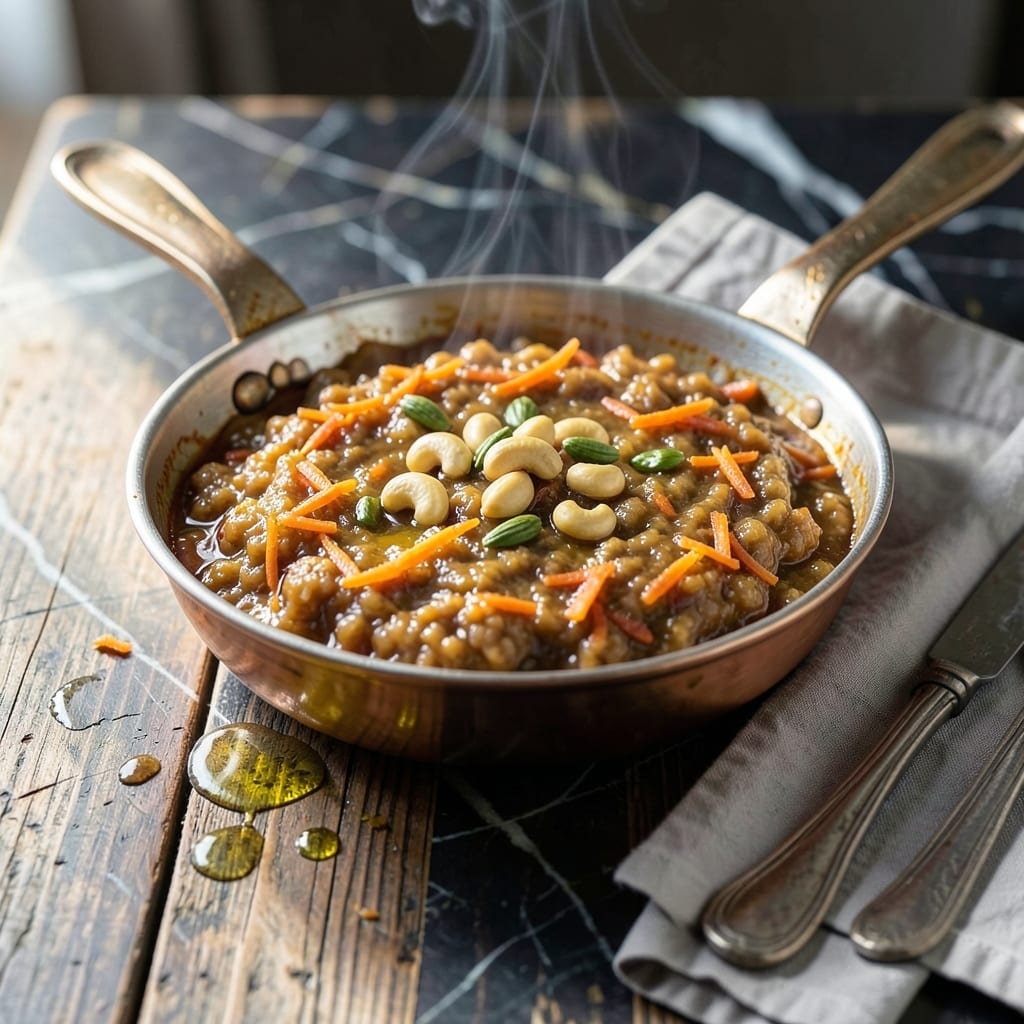
This traditional dessert transforms simple carrots into a rich, creamy pudding through slow cooking in milk. The process is straightforward but requires patience as the carrots soften and the milk reduces to a thick, velvety consistency.
What makes this version special is the balance of sweetness and cardamom aroma that develops during cooking. The result is a traditional Indian treat that’s both comforting and elegant.
Ingredients for Recipe to Make Gajar Ka Halwa
Fresh carrots, milk, and warm spices create this rich, traditional Indian pudding.
| Ingredient | Amount | Notes |
|---|---|---|
| Carrots 🥕 | 2 lb | Fresh, orange variety preferred |
| Whole Milk 🥛 | 4 cups | Full-fat for creaminess |
| Granulated Sugar 🍚 | 1 cup | Adjust to taste preference |
| Ghee 🧈 | ½ cup | Clarified butter, essential for authenticity |
| Cardamom Pods 🌿 | 8 pieces | Green cardamom, lightly crushed |
| Cashew Nuts 🌰 | ½ cup | Chopped, for garnish and texture |
| Raisins 🍇 | ½ cup | Golden or black, soaked in warm water |
| Rose Water 🌹 | 1 tsp | Optional, for floral aroma |
| Saffron Strands 🌼 | ¼ tsp | Optional, soaked in warm milk |
| Pistachio Nuts 🌰 | ¼ cup | Chopped, for garnish |
The carrots are the foundation here. Bright orange, firm carrots yield the best color and sweetness—avoid the pre-cut baby carrots as they lack depth. Whole Foods or Indian grocery stores often stock the ideal variety. The milk needs to be full-fat; skim or reduced-fat won’t give you that luxurious, creamy texture. For the ghee, Patel Brothers or local South Asian markets carry authentic, high-quality options.
No cardamom pods? Ground cardamom at half the amount works, but whole pods release flavor more slowly and evenly during cooking. If saffron isn’t available, skip it—don’t substitute with artificial coloring. For the nuts, almonds or walnuts can replace cashews or pistachios. The raisins add natural sweetness, so if you’re out, chopped dates work too.
This dessert keeps well in the fridge for 4-5 days and actually tastes better the next day as flavors meld. Store in an airtight container. To reheat, warm gently on the stove with a splash of milk to restore creaminess. Freezing isn’t recommended as it alters the texture.
Why You’ll Love This Recipe
- One Pot Wonder: I just grate the carrots, dump everything in one heavy-bottomed pan, and let it simmer—no fancy equipment needed.
- Warm Spice Hug: The cardamom pods infused in hot ghee release this fragrant aroma that makes the whole kitchen smell like a cozy winter evening.
- Festival Ready: I make a big batch for Diwali, but honestly, it’s just as perfect for a lazy Sunday when I’m craving something sweet.
- Stretches Further: A kilo of carrots and a liter of milk turn into a dessert that feeds six easily, and leftovers taste even better the next day.
Step-by-Step Instructions for Traditional Carrot Pudding
This traditional method ensures rich, creamy results with authentic Indian flavors.
Step 1: Prepare and Cook the Carrots
Peel and grate the 2 lb Carrots using a fine grater or food processor. I prefer fine grating as it helps the carrots cook down faster and creates a smoother texture in the final dish. The carrots should be fresh and orange for the best color and sweetness.
Heat 2 tablespoons of the 0.5 cup Ghee in a heavy-bottomed pan over medium heat. Add the grated carrots and sauté for 8-10 minutes until they begin to soften. Stir frequently to prevent sticking and ensure even cooking.
Step 2: Slow-Cook with Milk and Aromatics
Pour in the 4 cups Whole Milk and add the 8 pieces Cardamom Pods (lightly crushed to release their aroma). Stir well to combine. Reduce the heat to medium-low and let the mixture simmer uncovered for 30-40 minutes, stirring occasionally.
You’ll notice the milk gradually reducing and the carrots becoming very tender. This slow cooking process is essential for developing the deep, rich flavor characteristic of traditional halwa. The mixture should thicken to a porridge-like consistency when it’s ready for the next step.
Step 3: Add Sugar and Remaining Ghee
Add the 1 cup Granulated Sugar and the remaining ghee. Stir well and continue cooking over medium-low heat for another 15-20 minutes. The mixture will thicken further as the sugar dissolves and the moisture evaporates.
Watch for the halwa to start pulling away from the sides of the pan and form a cohesive mass. At this stage, you should be able to see the bottom of the pan when stirring. The color will deepen to a rich orange, and the kitchen will be filled with a sweet, spiced aroma.
Step 4: Incorporate Optional Flavors and Nuts
If using, add the 0.25 tsp Saffron Strands (soaked in warm milk) and 1 tsp Rose Water. Stir well to distribute the flavors evenly. These ingredients add a luxurious floral note that’s traditional in many versions of gajar ka halwa.
Next, add the 0.5 cup Cashew Nuts and 0.5 cup Raisins. Cook for an additional 5 minutes to allow the nuts to toast slightly and the raisins to plump up. The raisins should be soft and the cashews lightly golden when done.
Step 5: Finish and Garnish for Serving
Transfer the halwa to a serving dish. While still warm, sprinkle the 0.25 cup Pistachio Nuts (chopped) over the top. The heat from the halwa will slightly toast the pistachios, enhancing their flavor and adding a beautiful green contrast to the orange pudding.
Let it cool slightly before serving. The texture should be dense and fudgy when warm, and it will firm up more as it cools. Serve warm or at room temperature for the best experience, with each bite offering a perfect balance of sweet carrots, creamy milk, and the crunch of nuts.
Pro Tips For Making Recipe To Make Gajar Ka Halwa
- Grate Carrots Fine: Use the smallest grating disc on your food processor for even, quick cooking—I learned this the hard way after ending up with chewy chunks in my halwa.
- Simmer Milk Slow: Keep the flame at medium-low and stir often; rushing this step with high heat makes the milk scorch and ruins the texture.
- Add Sugar Late: Wait until the carrots are fully cooked and milk is reduced before adding sugar, otherwise the halwa stays watery.
- Use Fresh Ghee: Stir in 2 tablespoons of warm, fresh ghee at the end for a rich aroma—old or burnt ghee gives a bitter taste that’s hard to fix.
Common Mistakes When Making recipe to make gajar ka halwa
Rushing the Process
This dessert demands patience as the milk slowly reduces. I learned the hard way that cranking up the heat to high causes the milk to curdle and stick to the pan. Keep it at medium-low heat throughout.
Skipping Fine Grating
Coarsely grated carrots take forever to soften and create a grainy texture. I always use a fine grater or food processor for the 2 lb carrots. The finer the grate, the creamier your final halwa will be.
Over-Sweetening Early
Adding all the 1 cup sugar at once can make the mixture too sweet before the milk reduces properly. I add sugar only after the milk has reduced by about half. This builds flavor gradually.
Neglecting to Stir
Leaving the mixture unattended, even for 5 minutes, can cause burning at the bottom. I set a timer to stir every 3-4 minutes during the long cooking process. A heavy-bottomed pan helps prevent hot spots.
Using Low-Fat Milk
The 4 cups whole milk is non-negotiable for that rich, creamy texture. I tried using 2% once, and the result was watery and disappointing. Full-fat is essential for authenticity.
Adding Nuts Too Soon
Adding the 0.5 cup cashews or raisins at the beginning makes them soggy. I add them only in the final 5 minutes of cooking so they retain their texture and crunch.
Frequently Asked Questions
Can I use canned carrots instead of fresh?
No, fresh carrots are essential for authentic texture and flavor. Canned carrots become mushy and lack the natural sweetness. Always use 2 lb of fresh, orange carrots for best results.
How do I know when it’s done cooking?
The halwa is ready when it pulls away from the pan sides and forms a thick, cohesive mass. You should see the pan bottom clearly when stirring. This usually takes 45-50 minutes of cooking.
Can I make this in a pressure cooker?
While possible, traditional slow cooking develops the best flavor. In a pressure cooker, cook on low for 15 minutes after sautéing, but expect slightly different texture.
What’s the best way to store leftovers?
Store in an airtight container in the fridge for up to 5 days. Reheat gently on the stove with a splash of milk to restore creaminess. Freezing isn’t recommended.
Nutrition Facts

- BBQ Sausage Recipe Oven: Smoky Depth Without the Grill - September 28, 2026
- BBQ Chicken Bowl Recipe Rice: Smoky Sweetness Over Fluffy Grains - September 28, 2026
- Beef Cutlet Recipe Ideas: Crispy Breaded Patties With Bold Seasonings - September 28, 2026