
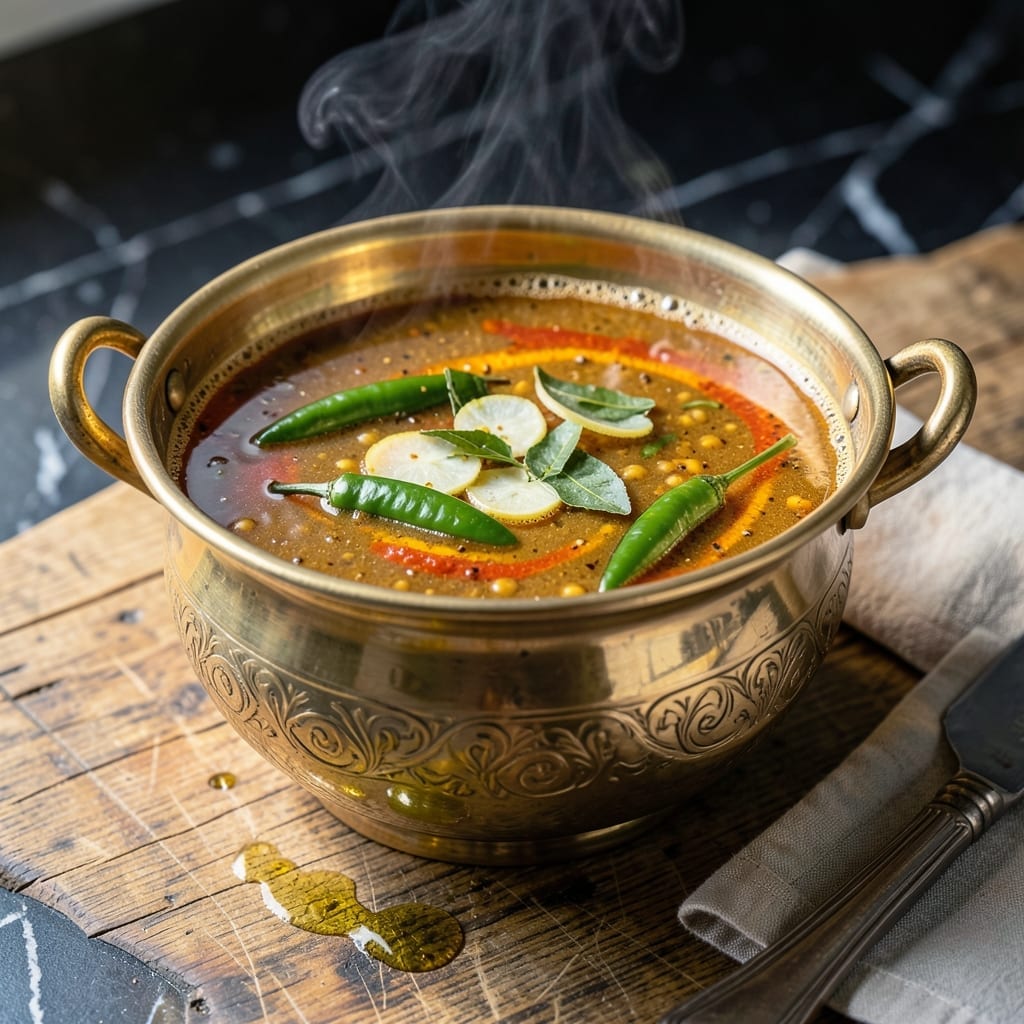
This traditional South Indian broth delivers a perfect balance of tangy, spicy, and aromatic flavors using a homemade spice blend. The recipe honors authentic techniques while keeping preparation simple.
You’ll achieve a light yet deeply flavorful soup that pairs beautifully with rice or enjoys as a comforting standalone dish. The key lies in toasting and grinding whole spices for maximum freshness.
Ingredients for Recipe to Make Rasam
Authentic South Indian spices and fresh ingredients create this vibrant, tangy broth from scratch.
| Ingredient | Amount | Notes |
|---|---|---|
| Toor Dal 🌾 | ½ cup | Rinsed and cooked until soft |
| Tamarind Paste 🍋 | 2 tbsp | Or lemon-sized tamarind pulp |
| Tomatoes 🍅 | 2 whole | Medium, finely chopped |
| Green Chili Peppers 🌶️ | 2 whole | Slit lengthwise, adjust to taste |
| Fresh Ginger 🌿 | 1 piece | 1-inch, crushed or grated |
| Curry Leaves 🍃 | 1 sprig | Fresh preferred, about 10 leaves |
| Asafoetida 🧂 | ¼ tsp | Hing, essential for authenticity |
| Cumin Seeds 🌿 | 1 tsp | Whole, for tempering |
| Mustard Seeds 🌶️ | 1 tsp | Black or yellow, for tempering |
| Dried Red Chili Peppers 🌶️ | 2 whole | Broken into pieces |
| Turmeric Powder 🌶️ | ½ tsp | Ground, for color and earthiness |
| Fresh Cilantro 🌿 | ¼ cup | Chopped, for garnish |
| Ghee or Olive Oil 🧈 | 2 tbsp | For tempering, use ghee for authenticity |
| Water 💧 | 4 cups | For broth consistency |
| Salt 🧂 | 1 tsp | Adjust to taste |
The whole spices are non-negotiable for authentic flavor. Indian grocery stores or Patel Brothers will have asafoetida, curry leaves, and quality tamarind. Toast the cumin and mustard seeds whole for maximum aroma—pre-ground loses its punch. For the dal, Toor dal (pigeon pea lentils) is traditional, but yellow lentils work in a pinch. Look for tamarind paste without added sugars or preservatives.
Short on time? Pre-cooked dal from the Indian store saves 30 minutes. No tamarind? Lemon juice or lime juice at double the amount gives similar tang. Green chilies can be replaced with serrano peppers—adjust heat to preference. Fresh ginger is essential, but ginger paste at half the quantity works if you’re desperate. Skip the cilantro garnish if unavailable, but it adds freshness.
Rasam tastes best fresh but keeps for 2 days in the fridge. Reheat gently to preserve the bright flavors. Freezing isn’t recommended—textures change. Store tamarind paste in an airtight container in the fridge for up to 6 months. Whole spices stay fresh for 1 year in a cool, dark place.
Why You’ll Love This Recipe
- One Pot Wonder: I just toss the toor dal, tamarind, and tomatoes into a single pot—minimal mess, maximum flavor.
- Tangy Spice Kick: The tamarind paste and green chilies give that bold, tangy heat I crave in every sip.
- Weeknight Lifesaver: Between us, it’s my go-to when I need something warm and ready in under 30 minutes.
- Budget Stretcher: A handful of pantry staples and fresh ginger feed my family for days without breaking the bank.
Step-by-Step Instructions for Rasam
Master this traditional method to achieve the perfect balance of tangy, spicy, and aromatic flavors.
Step 1: Prepare the Toor Dal Base
Rinse the 0.5 cup Toor Dal thoroughly under cold running water until the water runs clear. This removes any debris and ensures a clean, earthy flavor in your broth. Drain the dal and transfer it to a pressure cooker with the 4 cups Water and 0.5 tsp Turmeric Powder.
Cook on medium-high heat until it reaches full pressure, then reduce to low heat and cook for 15-18 minutes. The dal should soften completely and break apart when pressed between your fingers. If using a regular pot, simmer for 30-40 minutes, adding water as needed to maintain a broth-like consistency. Mash the cooked dal lightly with the back of a spoon to create a smooth base for your rasam.
Step 2: Extract Tamarind and Prepare Vegetables
While the dal cooks, soak the 2 tbsp Tamarind Paste in ½ cup of warm water for 10 minutes to soften. Mash it with your fingers to dissolve completely, then strain through a fine-mesh sieve to remove any seeds or fibers. You should have a smooth, tangy liquid.
Finely chop the 2 whole Tomatoes, slit the 2 whole Green Chili Peppers lengthwise, crush or grate the 1 piece Fresh Ginger, and separate the leaves from the 1 sprig Curry Leaves. This preparation ensures all your aromatics are ready to go when you begin tempering. The tomatoes should be uniformly diced to cook evenly and release their juices into the broth.
Step 3: Temper the Spices
Heat the 2 tbsp Ghee or Olive Oil in a heavy-bottomed pot over medium heat. Add the 1 tsp Mustard Seeds first—when they begin to splutter and pop (after about 30-45 seconds), add the 1 tsp Cumin Seeds, 2 whole Dried Red Chili Peppers (broken into pieces), and 0.25 tsp Asafoetida.
Stir constantly for 20-30 seconds until the seeds turn golden brown and the asafoetida releases its pungent aroma. Immediately add the crushed ginger, curry leaves, and green chili peppers. Sauté for another 30 seconds until the curry leaves become crisp and the ginger turns slightly golden. Be careful not to burn the spices—this would make the rasam bitter.
Step 4: Combine and Simmer
Pour the strained tamarind liquid into the tempered spices, followed by the chopped tomatoes. Cook over medium heat for 5-7 minutes, stirring occasionally, until the tomatoes soften completely and the raw smell of tamarind disappears. The mixture should reduce slightly and develop a glossy sheen.
Add the cooked toor dal with its water to the pot. Stir in the 1 tsp Salt and bring to a gentle boil. Reduce the heat to low and let it simmer for 10-12 minutes to allow all the flavors to meld together. The rasam should be thin and soup-like. If it thickens too much, add warm water to achieve your desired consistency.
Step 5: Finish and Garnish
Taste and adjust the salt if needed—the flavors should be bold and well-balanced with tanginess from the tamarind, heat from the chilies, and earthiness from the dal. The broth should have a vibrant, slightly frothy appearance on top, indicating that the spices have been properly tempered.
Remove from heat and let it rest for 5 minutes to allow the flavors to settle. Garnish with the 0.25 cup Fresh Cilantro just before serving. The cilantro adds a fresh, herbal note that complements the deep, complex flavors of the rasam. Serve hot with steamed rice or as a standalone soup.
Pro Tips For Making Recipe To Make Rasam
- Simmer the Dal: Cook the toor dal until it’s soft but not mushy—about 15-20 minutes on medium-low heat. Overcooking turns it starchy and thickens the rasam too much.
- Soak Tamarind First: Soak the tamarind paste in warm water for 10 minutes before squeezing out the pulp. This extracts more flavor and avoids a bitter aftertaste.
- Temper Properly: Heat the ghee or oil for tempering until it’s shimmering, then add mustard seeds, cumin, and curry leaves in that order. Adding them too early or all at once kills the aroma.
- Balance the Sour: Add tamarind pulp gradually and taste as you go—about 1-2 teaspoons for a standard batch. Too much sourness can overpower the ginger and green chilies.
Troubleshooting Perfect Results
Bitter Rasam
If your rasam tastes bitter, the spices likely burned during tempering. Always keep the heat at medium and stir constantly. I remove the pot from heat the moment mustard seeds start popping to prevent this. 🌡️
Too Thick
Rasam should be soup-like. If yours thickens, add ½ cup warm water at a time until desired consistency is reached. Remember, the dal continues absorbing liquid even after cooking.
Lacks Tanginess
Insufficient tamarind is often the culprit. Dissolve an extra 1 tsp tamarind paste in ¼ cup warm water, strain, and stir into the broth. Taste before adding more to avoid overpowering the dish.
Overly Spicy
Balance heat by adding ½ cup coconut milk or ¼ cup plain yogurt. This mellows the chilies while adding creaminess. I also recommend reducing green chilies to just 1 next time.
Weak Flavor
Under-toasted spices or insufficient tempering time can cause blandness. Ensure you temper for the full 20-30 seconds until seeds turn golden brown. Adding a pinch of extra asafoetida can also boost depth.
Dal Not Soft
If your toor dal remains firm, it didn’t cook long enough. Pressure cook for the full 18 minutes, or simmer in a pot for 40 minutes. Soaking dal for 30 minutes before cooking helps too. 💡
Frequently Asked Questions
Can I use lemon juice instead of tamarind?
Yes, substitute 4 tbsp lemon juice for tamarind. Add it at the end to preserve freshness. The flavor will be brighter but less complex.
What if I don’t have curry leaves?
Skip them if needed, but the dish will lack depth. A pinch of dried curry leaf powder works in a pinch. Fresh is always best for authentic flavor.
How do I store leftovers?
Keep in an airtight container in the fridge for up to 2 days. Reheat gently on the stove. Avoid freezing as textures may separate.
Why did my rasam turn bitter?
Spices likely burned during tempering. Always cook on medium heat and stir constantly. Remove from heat once seeds start popping.
Nutrition Facts

- BBQ Sausage Recipe Oven: Smoky Depth Without the Grill - September 28, 2026
- BBQ Chicken Bowl Recipe Rice: Smoky Sweetness Over Fluffy Grains - September 28, 2026
- Beef Cutlet Recipe Ideas: Crispy Breaded Patties With Bold Seasonings - September 28, 2026