
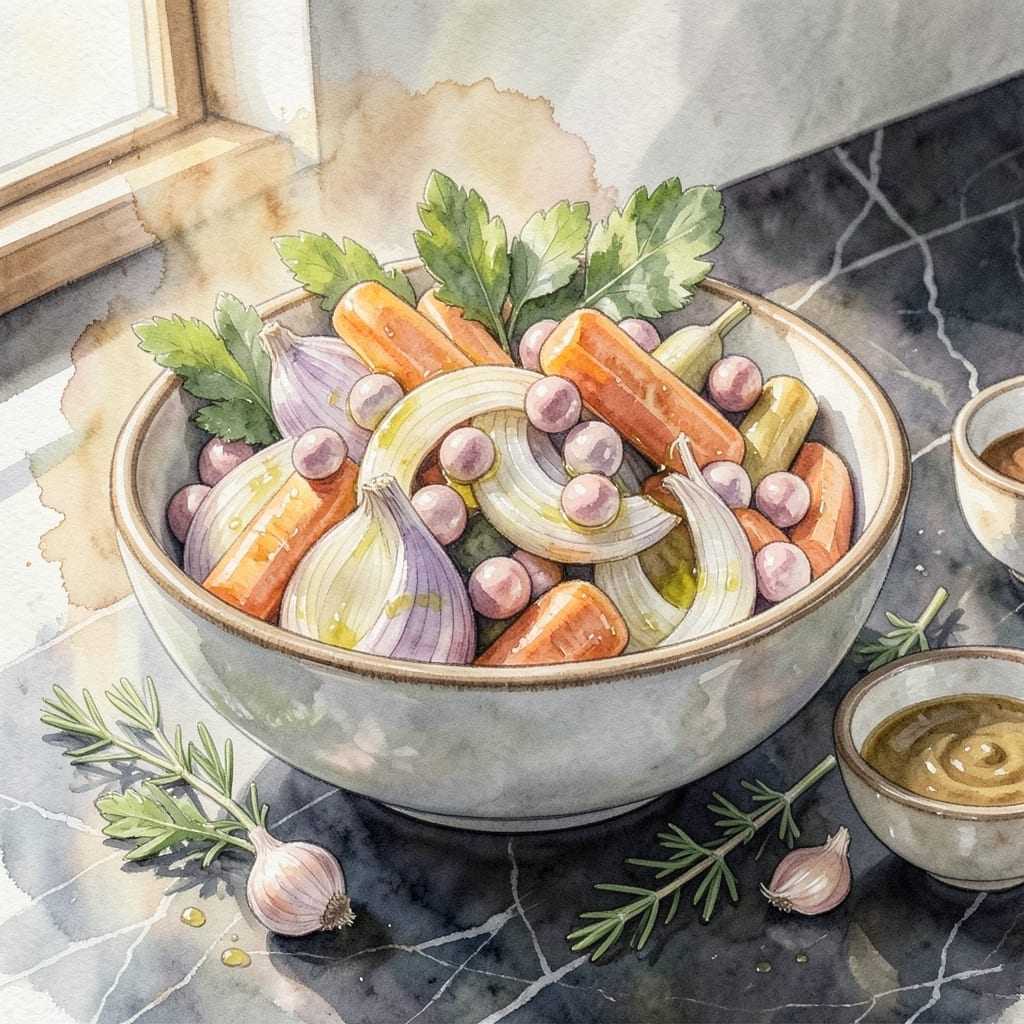
Weeknight dinners demand speed without sacrificing quality, and this sautéed vegetable dish delivers both. Frozen mixed vegetables form the base of a quick, flavorful side that comes together in minutes.
I developed this method to transform simple frozen vegetables into something special. A hot pan, a touch of oil, and the right seasonings create a dish with vibrant color and satisfying texture.
The vegetables retain their natural sweetness while developing a slight char at the edges. Garlic and herbs add depth, making this side anything but ordinary.
This weeknight solution pairs perfectly with any main course and proves that frozen vegetables can be just as delicious as fresh.
Ingredients for Recipe with Frozen Mixed Vegetables
A handful of pantry staples turns frozen veggies into something worth writing home about.
| Ingredient | Amount | Notes |
|---|---|---|
| Frozen Mixed Vegetables 🥕 | 16 oz | Peas, carrots, corn, green beans blend |
| Extra-Virgin Olive Oil 🫒 | 2 tbsp | Divided for sautéing and finishing |
| Garlic Cloves 🧄 | 4 cloves | Minced for maximum flavor |
| Red Onion 🧅 | ½ whole | Thinly sliced for texture |
| Vegetable Broth 🥣 | ¼ cup | Low-sodium preferred for control |
| Dried Thyme 🌿 | 1 tsp | Crushed between fingers for release |
| Dried Oregano 🍃 | 1 tsp | Mediterranean variety ideal |
| Smoked Paprika 🌶️ | ½ tsp | Adds depth and color |
| Sea Salt 🧂 | ½ tsp | Fine grain for even distribution |
| Freshly Ground Black Pepper 🌶️ | ½ tsp | Coarse grind preferred |
| Lemon Juice 🍋 | 1 tbsp | Freshly squeezed for brightness |
| Fresh Parsley 🌿 | 2 tbsp | Chopped, for garnish |
The frozen vegetables are key here. Trader Joe’s or Whole Foods 365 brand have the best texture—avoid the ones with added sauces. I always keep a bag in the freezer for nights like this (no prep, no waste). The olive oil should be something you’d actually drizzle on bread—California Olive Ranch is my go-to. For the herbs, Penzeys has the freshest dried options if you’re not growing your own.
No fresh parsley? Dried at one-third the amount works, but it won’t have that pop of color. Swap the smoked paprika for regular if that’s what’s in your spice rack. The vegetable broth can be water in a pinch, but the broth adds depth. If you’ve got fresh garlic, use it—jarred minced garlic (I won’t judge) works too, but fresh is always better.
This keeps 3-4 days in the fridge, but honestly, it’s best fresh. The parsley garnish is worth the extra minute—adds that restaurant-quality finish. Leftovers reheat well in a dry pan (don’t microwave, they’ll get soggy).
Why You’ll Love This Recipe
- No Chopping Needed: No knife required—just dump the frozen veggies straight from the bag.
- Garlic Kissed Goodness: The sizzle of garlic in olive oil turns simple veggies into something ridiculously good.
- Weeknight Sidekick: I toss this together while the pasta boils—dinner’s side dish, sorted.
- Pantry Hero: Frozen veggies plus a few staples means a solid meal for under five bucks.
Step-by-Step Instructions for Sautéed Mixed Vegetables
Here’s how I turn frozen veggies into a vibrant, flavorful side in minutes.
Step 1: Sauté Aromatics in Olive Oil
Heat 1 tablespoon of the extra-virgin olive oil in a large skillet over medium-high heat. Add the thinly sliced red onion and cook for 3-4 minutes until it starts to soften and turn translucent at the edges.
Add the minced garlic cloves and cook for 30 seconds, stirring constantly. You’ll smell that unmistakable garlic aroma—this is your signal to move fast before it burns. The onion should be light golden brown at this point.
This base layer builds the foundation of flavor for the entire dish. I always keep the heat at medium-high to prevent the garlic from turning bitter.
Step 2: Add Vegetables and Seasonings
Add the 16 oz frozen mixed vegetables to the skillet. Don’t thaw them first—they’ll release too much water and become mushy. Instead, let them cook directly from frozen for 5-6 minutes, stirring occasionally.
Sprinkle in the dried thyme, dried oregano, smoked paprika, sea salt, and freshly ground black pepper. I crush the thyme between my fingers as I add it to release more of its aromatic oils.
You’ll notice the vegetables start to brighten in color and develop some light browning on the edges. This is the Maillard reaction working its magic, creating those complex, savory flavors we’re after.
Step 3: Deglaze and Finish
Pour in the 0.25 cup vegetable broth and scrape up any browned bits from the bottom of the pan. This deglazing step incorporates all those flavorful browned bits into your dish. Reduce the heat to medium and let it simmer for 2-3 minutes.
The liquid should mostly evaporate, leaving the vegetables glossy and coated with a light sauce. At this point, the vegetables should be tender-crisp—not mushy, but without that frozen texture.
Drizzle with the remaining 1 tablespoon extra-virgin olive oil and the 1 tablespoon lemon juice. The acidity from the lemon brightens all the flavors and cuts through any richness.
Step 4: Garnish and Serve
Remove from heat and stir in the 2 tablespoons fresh parsley. I like to reserve a pinch for garnish on top—it adds that restaurant-quality touch. The parsley should look vibrant green against the colorful vegetables.
Taste and adjust seasoning if needed, though with the measured amounts, you shouldn’t need much. The smoked paprika should come through as a subtle, warm background note, not overpowering.
Serve immediately while hot. The vegetables should maintain their individual textures—peas slightly burst, carrots tender but still with bite, corn sweet and juicy, green beans crisp-tender. This dish comes together in under 15 minutes, making it perfect for busy weeknights.
Pro Tips For Making Recipe With Frozen Mixed Vegetables
- Don’t Thaw First: Toss the frozen veggies straight into the hot pan with oil—they’ll release moisture as they cook, which actually helps create a light sauce with the broth.
- Sear the Aromatics: Cook the red onion and garlic in olive oil until just golden before adding the frozen veggies; this builds a deeper flavor base than dumping everything in at once.
- Season the Broth: I learned this the hard way—vegetable broth can taste flat, so add a pinch of salt and pepper to it before pouring it over the vegetables.
- Cover for Tenderness: After adding the broth, cover the pan for 3-4 minutes to steam the veggies through—this shortcut softens them faster without turning them mushy.
Health Benefits of This Dish
Nutrient Retention
Frozen mixed vegetables are flash-frozen at peak ripeness, locking in up to 90% of their original nutrients. This process preserves vitamin C, vitamin A, and fiber better than long storage of fresh produce. I love that I’m getting maximum nutrition without the waste. 💪
Fiber Boost
A 1-cup serving provides about 4-5 grams of fiber, supporting digestive health. The blend of peas, carrots, corn, and green beans creates a balanced mix of soluble and insoluble fiber. This keeps you full and supports healthy gut bacteria.
Vitamin Powerhouse
This mix delivers vitamin K from green beans, beta-carotene from carrots, and folate from peas. These nutrients support immune function, vision, and cell repair. The variety means you’re covering multiple nutritional bases in one simple dish.
Low-Calorie Density
With only about 80-100 calories per cup, this dish lets you enjoy a generous portion without guilt. The high water content in vegetables helps maintain hydration while keeping calories low. Perfect for anyone watching their calorie intake.
Antioxidant Protection
Each vegetable in the mix brings unique antioxidants—lutein from corn, quercetin from peas. These compounds combat inflammation and support overall health. The colors in your pan aren’t just pretty—they represent different health benefits. ✨
Heart-Healthy Choice
Naturally cholesterol-free and low in sodium, this side supports cardiovascular health. The potassium in peas and green beans helps regulate blood pressure. I feel good knowing I’m making a heart-smart choice for my family.
Nutrition Facts
Frequently Asked Questions
Do I need to thaw the vegetables first?
No, cook them straight from frozen to prevent mushiness. Thawing releases excess water that can make the dish soggy.
Can I use a different oil?
Yes, any high-smoke-point oil like avocado or grapeseed works. Avoid butter as it burns at medium-high heat.
How do I prevent the vegetables from getting mushy?
Use a hot pan and avoid overcrowding. Cook in batches if needed, and don’t stir too often—let them brown slightly.
What can I add for extra flavor?
Try a pinch of red pepper flakes for heat or a splash of soy sauce for umami. Fresh herbs like basil also work well.

- BBQ Sausage Recipe Oven: Smoky Depth Without the Grill - September 28, 2026
- BBQ Chicken Bowl Recipe Rice: Smoky Sweetness Over Fluffy Grains - September 28, 2026
- Beef Cutlet Recipe Ideas: Crispy Breaded Patties With Bold Seasonings - September 28, 2026