
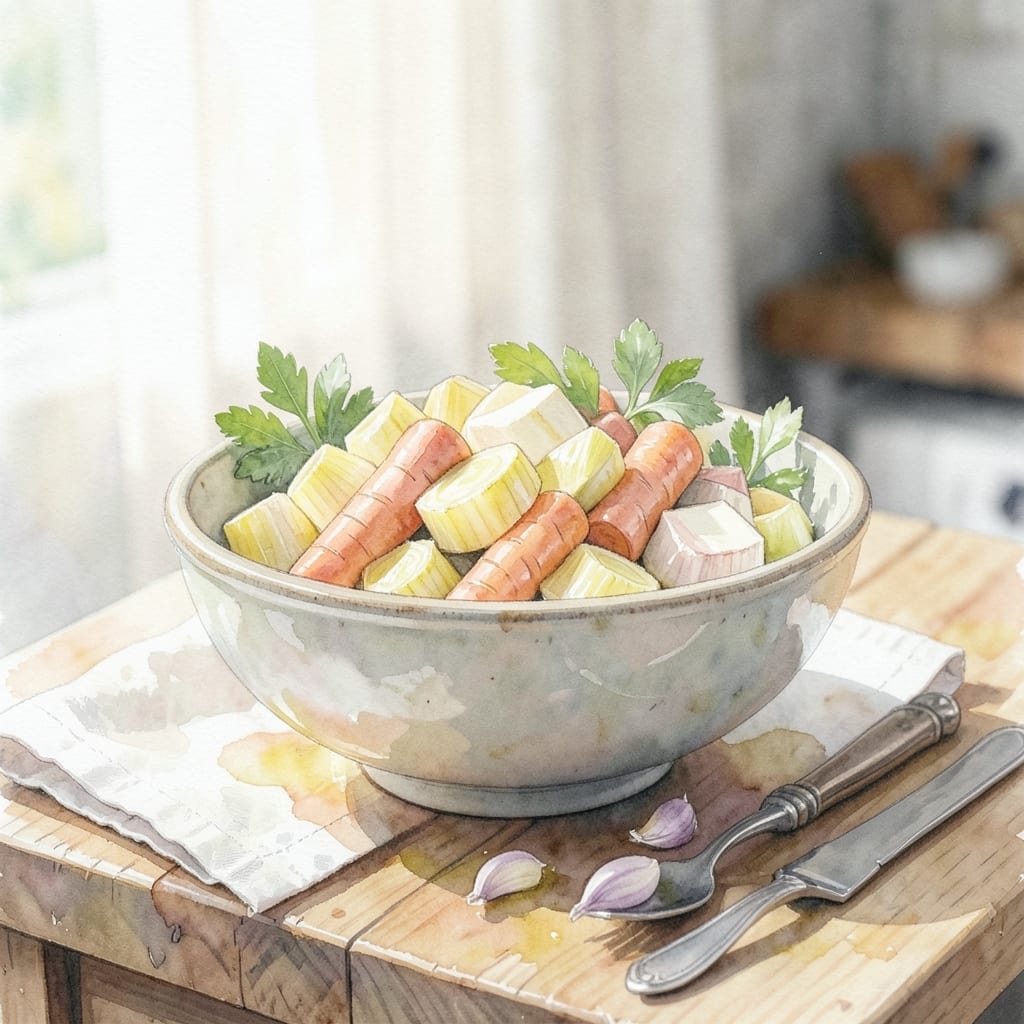
Mirepoix forms the aromatic backbone of countless French dishes, and this recipe showcases its power to build deep, layered flavors. The combination of diced onions, carrots, and celery creates a foundation that transforms simple ingredients into something extraordinary.
I’ve relied on this technique for years to elevate soups, stews, and braises with minimal effort. The key is cooking the mirepoix low and slow until the vegetables soften and their natural sweetness emerges, creating a rich base for the rest of the dish.
What you’ll end up with is a dish that tastes complex and restaurant-quality, yet requires only basic pantry staples. The mirepoix does all the heavy lifting, infusing every bite with a balanced, savory depth.
Follow along to see how this classic method can become the secret weapon in your kitchen.
Ingredients for Recipe with Mirepoix
A classic French trio plus a few pantry staples builds flavor from the ground up.
| Ingredient | Amount | Notes |
|---|---|---|
| Yellow Onions 🧅 | 2 whole | Medium, finely diced |
| Carrots 🥕 | 2 whole | Medium, finely diced |
| Celery Stalks 🌿 | 2 whole | Finely diced, leaves included |
| Olive Oil 🫒 | 2 tbsp | Extra-virgin preferred |
| Unsalted Butter 🧈 | 2 tbsp | Optional for richness |
| Garlic Cloves 🧄 | 3 cloves | Minced for depth |
| Fresh Thyme 🌿 | 2 tsp | Chopped, or 1 tsp dried |
| Bay Leaf 🍃 | 1 whole | Dried, for aroma |
| Salt 🧂 | 1 tsp | Kosher or sea salt |
| Black Pepper 🌶️ | ½ tsp | Freshly ground |
| Chicken Stock 🍲 | 4 cups | Low-sodium preferred |
| Tomato Paste 🍅 | 1 tbsp | For umami depth |
| Dry White Wine 🍷 | ½ cup | Optional, deglazing liquid |
The mirepoix is non-negotiable here. Equal parts onions, carrots, and celery—roughly 2 cups total—form the base. Organic produce isn’t required, but avoid pre-cut veggies (they lose moisture fast). I source mine from Whole Foods or a local farmers market when in season. The butter adds richness, but olive oil alone works if you’re keeping it light.
No white wine? Extra stock with a splash of lemon juice mimics the acidity. Fresh thyme can be swapped for rosemary or savory at the same amount. For a vegetarian twist, vegetable stock replaces chicken stock seamlessly. The tomato paste might seem small, but it packs a punch—don’t skip it. Pre-minced garlic works in a pinch, but fresh tastes brighter.
Mirepoix keeps 3-4 days pre-diced in the fridge (store in airtight containers). The cooked base holds 5 days refrigerated or 3 months frozen. Label it well—it’s easy to forget what that aromatic mix is for later use.
Why You’ll Love This Recipe
- Chop and Go: I love how I can dice the onions, carrots, and celery in one go and have the base ready for anything.
- Rich Foundation: The combo of butter and olive oil coaxes out a deep, sweet aroma from the veggies that makes every bite taste layered.
- Weeknight Rescue: Honestly, it’s my shortcut for soups, stews, or even a quick pasta sauce on busy evenings.
- Stretches Far: A big batch costs pennies and freezes beautifully, so I always have flavor ready when I need it.
Step-by-Step Instructions for Mirepoix
Master the classic foundation that builds depth in countless French and international dishes.
Step 1: Prepare the Mirepoix Base
Finely dice the 2 whole Yellow Onions, 2 whole Carrots, and 2 whole Celery Stalks into uniform ¼-inch pieces. Consistency in size ensures even cooking and balanced flavor distribution throughout the dish. Include the celery leaves for additional aromatic depth.
This classic 2:1:1 ratio of onions to carrots to celery forms the flavor backbone of countless recipes. The uniform dice creates a professional appearance and ensures all components cook at the same rate, preventing some pieces from becoming mushy while others remain undercooked.
Step 2: Sauté the Aromatic Vegetables
Heat the 2 tbsp Olive Oil in a large pot or Dutch oven over medium heat. Add the diced onions, carrots, and celery, then cook for 8-10 minutes until the vegetables soften and the onions become translucent.
Stir occasionally to prevent browning—this step develops sweetness in the vegetables without caramelizing them. The mixture should reduce in volume by about one-third and release fragrant aromas that signal the base is ready for the next ingredients.
Step 3: Build the Flavor Profile
Add the 2 tbsp Unsalted Butter, 3 cloves minced Garlic Cloves, 2 tsp Fresh Thyme, and 1 whole Bay Leaf to the pot. Cook for 2 minutes until the garlic becomes fragrant but not browned.
Stir in the 1 tbsp Tomato Paste and cook for an additional 1 minute. This concentrates the tomato flavor and deepens the color of the base. The tomato paste should darken slightly and coat the vegetables evenly.
Step 4: Deglaze and Simmer
Pour in the 0.5 cup Dry White Wine and scrape the bottom of the pot to release any browned bits. Simmer for 3-4 minutes until the liquid reduces by half and the alcohol smell dissipates.
Add the 4 cups Chicken Stock, 1 tsp Salt, and 0.5 tsp Black Pepper. Bring to a gentle simmer, then reduce heat to low and cook for 15-20 minutes until the liquid reduces slightly and the flavors meld together beautifully.
Step 5: Strain and Use as Base
Remove the pot from heat and let the mirepoix cool slightly. For a smooth base, strain the mixture through a fine-mesh sieve, pressing gently on the solids to extract all the flavorful liquid.
Use this aromatic foundation immediately in soups, sauces, or braises, or store it in the refrigerator for up to 3 days. The mirepoix should have a rich, concentrated flavor with a balance of sweetness from the vegetables and depth from the herbs and tomato paste.
Pro Tips For Making Recipe With Mirepoix
- Sweat, Don’t Fry: Keep the heat at medium-low so the onions, carrots, and celery soften without browning—about 8-10 minutes. I learned this the hard way after burning three batches trying to rush it.
- Cut Evenly: Dice all your mirepoix into uniform ¼-inch pieces so they cook at the same rate. Sounds tedious, but it actually changes the outcome.
- Salt the Onions: Hit the onions with a pinch of salt as soon as they hit the pan—about ½ teaspoon for a standard batch. It draws out moisture faster and seasons them from the start.
- Butter Last: Start with olive oil to avoid burning, then stir in 1-2 tablespoons of butter at the end for richness. My grandmother swore by this, and she was right.
Pro Cooking Tips for This Recipe
Uniform Dice Matters
Cut your onions, carrots, and celery into precise ¼-inch pieces—this isn’t just for looks. Uniform dice ensures even cooking and prevents some veggies from turning to mush while others stay raw. I use a Wüsthof chef’s knife for clean, consistent cuts every time.
Low and Slow Sauté
Cook the mirepoix over medium heat for 8-10 minutes until the onions turn translucent. Resist the urge to crank up the heat—browning here means you’ve missed the sweet spot where flavors develop without caramelization. Stir every 2-3 minutes for even cooking.
Bloom the Aromatics
After adding garlic, thyme, and tomato paste, cook for just 2 minutes. This “blooming” step unlocks their full potential. If the garlic browns, it turns bitter—I pull the pot off heat for 30 seconds if it’s moving too fast. 💡
Deglaze Properly
When adding wine, scrape the fond (browned bits) from the pot bottom with a wooden spoon. This adds incredible depth. Simmer until the liquid reduces by half—about 3-4 minutes—to cook off the alcohol while keeping the flavor.
Simmer for Depth
Once you add the stock, keep the heat at a gentle simmer. Too high and you’ll evaporate the liquid too quickly; too low and flavors won’t meld. 15-20 minutes is the sweet spot for a rich, concentrated base.
Strain for Smoothness
For velvety sauces or soups, strain the mirepoix through a fine-mesh sieve. Press the solids gently to extract every drop of flavor. I use a Cuisinox strainer—it’s sturdy and doesn’t bend under pressure. 🔥
Nutrition Facts
Frequently Asked Questions
What’s the best way to dice the vegetables?
Aim for uniform ¼-inch pieces. This ensures even cooking and a consistent texture throughout your dish. Use a sharp chef’s knife for clean cuts.
Can I substitute other herbs?
Yes! Swap thyme for rosemary or savory at the same amount. Fresh herbs work best, but dried are fine in a pinch.
How do I fix burnt garlic?
If garlic browns, remove the pot from heat immediately and transfer to a clean pot. Burnt garlic turns bitter, so it’s best to start fresh.
How long can I store the base?
Keep it in the fridge for up to 3 days or freeze for 3 months. Store in airtight containers for best results.

- BBQ Sausage Recipe Oven: Smoky Depth Without the Grill - September 28, 2026
- BBQ Chicken Bowl Recipe Rice: Smoky Sweetness Over Fluffy Grains - September 28, 2026
- Beef Cutlet Recipe Ideas: Crispy Breaded Patties With Bold Seasonings - September 28, 2026