
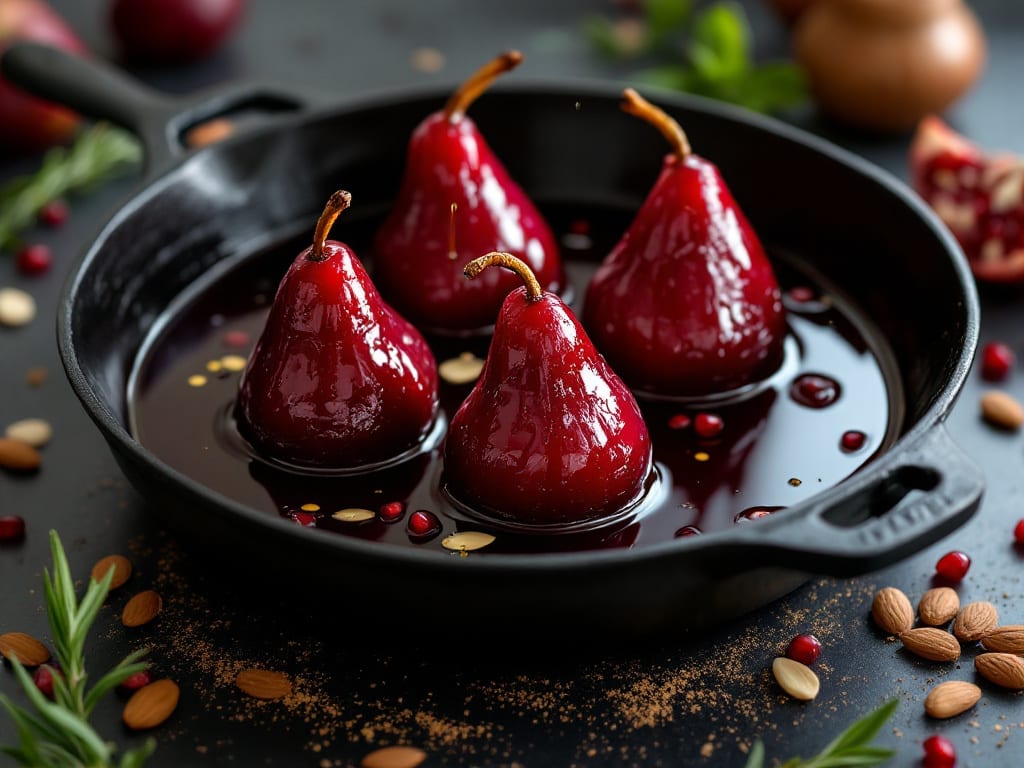
Poaching pears in red wine transforms a simple fruit into a sophisticated dessert with layers of spiced vanilla depth. The wine’s tannins and acidity create a silky texture while infusing subtle complexity—think caramelized edges, tender centers, and an aroma that feels like autumn in a bowl.
I developed this method after years of testing, balancing sweetness with wine’s natural acidity for perfect harmony every time.
What makes this recipe special is the 15-minute active time—just combine pears, wine, sugar, and spices, then simmer until tender. The red wine reduces slightly, concentrating its flavors into a glossy syrup that coats each pear.
Vanilla bean and cinnamon add warmth without overpowering the wine’s earthy notes, creating a dessert that’s elegant yet approachable for weeknight dinners or holiday tables.
By the end, you’ll have plump, jewel-toned pears floating in a fragrant syrup that’s perfect for serving warm or chilled. The texture is irresistibly tender, with just enough bite, while the wine’s subtle bitterness cuts through the sweetness.
This isn’t just dessert—it’s a showstopper that pairs beautifully with vanilla ice cream or crusty bread for dipping.
Use this technique with firm pears like Bosc or Anjou, and don’t skip the vanilla—it’s the secret to depth. The recipe scales effortlessly for parties or meal prep, making it versatile for any occasion. Let’s get cooking!
Ingredients for red wine poached pears
Four ripe pears, bold red wine, and subtle spices create an elegant dessert with minimal effort.
| Ingredient | Amount | Notes |
|---|---|---|
| Fresh Pears (Bosc or Anjou) 🍐 | 4 whole | Firm, unblemished, similar size |
| Dry Red Wine (Cabernet Sauvignon or Merlot) 🍷 | 2 cups | Bold, dry, no sugar residue |
| Granulated Sugar 🍚 | ½ cup | White or raw cane preferred |
| Vanilla Bean 🌿 | 1 whole | High-quality, split lengthwise |
| Ground Cinnamon 🌶️ | 1 tsp | Freshly toasted for aroma |
| Star Anise Pods 🌟 | 2 whole | Lightly crushed for infusion |
| Orange Peel (1 strip) 🍊 | 1 piece | Organic, no pith, 1-inch strip |
| Unsalted Butter 🧈 | 2 tbsp | Cold, cubed for finishing |
| Diamond Crystal Kosher Salt 🧂 | ¼ tsp | Fine grain for balance |
| Freshly Ground Black Pepper 🌶️ | ⅛ tsp | Freshly cracked for brightness |
| Heavy Cream (optional) 🥛 | ¼ cup | For serving, warmed |
The red wine is the heart of this recipe—Cabernet Sauvignon or Merlot from a reputable producer like Louis M. Martini or Apothic delivers the best balance of tannins and acidity. Avoid sweet wines or those with residual sugar, as they’ll overpower the delicate pear flavor. For the pears, Bosc or Anjou varieties are ideal due to their firm texture and subtle sweetness; Whole Foods Market or local orchards often carry these in peak season. The vanilla bean should be plump and moist—Madagascar Bourbon beans from Penzeys Spices are a reliable choice. Star anise adds an aromatic depth that complements the wine’s earthiness, while orange peel brightens the overall profile without competing with the primary flavors.
No red wine on hand? Substitute with 1.5 cups of dry apple cider or pomegranate juice, though the flavor will be subtly different. For vanilla, vanilla extract at half the amount works in a pinch, but the texture and aroma won’t be as luxurious. Star anise can be omitted if unavailable, though it’s worth seeking out at World Market or specialty spice shops. The orange peel is optional but recommended—its citrus notes elevate the dish. If you prefer a richer finish, add 1 tbsp of honey to the syrup during the last 5 minutes of cooking. For a lighter presentation, skip the butter and serve the pears with a drizzle of reduced syrup instead.
Poached pears keep beautifully in the refrigerator for up to 5 days, though they’re best enjoyed within 2 days for optimal texture. Store them in the syrup, sealed in an airtight container. The syrup itself can be reheated gently for up to 1 week and used as a sauce for pancakes, yogurt, or ice cream. For a make-ahead option, poach the pears and refrigerate them in the syrup; finish with butter and spices just before serving. The dish reheats well—simmer gently for 5 minutes to restore the glossy texture. Portion the pears into individual ramekins with a ladle of syrup for an elegant presentation.
Why You’ll Love This Recipe
- No-Stress Simplicity: I swear by this recipe because it’s the kind of dish that lets me not stress. Peel and halve the pears—that’s it. The wine, sugar, and spices do all the work while I sip my coffee and pretend I’m a fancy chef.
- Wine-Infused Magic: That first sip of the poaching liquid? It’s like dessert and wine had a baby. The Cabernet’s richness caramelizes into the pears, while the vanilla and cinnamon turn them into something so tender, they practically melt in your mouth.
- Weeknight to Dinner Party: Same recipe, zero guilt. Serve it warm over vanilla ice cream for a lazy Tuesday, or chill it for 10 minutes and drizzle with reduced wine sauce for a dinner party that’ll have guests asking for the recipe.
- Leftovers? More Like Leftovers?: Between us, I’ve never had a single pear go to waste. The syrup keeps for days in the fridge—drizzle it over yogurt, toast, or even pancakes. And honestly? The second batch always tastes better.
Step-by-step instructions for red wine poached pears
This method delivers tender, aromatic pears infused with wine and spice in minimal time.
Prepare the Poaching Liquid
In a medium saucepan, combine the 2 cups dry red wine, 0.5 cup granulated sugar, split vanilla bean, 1 tsp ground cinnamon, 2 whole star anise pods, and 1 strip orange peel. Bring to a gentle simmer over medium heat, stirring occasionally until the sugar fully dissolves and the liquid becomes fragrant—about 3 minutes. Here’s the thing—don’t let it boil vigorously, as this can make the pears tough.
Simmer uncovered for 5 minutes to allow the spices to infuse fully. You’ll notice the aroma deepen as the star anise and cinnamon release their oils. The liquid should reduce slightly but remain liquid enough to fully submerge the pears. Remove from heat and let steep for 10 minutes while you prepare the pears. This infusion creates the complex flavor foundation that makes this dish special.
Peel and Prepare the Pears
Using a sharp paring knife, carefully peel the 4 whole pears, leaving the stems intact. I recommend working over a bowl to catch any juice—it’s delicious and can be reduced later for a sauce. Cut each pear in half lengthwise, then carefully remove and discard the cores using a melon baller or small spoon. The pears should remain whole but hollowed out.
Arrange the pear halves cut-side down in the warm poaching liquid. They should float just below the surface. If any pear halves don’t submerge completely, gently press them down with a spoon. This ensures even cooking and maximum flavor absorption. The liquid should come about halfway up the sides of the pears—this is ideal for gentle, even poaching.
Poach the Pears to Perfection
Return the saucepan to medium-low heat and bring the liquid to a bare simmer—you should see just a few tiny bubbles at the edges. Cover with a lid and poach the pears for 8-10 minutes, turning them once halfway through cooking. You’ll know they’re ready when a paring knife slides in easily and the flesh yields slightly to gentle pressure.
Watch carefully during the last 2 minutes of cooking—you want the pears tender but not mushy. The ideal texture should be firm yet yielding, with a delicate balance between the wine-infused exterior and the tender interior. Remove the pears with a slotted spoon and transfer to a serving platter, arranging them cut-side up.
Finish and Serve
Strain the poaching liquid through a fine-mesh sieve into a small saucepan, pressing gently on the solids to extract maximum flavor. Return the strained liquid to medium heat and reduce by half—about 5-7 minutes—until it becomes syrupy. Stir in the 2 tbsp cold unsalted butter, 0.25 tsp diamond crystal kosher salt, and 0.125 tsp freshly ground black pepper until the butter melts completely.
Drizzle the reduced sauce over the poached pears and serve immediately. For an elegant presentation, add a dollop of warmed 0.25 cup heavy cream alongside. The sauce should coat the pears beautifully, enhancing their natural sweetness with the wine’s acidity and the spices’ warmth. Serve warm as a dessert or with cheese for a sophisticated appetizer.
Pro Tips For Making Red Wine Poached Pears
- PEEL PERSIMMON-THIN SKIN: Use a vegetable peeler to shave off just the outer layer—no need to strip all the flesh, especially with Anjou. Thick skins make the pears taste dull, but don’t go too deep or you’ll hit the gritty core. (I learned this the hard way when my first batch tasted like sawdust.)
- SIMMER GENTle, NOT BOIL: Keep the heat low enough that the liquid barely bubbles—anything more aggressive and your Cabernet Sauvignon will turn to vinegar faster than you can say “waste.” A steady 180°F (82°C) is sweet spot; if it’s too hot, cover and reduce heat immediately.
- SPLIT VANILLA BEAN: Scrape the seeds into the wine and drop the empty pod in whole—it releases more flavor over time. I was lazy about this for years, then realized the extra depth made the difference between “nice” and “showstopper.” (Yes, even if you’re impatient like me.)
- SWEETEN SLOWLY, NOT ALL AT ONCE: Start with half the sugar and taste as you go—red wine’s acidity can make pears taste bitter if over-sweetened. Stir in the rest only if needed, but I’ve rarely had to. (Your future self will thank you for not drowning the wine.)
Serving suggestions for leftovers
Warm Dessert Presentation
Serve these poached pears warm in elegant ramekins or on a slate board for a restaurant-worthy display. I like to arrange them cut-side up with a drizzle of reduced syrup and a small dollop of whipped cream on top.
The warm pears release their aroma immediately, making the room smell like a cozy autumn evening. 🍐
For a more rustic touch, place the pears on a wooden board with a sprig of fresh rosemary and a handful of crushed pistachios for crunch. The contrast between the tender pears and the nutty texture adds depth to every bite.
If serving as part of a multi-course meal, pair with aged cheddar or brie for a sophisticated appetizer.
Chilled Delight Option
Let the pears cool completely in the refrigerator for at least 2 hours before serving. This works beautifully as a make-ahead dessert—just reheat the syrup slightly before drizzling.
Chilled pears have a silky texture and are perfect with a scoop of vanilla bean ice cream or a drizzle of honey. 🥶
Bread Pairings
Serve with crusty baguette slices or sourdough for dipping—it soaks up the syrupy goodness perfectly. I recommend warm, toasted bread to complement the wine’s richness. For a lighter option, try brioche or challah—their buttery texture contrasts nicely with the pears’ natural sweetness.
Cheese Board Fusion
Transform this dessert into a savory-sweet appetizer by pairing with blue cheese (like Gorgonzola) or triple cream cheese (such as Brie). The wine’s tannins cut through the cheese’s creaminess, while the pears add a refreshing contrast. Add walnuts and dried apricots for texture and sweetness. 🧀
Seasonal Garnishes
In fall, garnish with candied pecans and cinnamon sticks for a cozy vibe. For winter, add edible gold leaf or crushed gingerbread for festive flair.
In spring, swap cinnamon for fresh mint and orange zest to brighten the dish. These small touches elevate the presentation without overpowering the pears’ natural flavors.
Nutrition facts
Frequently asked questions
Can I use any type of red wine for poaching pears?
For best results, choose a dry red wine like Cabernet Sauvignon or Merlot—these provide bold flavor without overpowering the pears. Avoid sweet wines or those with residual sugar, as they’ll make the dish taste cloying. If you must substitute, use dry apple cider or pomegranate juice, though the flavor will differ slightly.
How do I know when the pears are perfectly tender?
Test doneness by inserting a paring knife into the thickest part of a pear half—it should slide in easily with just slight resistance. The pears should yield gently to pressure but still hold their shape. Overcooking turns them mushy, so watch closely during the last 2 minutes of poaching.
Can I make this ahead of time?
Poach the pears up to 2 days ahead and store them in the syrup in an airtight container. Reheat the syrup separately before serving. For best texture, finish with butter and spices just before plating. The flavors actually improve overnight as the wine continues to infuse.
Why did my poaching liquid turn cloudy?
Cloudiness usually means the pears released too much starch or the wine wasn’t properly strained. Strain the liquid through a fine-mesh sieve after poaching, pressing gently on the solids. For a clearer syrup, reduce it longer or add 1 tsp cornstarch to the poaching liquid to clarify it.
What’s the best way to serve these pears?
For a warm dessert, arrange pears in ramekins with reduced syrup and whipped cream. For a savory twist, pair with aged cheddar or Brie on a cheese board. Chilled pears work beautifully with vanilla ice cream or honey drizzle for a lighter option.

- Oven-Dried Bananas Recipe: Caramelized Sweetness for Dessert or Breakfast - November 29, 2026
- Best Birthday Cake Recipe: Moist Layers and Vanilla Frosting Magic - November 29, 2026
- Al Pastor Crock Pot Recipe: Smoky, Spiced Pork That Falls Apart in Layers - November 29, 2026