
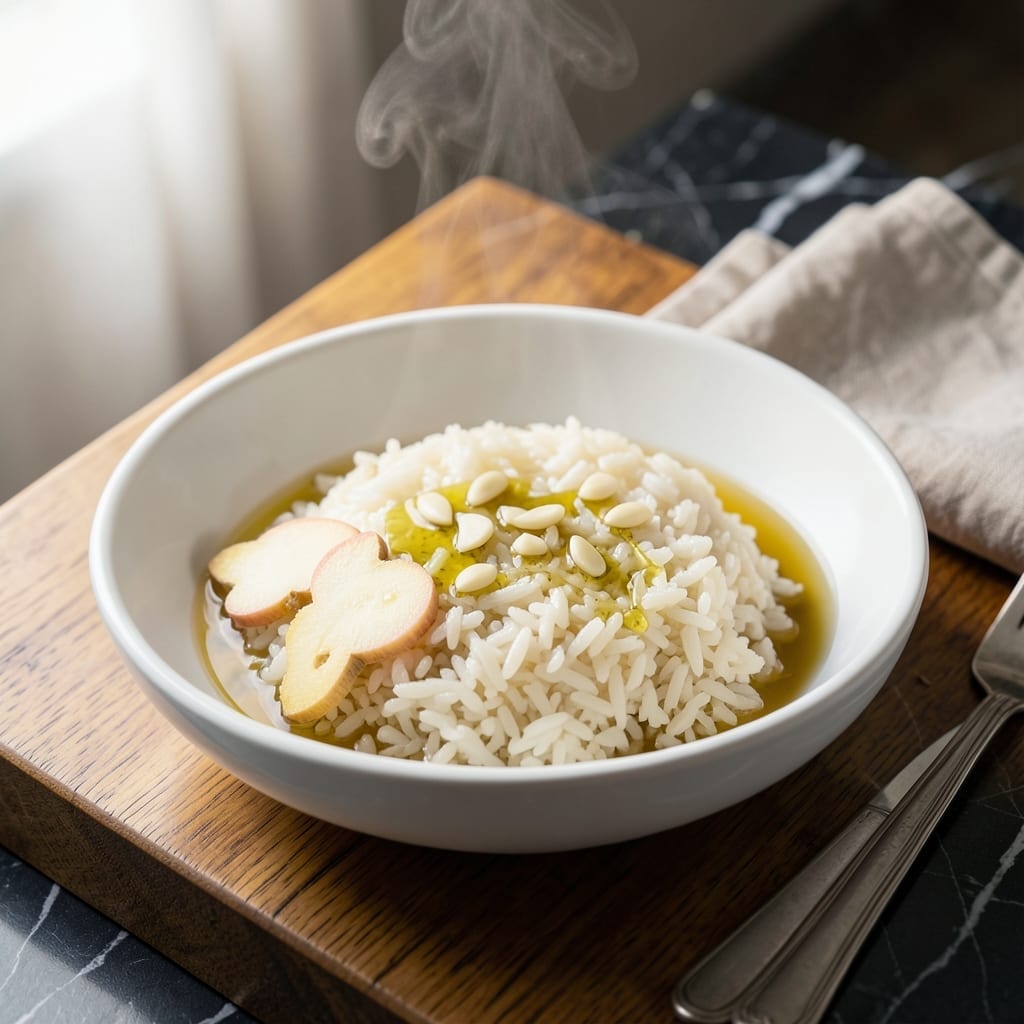
When your stomach needs a break, this simple rice dish offers gentle relief without sacrificing comfort. I developed this method after one too many takeout nights left me needing something bland yet nourishing.
The key is using white rice and cooking it in extra water until it becomes soft and easy to digest. A pinch of salt enhances the natural flavor without overwhelming sensitive systems.
What you get is a plain but perfect bowl of rice that soothes while providing energy to recover. It’s the kind of dish that proves sometimes the simplest solutions are the most effective.
Ready in 20 minutes, this recipe requires no special ingredients—just patience and care.
Ingredients for Rice Recipe for Upset Stomach
Pantry staples plus a few gentle extras make this soothing dish come together.
| Ingredient | Amount | Notes |
|---|---|---|
| White Rice 🍚 | 2 cups | Long-grain or jasmine preferred |
| Water 💧 | 6 cups | Extra for soft texture |
| Salt 🧂 | ½ tsp | Fine sea salt or kosher |
| Vegetable Broth 🥕 | 1 cup | Low-sodium for gentle flavor |
| Ginger Root 🌿 | 1 whole | Small knob, peeled and grated |
| Garlic Cloves 🧄 | 1 clove | Optional, minced lightly |
| Turmeric Powder 🌶️ | ¼ tsp | For anti-inflammatory benefits |
| Coconut Oil 🥥 | 1 tsp | Optional for light richness |
| Green Onions 🧅 | 2 whole | Thinly sliced for garnish |
| Fresh Cilantro 🌿 | 2 tbsp | Chopped, for fresh finish |
The rice is the star here. Long-grain or jasmine break down nicely with extra water—avoid short-grain, which gets mushy. I grab mine from Costco in bulk, but any supermarket brand works. The ginger is key for settling things down (fresh only, no powder). Organic vegetable broth avoids additives that might irritate further—Pacific Foods is my go-to for clean ingredients.
No fresh ginger? Ground ginger at one-quarter the amount works in a pinch, but fresh offers brighter relief. Skip the garlic if your stomach’s extra sensitive. Turmeric adds color and anti-inflammatory perks, but omit it if you’re not a fan. Olive oil can replace coconut oil—use whatever neutral fat you have. The green onions and cilantro are optional but add a fresh note without heaviness.
This keeps beautifully in the fridge for 3-4 days. Reheat with a splash of water to restore softness. Freezes for 1 month if you want to prep ahead (though fresh is always best). Portion into small containers for easy grab-and-go relief whenever you need it.
Why You’ll Love This Recipe
- Five-Minute Prep: I just dump rice, broth, and grated ginger in a pot—no chopping, no fuss.
- Warm Ginger Hug: The fresh ginger and light broth make it taste like comfort in a bowl, not bland hospital food.
- Kid and Couch Friendly: Honestly, it’s the only thing my picky nephew and I both want when we’re feeling lousy.
- Pennywise Portions: A cup of rice and a knob of ginger stretch into meals for days, and it costs less than a takeout tea.
Step-by-Step Instructions for Soothing Rice
This gentle cooking method ensures maximum digestibility and comfort in every bite.
Step 1: Prepare the Aromatic Base
Peel and finely grate the ginger root—you should have about 1 tablespoon of grated ginger. If using, mince the garlic cloves lightly; it should be barely crushed rather than fully pulverized to keep the flavor mild.
Heat the coconut oil in a medium pot over medium-low heat. Add the grated ginger and minced garlic, stirring for 30-45 seconds until fragrant. You want to activate their soothing properties without browning them, which can make the flavor too sharp for sensitive digestion.
Step 2: Toast the Rice Briefly
Add the 2 cups white rice to the pot and stir to coat it in the aromatic oil. Toast the rice for 1-2 minutes, stirring constantly, until the grains become slightly translucent at the edges and emit a light, nutty aroma.
This step enhances the rice’s natural starches, which helps create a creamier texture that’s easier on the stomach. Avoid toasting beyond the pale golden stage, as darker browning can introduce bitterness that might irritate rather than soothe.
Step 3: Add Liquids and Turmeric
Pour in the 6 cups water and 1 cup vegetable broth, then add the 0.5 tsp salt and 0.25 tsp turmeric powder. Stir well to distribute the turmeric evenly—it should give the liquid a soft, golden hue without any visible clumps.
Increase the heat to high and bring the mixture to a rolling boil. Once boiling, reduce the heat to low, cover the pot with a tight-fitting lid, and let it simmer gently. The liquid should just barely bubble at the edges, not boil vigorously, to prevent the rice from becoming mushy.
Step 4: Cook Until Tender and Absorbent
Let the rice cook undisturbed for 18-20 minutes. Resist the urge to stir or peek—this allows the steam to work its magic, softening the rice evenly while absorbing the soothing flavors of ginger and turmeric. The rice is done when the grains are tender and the liquid has been fully absorbed.
If you notice the liquid evaporating too quickly before the rice is cooked, add ¼ cup hot water and continue cooking. The final texture should be soft and slightly sticky, which is ideal for easing digestion. Turn off the heat and let the rice sit covered for an additional 5 minutes to steam.
Step 5: Garnish and Serve Warm
Thinly slice the green onions and chop the 2 tbsp fresh cilantro. Fluff the rice gently with a fork—this separates the grains without breaking them. Fold in the green onions and cilantro, reserving a small amount for garnish.
Serve the rice warm in shallow bowls, topped with the remaining green onions and cilantro. The dish should have a mild, comforting aroma with a soft, slightly creamy texture. Each bite should be gentle on the stomach while delivering the soothing benefits of ginger and turmeric.
Pro Tips For Making Rice Recipe For Upset Stomach
- Rinse the Rice: Wash the white rice under cold water until the water runs clear—this removes excess starch and prevents a gummy texture that can upset your stomach further.
- Grate the Ginger: Use a microplane to finely grate the ginger root so it disperses evenly in the broth, giving you soothing flavor in every bite without chewy bits.
- Simmer, Don’t Boil: Keep the heat low once the rice is in the pot—aggressive boiling turns the grains mushy and can make the dish harder to digest.
- Use Double Liquid: Swap half the water for vegetable broth and increase the total liquid by 25%—the extra moisture makes the rice softer and easier on your stomach.
Best Sauces and Condiments for These Flavors
Ginger-Turmeric Drizzle
I love making a light drizzle with 1 tbsp grated ginger and ½ tsp turmeric steeped in ¼ cup warm water for 10 minutes. Strain and drizzle over the rice for extra soothing power. The warmth helps activate the beneficial compounds. 💛
Mild Vegetable Broth
A simple low-sodium vegetable broth reduction can enhance flavor without irritation. Simmer 1 cup broth until reduced by half, then drizzle lightly over individual servings. I use Pacific Foods for its clean, gentle taste.
Coconut Milk Swirl
Stir in 2 tbsp coconut milk right before serving for a touch of creamy richness. This adds healthy fats that help absorb turmeric’s anti-inflammatory benefits. Use full-fat for the best texture, but light works in a pinch.
Fresh Herb Garnish
Combine the reserved green onions and fresh cilantro with a pinch of fine sea salt. Sprinkle over each bowl for a fresh finish. The herbs add brightness without overwhelming sensitive digestion.
Lemon Zest Sprinkle
Finely zest ½ lemon and sprinkle lightly over the rice. The citrus oils add a subtle lift that complements the ginger. Avoid lemon juice—it’s too acidic for an upset stomach.
Nutrition Facts
Frequently Asked Questions
Why use extra water in the cooking process?
Extra water ensures the rice becomes soft and easy to digest. This method breaks down the grains more thoroughly, creating a gentle texture that’s soothing for sensitive stomachs. It also prevents any dryness that could cause discomfort.
Can I use brown rice instead?
Brown rice is harder to digest due to its fiber content. For an upset stomach, white rice is the better choice because it’s milder and breaks down more easily. Save brown rice for when your digestion has fully recovered.
How long can I store leftovers?
Leftovers keep well in the fridge for 3-4 days in an airtight container. Reheat with a splash of water to restore the soft texture. Avoid freezing if possible, as it can make the rice too mushy when thawed.
What if my stomach reacts to ginger?
Simply omit the ginger and focus on the turmeric and bland rice. If even that feels too strong, stick with plain white rice cooked in extra water and a pinch of salt. Listen to your body and adjust as needed.

- BBQ Sausage Recipe Oven: Smoky Depth Without the Grill - September 28, 2026
- BBQ Chicken Bowl Recipe Rice: Smoky Sweetness Over Fluffy Grains - September 28, 2026
- Beef Cutlet Recipe Ideas: Crispy Breaded Patties With Bold Seasonings - September 28, 2026