
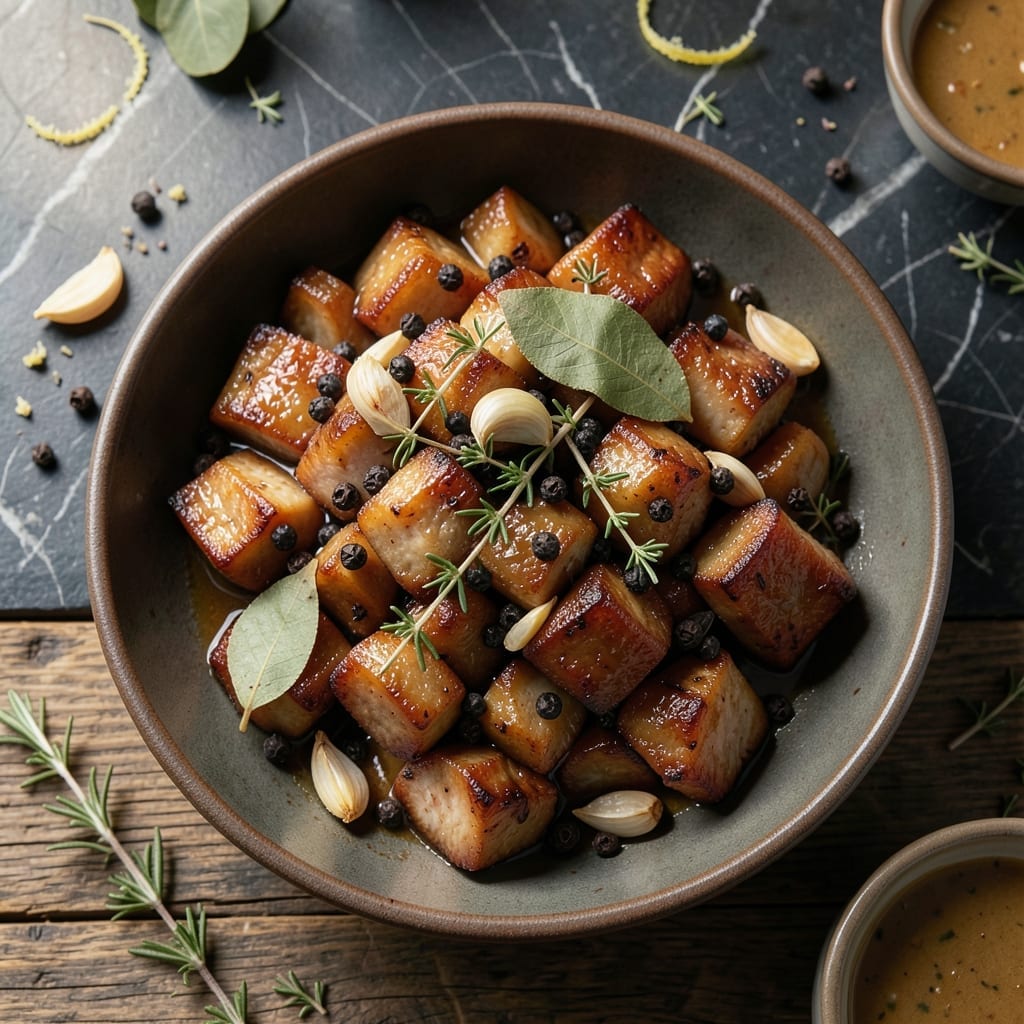
This traditional French method transforms pork belly into tender, golden brown cubes of pure indulgence. The process is simple yet precise, yielding results that rival any Parisian charcuterie.
Pork cubes are slowly cooked in their own fat until crispy outside and unctuous within. This technique, known as confit, preserves the meat while intensifying its natural richness.
The key is patience—allowing the pork to cook low and slow until it reaches that perfect balance of texture and flavor. Each bite delivers a contrast of crisp edges and melt-in-your-mouth interiors.
Serve these as an elegant appetizer or alongside crusty bread for a rustic meal. The result is a dish that embodies French culinary tradition with minimal effort.
Ingredients for Rillons
Pork belly, aromatic herbs, and fat come together for this French classic.
| Ingredient | Amount | Notes |
|---|---|---|
| Pork Belly 🥓 | 2 lb | Cut into 1-inch cubes, skin removed |
| Kosher Salt 🧂 | 2 tbsp | Diamond Crystal preferred for curing |
| Black Peppercorns 🌶️ | 1 tbsp | Lightly crushed for aroma |
| Fresh Thyme Sprigs 🌿 | 4 whole | Plus 2 tsp chopped leaves |
| Bay Leaves 🍃 | 2 whole | Dried, for curing brine |
| Garlic Cloves 🧄 | 6 cloves | Smashed, peeled |
| Duck Fat 🍗 | 4 cups | Or substitute pork lard |
| Dry White Wine 🍷 | ½ cup | Sauvignon Blanc recommended |
| Juniper Berries 🍇 | 10 whole | Lightly crushed (optional) |
| Fresh Rosemary Sprigs 🌿 | 2 whole | For aromatic infusion |
| Shallots 🧅 | 2 whole | Thinly sliced for garnish |
| Dijon Mustard 🟡 | 2 tbsp | For serving accompaniment |
| Cornichons 🥒 | ½ cup | For serving accompaniment |
The pork belly quality is paramount. Source from a reputable butcher—look for even fat-to-meat ratio and fresh, pink color. D’Artagnan or Niman Ranch offer excellent mail-order options if local selections are poor. The fat for cooking should ideally be duck fat (available at Whole Foods or specialty grocers), though rendered pork fat works acceptably. Fresh herbs make a noticeable difference in the final aroma.
No duck fat? Rendered pork lard at one-to-one substitution works, though the flavor profile will be slightly different. Fresh thyme can be replaced with dried at one-third the amount. White wine isn’t strictly necessary, but adds acidity—substitute with apple cider vinegar at 1 tbsp if omitting. Juniper berries are traditional but can be skipped. The curing salt must be non-iodized for proper preservation.
Cured pork belly keeps in its fat for up to 2 weeks refrigerated. Once cooked, rillons stay fresh for 5-7 days in the fridge or 3 months frozen. The cooking fat solidifies when cold—gently reheat to liquid state before serving. Always use a deep, heavy pot to prevent fat splatter during cooking.
Why You’ll Love This Recipe
- Set and Forget: Most of the work is just waiting while the pork belly confits in its own fat with thyme and bay leaves.
- Crispy Luxury: That first bite of tender meat with a salty, peppery crust? Ridiculously good.
- Crowd Pleaser: I serve these at parties and they vanish—even my picky nephew asks for more.
- Leftovers Win: Honestly, they taste even better the next day tucked into a sandwich or over greens.
Step-by-Step Instructions for French-Style Pork Cubes in Rich Fat
Master this traditional technique for perfectly tender pork confit with aromatic depth and rich texture.
Step 1: Cure the Pork Belly with Aromatic Brine
In a large bowl, combine the 2 lb pork belly (cut into 1-inch cubes with skin removed) with 2 tbsp kosher salt, 1 tbsp black peppercorns (lightly crushed), 4 whole fresh thyme sprigs, 2 whole bay leaves, 6 cloves garlic (smashed and peeled), and 10 whole juniper berries (lightly crushed).
Mix thoroughly to ensure every cube is evenly coated with the curing mixture. The salt will begin drawing out moisture while the spices infuse into the meat. Cover and refrigerate for 12-24 hours to allow the cure to penetrate deeply.
Step 2: Slow-Poach in Duck Fat
Preheat your oven to 275°F. Rinse the cured pork cubes under cold water and pat them completely dry with paper towels. This removes excess surface salt while preserving the flavor penetration.
Place the pork in a deep oven-safe dish and pour in 4 cups duck fat, ensuring the cubes are fully submerged. Add 2 whole fresh rosemary sprigs to the fat for additional aromatic complexity. The fat should just cover the pork—add more if needed, but maintain the 4 cups minimum.
Step 3: Confit Until Fork-Tender
Cover the dish and transfer it to the preheated oven. Cook for 2.5-3 hours, maintaining a gentle simmer—the fat should barely shimmer, not boil. This low-and-slow method transforms the tough pork belly into buttery, fall-apart tenderness.
Check for doneness by piercing a cube with a fork—it should slide in with no resistance. The pork will develop a rich, golden hue as it confits. Remove from the oven and let the pork cool in the fat to room temperature.
Step 4: Crisp and Glaze for Serving
Carefully remove the pork cubes from the fat (reserve the fat for future use). In a large skillet over medium-high heat, sear the cubes in batches until the surfaces turn deep golden brown and crispy, about 3-4 minutes per side.
Deglaze the pan with 0.5 cup dry white wine, scraping up any browned bits. Reduce the wine by half, then return the pork to the pan to coat in the glossy reduction. This final step adds a bright, tangy contrast to the rich pork.
Step 5: Serve with Traditional Accompaniments
Transfer the crispy rillons to a serving platter. Garnish with thinly sliced shallots for a mild, sweet allium note. Serve with 2 tbsp Dijon mustard and 0.5 cup cornichons on the side for classic French pairing.
The mustard’s sharpness cuts through the fat, while the tangy cornichons cleanse the palate between bites. Each element complements the pork’s unctuous texture and layered aromatic profile.
Pro Tips For Making Rillons
- Render Slowly: I learned this the hard way—rush the cook and you’ll end up with chewy fat instead of melt-in-your-mouth pork. Keep the heat low and steady, around 275°F, and give it 3-4 hours to transform.
- Dry the Belly: Pat the pork belly completely dry before salting and searing—any moisture left behind steams the skin instead of crisping it. Sounds tedious, but it actually changes the outcome.
- Skip the Overcrowding: Resist the urge to pack the pan with too many cubes; they’ll steam rather than brown. Work in batches if needed—your future self will thank you.
- Use Fresh Thyme: Dried thyme works in a pinch, but fresh sprigs tucked into the fat as it renders add a brightness that dried just can’t match. It’s the thing that matters most for that classic flavor.
Storing and Reheating This Recipe
Refrigerator Storage
After cooking, let the rillons cool completely in their fat. Transfer to a clean, airtight container with the fat fully covering the pork. Store in the fridge for up to 7 days—the fat will solidify, creating a natural seal that preserves freshness beautifully. ❄️
Freezer Storage
For longer storage, freeze the rillons submerged in their fat in a freezer-safe container. They’ll keep for up to 3 months without losing texture or flavor. Leave ½ inch headspace for expansion, and thaw overnight in the fridge before reheating.
Oven Reheating
Preheat oven to 325°F. Spread rillons on a baking sheet and heat for 15-20 minutes until warmed through. The fat will re-liquefy, restoring that luscious mouthfeel. I often add a splash of white wine to refresh the aromatics.
Skillet Reheating
For crispy results, warm the rillons in a skillet over medium-low heat for 5-7 minutes. Stir gently to avoid breaking the cubes. This method revives the golden crust while keeping the inside tender. 🔥
Fat Preservation
The confit fat is liquid gold—strain and store it separately in the fridge for up to 2 weeks. Use it for roasting potatoes or sautéing vegetables. Its rich, porky depth elevates any dish it touches.
Nutrition Facts
Frequently Asked Questions
Can I use pork shoulder instead of belly?
Pork shoulder works but yields a different texture. Belly’s higher fat content creates the signature unctuousness. Shoulder will be leaner and less luxurious, though still tasty.
How do I know when they’re done cooking?
Test with a fork—it should slide in with zero resistance. The cubes turn golden brown and feel buttery inside. Undercooked meat will feel firm.
What if my fat isn’t covering the pork?
Add more duck fat or pork lard to fully submerge. Partial coverage leads to uneven cooking and dry spots. Maintain 4 cups minimum.
Can I skip the curing step?
Not recommended. The 12-24 hour cure seasons the meat deeply and preserves texture. Skipping it results in bland, less tender rillons.

- BBQ Sausage Recipe Oven: Smoky Depth Without the Grill - September 28, 2026
- BBQ Chicken Bowl Recipe Rice: Smoky Sweetness Over Fluffy Grains - September 28, 2026
- Beef Cutlet Recipe Ideas: Crispy Breaded Patties With Bold Seasonings - September 28, 2026