
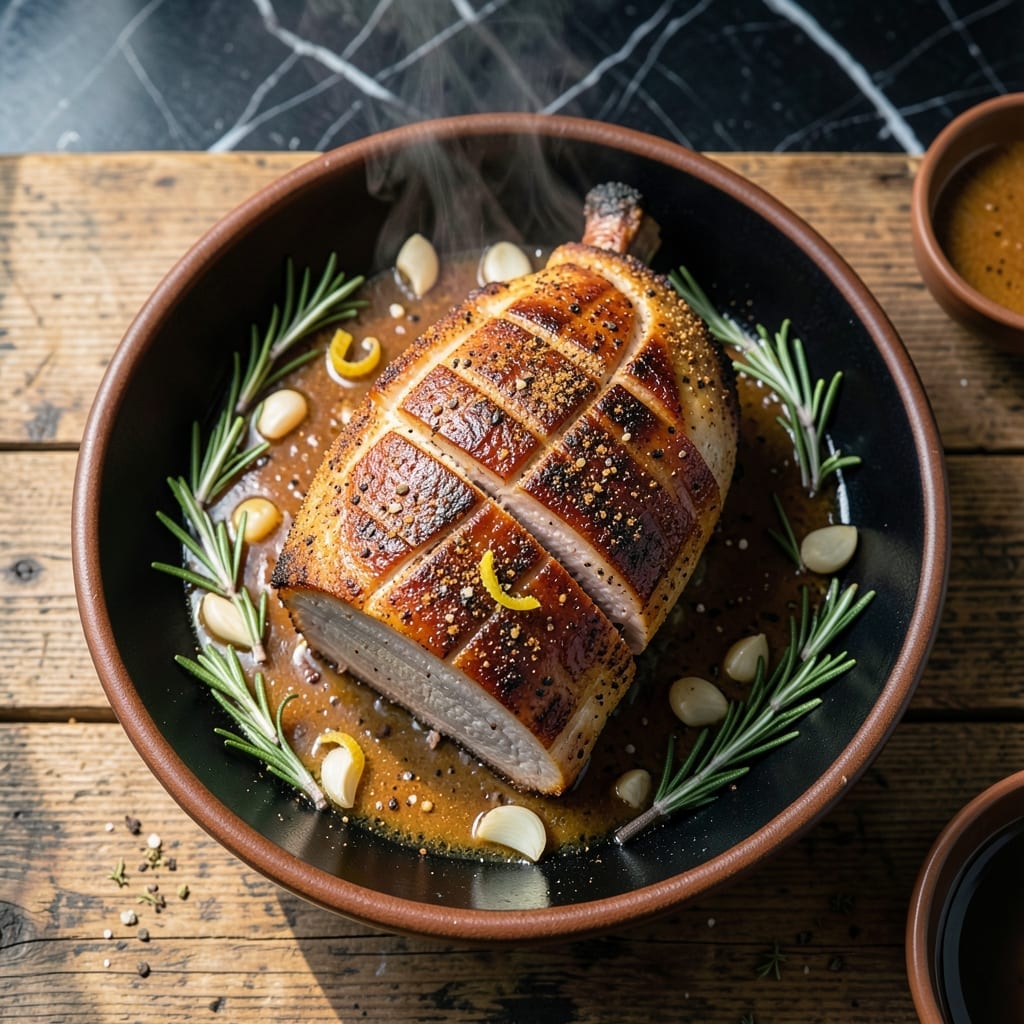
There’s no better way to achieve fall-apart tender pork than with a slow-roasted rotisserie method. This technique transforms an inexpensive cut into a smoky, juicy centerpiece that impresses every time.
The key lies in the slow rotation, which allows fat to baste the meat continuously while creating a crispy exterior. A simple dry rub and patience are all that’s needed to develop deep, complex flavors.
What emerges is pork so tender it shreds with a fork, infused with wood-fired aroma throughout. The exterior develops a beautiful bark that seals in all the natural juices.
Perfect for sandwiches, tacos, or serving as a main course with your favorite sides. The results justify the wait.
Ingredients for Rotisserie Pork Shoulder
A few bold spices and a slow spin transform pork into something extraordinary.
| Ingredient | Amount | Notes |
|---|---|---|
| Pork Shoulder 🐖 | 4 lb | Bone-in, skin-on preferred |
| Kosher Salt 🧂 | 2 tbsp | Diamond Crystal recommended |
| Black Pepper 🌶️ | 1 tbsp | Freshly ground coarse |
| Brown Sugar 🍚 | ½ cup | Light or dark variety |
| Smoked Paprika 🌶️ | 1 tbsp | Sweet or hot variety |
| Garlic Powder 🧄 | 1 tbsp | Not garlic salt |
| Onion Powder 🧅 | 1 tbsp | Freshly ground preferred |
| Dried Oregano 🍃 | 1 tsp | Mediterranean variety |
| Cayenne Pepper 🔥 | ½ tsp | Adjust for heat preference |
| Olive Oil 🫒 | 2 tbsp | Extra-virgin for moisture |
| Apple Cider Vinegar 🍏 | 2 tbsp | For acidity balance |
| Hickory Wood Chips 🪵 | 2 cups | Soaked in water 30 minutes |
The pork shoulder is non-negotiable here. Bone-in, skin-on yields the juiciest results and that coveted crispy exterior. Costco and Sam’s Club offer excellent pre-portioned cuts, but any butcher can provide a whole shoulder for trimming. Look for good marbling—this fat renders down during cooking, basting the meat continuously. Avoid lean cuts; they dry out on the rotisserie.
No smoked paprika? Regular paprika plus a pinch of liquid smoke works in a pinch. Brown sugar can be swapped for honey or maple syrup, though the texture will differ slightly. Out of apple cider vinegar? White vinegar or lemon juice at the same ratio maintains the acidity. For wood chips, cherry or pecan add a milder smoke compared to hickory’s bold flavor.
Store the uncooked pork in the fridge for up to 3 days before cooking, or freeze for 6 months. Once cooked, shredded pork keeps in the fridge for 4-5 days or freezes beautifully for 3 months. Always bring meat to room temperature before starting the rotisserie for even cooking.
Why You’ll Love This Recipe
- Set and Forget: I rub the pork shoulder with salt, pepper, brown sugar, and smoked paprika, then let the rotisserie do all the work.
- Sweet & Smoky: That brown sugar caramelizes while the smoked paprika adds a deep, rich flavor that’s ridiculously good.
- Feeds a Crowd: One pork shoulder gives me enough for tacos, sandwiches, and leftovers for days.
- Budget Hero: Pork shoulder is cheap, and this recipe turns it into something that tastes like it came from a fancy BBQ joint.
Step-by-Step Instructions for Rotisserie Pork Shoulder
Master the technique that transforms this cut into a tender, smoky masterpiece with a caramelized crust.
Step 1: Prepare and Season the Pork Shoulder
Begin by patting the 4 lb Pork Shoulder completely dry with paper towels. This ensures the rub adheres properly and promotes even browning. In a small bowl, combine the 2 tbsp Kosher Salt, 1 tbsp Black Pepper, 0.5 cup Brown Sugar, 1 tbsp Smoked Paprika, 1 tbsp Garlic Powder, 1 tbsp Onion Powder, 1 tsp Dried Oregano, and 0.5 tsp Cayenne Pepper.
Massage this spice mixture all over the pork, pressing firmly to create a thick, even coating. The brown sugar will caramelize during cooking, forming a sticky, flavorful bark. Drizzle the 2 tbsp Olive Oil and 2 tbsp Apple Cider Vinegar over the pork and rub again to distribute evenly. Let it sit at room temperature for 30 minutes while you prepare the smoker.
Step 2: Soak Wood Chips and Preheat Smoker
Place the 2 cups Hickory Wood Chips in a large bowl and cover with water. Soak for at least 30 minutes to prevent them from burning too quickly in the smoker. Meanwhile, preheat your smoker to 225°F using indirect heat. This low and slow temperature is critical for breaking down the collagen in the pork shoulder, resulting in fall-apart tenderness.
Once the wood chips are soaked, drain them and add directly to the smoker’s wood chip box or wrap in foil with holes poked through for a smoker box. The hickory will impart a robust, classic smoke flavor that complements the sweet and spicy rub without overpowering it.
Step 3: Smoke the Pork Shoulder to Perfection
Place the seasoned pork shoulder on the smoker grates, fat-side up. This position allows the fat to baste the meat naturally as it renders. Insert a meat thermometer into the thickest part of the shoulder, avoiding the bone. Smoke undisturbed for 6-8 hours, or until the internal temperature reaches 160°F.
Resist the urge to open the smoker lid frequently—each peek releases heat and smoke, extending the cooking time. The pork is ready for the next step when it develops a deep mahogany bark and the internal temperature stalls, a natural phase in the smoking process.
Step 4: Wrap and Finish Cooking
Once the pork hits 160°F, remove it from the smoker and wrap tightly in heavy-duty aluminum foil. This step, known as the “Texas crutch,” helps push through the stall by trapping heat and moisture. Return the wrapped pork to the smoker and continue cooking until the internal temperature reaches 203-205°F, about 2-3 more hours.
At this temperature, the connective tissue in the pork shoulder fully breaks down, yielding meat so tender it pulls apart effortlessly with a fork. The total cook time will vary based on the size of the pork shoulder and your smoker’s consistency.
Step 5: Rest and Shred
Carefully remove the pork from the smoker and let it rest, still wrapped in foil, for 1 hour. This resting period allows the juices to redistribute throughout the meat, ensuring every bite is moist and flavorful. Unwrap the pork and transfer it to a large cutting board or serving platter.
Using two forks or meat claws, shred the pork into chunks, discarding any large fat cap pieces. The meat should separate easily, revealing a smoky, juicy interior with a well-formed bark on the exterior. Serve immediately, or keep warm in a low oven with a splash of apple juice or broth to maintain moisture.
Pro Tips For Making Rotisserie Pork Shoulder
- Score the Fat Cap: Use a sharp knife to cut 1/4-inch deep crosshatches in the fat cap—this lets the brown sugar and smoked paprika rub penetrate deeper and creates more surface area for crispy bits.
- Start Low, Finish Hot: I learned this the hard way—roast at 275°F until the internal temp hits 195°F, then blast it at 425°F for 15 minutes to set that mahogany crust.
- Don’t Skip the Rest: After pulling it off the heat, tent the pork shoulder with foil and let it rest for at least 30 minutes, or the juices will run all over your cutting board instead of staying in the meat.
- Use a Meat Thermometer: Sounds obvious, but I used to guess and ended up with dry pork—aim for 195-203°F in the thickest part, and resist the urge to pull it early just because it looks done.
Regional Styles of This Dish
Southern BBQ Style
In the South, this dish gets a tangy vinegar-based mop sauce applied during the last hour of cooking. I mix 1 cup apple cider vinegar, ½ cup water, and 2 tbsp brown sugar with red pepper flakes for a Carolina-inspired finish. 🌶️
Texas Pitmaster Approach
Texas pitmasters often use a coarse black pepper and salt rub with no sugar, letting the meat’s natural flavors shine. They smoke at 250°F for a slightly faster cook time while maintaining that deep bark. The result is all about the beefy pork flavor.
Memphis Dry Rub
Memphis-style relies on a heavy dry rub with more paprika and less sugar. I add 1 tbsp mustard powder to my base rub for this version. The pork gets a light dusting of rub even after cooking for extra punch.
Kansas City Sweet
Kansas City prefers a sweeter profile with molasses or honey in the rub. I swap the brown sugar for ¼ cup molasses and add 1 tsp cinnamon. The final product gets glazed with a thick, sweet sauce before serving. 💛
Cuban Mojo Style
For a Cuban twist, I marinate the pork overnight in 1 cup sour orange juice, 6 garlic cloves, and 1 tsp cumin. The citrus brightens the rich pork beautifully. Serve with black beans and rice for a complete meal.
Asian Five-Spice
An Asian-inspired version uses 1 tbsp five-spice powder in the rub. I also add 2 tbsp soy sauce to the vinegar for umami depth. The result pairs wonderfully with steamed buns and pickled vegetables.
Nutrition Facts
Frequently Asked Questions
What’s the ideal internal temperature for pulled pork?
Cook until it reaches 203-205°F internally. This range ensures the collagen fully breaks down for that perfect fall-apart texture.
How long should I rest the meat after smoking?
Let it rest wrapped in foil for at least 1 hour. This allows juices to redistribute, keeping every bite moist and flavorful.
Can I use a different wood besides hickory?
Try apple or cherry wood for a sweeter, milder smoke. Avoid softwoods like pine—they can impart bitter flavors.
Why does the temperature stall during cooking?
This “stall” happens when moisture evaporates from the meat’s surface, cooling it. Wrapping in foil (the Texas crutch) helps push through this phase faster.

- BBQ Sausage Recipe Oven: Smoky Depth Without the Grill - September 28, 2026
- BBQ Chicken Bowl Recipe Rice: Smoky Sweetness Over Fluffy Grains - September 28, 2026
- Beef Cutlet Recipe Ideas: Crispy Breaded Patties With Bold Seasonings - September 28, 2026