
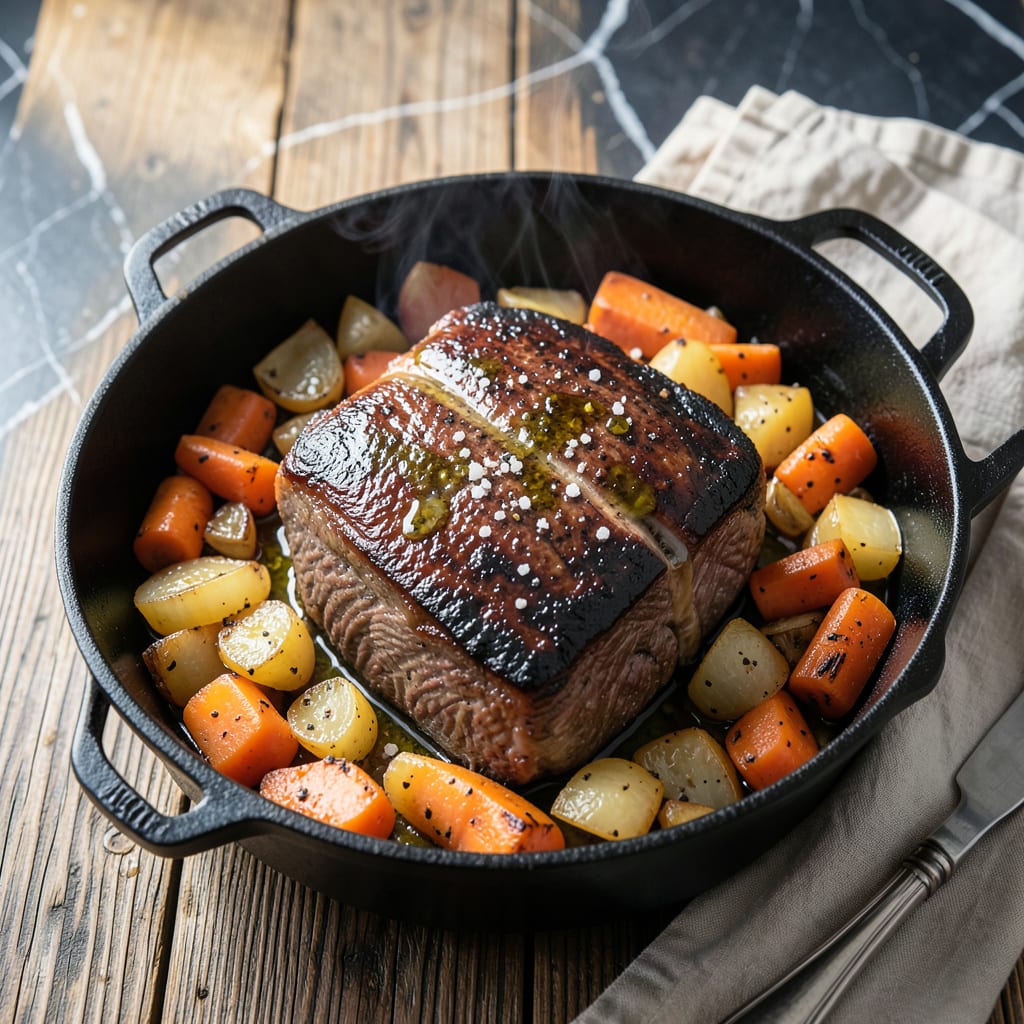
There’s something deeply satisfying about a perfectly cooked rump roast that falls apart at the touch of a fork. This Dutch oven method transforms a humble cut into a tender, flavorful centerpiece for any meal.
By searing the meat first and then slow-cooking it with aromatic vegetables and broth, you’ll achieve results that rival any professional kitchen. The secret lies in patience and the even heat distribution of a Dutch oven.
Ingredients for Rump Roast Dutch Oven
A well-marbled rump roast plus aromatic vegetables create this Dutch oven masterpiece with minimal effort.
| Ingredient | Amount | Notes |
|---|---|---|
| Rump Roast 🥩 | 3 lb | Well-marbled, trimmed of excess fat |
| Kosher Salt 🧂 | 1 ½ tsp | Diamond Crystal preferred for even seasoning |
| Freshly Ground Black Pepper 🌶️ | 1 tsp | Coarse grind for texture |
| Olive Oil 🫒 | 2 tbsp | High smoke point for searing |
| Yellow Onion 🧅 | 1 whole | Large, roughly chopped |
| Carrots 🥕 | 3 whole | Peeled, cut into chunks |
| Celery Stalks 🌿 | 3 whole | Cut into large pieces |
| Garlic Cloves 🧄 | 6 cloves | Smashed, peeled |
| Beef Broth 🍲 | 2 cups | Low-sodium preferred for control |
| Dry Red Wine 🍷 | 1 cup | Bold variety like Cabernet Sauvignon |
| Tomato Paste 🍅 | 2 tbsp | For depth of flavor |
| Fresh Thyme Sprigs 🌿 | 4 whole | Tied with kitchen twine |
| Bay Leaves 🍃 | 2 whole | Dried, for aromatic infusion |
| All-Purpose Flour 🌾 | 2 tbsp | For thickening the sauce |
The rump roast quality is paramount. Opt for well-marbled pieces from a trusted butcher or Whole Foods—this fat distribution ensures the meat breaks down properly during the long cook. Costco offers excellent pre-packaged options if you’re feeding a crowd. The beef broth should be low-sodium to allow for precise seasoning control throughout the cooking process.
No red wine? Additional beef broth with 1 tbsp of balsamic vinegar provides comparable depth. Fresh thyme is ideal, but dried thyme at one-third the amount works in a pinch. If tomato paste seems excessive for the quantity, Trader Joe’s sells convenient tubes that eliminate waste. The vegetables can be substituted with whatever root vegetables you have on hand.
This dish actually improves overnight as the flavors meld. Store leftovers in an airtight container for up to 4 days in the refrigerator, or freeze for 3 months. The fat will solidify when chilled—simply skim it off before reheating for a cleaner presentation.
Why You’ll Love This Recipe
- One Pot Wonder: I love that everything cooks together—just sear the rump roast, toss in onions, and let the dutch oven do the work.
- Fall-Apart Tender: The slow cook in the dutch oven makes the meat so tender it practically melts, with the onion and olive oil adding rich depth.
- Feeds a Crowd: Honestly, this is my go-to for Sunday dinners—it stretches easily for family or leftovers for the week.
Step-by-Step Instructions for Rump Roast Dutch Oven
Master the technique for fall-apart tender beef with rich, concentrated flavors.
Step 1: Sear the Rump Roast
Pat the 3 lb rump roast thoroughly dry with paper towels. Season all sides generously with the 1.5 tsp kosher salt and 1 tsp freshly ground black pepper, pressing the seasoning into the meat to ensure it adheres.
Heat the 2 tbsp olive oil in a Dutch oven over medium-high heat until it shimmers. Add the rump roast and sear for 4-5 minutes per side until a deep, rich brown crust forms. This step is critical—it locks in juices and creates a flavorful fond for the sauce. Transfer the roast to a plate and set aside.
Step 2: Build the Aromatic Base
In the same Dutch oven, reduce heat to medium. Add the roughly chopped yellow onion, 3 whole carrots, and 3 whole celery stalks. Cook for 5 minutes, stirring occasionally, until the vegetables begin to soften and develop color.
Add the 6 cloves garlic cloves, 2 tbsp tomato paste, 4 whole fresh thyme sprigs, and 2 whole bay leaves. Stir for 1-2 minutes until the tomato paste darkens slightly and becomes fragrant. This builds a deep, savory foundation for the braising liquid.
Step 3: Deglaze and Braise
Pour in the 1 cup dry red wine, using a wooden spoon to scrape up any browned bits from the bottom of the pot. Let it simmer for 3-4 minutes until the liquid reduces by half. This deglazing step dissolves the fond into the sauce, adding immense depth of flavor.
Return the rump roast to the Dutch oven and pour in the 2 cups beef broth. The liquid should come about halfway up the roast. Bring to a simmer, then cover with a tight-fitting lid. Transfer to a preheated 325°F oven and braise for 3-3.5 hours until the meat is fork-tender.
Step 4: Thicken and Finish the Sauce
Remove the Dutch oven from the oven and carefully transfer the rump roast to a cutting board. Skim any excess fat from the surface of the braising liquid, then place the Dutch oven on the stovetop over medium heat.
Whisk in the 2 tbsp all-purpose flour and simmer for 5-7 minutes, stirring frequently, until the sauce thickens enough to coat the back of a spoon. Adjust seasoning with additional salt and pepper if needed. The sauce should be rich, glossy, and deeply flavorful.
Slice the rump roast against the grain and serve with the sauce spooned over the top. The meat should be incredibly tender, nearly falling apart with minimal pressure from a fork.
Pro Tips For Making Rump Roast Dutch Oven
- Sear It Hard: Get your Dutch oven screaming hot before adding the rump roast—about 2 tablespoons of olive oil, then sear each side for 3-4 minutes until deeply browned. I learned this the hard way: a pale sear means flavor left on the table.
- Season Aggressively: Use 1 teaspoon of kosher salt per pound of rump roast, and don’t skimp on the black pepper. The salt penetrates deep during the long cook, and the crust will thank you.
- Don’t Rush the Onions: After searing the meat, cook the yellow onions in the same pot for at least 5 minutes until soft and golden. Skipping this step leaves them raw and harsh in the final dish.
- Use the Lid: Once everything’s in the Dutch oven, cover it tightly with the lid for the first hour. This traps steam, keeping the rump roast moist before you finish it uncovered to concentrate flavors.
Essential Equipment for This Dish
Dutch Oven Essentials
For this recipe, a 5-7 quart enameled cast iron Dutch oven is ideal—I swear by my Le Creuset for even heat distribution and retention. The heavy lid creates a perfect seal for braising, trapping moisture to break down the tough fibers in the rump roast over time. 💛
Searing Surface
A Dutch oven with a flat, wide base ensures proper searing. Avoid nonstick coatings as they can’t handle the medium-high heat needed for a good crust. My Lodge Enameled Dutch Oven cost a fraction of premium brands but delivers identical results.
Wooden Spoon
Use a wooden spoon to scrape up browned bits during deglazing—it won’t scratch your Dutch oven’s surface. I keep a 12-inch bamboo spoon dedicated to my Dutch oven cooking. The long handle protects your hands from the heat.
Kitchen Twine
For the thyme sprigs, unbleached cotton kitchen twine makes it easy to remove herbs after cooking. I buy 50-foot rolls at restaurant supply stores—they last for years. Look for twine without dyes to avoid any off-flavors.
Instant-Read Thermometer
While not strictly essential, a ThermoWorks Thermapen takes the guesswork out of doneness. Check the internal temperature reaches 195-200°F for perfect tenderness. This investment has saved me from overcooking countless roasts. 🌡️
Cutting Board
A large, stable cutting board is crucial for slicing the roast against the grain. I use a 18×12 inch maple board with a juice groove to catch any escaping liquids. The size gives plenty of room for even the largest rump roast.
Nutrition Facts
Frequently Asked Questions
What temperature should I cook it at?
Braise at 325°F in the oven for 3-3.5 hours until fork-tender. This low and slow method ensures the tough fibers break down properly.
Can I use a slow cooker instead?
Yes, but sear the roast first in a skillet. Then cook on low for 8-10 hours or high for 5-6 hours in your slow cooker. The Dutch oven gives better flavor development though.
How do I know when it’s done?
The meat should reach 195-200°F internally and fall apart easily with a fork. If it resists, give it 30 more minutes and check again.
What can I use instead of red wine?
Substitute 1 cup beef broth plus 1 tbsp balsamic vinegar for similar depth. The acidity helps tenderize the meat while adding rich flavor.

- BBQ Sausage Recipe Oven: Smoky Depth Without the Grill - September 28, 2026
- BBQ Chicken Bowl Recipe Rice: Smoky Sweetness Over Fluffy Grains - September 28, 2026
- Beef Cutlet Recipe Ideas: Crispy Breaded Patties With Bold Seasonings - September 28, 2026