
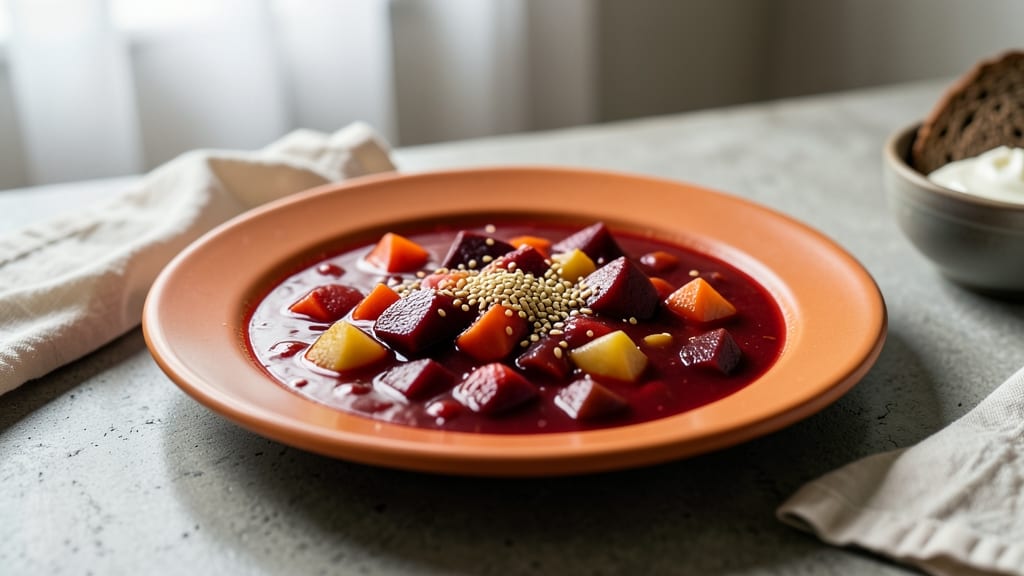
This Russian beet borscht soup recipe delivers the deep ruby hues and earthy sweetness that define Eastern European comfort food traditions. The key lies in slow-cooked beets that infuse the broth with natural sweetness, balanced by tangy vinegar and aromatic herbs.
I’ve perfected this vegetarian version that still satisfies even meat lovers—though adding smoked sausage transforms it into a heartier meal.
The beauty of borscht comes from its layers: tender beets, crisp cabbage, and creamy potatoes all simmered in a rich broth until flavors meld perfectly.
What makes this recipe special is the 30-minute prep followed by 1 hour of simmering—minimal effort for a dish that tastes like a labor of love. The traditional garnishes of sour cream, fresh dill, and pamprik (smoked paprika) elevate every spoonful.
By the time you serve this soup, you’ll have a velvety broth with vibrant red beets, tender vegetables, and just the right balance of sweet and tangy flavors. The texture is what sets it apart—creamy from the beets and potatoes, yet still light enough to enjoy as a main course.
It’s the kind of soup that warms the soul on chilly days while feeling special enough for company.
Serve with crusty rye bread or a side of pickles to complete the traditional experience. This recipe scales perfectly for gatherings, and leftovers taste even better the next day. Here’s how to make it—step by step—for restaurant-quality results at home.
Ingredients for russian beet borscht soup
Six vibrant ingredients create this soul-warming beet borscht that tastes like tradition.
| Ingredient | Amount | Notes |
|---|---|---|
| Medium Beets 🍠 | 2 lbs | Organic preferred, peeled and cubed |
| Green Cabbage 🥬 | ½ head | Core removed, shredded thin |
| Fresh Parsnips 🥕 | 1 lb | Peeled, cut into chunks |
| Carrots 🥕 | 1 ½ lbs | Peeled, cut into chunks |
| Russet Potatoes 🥔 | 1 ½ lbs | Peeled, cut into chunks |
| Yellow Onions 🧅 | 2 whole | Peeled, quartered |
| Garlic Cloves 🧄 | 6 cloves | Peeled, minced |
| Fresh Dill 🌿 | ¼ cup | Chopped, stems removed |
| Apple Cider Vinegar 🍎 | ¼ cup | For tangy brightness |
| Vegetable Broth 💧 | 6 cups | Low-sodium preferred |
| Tomato Paste 🍅 | ½ cup | For depth of flavor |
| Smoked Paprika 🌶️ | 1 tbsp | For traditional smokiness |
| Black Peppercorns 🌶️ | 1 tsp | Freshly cracked |
| Salt 🧂 | 2 tsp | Kosher or sea salt |
| Sour Cream 🥛 | ½ cup | For garnish and serving |
The beets are non-negotiable—organic preferred for richer flavor. Trader Joe’s or Whole Foods carry perfect ones year-round, or grab the pre-cubed frozen variety in a pinch. For the cabbage, green is best—red cabbage works but changes the color. I always buy a small head of cabbage (about 1.5 lbs) because it’s easier to shred and stays crisp longer. The parsnips? Skip them if you can’t find them—extra carrots or potatoes make great substitutes. Just make sure your veggies are uniformly cut so they cook evenly.
No fresh dill? Dried dill at one-third the amount gets you close, but fresh is ideal. The apple cider vinegar is what balances the sweetness—substitute white vinegar if that’s what you have. For the broth, low-sodium is key—otherwise you’ll need to adjust salt later. The tomato paste can be the squeeze-tube kind from Trader Joe’s for convenience. Smoked paprika? Penzeys has the best quality, but any good smoked paprika works. Don’t skip the peppercorns—crack them fresh for that restaurant-quality bite.
This soup tastes even better the next day—4-5 days in the fridge is perfect. For freezing, portion into containers and add a splash of broth to the top before sealing. 3 months frozen works great. The sour cream should be added fresh before serving—it’s the finishing touch that makes it feel special. Garnish with extra dill and a sprinkle of smoked paprika for that authentic look. Leftovers reheat beautifully—just add a splash of water if it gets too thick.
Why You’ll Love This Recipe
- One-Pot Magic: I swear by this recipe because it’s actually one-pot—no chopping chaos, no extra pans. Just toss in the beets (raw or roasted, your call), cabbage, parsnips, carrots, and potatoes, then let the broth work its magic. Twenty minutes later, you’ve got a steaming bowl with zero cleanup stress.
- Earthy Depth Bomb: That sweet-tart beet broth? Chef’s kiss. The parsnips add a nutty edge, the carrots bring natural sweetness, and the cabbage keeps it bright—plus, a splash of vinegar or sour cream ties it all together. It’s the kind of flavor that lingers, making you want to sip it like a fancy wine (but way cheaper).
- Potluck Star: This soup travels beautifully. Pack it in a thermos for picnics, bring it to holiday dinners (yes, even Thanksgiving), or freeze half for lazy Mondays. It reheats like a dream and always gets rave reviews—no one guesses it’s budget-friendly.
- Pantry Goldmine: Honestly, you’re probably already stocked for this. Beets stay fresh forever, potatoes and carrots are cheap staples, and cabbage lasts weeks. I’ve made this for under $10 a bowl, and the leftovers? Even better the next day—if there are any. My freezer’s full of it, and I don’t even pretend to care.
Step-by-step instructions for Russian beet borscht soup
Here’s how to create a vibrant, hearty borscht that captures all the classic Russian flavors.
Prepare and Sauté the Vegetable Base
In a large Dutch oven, heat 1 tablespoon olive oil over medium heat. Add the 2 whole yellow onions, peeled and quartered, and cook for 8-10 minutes until softened and translucent. You’ll know they’re ready when they release easily from the bottom of the pan.
Add the 6 minced garlic cloves and 1 tablespoon smoked paprika, stirring constantly for 30 seconds until fragrant. This aromatic base forms the flavor foundation for your soup. If you notice the garlic starts to brown too quickly, reduce the heat slightly to prevent burning.
Cook the Root Vegetables
Add the 2 lbs cubed medium beets, 1.5 lbs cubed carrots, 1.5 lbs cubed russet potatoes, and 1 lb cubed fresh parsnips to the pot. Stir to coat the vegetables evenly with the onion mixture. Pour in the 6 cups vegetable broth and bring to a gentle boil over medium-high heat.
Once boiling, reduce heat to low and let the vegetables simmer uncovered for 20-25 minutes until they’re fork-tender. You’ll see the beets begin to soften first, then the other vegetables will follow. This gradual cooking ensures all the flavors meld together beautifully without breaking down completely.
Build the Flavor Profile
After the vegetables have softened, stir in the 0.5 cup tomato paste and 0.25 cup apple cider vinegar. Add the 0.5 head shredded green cabbage and continue simmering for another 10-12 minutes until the cabbage is tender but still holds its shape. The vinegar adds that signature tang that balances the earthy sweetness of the beets.
Season with the 2 teaspoons salt and 1 teaspoon freshly cracked black peppercorns. Taste and adjust the seasoning if needed. The soup should be rich and flavorful, with a perfect balance between the sweet beets, tangy vinegar, and savory broth. If you find it needs more depth, you can add a pinch more salt or a splash of vinegar.
Finish and Serve
Remove the pot from heat and let the soup rest for 5 minutes. This resting period allows the flavors to settle and the soup to thicken slightly. Stir in the 0.25 cup chopped fresh dill just before serving to brighten the flavors and add freshness.
Ladle the hot borscht into bowls and top each serving with a dollop of 0.5 cup sour cream. The contrast between the warm, earthy soup and the cool, creamy sour cream is what makes this dish truly special. Serve immediately while the soup is steaming hot, and enjoy the deep ruby hues and rich, comforting flavors.
Pro Tips For Making Russian Beet Borscht Soup
- Peel Beets Before Cooking: I learned this the hard way—peeling raw beets before chopping saves time and keeps your hands from turning pink. The skin’s tough and bitter when cooked, so skip the post-boil peeling mess.
- Sweat Onions Low and Slow: Start onions in the pot on medium-low heat until they’re translucent, not browned. Too much heat burns them before the veggies join, leaving a bitter taste that even sour cream can’t fix.
- Don’t Overcrowd the Pot: Add potatoes and parsnips in batches if needed—they’ll release starch and turn your borscht gluey. Crowding also steams instead of simmering, and nobody wants mushy roots.
- Use Cold Water for Beets: Shock peeled beets in ice water for 10 minutes after boiling to stop cooking. This keeps them vibrant and prevents them from bleeding into the broth like a crime scene. (Yes, even if you’re impatient.)
Regional styles of these flavors
Ukrainian Grandmother Style
In Ukrainian households, borscht is often made with a beet broth that’s strained and reduced to a deep ruby concentrate. I start by simmering 2 lbs peeled beets in 4 cups water with 1 bay leaf and 1 tsp vinegar for 45 minutes until completely tender.
Then I blend the beets with 1 cup broth, strain through a fine-mesh sieve, and reduce the liquid by half. This concentrated beet broth is the secret to that intense color and sweetness. 🌟
For the vegetables, I use 1 small head of cabbage (about 1.5 lbs) and add 1 cup frozen peas in the last 5 minutes of cooking. The peas add a bright pop of color and texture that’s especially popular in Western Ukraine.
I also finish with 1 tbsp lemon juice instead of vinegar for a slightly sweeter tang. Serve with crispy fried onions on top for that authentic Ukrainian touch.
Belarusian Hearty Version
Belarusian borscht often includes potatoes as the main starch rather than just a supporting vegetable. I use 3 lbs potatoes (about 6 medium) and add 1 cup diced smoked sausage (like kielbasa) to the pot with the onions.
The sausage adds a deep, smoky flavor that balances the earthy beets. I also include 1 cup chopped sauerkraut in the last 10 minutes of cooking for extra tang and probiotics. 💪
For garnish, Belarusians often use sour cream mixed with chopped hard-boiled eggs and chives instead of dill. I make my egg mixture by whisking 4 egg yolks with 2 tbsp sour cream and 1 tsp mustard, then drizzling it over the soup.
This rich topping is a game-changer for heartier versions. The Belarusian version is especially popular during winter when hearty meals are essential.
Lithuanian Sour Cream Swirl
Lithuanian borscht often features a sour cream swirl that’s mixed directly into the soup before serving. I make this by whisking 1 cup sour cream with 1 tbsp lemon juice and 1 tsp sugar, then gently folding it into each bowl of hot soup.
This creates a marbled effect that’s both beautiful and delicious. I also add 1 cup chopped carrots and 1 cup chopped parsnips for extra sweetness. 🥛
The Lithuanian version often includes 1 cup chopped fresh parsley instead of dill, and I finish with a sprinkle of poppy seeds for a nutty crunch. For an extra touch, I sometimes add 1 tbsp honey to the broth while simmering to enhance the natural sweetness of the beets.
This version is lighter than the Ukrainian or Belarusian styles but still deeply flavorful.
Polish Beetroot Soup
Polish borscht, or “burakowa zupa,” often includes 1 cup chopped sauerkraut and 1 cup diced potatoes as the base. I start by sautéing 2 tbsp lard (or butter) with 2 onions and 2 garlic cloves until golden.
Then I add 2 lbs diced beets, 1.5 lbs diced potatoes, and 1 cup sauerkraut, cooking until the potatoes are tender. The lard adds a rich, savory depth that’s characteristic of Polish cuisine. 🥔
For finishing touches, I stir in 1 tbsp caraway seeds (toasted in a dry pan first) and 1 tbsp apple cider vinegar. The caraway adds an earthy, slightly bitter note that complements the sweet beets perfectly.
Polish borscht is often served with rye bread and pickled cucumbers on the side. This version is heartier and more substantial than the Eastern European styles, making it a perfect main dish.
Nutrition facts
Frequently asked questions
Why does my borscht look muddy instead of vibrant red?
The deep ruby color comes from properly cooked beets and a concentrated beet broth. Overcooking beets turns them gray, so simmer them just until tender (20-25 minutes). For extra vibrancy, strain the broth after cooking beets and reduce it by half to create a beet concentrate. The Ukrainian style even uses this method for that signature color!
Can I make this soup without beets?
While beets are essential for authentic flavor, you can substitute 1 cup roasted red peppers or 1 cup tomato paste for some color and sweetness. However, the earthy depth and natural sweetness of beets are irreplaceable. For a vegetarian version, try adding 1 cup cooked lentils to maintain heartiness. The Polish version even includes sauerkraut for tangy contrast.
How do I store and reheat borscht?
Store in an airtight container in the fridge for 4-5 days or freeze for 3 months. Reheat gently on low heat, adding a splash of broth if it thickens. Never microwave directly from frozen—thaw overnight first. The flavors actually improve after the first day as the beets release more sweetness into the broth!
What’s the difference between Russian and Ukrainian borscht?
The Russian version typically uses a lighter broth and includes potatoes as a main ingredient, while Ukrainian borscht often features a beet broth concentrate and peas for extra texture. Russian borscht may also include sour cream swirls, whereas Ukrainian versions frequently top with crispy fried onions. Both use dill, but the Ukrainian version tends to be slightly sweeter with lemon juice instead of vinegar.
Can I make this gluten-free?
This recipe is naturally gluten-free, but check your vegetable broth and smoked paprika for hidden gluten. For extra flavor, use gluten-free tamari instead of soy sauce if adding meat. Serve with gluten-free rye bread or cornbread. The traditional ingredients already provide plenty of hearty texture without needing grains.

- Broccili Salad Recipe: Crunchy, Creamy, and Crowd-Pleasing - November 29, 2026
- Rum Simple Syrup Recipe: Balanced Sweetness for Cocktails and Desserts - November 29, 2026
- Avocado Cloud Bread Recipe: Light, Fluffy, and Egg-Free Magic - November 29, 2026