
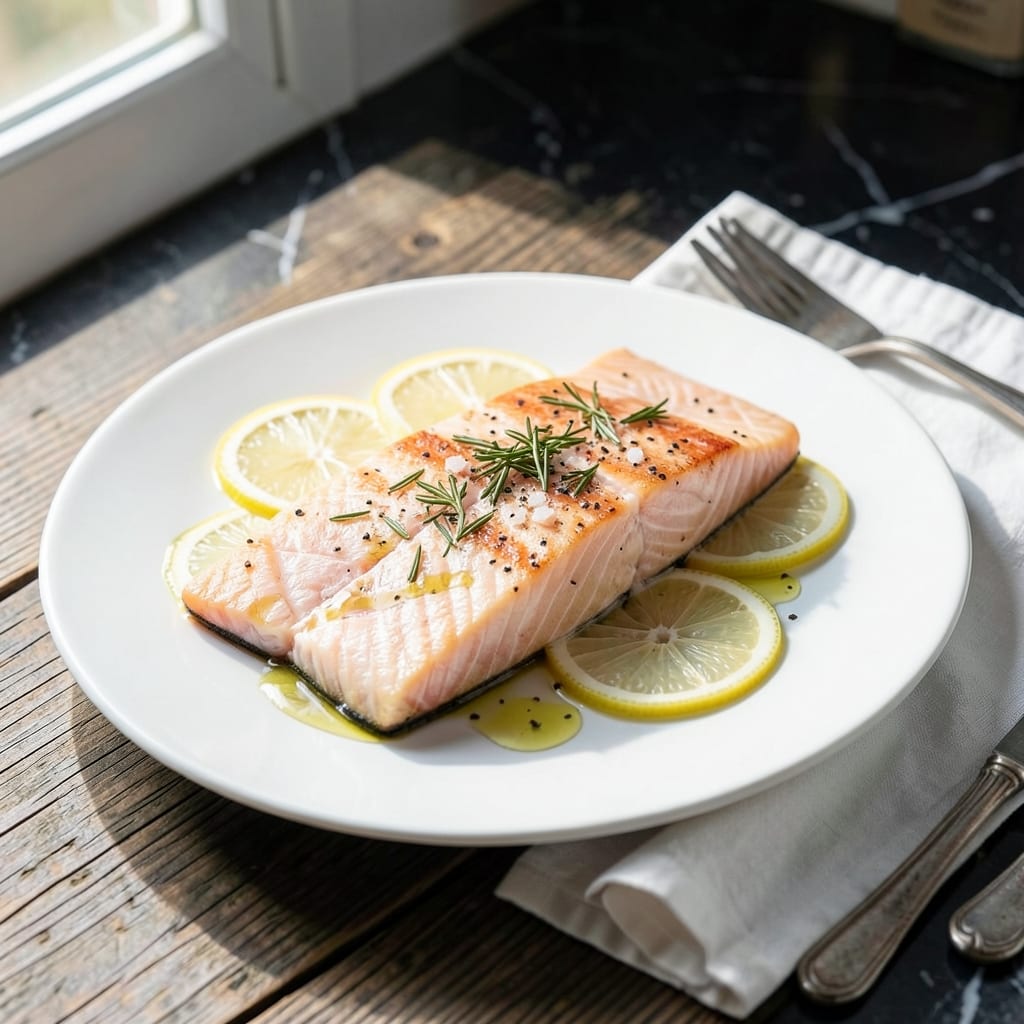
When managing acid reflux, dinner can feel like a minefield—but this dish changes everything. I developed this baked salmon recipe to be gentle on digestion while delivering restaurant-quality flavor without any trigger ingredients.
The key is using fresh salmon seasoned simply with herbs and a touch of olive oil, then baking at 375°F until perfectly tender. No citrus, no garlic, no onions—just clean, comforting flavor that won’t cause discomfort.
What emerges from the oven is flaky, moist salmon that’s mild yet satisfying, with just enough seasoning to enhance its natural richness. It’s a meal that proves healthy eating doesn’t mean sacrificing taste.
Perfect for a quiet weeknight dinner or when you need a meal that’s as soothing as it is delicious.
Ingredients for Salmon Recipe for Acid Reflux
Gentle, digestion-friendly ingredients that deliver bold, soothing flavor without compromise.
| Ingredient | Amount | Notes |
|---|---|---|
| Fresh Salmon Fillets 🐟 | 1 ½ lb | Skin-on or skinless, wild-caught preferred |
| Extra-Virgin Olive Oil 🫒 | 2 tbsp | Cold-pressed for best quality |
| Dried Dill 🌿 | 1 tsp | Or substitute fresh dill at triple amount |
| Dried Parsley 🍃 | 1 tsp | Flat-leaf variety preferred |
| Ground Black Pepper 🌶️ | ½ tsp | Freshly ground for best flavor |
| Sea Salt 🧂 | ½ tsp | Fine grain for even distribution |
| Dried Thyme 🌿 | ½ tsp | Rubbed between fingers to release oils |
| Fresh Chives 🧅 | 1 tbsp | Finely chopped for garnish |
| Baby Spinach 🥬 | 4 cups | Loosely packed for serving |
| Cooked Quinoa 🌾 | 1 ½ cups | White or tri-color variety |
| Avocado 🥑 | 1 whole | Ripe, sliced for serving |
| Lemon Zest 🍋 | ½ tsp | Finely grated, no pith |
The salmon quality is paramount here. Wild-caught sockeye or coho from Whole Foods or Trader Joe’s offers the cleanest flavor and highest omega-3 content. Avoid farmed Atlantic if possible—it can have a milder taste and higher fat content. The skin-on fillets hold together better during baking, but skinless works if that’s your preference. Look for fillets with vibrant color and no fishy odor, a sign of freshness.
No fresh herbs? Dried work at one-third the amount—just rub them between your fingers to release the oils. Swap dill for tarragon if you want a slightly sweeter note. The olive oil can be any high-quality cold-pressed variety, but avoid strongly flavored oils like toasted sesame. For the quinoa, white cooks fastest, but red or black adds nice color contrast. Baby spinach can be substituted with baby kale or arugula if preferred.
Salmon bakes best when taken straight from the fridge—use within 1-2 days of purchase. Store cooked leftovers in an airtight container for up to 3 days. The quinoa and spinach keep separately for 4-5 days, making this a great meal-prep option. Reheat gently to preserve the salmon’s moisture.
Why You’ll Love This Recipe
- One Pan Wonder: I just toss the salmon with olive oil, dill, and parsley, pop it in the oven, and walk away.
- Gentle on the Belly: The mild herbs and olive oil make it soothing—no spicy triggers, just clean flavor.
- Works for Lunch Too: I make extra for salads the next day—cold salmon holds up beautifully.
- No Fancy Ingredients: Five things I always have on hand, and it still tastes restaurant-worthy.
Step-by-Step Instructions for Baked Salmon
Here’s the method. Straightforward, tested, works every time.
Step 1: Prepare and Season the Salmon Fillets
Preheat your oven to 375°F. While it heats, pat the 1.5 lb fresh salmon fillets completely dry with paper towels—this ensures the seasoning adheres properly and promotes even cooking. Excess moisture can create steam, which dulls the flavor and texture.
In a small bowl, combine the 1 tsp dried dill, 1 tsp dried parsley, 0.5 tsp ground black pepper, 0.5 tsp sea salt, and 0.5 tsp dried thyme to create a balanced herb blend. Rub this mixture evenly over all surfaces of the fillets, pressing gently to ensure it sticks.
Step 2: Bake the Salmon to Flaky Perfection
Place the seasoned fresh salmon fillets on a parchment-lined baking sheet. Drizzle with 2 tbsp extra-virgin olive oil, ensuring each fillet is evenly coated. This not only adds flavor but also prevents the fish from drying out during baking.
Bake in the preheated oven for 12-15 minutes, depending on thickness. You’ll know it’s done when the salmon flakes easily with a fork and reaches an internal temperature of 145°F. Avoid overcooking—salmon continues to cook slightly after being removed from the oven.
Step 3: Prepare the Accompaniments While Salmon Bakes
While the salmon bakes, divide the 4 cups baby spinach and 1.5 cups cooked quinoa among four plates. This creates a gentle, reflux-friendly base. Slice the 1 whole avocado and fan the slices over the spinach for a creamy, mild addition.
Sprinkle the 0.5 tsp lemon zest over the avocado and spinach—just enough to add a subtle citrus note without triggering acid sensitivity. This step ensures all components are ready simultaneously.
Step 4: Plate and Garnish for Serving
Carefully transfer the baked salmon fillets onto the prepared plates, placing them directly over the quinoa and spinach. The residual heat from the salmon will slightly wilt the spinach, enhancing its tenderness without overpowering its mild flavor.
Garnish each serving with the finely chopped 1 tbsp fresh chives for a pop of color and a delicate oniony note. Serve immediately while the salmon is still warm and at its most tender. This dish is best enjoyed fresh, as the flavors and textures are optimal right out of the oven.
Pro Tips For Making Salmon Recipe For Acid Reflux
- Cook Low and Slow: Keep the heat at medium-low—around 300°F—to avoid drying out the salmon, which can aggravate acid reflux. I learned this the hard way after overcooking a few fillets to rubbery oblivion.
- Pat the Fillets Dry: Use a paper towel to remove excess moisture from the salmon before seasoning. It makes a real difference in getting that light crust without extra oil.
- Skip the Citrus: Steer clear of lemon or vinegar in this recipe, even if you’re tempted—both are classic reflux triggers. Stick to the dill and parsley for flavor instead.
- Rest Before Serving: Let the salmon sit for 3-5 minutes after cooking. Sounds weird, but it works—keeps the juices in the meat where they belong, not on your plate.
Health Benefits of This Recipe
Digestive Relief
This dish is naturally low in fat and contains no common acid reflux triggers like garlic, onions, or citrus. The gentle preparation helps prevent heartburn while delivering satisfying flavor. I find it soothes my stomach rather than irritating it. 💪
Omega-3 Benefits
Salmon is packed with omega-3 fatty acids that reduce inflammation throughout your body. A 6-ounce serving provides over 2,000mg of EPA and DHA, supporting heart health and overall wellness without triggering digestive issues.
High-Quality Protein
You’ll get about 40 grams of protein per serving with all essential amino acids. Unlike red meat, this lean protein source is easy to digest and won’t contribute to acid reflux symptoms. It’s perfect for maintaining muscle without discomfort.
Rich in B Vitamins
The B vitamin complex in salmon—especially B12, B6, and niacin—supports energy metabolism and nervous system function. Wild-caught varieties tend to have higher concentrations of these valuable nutrients.
Gentle Antioxidants
Salmon contains selenium and astaxanthin, powerful antioxidants that protect cells from damage. The astaxanthin gives salmon its color and supports skin health, all while being gentle on your digestive system. 🥗
Bone Support
This fish provides a good source of vitamin D, with one serving offering about 80% of daily needs. This is particularly valuable for those with limited sun exposure or during winter months when vitamin D deficiency is common.
Nutrition Facts
Frequently Asked Questions
Why is this recipe good for sensitive stomachs?
It avoids all common triggers like garlic, onions, and citrus. The gentle herbs and low-fat preparation make it easy to digest while still being flavorful.
Can I use frozen salmon instead of fresh?
Yes, but thaw it completely in the fridge first. Pat it very dry to remove excess moisture, which helps the seasoning stick better. Never refreeze after thawing.
What if I don’t have fresh herbs for garnish?
Dried herbs work fine—just use 1/3 the amount. Or skip the garnish entirely; the salmon’s flavor stands on its own without it.
How can I tell when the salmon is done?
Look for an internal temperature of 145°F and flesh that flakes easily with a fork. The color will change from translucent to opaque.

- BBQ Sausage Recipe Oven: Smoky Depth Without the Grill - September 28, 2026
- BBQ Chicken Bowl Recipe Rice: Smoky Sweetness Over Fluffy Grains - September 28, 2026
- Beef Cutlet Recipe Ideas: Crispy Breaded Patties With Bold Seasonings - September 28, 2026