
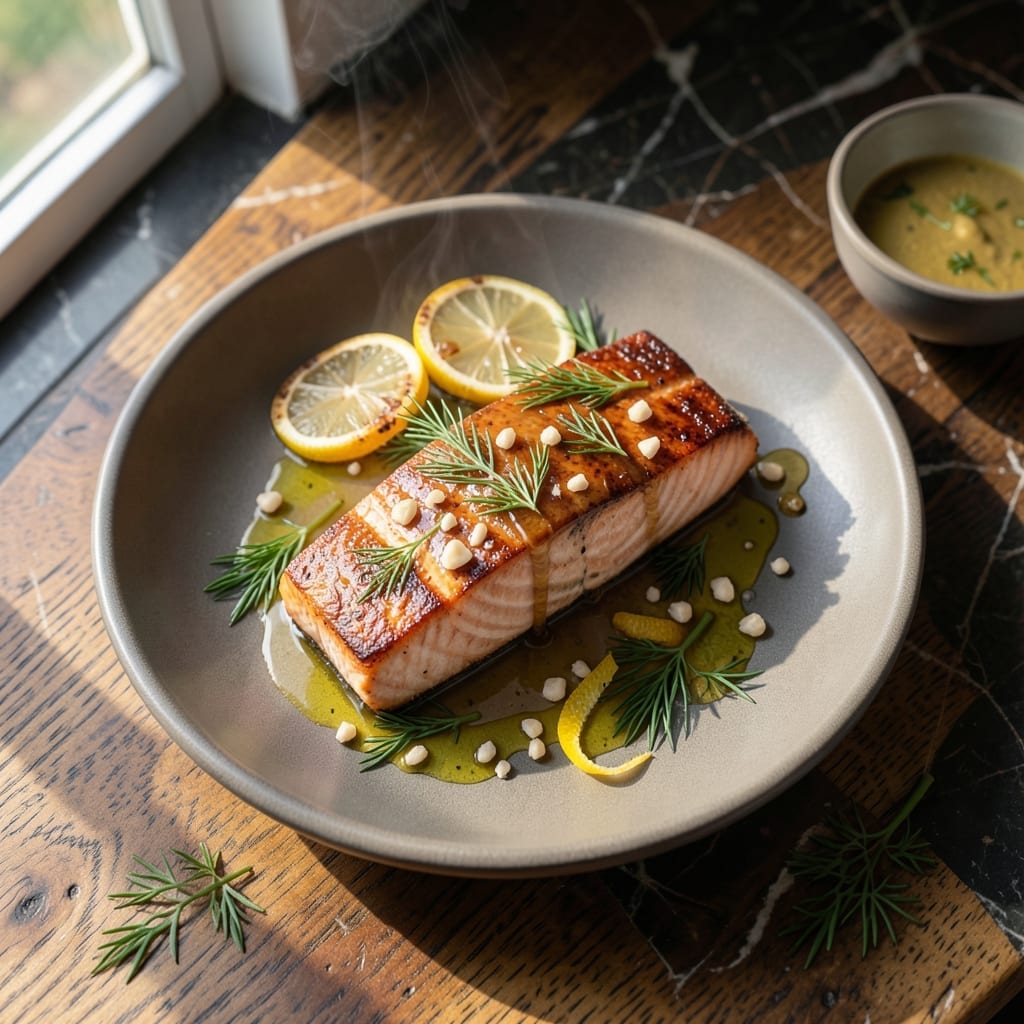
Achieving perfectly flaky salmon doesn’t require a full-size oven or complicated techniques. This toaster oven method delivers consistent, professional results with minimal effort and maximum flavor.
The key is precise temperature control and strategic placement within the compact space. At 400°F, the salmon cooks evenly while developing a light crust that locks in moisture.
You’ll get tender, buttery fillets with that coveted flaky texture every time. The compact environment actually works to your advantage, concentrating heat for optimal cooking.
This approach transforms a simple weeknight dinner into a restaurant-worthy dish. The method is streamlined yet delivers on flavor and presentation.
Ingredients for Salmon Recipe Toaster Oven
Fresh salmon fillets and pantry staples create this restaurant-quality dish with ease.
| Ingredient | Amount | Notes |
|---|---|---|
| Salmon Fillets 🐟 | 1 ½ lb | Skin-on, center-cut preferred |
| Extra-Virgin Olive Oil 🫒 | 2 tbsp | Divided for coating and drizzling |
| Kosher Salt 🧂 | 1 tsp | Diamond Crystal preferred |
| Freshly Ground Black Pepper 🌶️ | ½ tsp | Coarse grind for texture |
| Garlic Cloves 🧄 | 3 cloves | Minced or pressed |
| Fresh Dill 🌿 | 2 tbsp | Chopped, for garnish |
| Lemon 🍋 | 1 whole | Zested and juiced |
| Dijon Mustard 🟡 | 1 tbsp | For glaze or marinade |
| Honey 🍯 | 1 tbsp | Optional for sweetness |
| Unsalted Butter 🧈 | 2 tbsp | Melted, for basting |
| Paprika 🌶️ | ½ tsp | Smoked or sweet variety |
| Red Pepper Flakes 🔥 | ¼ tsp | Optional for heat |
The salmon quality is paramount. Wild-caught sockeye or king offer the best flavor and texture. Whole Foods or a reputable fishmonger will have the freshest selection—look for bright, moist fillets with no fishy odor. Center-cut pieces ensure even cooking in the toaster oven’s compact space. Skin-on fillets hold together better, but skinless works if that’s your preference.
No fresh dill? Dried dill at one-third the amount suffices, though fresh brings better aroma. If you lack Dijon, whole-grain mustard adds pleasant texture. Honey can be replaced with maple syrup for a vegan-friendly option. The lemon is non-negotiable—its acidity brightens the rich salmon. For heat, cayenne pepper can replace the red pepper flakes.
Cooked salmon keeps in the fridge for up to 2 days. Best stored in an airtight container. For longer storage, freeze raw fillets for up to 3 months. Always thaw in the fridge overnight for best texture.
Why You’ll Love This Recipe
- Set and Forget: I just pop the salmon in the toaster oven, set the timer, and walk away—no babysitting required.
- Garlic Magic: That sizzle when the minced garlic hits the hot oil? It makes the whole kitchen smell incredible.
- Weeknight Hero: Honestly, it’s my go-to for busy evenings when I need dinner fast but still want it to feel special.
- Leftovers Win: Cold salmon on salad the next day is a bonus—if there even is any left.
Step-by-Step Instructions for Salmon Toaster Oven
This method delivers perfectly cooked, flaky salmon with minimal effort in your toaster oven.
Step 1: Prep the Salmon Fillets
Pat the 1.5 lb Salmon Fillets completely dry with paper towels—this is crucial for achieving a good sear and preventing the skin from sticking. I always place them skin-side down on a paper towel to absorb any excess moisture.
Season both sides evenly with the 1 tsp Kosher Salt and 0.5 tsp Freshly Ground Black Pepper. Then, rub the fillets with 1 tbsp Extra-Virgin Olive Oil to create a protective barrier that locks in moisture during cooking. Let the salmon sit at room temperature for 10 minutes while you preheat the toaster oven.
Step 2: Create the Aromatic Glaze
In a small bowl, combine the 1 tbsp Dijon Mustard, 1 tbsp Honey, zest of the 1 whole Lemon, 3 cloves Garlic Cloves (minced), 0.5 tsp Paprika, and 0.25 tsp Red Pepper Flakes. Whisk until smooth and fully incorporated.
Melt the 2 tbsp Unsalted Butter and slowly drizzle it into the mustard mixture while whisking continuously. This emulsifies the glaze, ensuring it clings beautifully to the salmon. The glaze should have a thick, pourable consistency with a vibrant golden color.
Step 3: Preheat and Prepare the Toaster Oven
Preheat your toaster oven to 400°F using the bake function. I recommend placing the oven rack in the middle position for even heat distribution. While it heats, line a small baking sheet or the toaster oven tray with parchment paper to prevent sticking.
This high temperature mimics the intense heat of a full-sized oven, creating a beautiful crust on the glaze while cooking the salmon through gently. The parchment paper also makes cleanup effortless and ensures the delicate fish doesn’t tear when you remove it.
Step 4: Cook the Salmon to Flaky Perfection
Place the salmon fillets skin-side down on the prepared baking sheet. Brush the top and sides generously with the glaze, using about half the mixture. Reserve the rest for basting later. The skin should sizzle slightly when it hits the hot parchment.
Bake for 12-15 minutes, depending on the thickness of your fillets. At the 8-minute mark, brush the salmon with the remaining glaze. The salmon is done when it reaches an internal temperature of 145°F and flakes easily with a fork. The edges should be slightly caramelized from the honey in the glaze.
Step 5: Rest and Garnish
Remove the salmon from the toaster oven and let it rest for 5 minutes—this allows the muscle fibers to relax and the juices to redistribute, ensuring moist, tender flesh. The temperature will rise a few degrees during this time, which is normal.
Garnish with the 2 tbsp Fresh Dill and a squeeze of juice from the remaining lemon. The acidity cuts through the richness of the glaze. Serve immediately while the skin is still crisp and the glaze is glossy and fragrant.
Pro Tips For Making Salmon Recipe Toaster Oven
- Preheat the Toaster Oven: Crank it to 400°F for at least 10 minutes before adding the salmon—I learned this the hard way after ending up with unevenly cooked fillets.
- Pat Salmon Dry: Blot the fillets with a paper towel before seasoning; it helps the skin crisp up and prevents steaming in the toaster oven.
- Skip Overcrowding: Leave at least an inch between fillets so the heat circulates properly—after burning a batch, I finally figured out spacing matters.
- Crush the Garlic: Smash the cloves lightly with the side of your knife before mincing; it releases more flavor and saves you from chopping for ages.
Troubleshooting This Dish
Uneven Cooking
If one side cooks faster, rotate your baking sheet 180 degrees halfway through. Thicker fillets may need 2-3 extra minutes. I always check the thickest part with my instant-read thermometer—don’t trust visual cues alone. 🌡️
Dry Salmon
Overcooking is the main culprit. Remove it at 140°F—it’ll reach 145°F while resting. Also, ensure you’re using the full 2 tbsp olive oil in prep. The glaze helps seal in moisture, but oil is your first defense against dryness.
Sticking Skin
Prevent this by using parchment paper, not foil. Make sure your fillets are completely dry before seasoning. If skin sticks, let it cook 1-2 more minutes to crisp and release naturally. I also avoid moving the fillets until ready to serve.
Glaze Burning
If your glaze darkens too quickly, tent loosely with foil. The honey in the glaze can caramelize fast at 400°F. Baste at the 8-minute mark as instructed, but if you see dark spots earlier, cover it temporarily. 💡
Toaster Oven Hot Spots
Every toaster oven has them. To identify yours, place 4 slices of bread on the tray and toast. The browner slices reveal hotter areas. Position your salmon away from these spots, or rotate the tray during cooking.
Underseasoned Fillets
Salmon needs bold seasoning to stand up to its richness. Don’t skimp on the 1 tsp salt. I also recommend adding a pinch of lemon zest directly to the fillets before baking for extra brightness. Taste your glaze before applying—it should be vibrant, not bland.
Nutrition Facts
Frequently Asked Questions
How long does it take to cook salmon in a toaster oven?
At 400°F, it typically takes 12-15 minutes for standard fillets. Always check the internal temperature reaches 145°F for perfect doneness. Thinner pieces may finish in 10 minutes.
Can I use frozen salmon for this method?
Yes, but thaw completely first in the fridge overnight. Pat it very dry before seasoning to prevent steaming. Never cook from frozen—it leads to uneven results.
What’s the best way to prevent the glaze from burning?
Tent with foil if it darkens too quickly. The honey caramelizes fast, so baste only at the 8-minute mark and monitor closely. Lowering temperature to 375°F also helps.
Should I cook salmon skin-side up or down?
Always place fillets skin-side down on parchment paper. This protects the flesh and helps the skin crisp. It also prevents sticking and makes serving easier.

- BBQ Sausage Recipe Oven: Smoky Depth Without the Grill - September 28, 2026
- BBQ Chicken Bowl Recipe Rice: Smoky Sweetness Over Fluffy Grains - September 28, 2026
- Beef Cutlet Recipe Ideas: Crispy Breaded Patties With Bold Seasonings - September 28, 2026