
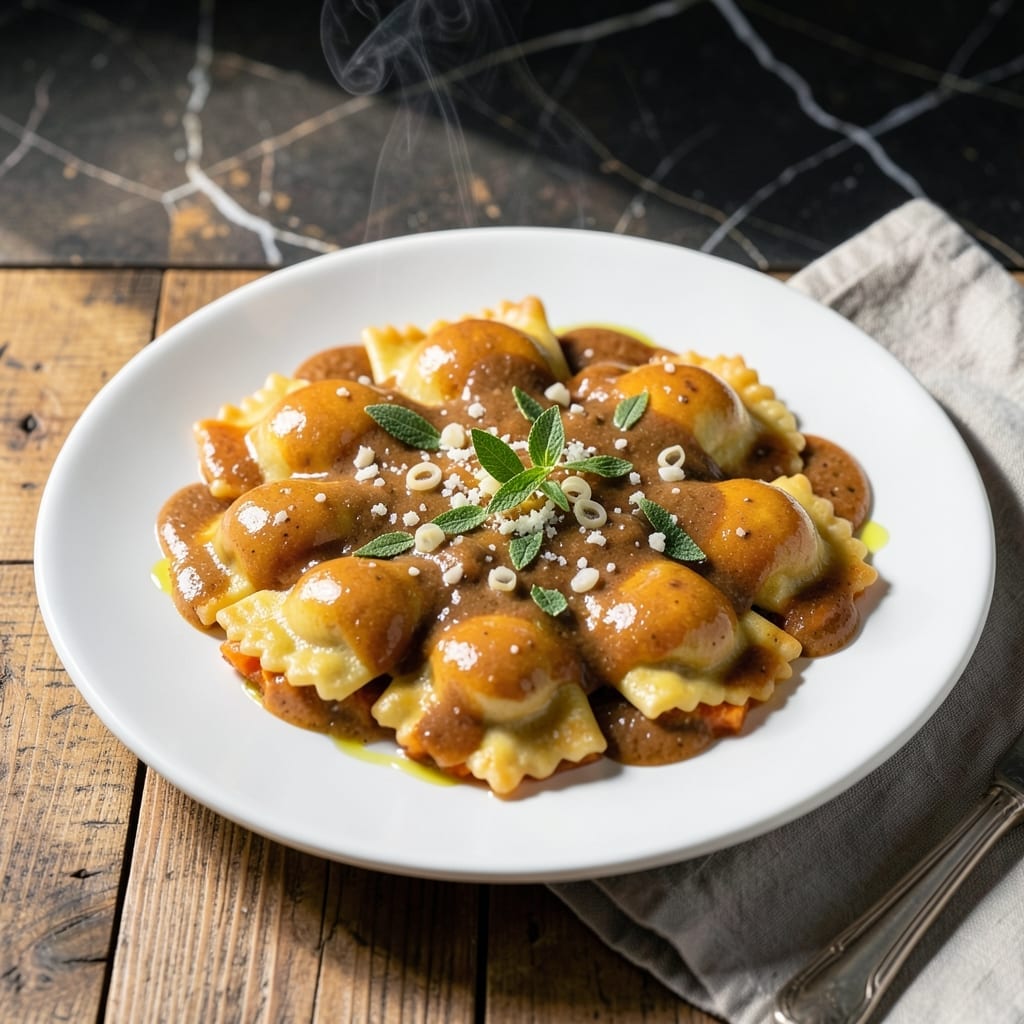
This brown butter and sage sauce transforms butternut squash ravioli into a restaurant-worthy dish with minimal effort. A simple combination of nutty browned butter and fragrant fresh sage creates depth that perfectly complements the sweetness of the filling.
The process takes less than 10 minutes and requires just a handful of ingredients. As the butter melts and browns, its aroma fills the kitchen, signaling the sauce is nearly ready. The sage leaves crisp up in the hot butter, infusing it with their earthy essence.
What results is a velvety, rich sauce that coats each ravioli beautifully. The nutty butter enhances the squash’s natural sweetness while the sage adds an aromatic touch. It’s the ideal pairing for a dish that looks and tastes gourmet.
Serve immediately for the best flavor and texture. This sauce elevates the ravioli without overpowering it.
Ingredients for Sauce Recipe for Butternut Squash Ravioli
Nine simple ingredients create this velvety, aromatic sauce in minutes.
| Ingredient | Amount | Notes |
|---|---|---|
| Unsalted Butter 🧈 | ½ cup | Cut into even pieces for melting |
| Fresh Sage Leaves 🍃 | 20 pieces | Whole leaves, stemmed |
| Shallot 🧅 | 1 whole | Finely minced for depth |
| Garlic Clove 🧄 | 1 clove | Minced for aromatic base |
| Heavy Cream 🥛 | ¼ cup | For velvety finish |
| Parmesan Cheese 🧀 | ¼ cup | Freshly grated for umami |
| Lemon Juice 🍋 | 1 tsp | Freshly squeezed for brightness |
| Salt 🧂 | ¼ tsp | Fine sea salt preferred |
| Black Pepper 🌶️ | 0.125 tsp | Freshly ground for bite |
| Nutmeg 🌰 | 0.125 tsp | Freshly grated for warmth |
The butter quality matters here—use a high-fat European-style like Plugrá or Kerrygold. Fresh sage is non-negotiable (dried won’t crisp properly). Look for bright green, unblemished leaves at the grocery store or farmers market. Shallots add subtle sweetness—substitute with white onion in a pinch. The Parmesan should be a Parmigiano-Reggiano wedge for authentic flavor.
No fresh sage? Dried rubbed sage at half the amount works for flavor (but won’t crisp). Skip the cream for a lighter version—just add 2 tbsp pasta water for silkiness. Garlic can be pre-minced from a jar (though fresh is ideal). If avoiding dairy, nutritional yeast adds a cheesy note. The nutmeg is subtle but important—freshly grated makes a difference.
Sauce comes together fast—make it right before serving. Leftovers keep 3-4 days refrigerated, but reheat gently to avoid separation. Freezes beautifully for up to 3 months. Always bring butter to room temp first (cuts melting time in half).
Why You’ll Love This Recipe
- One-Pot Wonder: I melt the butter, toss in the sage and shallots, and let it all come together in one pan—minimal cleanup, maximum flavor.
- Rich and velvety: The heavy cream blended with garlic and sage creates this ridiculously good, silky sauce that clings perfectly to the ravioli.
- Date Night Ready: Honestly, it feels fancy enough for company but takes me less time than ordering takeout.
- Budget-Friendly Luxe: Between us, a little butter and cream go a long way, and fresh sage is cheaper than you’d think at the farmers market.
Step-by-Step Instructions for Brown Butter and Sage Sauce
This method delivers a restaurant-quality sauce with rich, nutty depth and aromatic complexity.
Step 1: Brown the Butter with Sage
Cut the 0.5 cup unsalted butter into even pieces and melt in a large skillet over medium heat. Once melted, add all 20 pieces fresh sage leaves and cook for 5-7 minutes, swirling occasionally, until the butter turns a deep amber brown and the sage leaves become crisp.
Watch closely as the butter can go from brown to burnt quickly. The sage will infuse the butter with its earthy aroma while the milk solids toast to create that signature nutty flavor. Remove from heat immediately once the butter reaches the desired color.
Step 2: Sauté the Aromatics
Add the finely minced shallot and minced garlic clove to the browned butter. Cook over medium-low heat for 1-2 minutes until the shallot softens and becomes translucent but not browned.
This step builds the flavor base for your sauce. The shallot and garlic will mellow in the browned butter, adding depth without overpowering the delicate sage notes. Stir frequently to prevent burning.
Step 3: Create the Creamy Base
Pour in the 0.25 cup heavy cream and stir to combine. Bring to a gentle simmer and cook for 2-3 minutes until the mixture thickens slightly and coats the back of a spoon.
The cream tempers the intensity of the browned butter while creating a velvety texture. At this point, the sauce should have a glossy appearance and a rich, nutty aroma with herbal undertones.
Step 4: Finish with Cheese and Seasonings
Reduce heat to low and stir in the 0.25 cup parmesan cheese, 1 tsp lemon juice, 0.25 tsp salt, 0.125 tsp black pepper, and 0.125 tsp nutmeg. Cook for 1 additional minute, stirring constantly, until the cheese melts completely.
The parmesan adds umami depth while the lemon juice brightens the rich flavors. The nutmeg provides a subtle warmth that complements the butternut squash ravioli perfectly. Taste and adjust seasoning if needed.
Step 5: Serve Immediately
Pour the sauce over cooked butternut squash ravioli and toss gently to coat. The sauce should cling beautifully to the pasta, with each bite delivering the complex flavors of browned butter, crispy sage, and creamy parmesan.
Serve immediately while hot, as the sauce will thicken as it cools. Garnish with additional fresh sage leaves if desired for a pop of color and extra aromatic flavor.
Pro Tips For Making Sauce Recipe For Butternut Squash Ravioli
- Brown the Butter: Let the butter cook until it turns golden brown and smells nutty—this adds depth to the sauce that raw butter just can’t. I learned this the hard way after tasting a bland batch made with un-browned butter.
- Sliver the Sage: Tear or chop the sage leaves into thin strips so they crisp up evenly and distribute flavor throughout the sauce. Whole leaves can be overpowering and chewy.
- Low and Slow Cream: After adding the heavy cream, keep the heat at a gentle simmer to avoid splitting. I’ve ruined a few sauces by cranking the heat too high and ending up with a greasy mess.
- Bloom the Shallots: Cook the finely diced shallots in the butter until soft and translucent before adding garlic—this builds a sweet, aromatic base. Skipping this step leaves the sauce tasting raw and harsh.
Storing and Reheating This Dish
Refrigerator Storage
Let the sauce cool to room temperature within 2 hours before transferring. Store in an airtight container—I use a glass mason jar. It keeps well in the fridge for 3-4 days with flavors deepening over time. ❄️
Freezer Storage
This sauce freezes beautifully for up to 3 months without texture changes. Pour into ice cube trays for portion control, then transfer to a freezer bag. Leave ½ inch headspace for expansion and label with the date.
Stovetop Reheating
Gently warm over low heat in a small saucepan, stirring frequently. Add 1-2 tbsp water or cream if it separates. Reheating takes about 5 minutes—don’t let it boil or the butter may break. 🔥
Microwave Method
Microwave in 15-second intervals at 50% power, stirring between each. Cover loosely with a damp paper towel to prevent drying. Expect to heat for 45-60 seconds total for a single serving.
Pro Tips
For best results, reheat only what you’ll use immediately. If the sauce looks grainy, whisk in 1 tsp hot water to restore its velvety texture. Always taste and adjust seasoning after reheating.
Nutrition Facts
Frequently Asked Questions
Can I make this sauce ahead of time?
Yes, but prepare it no more than 2 hours ahead. The sauce thickens as it cools and the sage loses its crispness. Store at room temperature and reheat gently before serving.
What if my butter burns?
Start over—burnt butter tastes bitter and ruins the sauce. Use medium heat and swirl the pan constantly. The butter should turn amber brown, not black.
Can I use dried sage instead?
Yes, but reduce to 1 tablespoon and add with the cream. It won’t crisp but will still infuse flavor. Fresh sage is ideal for the best aroma and texture.
How do I prevent the sauce from separating?
Keep heat at low when adding cream and cheese. If it separates, whisk in 1 tsp hot water to restore smoothness. Constant stirring helps maintain the emulsion.

- Pav Bhaji Recipe Food Lab: Mumbai Street Food Magic at Home - October 6, 2026
- Peach Jelly Recipe Without Pectin: Naturally Set Sweet Spread - October 6, 2026
- Pasta Salad Recipe With Zesty Italian Dressing: Bright Herb-Kissed Medley for Picnics - October 6, 2026