
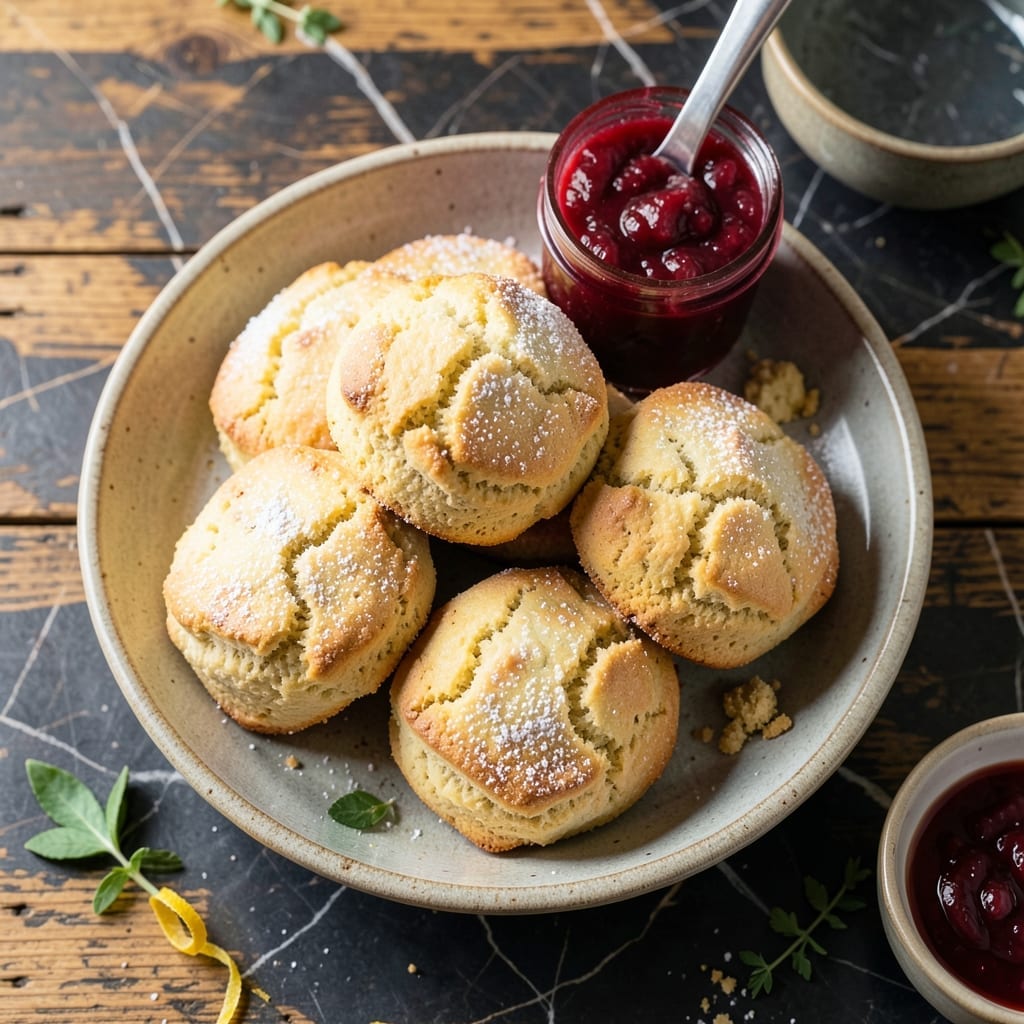
This egg-free scone recipe delivers flaky layers that rival traditional versions, proving you don’t need eggs for perfect texture.
Cold butter and buttermilk create the lift and structure typically provided by eggs, while a gentle touch with the dough ensures tender results. The key is working quickly to keep the butter from melting before baking.
You’ll get golden, layered scones with crisp edges and a soft, crumbly interior—ideal for breakfast or afternoon tea. These hold their shape beautifully and taste just as rich as classic recipes.
Ready in under 30 minutes, this method simplifies baking without sacrificing quality. Here’s how to make them right every time.
Ingredients for Scones Recipe No Egg
Cold vegan butter and buttermilk replace eggs for flaky, tender layers in these scones.
| Ingredient | Amount | Notes |
|---|---|---|
| All-Purpose Flour 🌾 | 2 ½ cups | Plus extra for dusting |
| Granulated Sugar 🍚 | ¼ cup | Fine grain preferred |
| Baking Powder 🧂 | 1 tbsp | Aluminum-free for best flavor |
| Baking Soda 🧂 | ½ tsp | Balances acidity in buttermilk |
| Salt 🧂 | ½ tsp | Fine sea salt or table salt |
| Vegan Butter 🧈 | ½ cup | Cold, cubed (8 tbsp) |
| Vegan Buttermilk 🥛 | ¾ cup | Unsweetened plant milk + 2 tbsp vinegar |
| Vanilla Extract 💧 | 1 tsp | Pure extract, not imitation |
| Lemon Zest 🍋 | 1 tsp | Finely grated, optional |
| Raisins 🍇 | ½ cup | Plumped in warm water |
| Coarse Turbinado Sugar 🍚 | 1 tbsp | For sprinkling on top |
The vegan butter is non-negotiable for texture—Miyoko’s or Earth Balance are top choices. Ensure it’s ice cold (freeze for 10 minutes if needed) and use the stick version, not tub. For buttermilk, any unsweetened plant milk works: soy or oat milk gives the richest results. The flour should be all-purpose; avoid cake or bread flour as they’ll alter the crumb structure.
No vegan butter? Coconut oil (solid, not melted) works in a pinch, though the flavor differs. Swap raisins for chopped dried apricots or cranberries. For extra flakiness, add 1 tbsp cornstarch to the flour. Skip the lemon zest if you prefer, but it brightens the flavor. The baking powder must be fresh—test by dropping a teaspoon in hot water; it should bubble vigorously.
Scones are best the day they’re baked but keep at room temperature for 2 days in an airtight container. For longer storage, freeze unbaked dough discs for up to 1 month—bake straight from frozen, adding 2-3 minutes. Reheat briefly in a 300°F oven to revive.
Why You’ll Love This Recipe
- No-Fuss Mixing: I just dump the dry ingredients—flour, sugar, baking powder, soda, salt—and stir. No eggs to crack, no extra bowls.
- Buttery Crumb: Honestly, the texture is my favorite part. Crisp edges with that tender, slightly sweet crumb inside.
- Breakfast or Brunch: I serve these warm with jam for a lazy Sunday, or pack them for a midweek treat with tea.
- Pantry Staples: Between us, I always have these basics on hand. No last-minute grocery runs, ever.
Step-by-Step Instructions for Scones No Egg
Master the technique for achieving flaky, tender layers without traditional binders.
Step 1: Combine Dry Ingredients for Even Leavening
In a large mixing bowl, whisk together the 2.5 cups All-Purpose Flour, 0.25 cup Granulated Sugar, 1 tbsp Baking Powder, 0.5 tsp Baking Soda, and 0.5 tsp Salt until thoroughly combined. This ensures your leavening agents distribute evenly throughout the dough.
The baking powder and baking soda work in tandem—the soda reacts with the acidity in the vegan buttermilk while the powder provides additional lift. Whisk for at least 30 seconds to break up any clumps in the flour.
Step 2: Cut in Cold Vegan Butter for Flaky Texture
Add the 0.5 cup Vegan Butter (cold and cubed) to the dry ingredients. Using a pastry cutter or your fingertips, work the butter into the flour mixture until it resembles coarse crumbs with pea-sized butter pieces visible. This creates the flaky layers that define proper scones.
Keep the butter as cold as possible during this step—warm butter will melt into the flour and create a dense texture rather than distinct layers. If your kitchen is warm, chill the bowl for 10 minutes between steps.
Step 3: Incorporate Wet Ingredients Gently
Create a well in the center of the flour-butter mixture. Pour in the 0.75 cup Vegan Buttermilk, 1 tsp Vanilla Extract, and 1 tsp Lemon Zest. Using a fork, gently stir until the dough just begins to come together. The mixture will appear shaggy and slightly dry—that’s correct.
Now fold in the 0.5 cup Raisins by hand, distributing them evenly without overworking the dough. The less you handle it, the more tender your scones will be. Stop mixing as soon as the raisins are incorporated.
Step 4: Shape and Cut the Dough
Turn the dough onto a lightly floured surface and gently pat it into a 1-inch thick rectangle. Avoid using a rolling pin, which can compress the layers. Use a bench scraper to help shape the edges cleanly.
For even baking, cut the rectangle into 8 equal triangles or squares using a sharp knife or bench scraper. Don’t twist the cutter if using one—straight down and up preserves the flaky texture. Transfer the pieces to a parchment-lined baking sheet, spacing them 1 inch apart.
Step 5: Bake to Golden Perfection
Preheat your oven to 400°F. Brush the tops of the scones with a bit of vegan buttermilk and sprinkle with the 1 tbsp Coarse Turbinado Sugar for added crunch and visual appeal. This step enhances browning and adds a subtle caramelized flavor.
Bake for 15-18 minutes until the edges are light golden brown and the centers are set. Rotate the pan halfway through baking for even browning. The scones are done when a toothpick inserted in the center comes out clean. Serve warm for the best texture.
Pro Tips For Making Scones Recipe No Egg
- Chill the Dough: Pop your dough in the fridge for 15-20 minutes before shaping—I learned this the hard way after my first few batches spread like pancakes.
- Use Cold Butter: Cut in 1/2 inch cubes of cold butter (about 6 tablespoons) until it resembles coarse crumbs. Sounds weird, but it works: this creates flaky layers without eggs.
- Skip Overmixing: Mix just until the dough comes together. After burning three batches to crispy hockey pucks, I finally figured out overworking makes scones tough, not tender.
- Brush with Milk: A quick brush of milk or cream before baking gives that golden crust my grandmother swore by, and she was right.
Storing and Reheating This Dish
Room Temperature Storage
Let your scones cool completely on a wire rack before storing. Place them in an airtight container with parchment paper between layers to prevent sticking. They’ll stay fresh for up to 2 days at room temperature. 💡
Refrigerator Storage
For longer freshness, store cooled scones in an airtight container in the fridge for up to 5 days. I recommend wrapping them individually in beeswax wrap first for extra protection against drying out.
Freezing Baked Scones
Wrap each cooled scone tightly in plastic wrap, then place all in a freezer bag. They’ll keep for up to 3 months. Thaw overnight at room temperature before reheating. ❄️
Oven Reheating
Preheat to 300°F and warm scones for 5-10 minutes on a baking sheet. This method restores their crisp edges and soft centers beautifully. Brush with a little vegan buttermilk for extra freshness.
Microwave Reheating
For quick reheating, microwave individual scones on 50% power for 20-30 seconds. Place a damp paper towel over them to retain moisture. This works best for same-day reheating.
Freezing Unbaked Dough
Shape and cut dough as directed, then freeze on a baking sheet before transferring to a freezer bag. Bake from frozen, adding 2-3 minutes to the baking time. This lets you enjoy fresh scones anytime.
Nutrition Facts
Frequently Asked Questions
Can I use regular milk instead of buttermilk?
Yes, but add 1 tsp vinegar or lemon juice per 1 cup of milk and let sit for 5 minutes to mimic buttermilk’s acidity. This helps activate the baking soda for proper rise.
Why did my scones turn out dense?
Overworking the dough is the most common cause. Handle it just until combined, and keep the butter cold. Pressing too hard or using warm ingredients can eliminate flaky layers.
Can I add chocolate chips or nuts?
Fold in up to 1 cup of mix-ins like chocolate chips or chopped nuts with the raisins. Chill the dough for 15 minutes before shaping if it feels too soft.
How do I get taller scones?
Pat the dough thicker (1.5 inches) and cut into smaller pieces. Also, ensure your baking powder is fresh—it’s the key to a good rise.

- BBQ Sausage Recipe Oven: Smoky Depth Without the Grill - September 28, 2026
- BBQ Chicken Bowl Recipe Rice: Smoky Sweetness Over Fluffy Grains - September 28, 2026
- Beef Cutlet Recipe Ideas: Crispy Breaded Patties With Bold Seasonings - September 28, 2026