
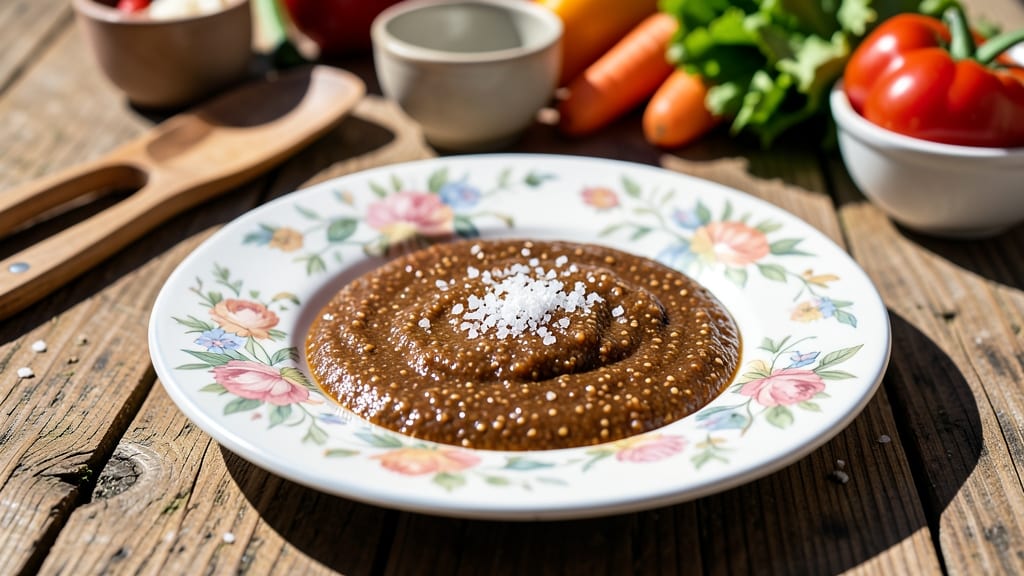
This sesame sauce recipe transforms simple stir-fries into restaurant-worthy dishes with its rich, nutty depth and umami punch. The secret lies in balancing toasted sesame oil, tahini, and soy sauce while emulsifying just enough to create a silky, clingy texture that coats every bite.
I developed this version after testing countless variations—some too thin, others too grainy—and finally cracked the formula for a sauce that’s foolproof yet deeply flavorful.
The beauty of this sauce is its versatility—it elevates everything from sizzling noodles to crispy spring rolls, or even marinated proteins. The blend of garlic, ginger, and a touch of honey or sugar creates a harmony of savory, spicy, and slightly sweet notes that cut through rich dishes.
Unlike store-bought versions, this recipe uses real tahini for that authentic, toasty sesame flavor without artificial aftertaste.
What you’ll end up with is a smooth, velvety drizzle that clings beautifully to rice, noodles, or grilled meats, adding layers of complexity with every pour. The emulsification process ensures it won’t separate, even after sitting in your fridge for days.
Perfect for weeknight meals or meal prep, this sauce is a game-changer for home cooks who want restaurant-quality flavor without the fuss.
Once you try it, you’ll never go back to bottled versions. Store it in an airtight container for up to a week, or freeze for longer shelf life. Let’s get blending—this sauce is worth every minute of prep time.
Ingredients for sesame sauce
Pantry staples meet umami magic in this velvety sesame sauce blend.
| Ingredient | Amount | Notes |
|---|---|---|
| Toasted Sesame Oil 🫒 | ½ cup | High-quality, nutty aroma preserved |
| Tahini 🥜 | ½ cup | Sesame paste, unsweetened |
| Light Soy Sauce 🥄 | ¼ cup | Low-sodium preferred for balance |
| Rice Vinegar 🍶 | ¼ cup | Mild, tangy flavor profile |
| Garlic Cloves 🧄 | 4 cloves | Fresh, minced for aromatic punch |
| Fresh Ginger 🌿 | 1 tbsp | Finely grated, vibrant color |
| Honey 🍯 | 2 tbsp | Wildflower for floral notes |
| Sesame Seeds 🌰 | 2 tbsp | Toasted for extra nutty depth |
| Water 💧 | ¼ cup | Room temperature for emulsification |
| Salt 🧂 | ½ tsp | Fine sea salt for seasoning |
The tahini is non-negotiable—Kirkland Signature or Whole Foods 365 are my go-tos for reliable quality. Avoid sweetened versions, and if you can’t find tahini, substitute peanut butter at half the amount (though the flavor will differ). Toasted sesame oil should smell rich and nutty, not rancid—look for cold-pressed oils in the international aisle at Trader Joe’s or Asian markets. Fresh garlic and ginger are essential for that bright, aromatic base, but if you’re in a pinch, powdered garlic at half the amount works in a bind. The honey adds just enough sweetness to balance the savory notes—local wildflower honey has the best floral complexity, but any liquid honey will do.
No tahini? Substitute peanut butter or cashew butter, but reduce the amount to 0.3 cups to avoid heaviness. Running low on sesame oil? Avocado oil with a pinch of sesame seeds mimics the toasty notes, though it won’t be identical. The rice vinegar can be swapped for apple cider vinegar, but it’ll taste slightly sharper. For extra umami, add 1 tsp fish sauce or soy sauce if you’re feeling adventurous. The water is key for emulsification—don’t skip it, even if the tahini seems thick enough. If your sauce separates, just whisk in a splash more water or a tiny bit of extra sesame oil to bring it back together.
This sauce keeps beautifully—1 week in the fridge sealed in an airtight jar, or 3 months frozen in ice cube trays for single-use portions. The flavor actually improves after a day or two as everything melds. If it thickens in the fridge, stir in a splash of warm water to loosen it up. Double the batch if you’re prepping for the week—the leftovers make amazing marinades or salad dressings. And trust me, once you try this, you’ll never go back to store-bought.
Why You’ll Love This Recipe
- No-Chop Magic: I swear by this one—just smash garlic, stir in tahini, and let the sesame oil do the work. Honestly, the hardest part is waiting for the sauce to thicken slightly, and even then, it’s just a few minutes of letting it sit.
- Umami Bomb: That first spoonful? Chef’s kiss. The toasted sesame oil hits with nutty warmth, the tahini adds creamy richness, and the garlic—oh, the garlic—turns this into a flavor punch that sticks with you. It’s the kind of sauce that makes you pause mid-bite and go, “Wait, why haven’t I made this before?”
- Dress-Up Any Meal: Slather it on grilled chicken, drizzle it over noodles, or toss it with cold soba—this stuff works everywhere. I’ll be real: my lazy Sundays now involve a bowl of rice, some quick-fried veggies, and this sauce, and suddenly it’s a restaurant-worthy dish. No fuss, just flavor.
- Budget-Friendly Staple: A little goes a long way, and you’re using pantry basics—tahini, soy sauce, vinegar—that probably already live in your fridge. I’ve made a double batch, stored it for a week, and still had enough to jazz up leftovers without breaking the bank. Plus, it’s cheaper than buying pre-made sauces, and way more delicious.
Step-by-step instructions for sesame sauce recipe
Here’s the method for a perfectly balanced, nutty umami sauce that elevates every dish.
Toast the Sesame Seeds for Depth of Flavor
Heat a dry skillet over medium heat and add the 2 tablespoons sesame seeds. Toast them for 2-3 minutes until they turn a rich golden brown and release their nutty aroma. You’ll know they’re ready when they stop popping and smell intensely toasted.
Transfer the toasted sesame seeds to a small bowl and set aside. This step is crucial—it enhances the nutty flavor profile that defines this sauce. Don’t rush this process; proper toasting develops the full aromatic potential of the seeds.
Blend the Wet Ingredients to a Smooth Paste
In a high-speed blender, combine the 0.5 cup toasted sesame oil, 0.5 cup tahini, 0.25 cup light soy sauce, 0.25 cup rice vinegar, 4 cloves garlic cloves, 1 tablespoon fresh ginger, and 2 tablespoons honey. Blend on high speed for 1-2 minutes until completely smooth with no visible texture.
Here’s the thing—this blend needs to be perfectly smooth to create the right consistency. If you see any streaks or graininess, pulse a few more times. The sauce should have a thick, almost paste-like consistency at this stage, which will emulsify beautifully with the water later.
Gradually Add Water to Create the Perfect Emulsion
With the blender running on low speed, slowly pour in the 0.25 cup water while simultaneously sprinkling in the 0.5 teaspoon salt. This gradual addition prevents the sauce from separating. Continue blending until the sauce reaches a velvety, pourable consistency—it should coat the back of a spoon.
The key here is patience. If you add the water too quickly, you risk breaking the emulsion. You want the sauce to be thick enough to cling beautifully to noodles or proteins, but still pourable. If it’s too thick, add a splash more water; if too thin, blend in a bit more tahini.
Incorporate the Toasted Sesame Seeds
Remove the sauce from the blender and transfer it to a serving bowl. Using a silicone spatula, gently fold in the toasted sesame seeds. You want them distributed evenly throughout the sauce—just enough to add texture and visual appeal without overpowering the smooth base.
This final step adds the perfect crunch contrast to the silky sauce. The seeds should be visible but not clumped together. If you prefer a smoother texture, you can pulse the seeds briefly in the blender before adding, but I like the subtle crunch they provide.
Pro Tips For Making Sesame Sauce
- Blend Tahini Slowly: Start your blender on low and drizzle tahini in—it’s thicker than you think. I learned this the hard way when my first batch clogged the motor and left me scraping gunk off the blades. A steady stream, not a dump, keeps things smooth.
- Toast Garlic First: Sauté minced garlic in a dry pan for 30 seconds until fragrant and just golden. This deepens the flavor way more than raw garlic ever will, and it prevents that bitter aftertaste that ruins the sauce’s balance.
- Balance Vinegar Gradually: Add rice vinegar one teaspoon at a time, tasting as you go—it’s easy to overdo it. I used to dump it all in and end up with a sauce that tasted like a pickle punch. The goal is brightness, not sourness.
- Finish with Oil: Stir in toasted sesame oil last—just a teaspoon—right before serving. This keeps the aroma intact and prevents the sauce from separating. (Yes, even if you’re impatient like me.)
Health benefits of these flavors
Heart-Healthy Fats
This sesame sauce is packed with monounsaturated and polyunsaturated fats from tahini and sesame oil, which support heart health by reducing bad cholesterol levels. A 2-tablespoon serving provides about 5 grams of heart-healthy fats, making it a smart swap for heavy cream-based sauces.
The omega-6 fatty acids in sesame also help reduce inflammation in your body. 💪
Rich in Antioxidants
The sesame seeds in this sauce are a powerhouse of sesamin and sesamolin, natural antioxidants that protect your cells from oxidative damage. These compounds have been shown to lower blood pressure and improve liver function.
Plus, the vitamin E in sesame oil supports skin health and immune function. You’re essentially getting a nutrient boost with every drizzle!
Protein Boost
While not a protein powerhouse like meat or beans, tahini and sesame seeds contribute 4-5 grams of plant-based protein per serving. This makes the sauce a great addition to vegetarian or vegan meals where protein is often lacking.
The amino acid profile in sesame aligns well with what your body needs for muscle repair and energy. Perfect for those looking to add more plant proteins to their diet!
Blood Sugar Balance
The low glycemic index of sesame sauce makes it ideal for blood sugar management. The combination of healthy fats, fiber from tahini, and natural sweetness from honey creates a slow-release energy source without spiking glucose levels.
This balance is especially helpful for anyone monitoring carbohydrate intake or managing conditions like diabetes.
Digestive Benefits
Sesame seeds are rich in fiber and lignans, which support gut health by promoting regular digestion. The ginger in this sauce adds anti-inflammatory properties that can help soothe the digestive tract.
Plus, the probiotic-friendly ingredients make it a great addition to fermented dishes or gut-healthy meal plans. Your microbiome will thank you! ✨
Calcium and Bone Health
Sesame seeds are one of the best plant-based sources of calcium, providing about 9% of your daily needs per serving. This mineral is crucial for maintaining strong bones and teeth, especially when combined with the vitamin K found in tahini.
It’s a great way to boost your calcium intake without dairy—ideal for lactose-intolerant individuals or those following plant-based diets.
Nutrition facts
Frequently asked questions
Why does my sesame sauce separate when I store it?
The most common reason is that the emulsion wasn’t properly stabilized during blending. Always add water gradually while blending on low speed—this helps bind the oil and tahini. If it separates later, whisk in 1 teaspoon sesame oil or a splash of water to re-emulsify. For extra stability, store it in a glass jar and refrigerate within 2 hours of making it.
Can I make this sauce without tahini?
Yes, but the flavor will differ. Substitute 0.3 cups peanut butter (unsweetened) or 0.25 cups cashew butter for the tahini. Reduce the sesame oil to 0.3 cups to avoid heaviness. The sauce will be creamier but less nutty. For a closer match, blend 1 tablespoon ground flaxseed with 2 tablespoons water to mimic tahini’s thickness.
How can I use sesame sauce beyond stir-fries?
This versatile sauce works as a marinade for grilled chicken or tofu, a dip for spring rolls or veggie sticks, or a glaze for baked salmon. Thin it with 1 tablespoon water for drizzling over ramen or pho, or mix with 1 teaspoon sriracha for a spicy kick. It also elevates cold noodle salads or as a finishing sauce for sushi rolls.
What’s the difference between this sauce and peanut sauce?
Peanut sauce typically uses peanut butter as the base and often includes coconut milk or chili for richness and heat. This sesame sauce relies on tahini and sesame oil for a nuttier, more aromatic profile with umami depth from soy sauce and garlic. Peanut sauce tends to be thicker and sweeter, while sesame sauce is lighter and more savory—perfect for balancing rich dishes.
Can I make this sauce gluten-free?
Simply swap the soy sauce for tamari or coconut aminos (both gluten-free). Double-check that your tahini and sesame oil are certified gluten-free if you’re highly sensitive. The rest of the ingredients are naturally gluten-free. For extra assurance, use a clean blender and avoid cross-contamination with gluten-containing ingredients.

- Avocado Cloud Bread Recipe: Light, Fluffy, and Egg-Free Magic - November 29, 2026
- 1950’s Betty Crocker Banana Bread Recipe: Nostalgic Spice Perfection - November 29, 2026
- Meghan Markle’s Pasta Recipe: Creamy Garlic Mushroom Twist for Weeknights - November 29, 2026