
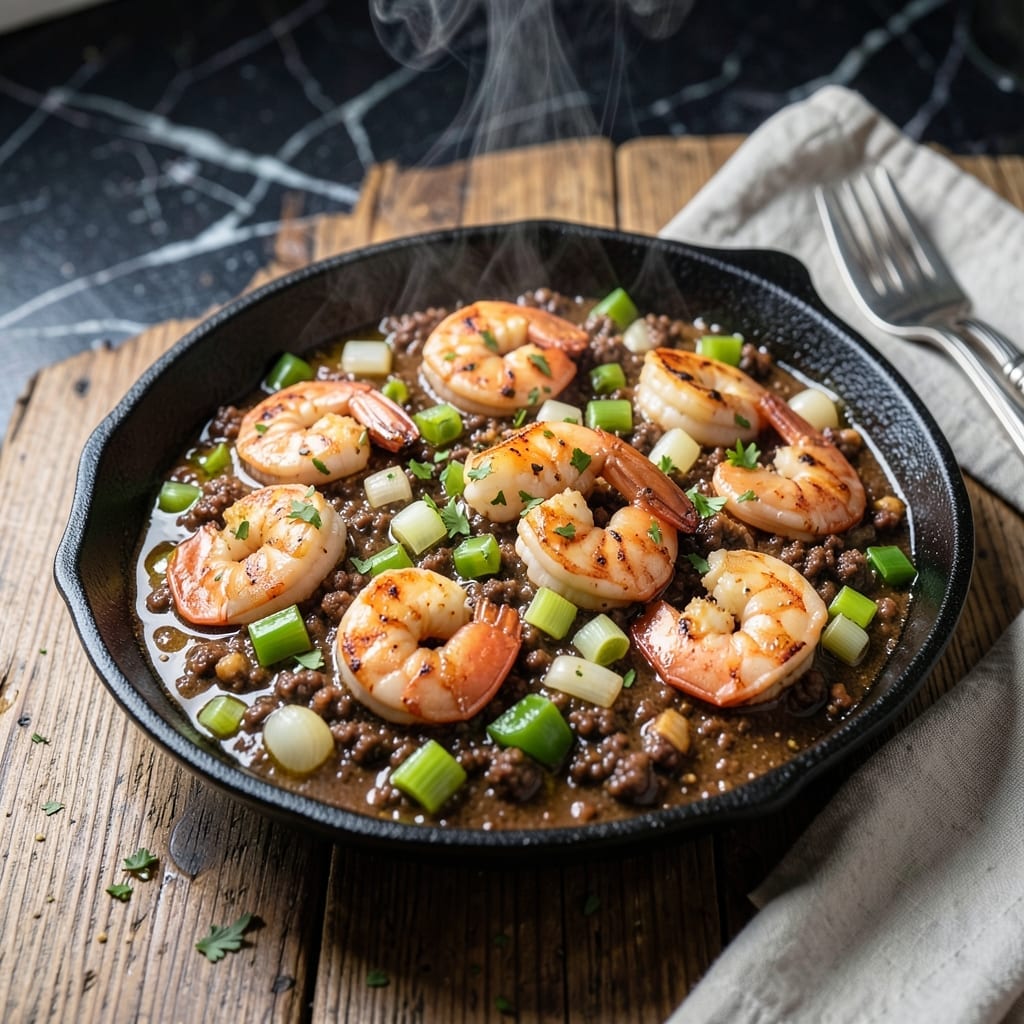
This shrimp étouffée brings authentic New Orleans flavor to your kitchen with a rich, smothered sauce that defines Creole cooking.
The Pappadeaux-style method builds deep flavor through a dark roux, the Holy Trinity of vegetables, and perfectly cooked shrimp. It’s a foolproof approach to achieving restaurant-quality results at home.
You’ll create a velvety sauce with layers of complexity, where every bite delivers tender shrimp and a savory, aromatic base. The technique ensures the roux won’t burn while developing maximum color and flavor.
Serve this classic dish over steamed rice for a meal that transports you straight to the French Quarter.
Ingredients for Shrimp Etouffee Pappadeaux
A Creole classic with shrimp, dark roux, and the Holy Trinity. Nothing short of spectacular.
| Ingredient | Amount | Notes |
|---|---|---|
| Large Shrimp 🍤 | 1 ½ lb | Peeled, deveined, tails on |
| All-Purpose Flour 🌾 | ½ cup | For the dark roux |
| Vegetable Oil 🫒 | ½ cup | Or canola oil for roux |
| Onion 🧅 | 1 whole | Diced, medium size |
| Green Bell Pepper 🌶️ | 1 whole | Diced, Holy Trinity base |
| Celery Stalks 🥬 | 2 whole | Diced, Holy Trinity base |
| Garlic Cloves 🧄 | 4 cloves | Minced for depth |
| Cajun Seasoning 🌶️ | 2 tsp | Or Creole seasoning blend |
| Dried Thyme 🍃 | 1 tsp | Crushed between fingers |
| Bay Leaves 🌿 | 2 whole | Removed before serving |
| Chicken Stock 🥣 | 2 cups | Low-sodium preferred |
| Tomato Sauce 🍅 | ½ cup | For color and balance |
| Unsalted Butter 🧈 | 2 tbsp | For finishing the sauce |
| Hot Sauce 🔥 | 1 tsp | Crystal or Tabasco style |
| Kosher Salt 🧂 | 1 tsp | Adjust to taste |
| Ground Black Pepper 🌶️ | ½ tsp | Freshly ground preferred |
| Green Onions 🧅 | 4 whole | Sliced for garnish |
| Long-Grain White Rice 🍚 | 2 cups | Uncooked, for serving |
The roux is everything here. Use vegetable or canola oil—they have a higher smoke point than butter for that deep chocolate color. Zatarain’s or Tony Chachere’s are my go-to Cajun seasonings (found at Walmart or any Southern store). For the shrimp, wild-caught Gulf shrimp if you can swing it—frozen works, but thaw them in the fridge overnight. Don’t skimp on the Holy Trinity; equal parts onion, bell pepper, celery are non-negotiable.
No Cajun seasoning? Mix paprika, garlic powder, onion powder, cayenne at a 2:1:1:0.5 ratio. Out of bay leaves? Thyme or oregano in a pinch. Chicken stock can be swapped for seafood stock for extra depth. The hot sauce isn’t just for heat—it brightens the whole dish. If you’re sensitive to spice, add it slowly. Fresh shrimp is ideal, but frozen shrimp (thawed properly) works just fine.
This actually gets better overnight. Store leftovers in the fridge for up to 3 days—the flavors just keep developing. Freeze without the shrimp (they get mushy) for up to 2 months. Reheat gently on the stove with a splash of stock. Always serve over fresh rice; it soaks up that sauce like nobody’s business.
Why You’ll Love This Recipe
- I’ll be real: the flavors meld overnight, so leftovers taste even more incredible for lunch.
- One Pan Magic: I love that I can go from chopping onions and bell peppers to a rich roux in the same pot—minimal cleanup.
- Roux Richness: The flour and oil blend into this deep, nutty base that makes the shrimp taste like a million bucks.
- Feeds the Crew: Honestly, this stretches easily for family dinners or when friends drop by unannounced.
Step-by-Step Instructions for New Orleans-Style Smothered Shrimp
Here’s how to build that rich, dark roux and layer flavors like a Bayou pro.
Step 1: Make the Dark Roux
Heat the 0.5 cup Vegetable Oil in a heavy-bottomed pot over medium heat. Add the 0.5 cup All-Purpose Flour and stir constantly with a wooden spoon. This is where patience pays off—you’re aiming for a deep chocolate brown color, not burnt.
The roux will go from blonde to peanut butter to milk chocolate over 15-20 minutes. Keep stirring and adjust heat as needed; if it’s browning too fast, lower the temperature. You’ll smell a rich, nutty aroma when it’s ready. Don’t walk away—roux burns easily.
Real talk: if your roux burns, start over. A burnt roux will make the entire dish bitter. This is the foundation of your etouffee, so take your time.
Step 2: Build the Holy Trinity Base
Immediately add the diced 1 whole Onion, 1 whole Green Bell Pepper, and 2 whole Celery Stalks to the roux. Stir well to coat the vegetables in the dark mixture. Cook for 5-7 minutes until softened and slightly caramelized.
Add the minced 4 cloves Garlic Cloves and cook for 1 minute until fragrant. Then stir in the 2 tsp Cajun Seasoning, 1 tsp Dried Thyme, 2 whole Bay Leaves, 1 tsp Kosher Salt, and 0.5 tsp Ground Black Pepper. This is where the flavor profile starts to sing.
Here’s the thing—if the mixture looks too thick, add a splash of the 2 cups Chicken Stock to loosen it. You want a thick but pourable consistency at this stage.
Step 3: Simmer the Sauce and Finish
Slowly pour in the remaining 2 cups Chicken Stock, stirring constantly to prevent lumps. Add the 0.5 cup Tomato Sauce and 1 tsp Hot Sauce. Bring to a gentle simmer and cook for 10-12 minutes to meld the flavors.
Reduce heat to low and stir in the 2 tbsp Unsalted Butter until melted. Taste and adjust seasoning if needed. The sauce should be rich, slightly smoky, and thick enough to coat the back of a spoon. Remove and discard the bay leaves before proceeding.
Step 4: Cook the Shrimp to Perfection
Add the 1.5 lb Large Shrimp to the sauce, stirring to coat evenly. Cook for 3-4 minutes just until the shrimp turn opaque and pink. Don’t overcook them—shrimp become rubbery quickly. They’ll finish cooking in the residual heat.
I know it seems weird, but turn off the heat when the shrimp are just barely done. They’ll continue to cook as you serve. Remove the pot from the burner to stop the cooking process completely.
Step 5: Serve Over Rice and Garnish
Cook the 2 cups Long-Grain White Rice separately according to package directions. Spoon a generous portion of rice into each bowl and ladle the shrimp etouffee over the top. The sauce should be thick enough to smother the shrimp completely.
Garnish with sliced 4 whole Green Onions for a fresh finish. Serve immediately with extra hot sauce on the side for those who want more heat. Each bite should deliver tender shrimp in a rich, velvety sauce that’s packed with the flavors of the Holy Trinity.
Pro Tips For Making Shrimp Etouffee Pappadeaux
- Brown the Roux Slow: Cook your flour and oil mixture on medium-low for 15-20 minutes, stirring constantly—this builds the deep, chocolate-brown base that defines Pappadeaux-style etouffee. I learned this the hard way after rushing it and ending up with a pale, floury taste.
- Pat Shrimp Dry: Use paper towels to thoroughly dry your shrimp before adding them to the roux. Extra moisture causes splattering and prevents that perfect sear—sounds tedious, but it actually changes the outcome.
- Skip the Pre-Chop: Measure and chop all your onion and bell pepper at once, but keep them separate until cooking. Adding them together too early can make the peppers mushy before the onions are translucent.
- Use a Dark Pan: A heavy-bottomed, dark-colored pan helps monitor your roux color better than stainless steel. After burning three batches, I finally figured out that the dark surface lets you see the true color as it develops.
Make-Ahead Tips for Leftovers
Prep the Roux Ahead
You can make the dark roux up to 3 days in advance and store it in an airtight container at room temperature. This saves you 20 minutes of stirring on cooking day. Just reheat it gently before adding the Holy Trinity.
Chop the Trinity Early
Dice the onion, bell pepper, and celery the night before and store them together in the fridge. They’ll keep for 2 days without losing texture. This makes the cooking process much smoother the next day.
Sauce Base Make-Ahead
Prepare the entire sauce base (roux through stock) up to 2 days ahead. Let it cool completely before refrigerating. Reheat gently before adding shrimp to prevent overcooking. 💡
Shrimp Storage Tip
If using fresh shrimp, peel and devein them up to 1 day in advance. Store in the fridge in a bowl of ice water to keep them firm. For frozen shrimp, thaw overnight in the fridge before cooking.
Freeze Without Shrimp
This dish freezes beautifully for up to 2 months—just leave the shrimp out. Freeze the sauce in quart-sized bags laid flat. When ready to serve, thaw overnight, reheat, then add fresh shrimp.
Rice Prep Hack
Cook the rice up to 1 day ahead and store it in the fridge. Reheat with a splash of water and a tight lid to restore moisture. The sauce will reheat better over freshly made rice.
Nutrition Facts
Frequently Asked Questions
What’s the best oil for making the roux?
Use vegetable or canola oil for the roux—they have a high smoke point. Avoid butter, as it burns easily. The key is constant stirring over medium heat for 15-20 minutes.
Can I use frozen shrimp for this recipe?
Yes! Thaw frozen shrimp overnight in the fridge. Avoid thawing at room temperature to prevent texture issues. Pat them dry before adding to the sauce.
How do I prevent my roux from burning?
Stir constantly with a wooden spoon and adjust heat as needed. If it browns too quickly, lower the temperature. A burnt roux will make the dish bitter—start over if needed.
How long can I store leftovers?
Leftover étouffée keeps in the fridge for up to 3 days. For longer storage, freeze the sauce (without shrimp) for up to 2 months.

- BBQ Sausage Recipe Oven: Smoky Depth Without the Grill - September 28, 2026
- BBQ Chicken Bowl Recipe Rice: Smoky Sweetness Over Fluffy Grains - September 28, 2026
- Beef Cutlet Recipe Ideas: Crispy Breaded Patties With Bold Seasonings - September 28, 2026