
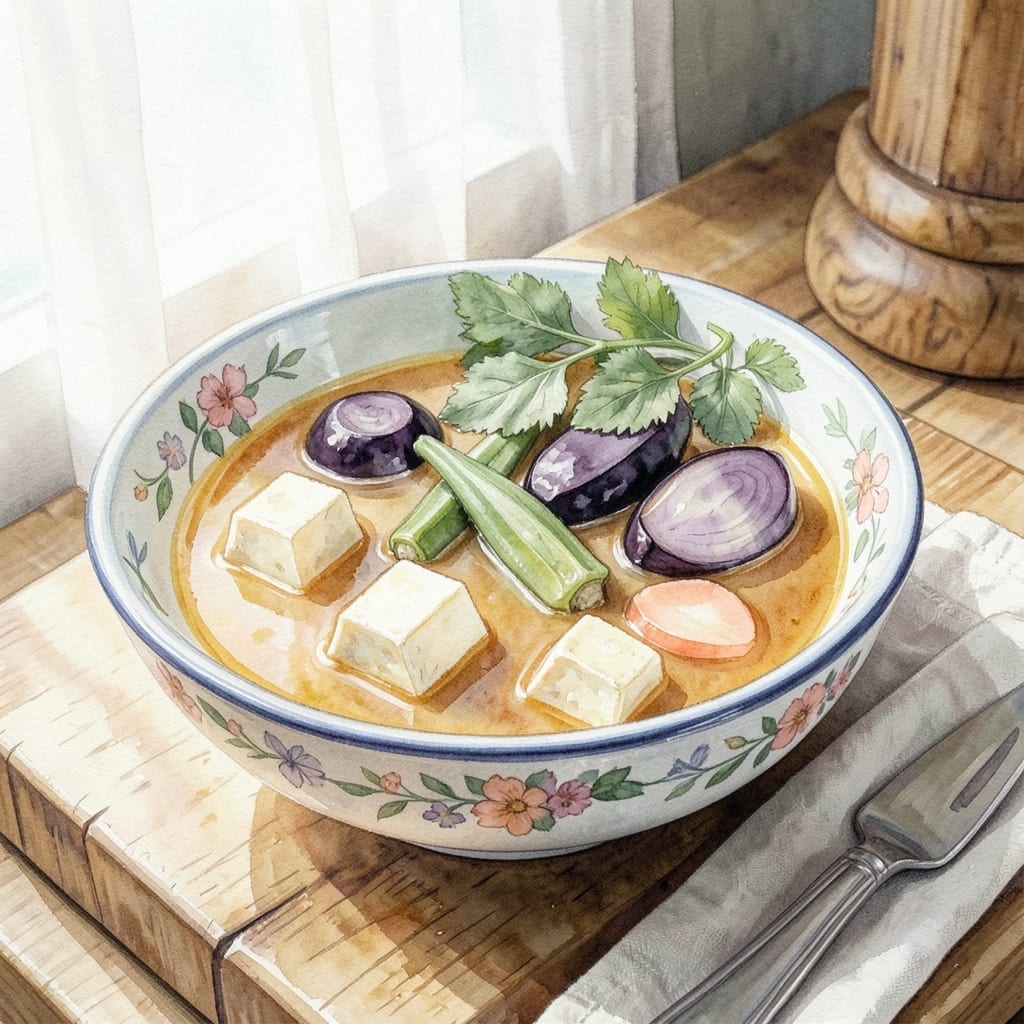
This vegetarian sinigang brings the beloved Filipino sour soup to life without any meat.
The tamarind broth delivers that signature tangy flavor, packed with garden-fresh vegetables like eggplant, okra, and kangkong. Each ingredient soaks up the broth beautifully.
I’ve adapted this version to be completely plant-based while keeping the rich, comforting taste. The tofu adds a satisfying texture that holds up well in the hot, sour broth.
Serve it steaming hot over rice for a hearty, flavorful meal that stays true to tradition.
Ingredients for Sinigang Recipe Vegetarian
Fresh veggies and tofu bring this tangy Filipino soup to life.
| Ingredient | Amount | Notes |
|---|---|---|
| Tamarind Paste 🍈 | ½ cup | For sour broth base |
| Firm Tofu 🧈 | 14 oz | Pressed, cubed for texture |
| Eggplant 🍆 | 1 whole | Cut into rounds, skin on |
| Okra 🌿 | 8 pieces | Trimmed, whole for texture |
| Kangkong 🌱 | 2 cups | Water spinach, chopped |
| Daikon Radish 🥕 | 1 whole | Peeled, sliced into rounds |
| Tomatoes 🍅 | 2 whole | Quartered for acidity |
| Red Onion 🧅 | 1 whole | Sliced thinly for flavor |
| Long Green Chili 🌶️ | 2 pieces | Optional, for heat |
| Vegetable Broth 🥣 | 6 cups | Low-sodium preferred |
| Fish-Free Seasoning 🧂 | 1 tbsp | For umami depth |
| Salt 🧂 | 1 tsp | Adjust to taste |
The tamarind paste is non-negotiable for authentic flavor. Filipino markets or Asian grocery stores stock it fresh or in jars—avoid the concentrate, it’s too intense. Tofu should be extra-firm to hold its shape; Nasoya or House Foods are reliable brands. Kangkong (water spinach) is traditional, but baby bok choy works if you can’t find it.
No tamarind? Guava paste or unripe mango can mimic the sourness in a pinch. Out of kangkong? Spinach or Swiss chard are fine substitutes. The daikon adds a nice crunch, but regular radishes or turnips work too. For extra umami without fish sauce, try a dash of soy sauce or mushroom powder.
This soup actually tastes better the next day once the flavors meld. Keeps for 3-4 days in the fridge—just reheat gently. Freezes well for up to 2 months if you leave out the kangkong (add it fresh when reheating).
Why You’ll Love This Recipe
- One Pot Wonder: I toss everything in—tamarind paste, tofu, eggplant, okra—and let it simmer. Hardly any cleanup.
- Tangy Craving: That tamarind sourness with silky tofu and crisp okra? Honestly, I could eat it daily.
- Budget Stretcher: Firm tofu and seasonal veggies keep costs low without skimming on flavor.
- Next-Day Magic: The flavors deepen overnight, so leftovers taste even better for lunch.
Step-by-Step Instructions for Vegetarian Sinigang
Here’s the method I use to build layers of tangy, savory flavor in this classic soup.
Step 1: Create the Tamarind Broth Foundation
In a large pot, combine the 6 cups vegetable broth with the 0.5 cup tamarind paste. I whisk vigorously until the paste dissolves completely into the liquid, creating that signature sour base we’re after.
Bring the mixture to a gentle boil over medium-high heat, then reduce to a simmer. This is where the magic starts—the tamarind’s natural pectin will thicken the broth slightly as it cooks. Add the 1 tbsp fish-free seasoning and 1 tsp salt now to build your flavor foundation early.
Step 2: Layer in the Hearty Vegetables
Add the daikon radish slices and 1 whole eggplant cut into rounds to the simmering broth. These dense vegetables need time to absorb the tangy liquid and become tender. I like to keep the eggplant skin on for texture and color contrast.
After 5 minutes, add the 1 whole red onion sliced thinly and 2 whole tomatoes quartered. The tomatoes will break down slightly, adding natural sweetness that balances the tamarind’s sourness. Simmer for another 5 minutes until the daikon starts to soften at the edges.
Step 3: Incorporate the Delicate Ingredients
Now add the 14 oz firm tofu pressed and cubed and 8 pieces okra trimmed. The tofu will soak up the broth like a sponge, so add it now to maximize flavor absorption. I press my tofu for at least 30 minutes beforehand to ensure it holds its shape in the soup.
The okra will release some of its natural mucilage, which actually helps thicken the broth slightly. Don’t stir too vigorously at this point—gentle movement prevents the okra from breaking apart. Simmer for 3-4 minutes until the okra brightens in color.
Step 4: Finish with Greens and Final Adjustments
Stir in the 2 cups kangkong chopped and 2 pieces long green chili (if using). The water spinach wilts quickly—you’ll see it collapse into the broth within 1-2 minutes. This is your signal that the dish is nearly done.
Taste and adjust seasoning if needed. The tamarind should be prominent but not overpowering, with the vegetables offering their own distinct textures. The daikon should be fork-tender, the eggplant silky, and the tofu infused with that signature sinigang tang. Serve hot with steamed rice to soak up every last bit of broth.
Pro Tips For Making Sinigang Recipe Vegetarian
- Press the Tofu: Drain and press firm tofu for at least 15 minutes under a heavy pan to remove excess water so it absorbs the tamarind broth better.
- Add Eggplant Last: I learned this the hard way—drop eggplant in only during the last 5-7 minutes of simmering to prevent it from turning mushy.
- Skip the Overcooking: Okra turns slimy if left too long in the pot, so add it just 3-4 minutes before serving.
- Bloom the Tamarind: Mix tamarind paste with a little hot water first to dissolve it completely before adding to the broth—sounds weird, but it works.
Essential Equipment for sinigang recipe vegetarian
Large Pot Selection
I always use a 5-6 quart heavy-bottomed pot—like my Le Creuset Dutch oven—to ensure even heat distribution. The soup needs room for all those veggies to simmer comfortably without overcrowding. A pot with a tight-fitting lid helps maintain the perfect simmer. 🔥
Wooden Spoon Essential
A long wooden spoon is my go-to for stirring the tamarind broth. It won’t scratch your pot and gently moves the delicate vegetables without breaking them apart. I avoid metal spoons that can react with the acidic tamarind.
Tofu Press Tool
For the best texture, I use a tofu press to remove excess water from the 14 oz firm tofu. If you don’t have one, wrap the tofu in a clean towel, place a heavy pan on top, and press for 30 minutes. EZ Tofu Press is my favorite affordable brand.
Fine Mesh Strainer
If your tamarind paste has seeds or fibers, strain the broth through a fine mesh strainer before adding vegetables. I use OXO’s 7-inch strainer—it fits perfectly over my pot and catches all the bits while letting the smooth, tangy liquid through.
Sharp Chef’s Knife
You’ll need a good knife for all the veggie prep. I swear by my 8-inch Wüsthof for slicing the daikon radish and eggplant. A sharp blade makes quick work of the prep and ensures clean cuts that look as good as they taste.
Ladle for Serving
A large ladle is perfect for serving this soup over rice. I prefer one with a long handle, like RSVP’s stainless steel ladle, to reach deep into the pot. The broth is the star here, so make sure every bowl gets plenty of that tangy liquid. 💛
Nutrition Facts
Frequently Asked Questions
What can I use instead of tamarind?
Guava paste or unripe mango work well as substitutes. For a quick fix, use 2 tablespoons of vinegar mixed with 1 tablespoon of brown sugar to mimic the sour-sweet balance.
How do I prevent the tofu from breaking apart?
Press the tofu for 30 minutes before cooking and add it gently to the broth. Avoid stirring vigorously once it’s in the pot.
Can I make this ahead of time?
Yes! The flavors deepen if made 1 day in advance. Store in the fridge for up to 3-4 days or freeze for 2 months.
What if I can’t find kangkong?
Baby bok choy, spinach, or Swiss chard are great alternatives. Add them at the same step as kangkong for best results.

- BBQ Sausage Recipe Oven: Smoky Depth Without the Grill - September 28, 2026
- BBQ Chicken Bowl Recipe Rice: Smoky Sweetness Over Fluffy Grains - September 28, 2026
- Beef Cutlet Recipe Ideas: Crispy Breaded Patties With Bold Seasonings - September 28, 2026