
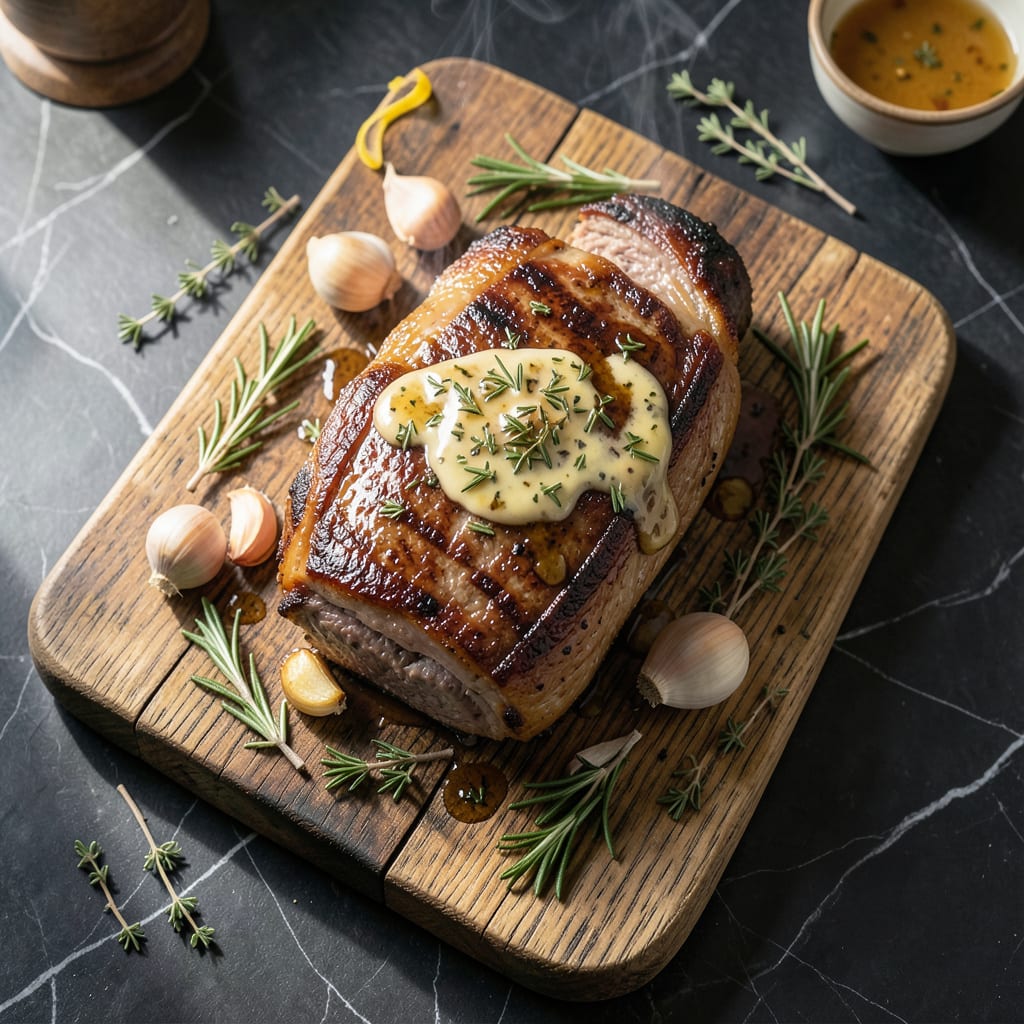
This slow-roasted sirloin tip roast delivers tender, flavorful beef with a fragrant herb crust that’s perfect for Sunday dinner or special occasions.
The low-and-slow method ensures the meat stays juicy while the crust forms a golden, aromatic seal. Simple ingredients and precise timing make this dish impressive yet approachable.
Ingredients for Sirloin Tip Roast
Simple ingredients transform into a showstopping roast with aromatic herb crust and juicy beef.
| Ingredient | Amount | Notes |
|---|---|---|
| Sirloin Tip Roast 🥩 | 3 lb | Trimmed of excess fat |
| Kosher Salt 🧂 | 1 ½ tsp | Diamond Crystal preferred |
| Freshly Ground Black Pepper 🌶️ | 1 tsp | Coarse grind recommended |
| Garlic Cloves 🧄 | 6 cloves | Minced into paste |
| Fresh Rosemary 🌿 | 2 tbsp | Finely chopped, stems removed |
| Fresh Thyme 🍃 | 2 tbsp | Leaves stripped from stems |
| Dijon Mustard 🟡 | 2 tbsp | Whole grain preferred |
| Extra-Virgin Olive Oil 🫒 | ¼ cup | Divided for searing and crust |
| Red Wine 🍷 | ½ cup | Dry variety for deglazing |
| Beef Stock 🥘 | 1 cup | Low-sodium preferred |
| Unsalted Butter 🧈 | 2 tbsp | Softened for herb crust |
| Yellow Onion 🧅 | 1 whole | Large, roughly chopped |
| Carrots 🥕 | 3 whole | Peeled, cut into chunks |
| Celery Stalks 🌿 | 2 whole | Cut into large pieces |
[recipeingredientscaler]
The beef quality is paramount. Sirloin tip roast from a reputable butcher like Whole Foods or local farms ensures superior marbling and tenderness. Look for bright red color and fine fat distribution—avoid grayish or dry-cut pieces. For the herb crust, fresh rosemary and thyme provide superior aroma compared to dried (though dried can work at one-third the quantity).
Substitutions are minimal but possible. No red wine? Use beef broth with 1 tbsp balsamic vinegar for acidity. Garlic powder at one-third the amount replaces fresh if needed. For the mustard, yellow mustard works in a pinch, though Dijon’s complexity is ideal. The butter can be omitted, but it adds richness to the crust worth the extra step.
Store the roast uncut in its juices for up to 4 days—it reheats beautifully. For longer storage, slice and freeze portions for 3 months. The herb crust stays vibrant if kept airtight. Always bring refrigerated roast to room temperature before slicing for clean cuts.
Why You’ll Love This Recipe
- Hands-Off Cooking: I just rub the sirloin with salt, pepper, garlic, and rosemary, then let the oven do all the work.
- Garlic-Rosemary Magic: The combo of fresh garlic and rosemary makes every bite rich and aromatic.
- Feeds a Crowd: This roast is my go-to for Sunday dinner—it satisfies everyone at the table.
- Leftovers for Days: Honestly, the sandwiches I make with the leftovers might be even better than the first meal.
Step-by-Step Instructions for Slow-Roasted Beef With Herb Crust
This method delivers tender beef with a fragrant crust and rich pan sauce every time.
Step 1: Prepare the Herb Crust and Season the Roast
Combine the 2 tbsp Fresh Rosemary, 2 tbsp Fresh Thyme, 6 cloves Garlic Cloves, 2 tbsp Dijon Mustard, 1.5 tsp Kosher Salt, and 1 tsp Freshly Ground Black Pepper in a small bowl. Stir in 2 tbsp Unsalted Butter until the mixture forms a thick paste.
Pat the 3 lb Sirloin Tip Roast dry with paper towels, then rub the herb mixture evenly over the entire surface. This creates a flavorful crust that will caramelize during roasting. Let the roast sit at room temperature for 30 minutes while you preheat the oven to 325°F.
Step 2: Sear the Roast for Deep Flavor
Heat 0.25 cup Extra-Virgin Olive Oil in a large Dutch oven or heavy-bottomed pot over medium-high heat. When the oil shimmers, add the roast and sear on all sides until deeply browned, about 3-4 minutes per side. This step develops a rich fond that will flavor your pan sauce.
Once browned, transfer the roast to a plate and reduce the heat to medium. Add the 1 whole Yellow Onion, 3 whole Carrots, and 2 whole Celery Stalks to the pot. Cook for 5 minutes, stirring occasionally, until the vegetables begin to soften and brown.
Step 3: Deglaze and Begin Slow Roasting
Pour in the 0.5 cup Red Wine and scrape up any browned bits from the bottom of the pot with a wooden spoon. Let the wine reduce by half, about 3-4 minutes. This deglazing step captures all the concentrated meat flavors.
Return the roast to the pot along with any accumulated juices. Pour in the 1 cup Beef Stock—the liquid should come about halfway up the roast. Cover the pot and transfer it to the preheated oven.
Step 4: Slow-Roast to Perfection
Roast covered for 2 to 2.5 hours, turning the roast every 45 minutes to ensure even cooking. The beef is done when an instant-read thermometer inserted into the thickest part registers 135°F for medium-rare.
During the last 30 minutes of cooking, remove the lid to allow the surface to brown and the pan sauce to reduce slightly. Baste the roast occasionally with the pan juices to enhance flavor and moisture.
Step 5: Rest and Serve with Pan Sauce
Transfer the roast to a cutting board and tent loosely with foil. Let it rest for 15-20 minutes—this allows the juices to redistribute for maximum tenderness. Skim excess fat from the pan sauce if desired, then serve the sauce spooned over the sliced roast.
Slice the roast against the grain into ½-inch thick pieces. The herb crust should be deeply browned and aromatic, while the interior remains juicy and pink. Serve immediately with the vegetables and pan sauce for a complete meal.
Pro Tips For Making Sirloin Tip Roast
- Sear it hard: Crank the heat to medium-high and get a deep brown crust on all sides—this is where the flavor lives. I learned this the hard way after serving too many gray, bland roasts.
- Season overnight: Rub the sirloin tip with kosher salt, pepper, and crushed garlic at least 12 hours before cooking. Sounds weird, but it works: the salt penetrates deep, and the garlic mellows into the meat.
- Skip the cold roast: Pull the meat out of the fridge 1-2 hours before cooking—cooking it cold straight from the fridge guarantees uneven doneness. My grandmother swore by this, and she was right.
- Rest under foil: Tent the roast with foil and let it rest 15-20 minutes after pulling it from the oven. I used to rush this part and wondered why my roast was dry—now I know better.
Dietary Considerations for This sirloin tip roast
Gluten-Free Friendly
This roast is naturally gluten-free as written, with no wheat-based ingredients in the herb crust or pan sauce. The Dijon mustard and beef stock are the only processed items to verify—always check labels for hidden gluten in thickeners or flavorings. I use Annie’s Dijon and Pacific Foods beef stock for guaranteed safety. 💪
Low-Carb & Keto
With just 5g net carbs per serving (from the vegetables and wine), this fits perfectly into low-carb diets. The red wine contributes about 2g carbs per ounce, so you could reduce it to ¼ cup for stricter keto. The herb crust adds negligible carbs while packing big flavor.
Dairy-Free Adaptation
The only dairy in this recipe is the 2 tbsp unsalted butter in the herb crust. Simply substitute with olive oil or dairy-free butter (I recommend Miyoko’s). The crust will still brown beautifully and adhere well to the roast.
Allergen Awareness
Common allergens here are limited to mustard in the Dijon. For mustard allergies, replace with 1 tbsp horseradish plus 1 tsp apple cider vinegar for similar tang. The recipe contains no nuts, soy, eggs, or fish—making it safe for most common food allergies.
Heart-Healthy Swaps
To reduce saturated fat, trim all visible fat from the sirloin tip roast before cooking and use 1 tbsp olive oil instead of butter in the herb crust. The red wine actually provides heart-healthy polyphenols, so I keep that as-is. These small tweaks cut fat without sacrificing flavor. 🥗
Nutrition Facts
Frequently Asked Questions
What temperature should the roast reach?
For perfect medium-rare, cook until the internal temperature hits 135°F. Use a meat thermometer for accuracy. The temperature will rise to 140-145°F during resting.
How long should it rest before slicing?
Always let the roast rest for 15-20 minutes before cutting. This allows juices to redistribute, ensuring tender, moist slices. Skipping this step can make the meat dry.
Can I use a different cut of beef?
Yes, but choose lean, tough cuts like top round or eye of round. These benefit from the same low-and-slow method. Avoid tender cuts like ribeye, as they’ll overcook.
What if my roast turns out tough?
Overcooking is the most common cause. Next time, pull it at 135°F and let it rest. Slicing against the grain also improves tenderness.

- BBQ Sausage Recipe Oven: Smoky Depth Without the Grill - September 28, 2026
- BBQ Chicken Bowl Recipe Rice: Smoky Sweetness Over Fluffy Grains - September 28, 2026
- Beef Cutlet Recipe Ideas: Crispy Breaded Patties With Bold Seasonings - September 28, 2026