
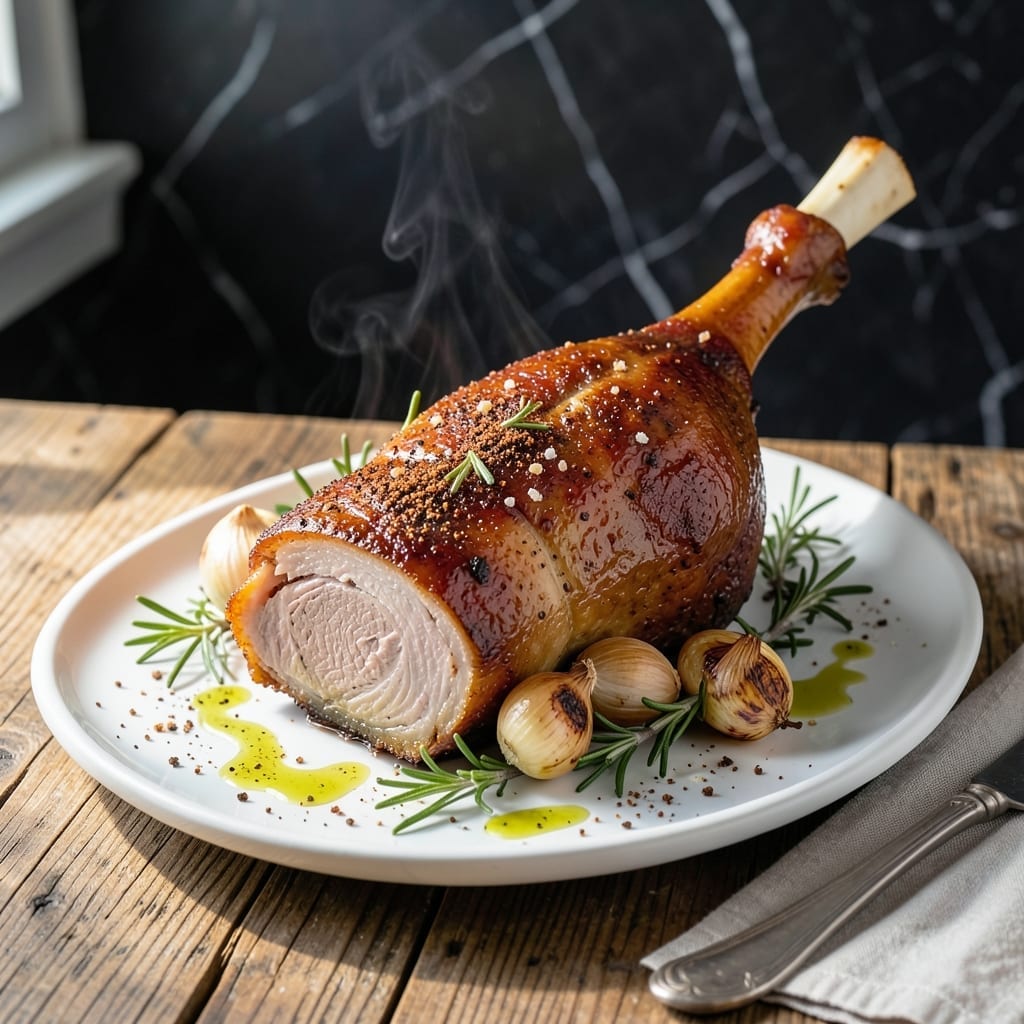
Few cuts of meat transform as dramatically as pork shank during slow roasting. This method unlocks its full potential, rendering tough collagen into gelatinous luxury that falls off the bone.
The process requires patience but rewards with meat so tender it yields to a fork. A low oven and careful seasoning create a crisp exterior while maintaining moist, flavorful interior layers.
Traditional techniques meet modern convenience in this preparation. The extended cooking time allows connective tissues to break down completely, resulting in a richly textured dining experience.
Perfect for special occasions or weekend projects, this dish delivers restaurant-quality results with minimal active preparation. The transformation from humble cut to elegant main course is truly remarkable.
Ingredients for Slow Roasted Pork Shank
Transform humble pork shank into elegant gelatinous luxury with these carefully selected ingredients.
| Ingredient | Amount | Notes |
|---|---|---|
| Pork Shank 🐖 | 4 lb | Bone-in, skin-on preferred |
| Kosher Salt 🧂 | 2 tbsp | Diamond Crystal preferred |
| Black Pepper 🌶️ | 1 tbsp | Freshly cracked for texture |
| Smoked Paprika 🌶️ | 1 tbsp | Hungarian or Spanish variety |
| Garlic Cloves 🧄 | 8 cloves | Thinly sliced for even distribution |
| Fresh Rosemary 🌿 | 3 tbsp | Chopped, stems removed |
| Fresh Thyme 🍃 | 2 tbsp | Leaves stripped from stems |
| Bay Leaves 🍃 | 2 whole | Dried Turkish preferred |
| Olive Oil 🫒 | ¼ cup | Extra-virgin for richness |
| Chicken Stock 🥣 | 2 cups | Low-sodium preferred for control |
| Dry White Wine 🍷 | 1 cup | Sauvignon Blanc or Pinot Grigio |
| Yellow Onion 🧅 | 1 whole | Large, roughly chopped |
| Carrots 🥕 | 2 whole | Peeled, cut into chunks |
| Celery Stalks 🌿 | 2 whole | Cut into 2-inch pieces |
The pork shank is paramount here. Source bone-in, skin-on cuts from a trusted butcher or Whole Foods for consistent quality. Look for pieces with good marbling and a thick skin cap—this ensures the gelatinous transformation. Diamond Crystal kosher salt is ideal for its pure flavor and even distribution. Professional kitchens often brine overnight (worth the extra step).
No white wine? Substitute with additional chicken stock plus a splash of apple cider vinegar. Fresh herbs are non-negotiable for optimal aroma, but dried at one-third the quantity works in a pinch. If smoked paprika is unavailable, regular paprika plus a pinch of liquid smoke approximates the depth. The vegetables can be swapped for parsnips or fennel (adjust cooking time slightly).
Store pork shank in the coldest part of your refrigerator for up to 3 days before cooking. Leftovers keep beautifully, actually improving in flavor over 4-5 days. Freeze portions for up to 3 months—reheat gently in stock to revive the gelatinous texture.
Why You’ll Love This Recipe
- Set and Forget: I season the shank with salt, pepper, and smoked paprika, then let the oven do all the work for hours.
- Garlic Infused: The slow roast turns those garlic cloves into a spreadable paste that soaks right into the meat.
- Feeds a Crowd: One shank serves four with leftovers for sandwiches the next day—no extra effort.
- Budget Hero: Pork shank is inexpensive, but the long, slow cooking makes it taste like a fancy restaurant dish.
Step-by-Step Instructions for Slow Roasted Pork Shank
This method transforms tough pork shank into fall-off-the-bone luxury through patience and precision.
Step 1: Season and Sear the Pork Shank
Pat the 4 lb pork shank thoroughly dry with paper towels. This ensures a proper sear. Rub the meat generously with the 2 tbsp kosher salt, 1 tbsp black pepper, and 1 tbsp smoked paprika, pressing the seasoning into every crevice. The smoked paprika adds depth that complements the slow cooking process.
Heat the 0.25 cup olive oil in a large Dutch oven over medium-high heat. When the oil shimmers, add the pork shank and sear on all sides until deep golden brown, about 4-5 minutes per side. This creates a flavorful crust and renders some fat. Remove the shank and set aside.
Step 2: Build the Aromatic Base
In the same Dutch oven, add the roughly chopped yellow onion, chunked carrots, and 2 celery stalks. Cook over medium heat for 5 minutes, stirring occasionally, until the vegetables begin to soften and develop light caramelization.
Add the 8 cloves garlic cloves, 3 tbsp fresh rosemary, 2 tbsp fresh thyme, and 2 whole bay leaves. Stir for 1 minute until fragrant. The garlic should just begin to turn slightly golden at the edges. Pour in the 1 cup dry white wine and deglaze the pan, scraping up all browned bits.
Step 3: Braise to Tenderness
Return the pork shank to the Dutch oven, nestling it among the vegetables. Pour in the 2 cups chicken stock until the liquid comes about halfway up the shank. The liquid should not fully submerge the meat. Bring to a gentle simmer over medium heat.
Cover the Dutch oven and transfer it to a preheated 325°F oven. Braise for 3 to 3.5 hours, turning the shank every hour. You’ll know it’s ready when the meat pulls away from the bone easily and a fork slides in with no resistance. The collagen will have rendered into a rich, gelatinous sauce.
Step 4: Reduce and Serve
Carefully remove the pork shank and set it on a serving platter. Skim any excess fat from the surface of the braising liquid, then place the Dutch oven over medium-high heat. Simmer the liquid for 5-7 minutes until it reduces to a sauce-like consistency that coats the back of a spoon.
Spoon the reduced sauce and vegetables over the pork shank. The sauce should be glossy and rich, with the flavors of wine, herbs, and rendered pork deeply concentrated. Serve immediately with crusty bread or polenta to soak up every last bit of the luxurious sauce.
Pro Tips For Making Slow Roasted Pork Shank
- Start Low and Slow: I learned this the hard way—crank the oven to 275°F and give it at least 3 hours, or the collagen won’t melt into that sticky, fall-off-the-bone goodness.
- Score the Skin: Cut 1/4-inch slits all over the shank before seasoning so the fat renders out and the smoked paprika actually sticks where it matters.
- Skip the Water Bath: Sounds counterintuitive, but adding liquid just steams the meat—dry heat is what gives you that mahogany crust while keeping the inside juicy.
- Rest Before Slicing: After pulling it from the oven, tent it with foil for 15 minutes—this isn’t optional if you want the garlic and spices to settle into every bite instead of pooling on the cutting board.
Pro Cooking Tips for This Dish
Perfect Searing
Pat the shank completely dry before seasoning—this ensures a deep, flavorful crust. Use medium-high heat and don’t move the meat until it releases naturally, about 4-5 minutes per side. A cast iron Dutch oven gives the best sear for this dish. 🌡️
Low and Slow
Maintain a consistent 325°F oven temperature throughout the braise. I check with an oven thermometer since many home ovens run hot or cold. Turning the shank every hour ensures even cooking and prevents sticking.
Liquid Control
Use just enough chicken stock to come halfway up the shank—too much liquid dilutes the sauce. If it reduces too quickly, add ½ cup more stock. The ideal sauce should coat the back of a spoon when finished.
Resting Time
Let the pork rest 15-20 minutes before serving. This allows the juices to redistribute and the collagen to set slightly, making it easier to serve. I tent it loosely with foil to keep it warm. 💡
Sauce Reduction
For an extra-rich sauce, skim the fat before reducing. Simmer over medium-high heat for 5-7 minutes until it thickens. A splash of white wine added at this stage can brighten the flavors.
Herb Freshness
Fresh rosemary and thyme make a noticeable difference here. If using dried, reduce the amount by two-thirds. Tie whole sprigs with kitchen twine for easy removal after cooking.
Nutrition Facts
Frequently Asked Questions
What’s the ideal cooking temperature for this?
A consistent 325°F oven works best. This low heat allows the collagen to break down slowly without drying out the meat. Use an oven thermometer to verify your appliance’s accuracy.
Can I use a slow cooker instead?
Yes, but sear the meat first. Cook on low for 8-10 hours or high for 5-6 hours. The texture will be slightly different but still delicious.
How do I know when it’s done?
The meat should pull away from the bone effortlessly. Test with a fork—if it slides in with no resistance, it’s ready after 3-3.5 hours.
What if my sauce is too thin?
Simmer the liquid uncovered over medium-high heat for 5-7 minutes. For faster reduction, transfer to a saucepan for more surface area.

- BBQ Sausage Recipe Oven: Smoky Depth Without the Grill - September 28, 2026
- BBQ Chicken Bowl Recipe Rice: Smoky Sweetness Over Fluffy Grains - September 28, 2026
- Beef Cutlet Recipe Ideas: Crispy Breaded Patties With Bold Seasonings - September 28, 2026