
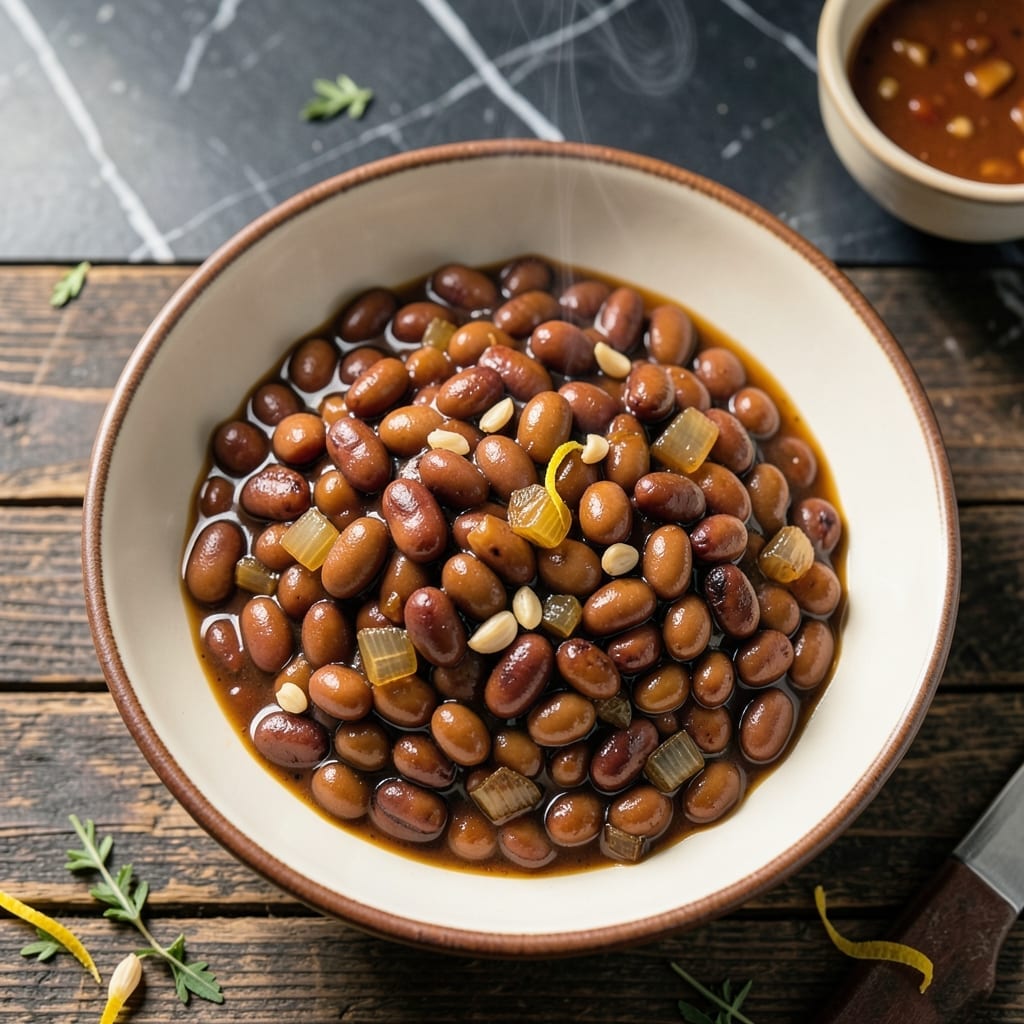
I’ve refined this smoker method for baked beans through countless cookouts, achieving deep smoky sweetness that elevates any barbecue spread.
Slow-cooked in the smoker, these beans absorb rich wood flavors while maintaining their tender texture. The process is straightforward yet delivers restaurant-quality results every time.
Ingredients for Smoked Baked Beans Recipe Smoker
These well-balanced ingredients transform into smoky, tender beans with restaurant-quality depth and sweetness.
| Ingredient | Amount | Notes |
|---|---|---|
| Dried Navy Beans 🌱 | 1 lb | Rinsed, picked over for stones |
| Vegetable Broth 🥣 | 4 cups | Low-sodium preferred for balance |
| Yellow Onion 🧅 | 1 whole | Medium, finely diced for even distribution |
| Garlic Cloves 🧄 | 4 cloves | Minced for maximum flavor infusion |
| Tomato Paste 🍅 | 6 oz | Canned, for concentrated richness |
| Molasses 🍯 | ½ cup | Dark or light, both work well |
| Brown Sugar 🧈 | ½ cup | Light or dark, packed firmly |
| Apple Cider Vinegar 🍏 | 2 tbsp | Adds essential tang to balance sweetness |
| Dijon Mustard 🟡 | 2 tbsp | For depth and slight heat |
| Worcestershire Sauce 🫒 | 2 tbsp | Vegetarian version required for dietary compliance |
| Smoked Paprika 🌶️ | 1 tbsp | For authentic smoky flavor without meat |
| Dried Thyme 🌿 | 1 tsp | Crushed between fingers to release oils |
| Bay Leaves 🌿 | 2 pieces | Whole, removed before serving |
| Salt 🧂 | 1 ½ tsp | Diamond Crystal kosher salt preferred |
| Black Pepper 🌶️ | 1 tsp | Freshly ground for best results |
The beans are the foundation, so opt for high-quality dried navy or pinto beans from a store with good turnover—Whole Foods or a well-stocked natural foods section ensures freshness. Vegetable broth depth matters here; Better Than Bouillon No Chicken Base delivers the richest flavor. For the molasses and brown sugar, organic brands like Wholesome provide cleaner taste without bitter afternotes.
No vegetarian Worcestershire? Annie’s or Edward & Sons make solid meat-free versions. Swap molasses for honey or maple syrup if needed, though the flavor profile shifts slightly. Dried thyme can be replaced with fresh at triple the amount. The smoked paprika is non-negotiable for that authentic barbecue essence—Penzeys offers exceptional quality.
Soaked beans keep refrigerated for 2 days before cooking. The finished dish holds 5 days refrigerated or 3 months frozen. Portion leftovers into airtight containers for easy reheating—flavors intensify beautifully over time.
Why You’ll Love This Recipe
- Set It and Forget It: I toss the navy beans with broth and tomato paste in the smoker, then let the low heat work its magic for hours with zero babysitting.
- Smoky Depth: The slow-smoked garlic and onion turn the tomato paste into this rich, almost meaty sauce that clings to every bean.
- Feeds a Hungry Crowd: Between us, this is my go-to for potlucks—one batch makes enough to satisfy a dozen people without breaking the bank.
- Leftovers for Days: Honestly, they taste even better the next day, and I love having a ready-made side for sandwiches or eggs all week.
Step-by-Step Instructions for Smoked Baked Beans
Here’s the method. Straightforward, tested, works every time.
Step 1: Soak and Prepare the Dried Navy Beans
Place the 1 lb Dried Navy Beans in a large bowl and cover with cold water by 2 inches. I always pick through the beans first to remove any stones or debris, then rinse them under cold water. Let them soak overnight at room temperature, or use the quick-soak method: boil for 2 minutes, then remove from heat and let stand for 1 hour.
After soaking, drain and rinse the beans again. This step removes excess starch that can make the final dish gummy and ensures even cooking. Your beans should look plump and slightly split when properly hydrated.
Step 2: Build the Flavor Base
In a large, oven-safe pot or Dutch oven, combine the soaked beans with 4 cups Vegetable Broth, 1 whole Yellow Onion (finely diced), and 4 cloves Garlic Cloves (minced). Add the 6 oz Tomato Paste, 0.5 cup Molasses, and 0.5 cup Brown Sugar, stirring until the tomato paste dissolves completely into the liquid.
This mixture should be thick but pourable. The molasses and brown sugar create the signature sweetness, while the tomato paste adds depth and richness. I always use a whisk to break up any lumps in the tomato paste for a smooth sauce.
Step 3: Season and Add Aromatics
Stir in the 2 tbsp Apple Cider Vinegar, 2 tbsp Dijon Mustard, and 2 tbsp Worcestershire Sauce. These ingredients provide the essential tang and umami to balance the sweetness. Next, add the 1 tbsp Smoked Paprika, 1 tsp Dried Thyme (crushed between your fingers), 2 pieces Bay Leaves, 1.5 tsp Salt, and 1 tsp Black Pepper.
The smoked paprika is non-negotiable—it delivers that authentic smoky flavor even without meat. Taste the liquid now; it should be bold and well-seasoned. The flavors will mellow and deepen during cooking, so don’t be shy with the seasoning at this stage.
Step 4: Smoke Until Tender and Saucy
Transfer the pot to a preheated smoker set to 225-250°F. Smoke uncovered for 3-4 hours, stirring every 45-60 minutes to prevent sticking. You’ll notice the beans gradually absorbing the liquid and swelling in size.
After about 2 hours, check the beans for tenderness. They should be just starting to soften. If the mixture looks dry, add a splash of water or additional vegetable broth. Continue smoking until the beans are creamy and tender and the sauce has thickened to your desired consistency—this usually takes the full 4 hours for perfect texture.
Step 5: Rest and Serve
Once the beans reach your preferred tenderness, remove the pot from the smoker. Discard the bay leaves. Let the beans rest for 10-15 minutes off the heat; this allows the sauce to thicken slightly and the flavors to meld together.
The final dish should have a glossy, thick sauce that clings to the beans with a perfect balance of smoky, sweet, and tangy flavors. Serve hot as a side dish or main course, with the sauce just loose enough to spoon easily. The beans will continue to absorb liquid as they sit, so they’re best served fresh from the smoker.
Pro Tips For Making Smoked Baked Beans Recipe Smoker
- Soak Overnight: I learned this the hard way—dried navy beans need at least 8 hours in water to soften properly, or they’ll stay tough no matter how long you smoke them.
- Bloom the Paste: Cook the tomato paste with the onions and garlic for 2-3 minutes until it darkens slightly—this kills the raw taste and deepens the flavor.
- Skip the Boil: After soaking, drain and rinse the beans but don’t pre-boil them; adding them straight to the smoker keeps them from turning to mush.
- Use a Water Pan: Place a pan of water in the smoker to maintain steady moisture—dry heat will leave your beans with a weird, leathery skin.
Regional Styles of This Dish
Texas Style
In the Lone Star State, they often add ½ lb chopped brisket or crumbled bacon to the beans during the last hour of smoking. The meat infuses the dish with extra richness. I’ve found post oak wood gives the most authentic Texas flavor.
Carolina Twist
Eastern Carolina brings a vinegar-forward approach with ¼ cup apple cider vinegar and 1 tbsp red pepper flakes stirred in at the end. This version skips the molasses for a tangier bite. It’s a favorite at summer pig pickin’s. 🌶️
Kansas City Sweet
Here, the beans get even sweeter with an extra ¼ cup brown sugar and 2 tbsp ketchup mixed into the sauce. The result is sticky, glossy, and finger-licking good. I love serving these with burnt ends.
Memphis Dry Rub
For a dry-rub twist, Memphis pitmasters dust the beans with a mix of 1 tbsp paprika, 1 tsp garlic powder, and 1 tsp onion powder before smoking. This adds a subtle crust to the beans that’s uniquely delicious.
Southern Comfort
In the deep South, they often finish the beans with ½ cup bourbon stirred in during the last 30 minutes of cooking. The alcohol burns off, leaving a warm, caramelized depth. I use Maker’s Mark for this version. 💛
Midwest Simple
Midwestern styles keep it straightforward with just bacon grease instead of vegetable broth and a touch of maple syrup for sweetness. It’s a hearty, no-fuss approach that lets the smoky flavor shine.
Frequently Asked Questions
What’s the best wood for smoking?
Hickory or apple wood work best for a balanced smoky flavor. Post oak is perfect for a stronger taste, while cherry adds a subtle sweetness. Avoid mesquite—it can overpower the beans.
Can I use canned beans instead?
Not recommended. Dried beans absorb smoke and seasoning better. Canned beans may turn mushy and lack depth. If you must, reduce smoking time to 1-1.5 hours to avoid overcooking.
Why are my beans still tough?
They likely need more time. Older beans or insufficient soaking can cause this. Ensure they’re fully submerged in liquid and smoke for the full 4 hours at 225-250°F.
How do I store leftovers?
Let cool completely, then store in an airtight container in the fridge for up to 5 days. For longer storage, freeze for 3 months. Reheat gently on the stove with a splash of water.
Nutrition Facts

- BBQ Sausage Recipe Oven: Smoky Depth Without the Grill - September 28, 2026
- BBQ Chicken Bowl Recipe Rice: Smoky Sweetness Over Fluffy Grains - September 28, 2026
- Beef Cutlet Recipe Ideas: Crispy Breaded Patties With Bold Seasonings - September 28, 2026