
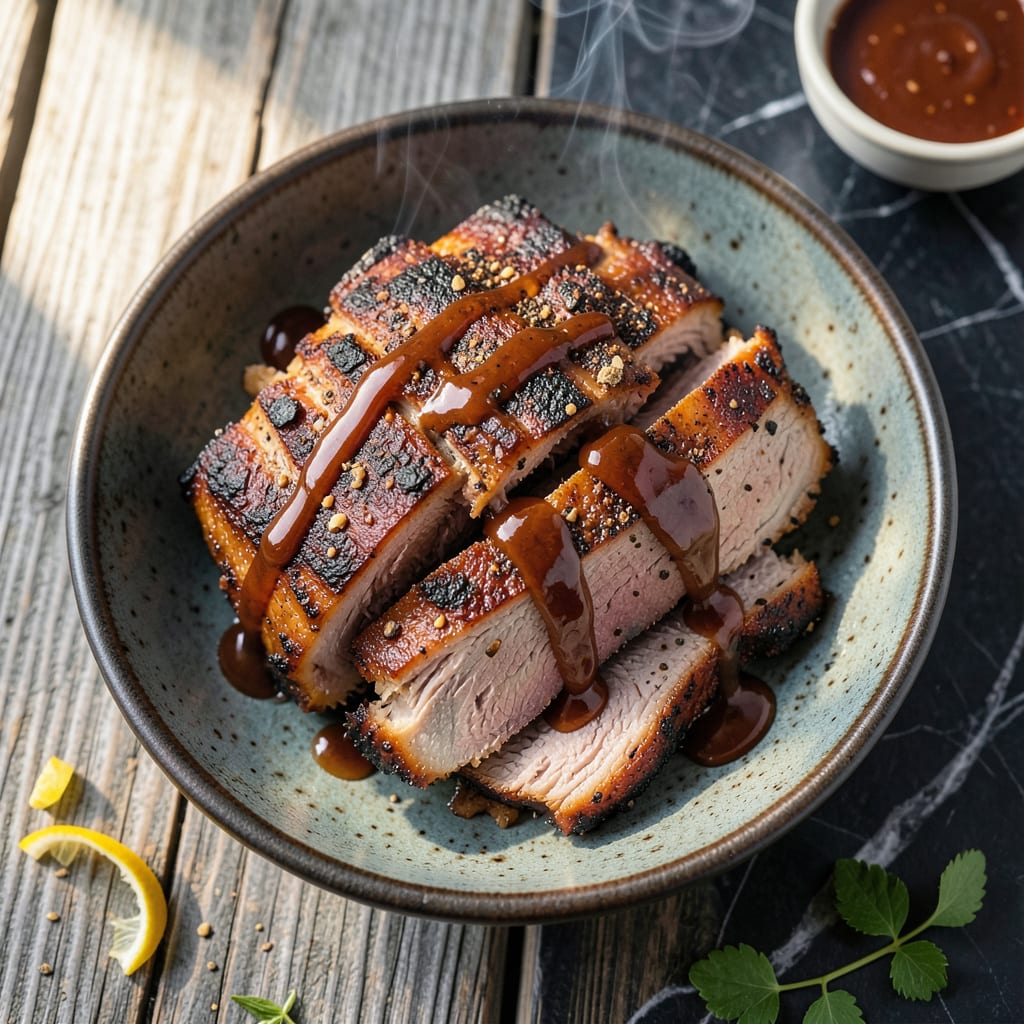
This smoked Boston butt delivers fall-off-the-bone tenderness with deep, smoky flavor developed through low and slow cooking. The process transforms a tough cut into a melt-in-your-mouth masterpiece.
With a simple dry rub and patient smoking at 225°F, you’ll achieve bark that’s crisp on the outside and succulent meat inside. Resting is key to locking in juices for that perfect pull-apart texture.
Ingredients for Smoked Boston Butt Bbq
Pantry staples and one star ingredient. Nothing exotic, just bold smoky flavor.
| Ingredient | Amount | Notes |
|---|---|---|
| Boston Butt Pork Roast 🥩 | 8 lb | Bone-in, skin-on preferred |
| Brown Sugar 🍚 | ½ cup | Light or dark variety |
| Kosher Salt 🧂 | ¼ cup | Diamond Crystal preferred |
| Black Pepper 🌶️ | 2 tbsp | Freshly ground coarse |
| Paprika 🌶️ | 2 tbsp | Sweet or smoked variety |
| Garlic Powder 🧄 | 1 tbsp | Not garlic salt |
| Onion Powder 🧅 | 1 tbsp | Fresh ground preferred |
| Cayenne Pepper 🔥 | 1 tsp | Adjust for heat preference |
| Yellow Mustard 🟡 | ½ cup | For binder in dry rub |
| Apple Cider Vinegar 🍏 | ½ cup | For spritzing during smoking |
| Hickory Wood Chunks 🪵 | 4 pieces | Or apple/cherry wood |
| Barbecue Sauce 🍯 | 2 cups | For finishing and serving |
The pork shoulder is everything here. Boston butt (bone-in, skin-on) gives you that perfect marbling for fall-apart texture—skip the pre-cut chunks. Costco or Sam’s Club have great prices for whole roasts. Look for pieces around 8 pounds (that’s the sweet spot for even cooking). If your butcher offers pork butt labeled as ‘picnic shoulder,’ that works too (just trim excess fat).
No hickory wood? Apple or cherry wood adds a sweeter smoke. Swap cayenne for chipotle powder at half the amount for smoky heat. Brown sugar can be light or dark—both caramelize beautifully. The mustard binder isn’t for flavor (it’s just to help the rub stick), so Dijon works too. Running low on apple cider vinegar? White vinegar in a pinch, but cut the amount by 25%.
Store the pork in the fridge for up to 3 days before cooking (or freeze for 6 months). The dry rub can be mixed ahead—keeps forever in an airtight container. Leftovers? Shred, mix with sauce, and freeze for 3 months (perfect for sandwiches later).
Why You’ll Love This Recipe
- Set It and Forget It: I just rub the Boston Butt with brown sugar, salt, pepper, and paprika, then let the smoker do all the work.
- Smoky Sweet Crust: That combo of brown sugar and paprika creates this ridculously good bark that’s both smoky and sweet.
- Feeds a Crowd: One pork shoulder makes enough pulled pork for a whole family gathering with leftovers for sandwiches later.
- Budget-Friendly Feast: Honestly, Boston Butt is one of the most affordable cuts, and it turns into something that tastes like a million bucks.
Step-by-Step Instructions for Smoked Boston Butt BBQ
This method delivers tender, smoky pork with minimal effort and maximum flavor.
Step 1: Prepare the Dry Rub and Season the Pork
In a bowl, combine the 0.5 cup brown sugar, 0.25 cup kosher salt, 2 tbsp black pepper, 2 tbsp paprika, 1 tbsp garlic powder, 1 tbsp onion powder, and 1 tsp cayenne pepper. Mix thoroughly to ensure even distribution of spices.
Pat the 8 lb Boston Butt Pork Roast dry with paper towels, then apply a thin layer of 0.5 cup yellow mustard all over the surface. This acts as a binder for the rub. Coat the pork generously with the dry rub, pressing it into the meat so it adheres well. Let it sit at room temperature for 30 minutes while you prepare your smoker.
Step 2: Set Up the Smoker and Add Wood
Preheat your smoker to 225°F using indirect heat. Once it reaches temperature, add the 4 pieces hickory wood chunks to the coals or smoker box. Hickory provides a robust, classic BBQ flavor that pairs perfectly with pork.
Wait until you see thin, blue smoke before placing the pork in the smoker. Thick white smoke can impart a bitter taste, so patience here is key. Place the pork roast on the grill grates, fat-side up, to allow the fat to baste the meat as it cooks.
Step 3: Smoke Low and Slow
Insert a meat thermometer into the thickest part of the pork, avoiding the bone. Smoke the pork undisturbed for 6-8 hours or until the internal temperature reaches 165°F. During this time, spritz the pork every 2 hours with the 0.5 cup apple cider vinegar to keep it moist and enhance the bark.
At 165°F, you’ll hit the stall—a plateau where the temperature stops rising as moisture evaporates. Wrap the pork tightly in butcher paper or foil at this point to push through the stall. Return it to the smoker and continue cooking until the internal temperature reaches 200-203°F.
Step 4: Rest and Finish with Sauce
Once the pork reaches 203°F, remove it from the smoker and let it rest, wrapped, in a cooler or warm oven for 1-2 hours. This resting period allows the juices to redistribute, ensuring moist, tender meat.
Unwrap the pork and shred it using two forks, discarding any large fat pieces. Toss the shredded pork with 2 cups barbecue sauce until evenly coated. Serve immediately on buns or as a main dish, with extra sauce on the side for those who like it saucier.
Pro Tips For Making Smoked Boston Butt Bbq
- Start Low and Slow: Smoke at 225°F for the first 4-5 hours—any hotter and the fat cap won’t render properly, leaving your pulled pork dry instead of juicy.
- Trim the Fat Cap: Leave a thin layer (about 1/4 inch) for flavor, but trim the thick chunks. I learned this the hard way after my first butt came out greasy, not tender.
- Don’t Rush the Stall: When the internal temp hits 160°F, it’ll stall—resist the urge to crank the heat. Wrap in foil and push through; it’ll climb to 203°F for perfect pull-apart texture.
- Rest Before Pulling: Give it a full hour in a cooler or warm oven after smoking—it reabsorbs the juices, so your pork isn’t just moist, it’s stupid tender.
Troubleshooting Perfect Results
Temperature Stall Issues
If your pork stalls below 165°F for over 2 hours, check your smoker temperature first. A drop below 225°F can cause this. I keep a ThermoWorks Smoke thermometer handy to track both meat and smoker temps accurately. 🌡️
Bitter Smoke Flavor
Thick white smoke creates bitter tastes. Wait for thin, blue smoke before adding your pork. If you detect bitterness early, trim any heavily exposed areas. I learned this the hard way with my first brisket.
Dry Meat Problems
Overcooking past 203°F or skipping the rest can dry out your butt. Pull it at 200-203°F and rest wrapped for 1-2 hours. Spritzing with apple cider vinegar every 2 hours also helps maintain moisture.
Weak Bark Formation
For better bark, don’t wrap too early. Let it develop until 165°F internal. Use butcher paper instead of foil to preserve texture. I’ve found Peach paper gives the best bark while still pushing through the stall.
Uneven Cooking
Rotate your pork 180 degrees halfway through if using a smoker with hot spots. Position fat-side up to baste the meat naturally. On my Traeger Pro 575, I rotate at the 4-hour mark for consistent results.
Sauce Separation
If your sauce separates when tossing, warm it slightly before mixing. Use 1-1.5 cups initially, then add more to taste. I always reserve ½ cup for serving to keep the texture perfect. 💫
Nutrition Facts
Frequently Asked Questions
What temperature should I maintain in the smoker?
Keep your smoker at a steady 225°F throughout the cook. This low, consistent heat ensures the pork cooks slowly for maximum tenderness. Use a reliable thermometer to monitor both the smoker and meat temps.
How long does it take to smoke?
Plan for 1.5-2 hours per pound at 225°F, so an 8 lb butt typically takes 12-16 hours. The exact time depends on your smoker’s efficiency and the meat’s internal temperature progression.
When should I wrap the pork?
Wrap once the internal temperature hits 165°F to power through the stall. Use butcher paper for better bark or foil for faster cooking. This step helps the pork push to the final 203°F without drying out.
Can I use a gas grill instead?
Yes, set up your gas grill for indirect heat and add wood chunks for smoke. Maintain 225°F and follow the same timing guidelines. Just ensure the heat stays consistent throughout the cook.

- BBQ Sausage Recipe Oven: Smoky Depth Without the Grill - September 28, 2026
- BBQ Chicken Bowl Recipe Rice: Smoky Sweetness Over Fluffy Grains - September 28, 2026
- Beef Cutlet Recipe Ideas: Crispy Breaded Patties With Bold Seasonings - September 28, 2026