
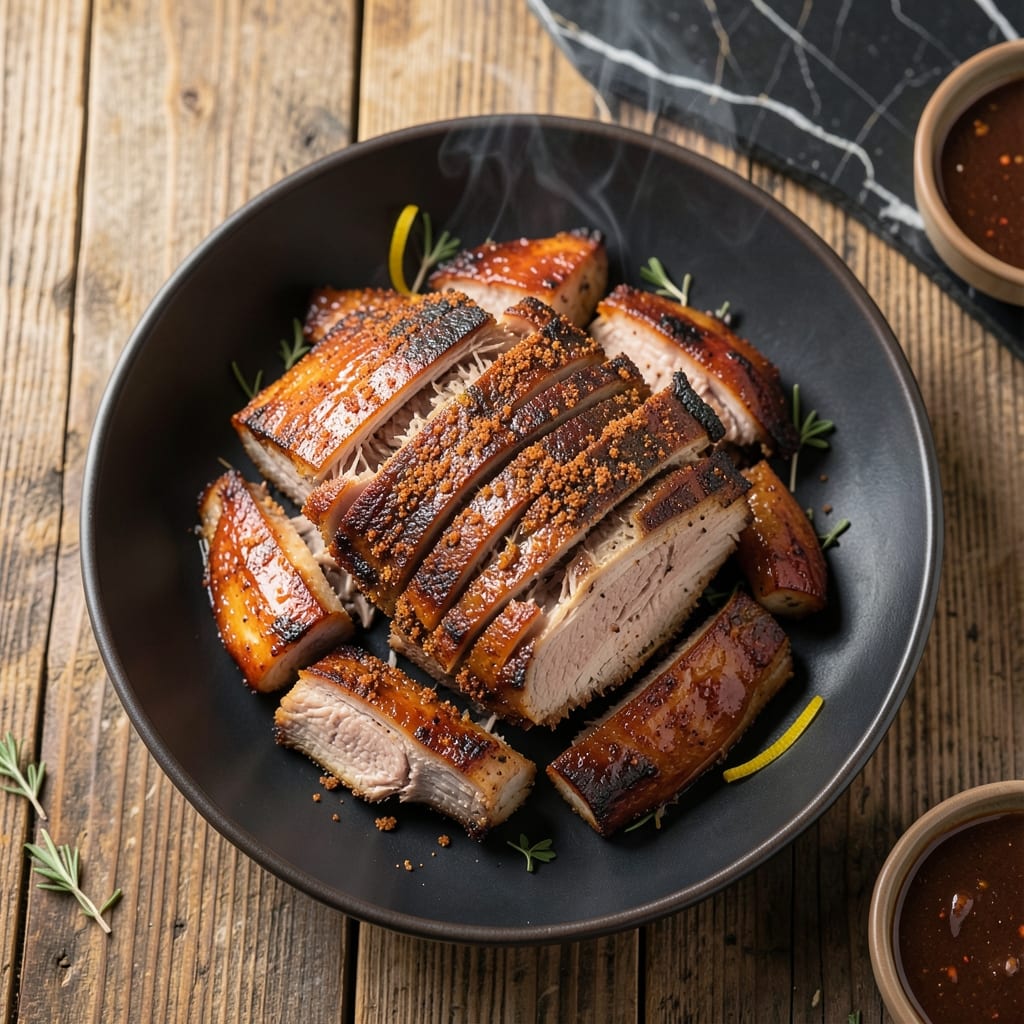
Achieving backyard BBQ perfection starts with mastering the art of smoking pork. This method transforms tough cuts into tender, flavorful meat with a smoky depth that’s hard to beat.
I developed this approach after years of testing different woods, temperatures, and techniques. The key is patience—low and slow cooking allows the collagen to break down, creating that melt-in-your-mouth texture we all crave.
What you’ll get is perfectly smoked pork with a beautiful bark on the outside and juicy, tender meat inside. It’s a simple process that delivers impressive results every time.
Whether you’re feeding a crowd or just treating your family, these techniques will elevate your BBQ game. Here’s how to do it right.
Ingredients for Smoked Pork Recipe Ideas
Simple ingredients, incredible results. This is backyard BBQ at its finest.
| Ingredient | Amount | Notes |
|---|---|---|
| Pork Shoulder 🐖 | 4 lb | Bone-in, skin-on preferred |
| Kosher Salt 🧂 | ¼ cup | Diamond Crystal brand recommended |
| Black Pepper 🌶️ | 2 tbsp | Freshly ground, coarse |
| Brown Sugar 🍚 | ½ cup | Light or dark variety |
| Paprika 🌶️ | 2 tbsp | Sweet or smoked variety |
| Garlic Powder 🧄 | 1 tbsp | Not garlic salt |
| Onion Powder 🧅 | 1 tbsp | Fresh or powdered |
| Apple Cider Vinegar 🍏 | ½ cup | For spritzing during smoking |
| Hickory Wood Chunks 🪵 | 4 pieces | Or chips, soaked if using |
| Yellow Mustard 🟡 | ¼ cup | For binder in rub |
| Olive Oil 🫒 | 2 tbsp | For moisture in rub |
| Beer 🍺 | 12 oz | Dark lager or stout preferred |
The pork shoulder is non-negotiable for that melt-in-your-mouth texture. Costco has great pre-trimmed options, but your local butcher can give you a custom cut with the perfect fat cap. Look for good marbling—it’s what keeps the meat moist during the long smoke. Hickory wood is my go-to for that classic BBQ flavor, but apple or cherry wood works too if you want something sweeter.
No pork shoulder? Pork butt is essentially the same thing (just a different part of the shoulder) and works identically. Out of apple cider vinegar? White vinegar in a pinch, though it lacks the depth. The beer can be swapped for extra vinegar and water, but the dark beer adds a richness that’s hard to replicate. Mustard and olive oil in the rub can be replaced with just oil, but the mustard helps the rub stick.
Store the pork in the fridge until ready to smoke—use within 3-4 days. Leftover smoked pork freezes beautifully for 3 months. The rub can be mixed ahead and stored in an airtight container for 1 week.
Why You’ll Love This Recipe
- Set and Forget: I rub the pork shoulder with salt, pepper, and brown sugar, then let the smoker do all the work for hours.
- Sweet & Smoky: That paprika and brown sugar crust? It caramelizes into a sticky, finger-licking bark.
- Feeds the Crew: One pork shoulder gives me pulled pork for sandwiches, tacos, and next-day hash.
- Leftovers for Days: Honestly, it tastes even better the next day—piled high on a bun or tossed in beans.
Step-by-Step Instructions for Smoked Pork
Here’s the method I use for foolproof, fall-apart tender results every single time.
Step 1: Prepare and Season the Pork Shoulder
Pat the 4 lb Pork Shoulder dry with paper towels to ensure the rub adheres properly. In a bowl, mix the 0.25 cup Kosher Salt, 2 tbsp Black Pepper, 0.5 cup Brown Sugar, 2 tbsp Paprika, 1 tbsp Garlic Powder, and 1 tbsp Onion Powder until fully combined.
Rub the 0.25 cup Yellow Mustard and 2 tbsp Olive Oil over the pork as a binder, then coat it evenly with the spice mixture. Press the rub into the meat so it forms a crust. Let it sit at room temperature for 30-45 minutes while you prepare the smoker.
Step 2: Set Up the Smoker for Low and Slow Cooking
Soak the 4 pieces Hickory Wood Chunks in water for at least 30 minutes if using chips. Preheat your smoker to 225°F using the hickory wood for smoke. Fill the water pan to maintain moisture during the long cook.
Once the smoker reaches temperature and produces thin, blue smoke, place the pork shoulder fat-side up on the grate. Close the lid and resist opening it—every peek adds time to the process. Pour the 12 oz Beer into a spray bottle with the 0.5 cup Apple Cider Vinegar for spritzing.
Step 3: Smoke and Spritz for Bark Perfection
Smoke the pork undisturbed for 4-5 hours until the internal temperature reaches 160-165°F. Every 45-60 minutes, spritz the pork with the beer and apple cider vinegar mixture to keep the surface moist and build a beautiful bark.
Watch for the color to deepen to a rich mahogany—this is your visual cue that the smoke is working its magic. If the temperature stalls, don’t worry; this is normal and part of the process.
Step 4: Wrap and Finish the Cook
When the internal temperature hits 165°F, wrap the pork tightly in butcher paper or foil to power through the stall. Return it to the smoker and continue cooking until it reaches 200-203°F internally, which should take another 3-4 hours.
The pork is done when a probe slides in like butter with no resistance. This ensures the connective tissue has fully broken down into gelatin, giving you that perfect pull-apart texture.
Step 5: Rest and Shred for Serving
Remove the pork from the smoker and let it rest wrapped for at least 1 hour (I prefer 2 hours in a cooler). This resting period allows the juices to redistribute, so every bite is moist and flavorful.
Unwrap the pork, discard any large fat caps, and shred it with two forks or your hands. Serve immediately with your favorite BBQ sauce or simply as is—the bark should be crispy, the meat tender, and the smoke flavor perfectly balanced.
Pro Tips For Making Smoked Pork Recipe Ideas
- Start Low and Slow: Keep your smoker between 225-250°F—any higher and the pork shoulder will toughen up before it has time to break down. I learned this the hard way after pulling a dry, chewy first attempt at 275°F.
- Dry the Surface: Pat the pork shoulder completely dry before applying the rub; moisture prevents the bark from forming. Sounds tedious, but it’s the thing that matters most for that crispy exterior.
- Skip the Over-Saucing: Resist the urge to drown the pork in sauce during the smoke—it’ll just steam the meat instead of letting the brown sugar and paprika caramelize. A light mop in the last hour is plenty.
- Rest Under Foil: Pull the pork at 195-203°F internal temp, then wrap it in foil and let it rest for at least 45 minutes. My grandmother swore by this, and she was right: it redistributes the juices so they don’t all spill out when you slice.
Best Sauces and Condiments for This smoked pork recipe ideas
Classic BBQ Sauce
I always keep a bottle of Sweet Baby Ray’s Original on hand—its balanced sweetness and tang complement the smoky pork perfectly. For a homemade touch, simmer 1 cup ketchup with 2 tbsp apple cider vinegar and 1 tbsp brown sugar for 10 minutes. 🍯
Tangy Vinegar Sauce
This Carolina-style sauce cuts through the richness beautifully. Whisk 1 cup apple cider vinegar, ¼ cup water, 2 tbsp sugar, 1 tbsp salt, and 1 tsp crushed red pepper until dissolved. I love it on pulled pork sandwiches.
Spicy Mustard Sauce
A South Carolina favorite that pairs wonderfully with smoked pork. Combine ½ cup yellow mustard, ¼ cup honey, 2 tbsp apple cider vinegar, and 1 tbsp hot sauce. Let it sit for 30 minutes before serving to let flavors meld.
Alabama White Sauce
This unique mayonnaise-based sauce is a game-changer. Mix 1 cup mayonnaise, ¼ cup apple cider vinegar, 1 tbsp prepared horseradish, and 1 tsp black pepper. It’s creamy, tangy, and adds a cool contrast to the smoky meat. 🥄
Quick Pickled Onions
Thinly slice 1 red onion and soak in ½ cup apple cider vinegar with 1 tbsp sugar and 1 tsp salt for 20 minutes. These add a bright, crunchy element that balances the richness of the pork.
Bourbon Glaze
For a sophisticated touch, reduce ½ cup bourbon, ¼ cup brown sugar, and 2 tbsp apple cider vinegar by half. Brush it on during the last 30 minutes of smoking for a sticky, caramelized finish.
Nutrition Facts
Frequently Asked Questions
What’s the best wood for smoking pork?
Hickory is the classic choice for its strong, bacon-like flavor. For something sweeter, try apple or cherry wood.
How long should I rest the pork after smoking?
Rest it wrapped for at least 1 hour, but 2 hours in a cooler gives the best results. This lets juices redistribute throughout the meat.
Can I use a different cut of pork?
Pork butt works identically to shoulder. Avoid lean cuts like tenderloin—they dry out during long smoking.
Why did my bark turn out soft instead of crispy?
Too much moisture or wrapping too early can soften the bark. Spritz lightly and wait until 165°F to wrap.

- BBQ Sausage Recipe Oven: Smoky Depth Without the Grill - September 28, 2026
- BBQ Chicken Bowl Recipe Rice: Smoky Sweetness Over Fluffy Grains - September 28, 2026
- Beef Cutlet Recipe Ideas: Crispy Breaded Patties With Bold Seasonings - September 28, 2026