
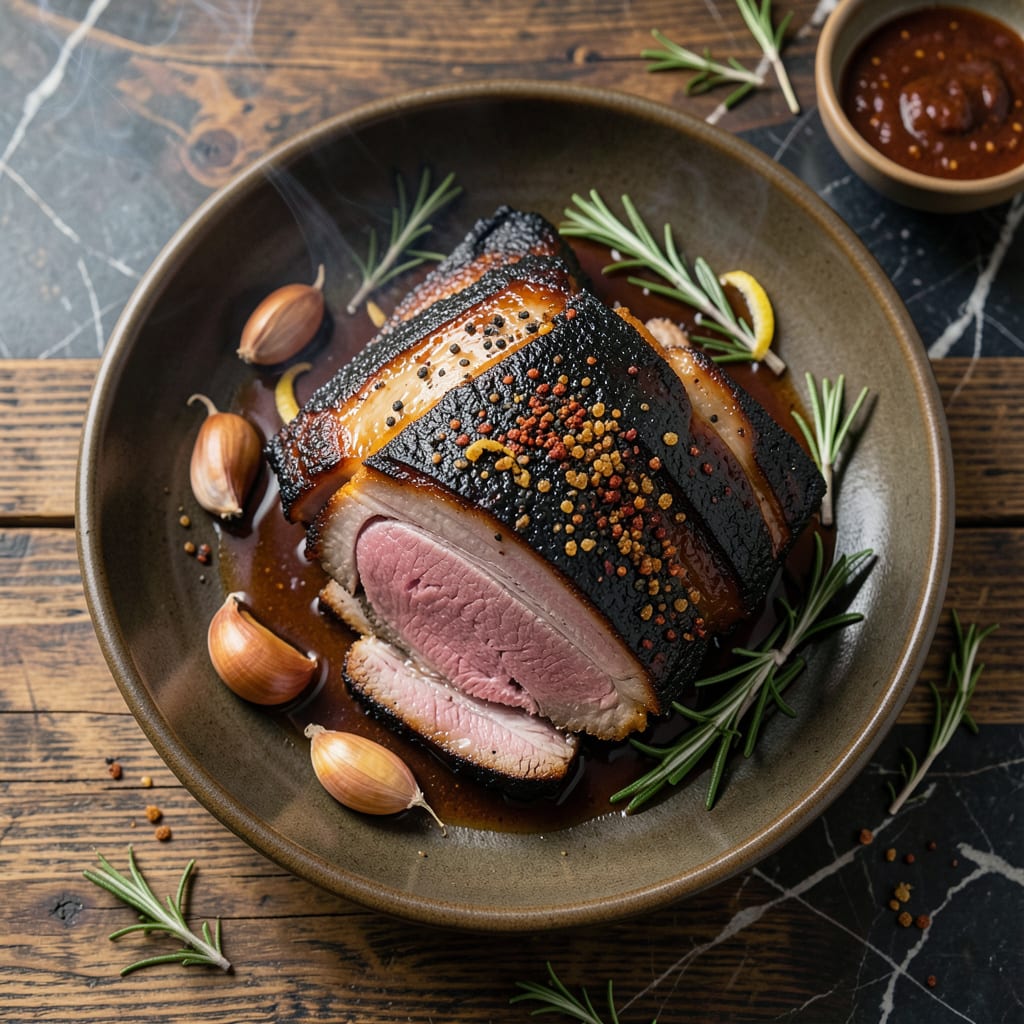
There’s a science to achieving pull-apart tender pork shoulder, and this low and slow method delivers every time. I’ve refined this approach over years of smoking to ensure consistent, melt-in-your-mouth results.
The secret lies in patience—maintaining a steady temperature and allowing the collagen to break down naturally. This creates meat so tender it falls apart with minimal effort, while developing a rich, smoky bark that seals in juices.
Ingredients for Smoked Pork Shoulder
Low and slow requires patience and these key ingredients for melt-in-your-mouth results every time.
| Ingredient | Amount | Notes |
|---|---|---|
| Pork Shoulder 🥩 | 4 lb | Bone-in, well-marbled preferred |
| Kosher Salt 🧂 | ¼ cup | Diamond Crystal preferred for texture |
| Coarse Black Pepper 🌶️ | 2 tbsp | Freshly ground for best results |
| Garlic Powder 🧄 | 2 tbsp | Not garlic salt substitute |
| Onion Powder 🧅 | 2 tbsp | Fresh and potent for depth |
| Smoked Paprika 🌶️ | 1 tbsp | Sweet or hot variety works |
| Brown Sugar 🍚 | ½ cup | Light or dark, packed firmly |
| Yellow Mustard 🟡 | ¼ cup | Binder for dry rub adhesion |
| Apple Cider Vinegar 🍏 | ½ cup | For spritzing during smoking |
| Hickory Wood Chunks 🪵 | 4 pieces | Soaked in water for 30 minutes |
| Vegetable Oil 🫒 | 2 tbsp | Neutral flavor for initial sear |
| Beer 🍺 | 12 oz | Dark lager preferred for spritzing |
The pork shoulder is non-negotiable—bone-in, well-marbled cuts from Costco or a trusted butcher yield the best texture. Look for pieces with a good fat cap; this renders down during smoking to baste the meat naturally. Diamond Crystal kosher salt is preferred by professional pitmasters for its clean flavor and consistent grain size. Avoid pre-ground black pepper; freshly grinding whole peppercorns releases essential oils that adhere better to the meat.
No pork shoulder? Pork butt (same cut, different name) works identically. Out of apple cider vinegar? White vinegar in a pinch, but the cider adds subtle sweetness. For the rub, substitute chili powder for smoked paprika if needed, though the flavor profile will shift slightly. The beer spritz can be replaced with apple juice mixed with a splash of vinegar—less traditional but effective.
Store uncooked pork in the fridge for up to 3 days or freeze for 6 months. The dry rub can be mixed ahead and kept in an airtight container for 2 weeks. Leftovers pull apart easily—perfect for sandwiches, tacos, or nachos within 5 days refrigerated.
Why You’ll Love This Recipe
- Set and Forget: That rub of salt, pepper, garlic and onion powder takes 2 minutes to pat on, then the smoker does all the work while I sip iced tea.
- Pure Smoky Bliss: The bark forms a dark, peppery crust, and inside the meat pulls apart with that perfect kiss of garlic and onion.
- Feeds the Weekend: I smoke one on Saturday morning and we’re eating pulled pork sandwiches, tacos, and nachos straight through Monday.
- Budget Hero: A single pork shoulder costs less per pound than most cuts, and it turns into three meals plus leftovers for soup.
Step-by-Step Instructions for Smoked Pork Shoulder
Master the technique that transforms tough meat into melt-in-your-mouth perfection with these proven steps.
Step 1: Prepare and Apply the Dry Rub
Combine the 0.25 cup Kosher Salt, 2 tbsp Coarse Black Pepper, 2 tbsp Garlic Powder, 2 tbsp Onion Powder, 1 tbsp Smoked Paprika, and 0.5 cup Brown Sugar in a bowl. Pat the 4 lb Pork Shoulder completely dry with paper towels—this is crucial for bark formation.
Apply the 0.25 cup Yellow Mustard all over the pork shoulder as a binder. Press the dry rub mixture firmly into every surface of the meat, ensuring complete coverage. Let it rest at room temperature for 30-45 minutes while you prepare the smoker.
Step 2: Set Up the Smoker with Proper Wood
Soak the 4 pieces Hickory Wood Chunks in water for 30 minutes before use. Fill your smoker’s water pan to maintain moisture during the long cook. Preheat the smoker to 225°F using an indirect heat setup.
Once at temperature, add the soaked hickory chunks to the coals. You want a steady thin blue smoke, not thick white smoke which can impart bitter flavors. Place a drip pan under the cooking grate to catch renderings.
Step 3: Smoke the Pork Shoulder Low and Slow
Place the pork shoulder fat-side up on the cooking grate. Insert a meat probe into the thickest part of the meat, avoiding the bone. Smoke undisturbed for the first 4-6 hours.
Every 45-60 minutes, spritz the pork with a mixture of 0.5 cup Apple Cider Vinegar and 12 oz Beer to keep the surface moist and enhance bark development. This also adds subtle tangy notes to complement the rub.
Step 4: Wrap and Finish the Cook
When the internal temperature reaches 165-170°F (typically after 8-10 hours), you’ll hit the stall. Wrap the pork tightly in pink butcher paper, adding 2 tbsp Vegetable Oil before wrapping to help with moisture retention.
Return to the smoker and continue cooking until the internal temperature reaches 203°F and a probe slides in like butter. This typically takes another 3-5 hours.
Step 5: Rest and Shred the Pork
Remove the pork from the smoker and let it rest, still wrapped, in a cooler or warm oven for 1-2 hours. This resting period allows the juices to redistribute and the meat to become fork-tender.
Unwrap and shred the pork using two forks, discarding any large fat pieces. The meat should pull apart effortlessly, with a dark, flavorful bark on the exterior and moist, smoky flesh throughout. Serve immediately for the best texture.
Pro Tips For Making Smoked Pork Shoulder
- Dry the Shoulder: Pat the pork shoulder completely dry before seasoning—I learned this the hard way after my rub kept sliding off wet meat and the bark never formed right.
- Let It Rest: After pulling it from the smoker, wrap the shoulder in foil and let it rest for at least 30 minutes, no peeking. Sounds weird, but it works: the juices redistribute and it’s easier to shred.
- Skip the Rush: Resist the urge to crank the smoker past 250°F—low and slow is non-negotiable for tender, fall-apart meat, and I’ve ruined more than one shoulder trying to speed it up.
- Double the Rub: Use more Kosher salt and coarse black pepper than you think you need; the bark is what makes smoked pork shoulder unforgettable, and a heavy hand with the seasoning actually changes the outcome.
Flavor Customization for Smoked Pork Shoulder
Sweet Heat Rub
Add 1 tbsp cayenne pepper and 2 tbsp chili powder to the dry rub for serious heat. Balance it with an extra ¼ cup brown sugar to create that sweet-spicy contrast. I love how the caramelization from the sugar enhances the smoky depth. 🌶️
Coffee-Infused Depth
Mix 2 tbsp finely ground coffee into your rub for an earthy complexity that pairs beautifully with hickory smoke. Use dark roast for boldness or medium for subtlety. The coffee doesn’t make it taste like coffee—it just deepens the overall flavor profile.
Herb-Forward Variation
Incorporate 1 tbsp dried rosemary and 1 tbsp dried thyme into the rub for a Mediterranean twist. These herbs hold up well during the long cook and add a fragrance that complements the pork’s richness. Crumble them between your fingers to release the oils.
Maple-Bourbon Glaze
During the final 2 hours of smoking, baste with a mixture of ½ cup maple syrup and ¼ cup bourbon. This creates a sticky, glossy finish that’s perfect for pulled pork sandwiches. The alcohol cooks off, leaving just the sweet, oaky notes.
Citrus-Zest Brightness
Add the zest of 1 lemon and 1 orange to the rub for a bright, citrusy lift. The oils in the zest bloom during cooking, cutting through the fat with refreshing acidity. I use a microplane to get the finest texture. ✨
Asian-Inspired Twist
Swap the smoked paprika for 1 tbsp five-spice powder and add 2 tbsp soy sauce to the mustard binder. This creates a complex, umami-rich bark with hints of star anise and clove. Serve with steamed buns for a fusion-style meal.
Nutrition Facts
Frequently Asked Questions
What’s the ideal internal temperature for pulling?
Remove from smoker at 203°F internal temp. The collagen breaks down completely at this point, making it fork-tender. Let it rest 1-2 hours before shredding for best texture.
Can I use a gas grill instead of a smoker?
Yes! Set up for indirect heat with a water pan. Maintain 225°F and add wood chips in a foil pouch for smoke. Check chips every 45 minutes to maintain consistent smoke.
How do I know when it’s done?
The meat should probe like butter in multiple spots. If it feels firm, keep cooking. The bark should be dark and slightly crispy, not rubbery.
Why did my pork turn out dry?
Overcooking or insufficient moisture are common culprits. Wrap at 165-170°F and spritz every 45-60 minutes. Resting is crucial to redistribute juices.

- BBQ Sausage Recipe Oven: Smoky Depth Without the Grill - September 28, 2026
- BBQ Chicken Bowl Recipe Rice: Smoky Sweetness Over Fluffy Grains - September 28, 2026
- Beef Cutlet Recipe Ideas: Crispy Breaded Patties With Bold Seasonings - September 28, 2026