
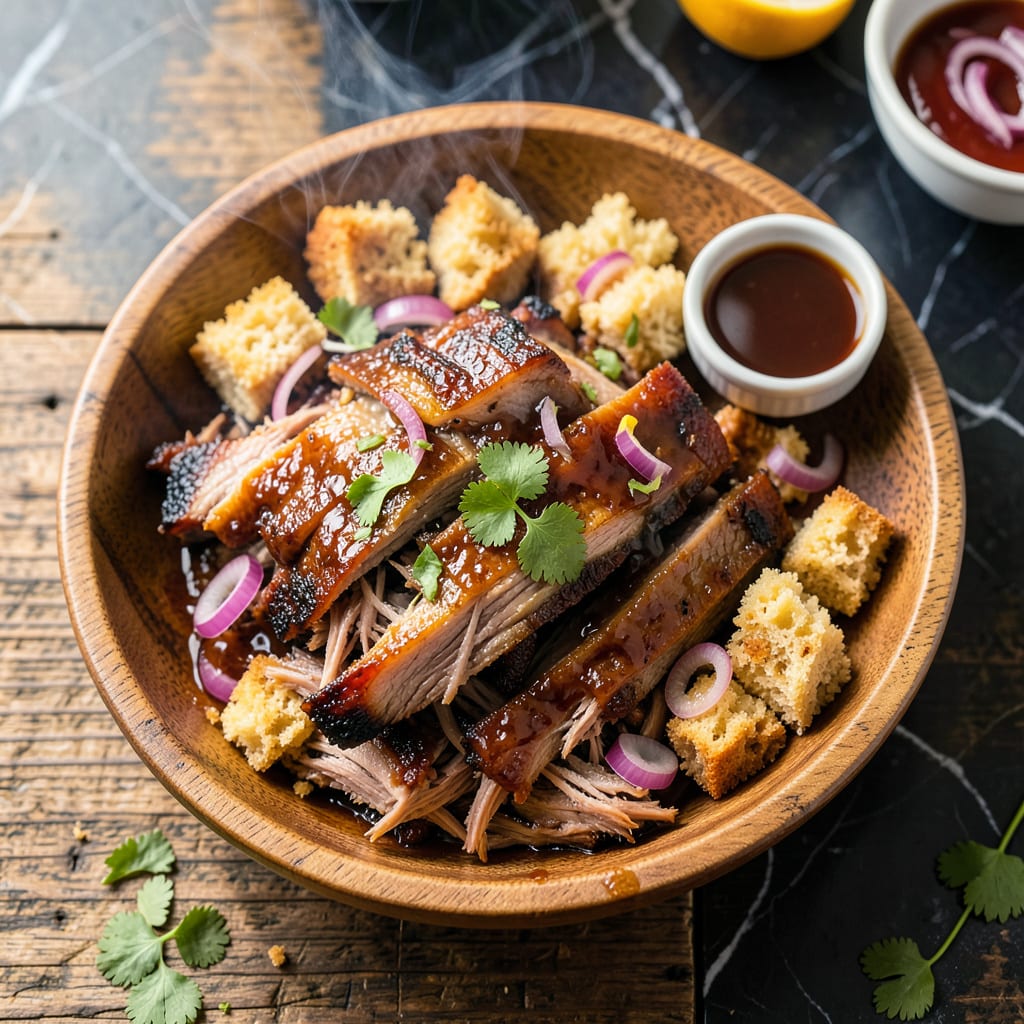
Achieving tender smoked pulled pork requires patience and precision. This method delivers melt-in-your-mouth results every time with a perfect bark.
The 12-hour smoking process at low heat breaks down the collagen, creating juicy, flavorful meat that falls apart with minimal effort. Serve on buns with your favorite sauce.
Ingredients for Smoked Pulled Pork
Pantry staples plus a trip to the butcher. Nothing exotic here—just good stuff.
| Ingredient | Amount | Notes |
|---|---|---|
| Pork Shoulder 🍖 | 4 lb | Bone-in for best flavor |
| Brown Sugar 🍚 | ½ cup | Light or dark works |
| Kosher Salt 🧂 | ¼ cup | Diamond Crystal preferred |
| Black Pepper 🌶️ | 2 tbsp | Freshly ground coarse |
| Paprika 🌶️ | 2 tbsp | Smoked or sweet variety |
| Garlic Powder 🧄 | 1 tbsp | Not garlic salt |
| Onion Powder 🧅 | 1 tbsp | Freshly ground if possible |
| Cayenne Pepper 🔥 | 1 tsp | Adjust for heat preference |
| Apple Cider Vinegar 🍏 | ½ cup | Adds tangy brightness |
| Yellow Mustard 🟡 | ¼ cup | Binds the rub together |
| Hickory Wood Chips 🪵 | 2 cups | Soaked in water 1 hour |
| Barbecue Sauce 🍯 | 2 cups | For serving, any style |
| Hamburger Buns 🍔 | 8 pieces | Soft, for serving |
The pork shoulder is non-negotiable here. Bone-in gives you that fall-apart texture—boneless just doesn’t have the same richness. Look for good marbling and a fat cap (that’s flavor insurance). Most butchers will cube it for you if you ask, but I usually grab a whole 8-lb shoulder from Costco and portion it myself. The bark forms best with a generous rub, so don’t skimp on the spices.
No hickory chips? Apple or cherry wood works great too (sweeter smoke). Swap apple cider vinegar for white vinegar in a pinch, but the cider adds depth. Out of yellow mustard? Dijon at half the amount for a sharper kick. The barbecue sauce can be store-bought (I like Sweet Baby Ray’s), but homemade takes it to another level. The rub quantities can be eyeballed—this isn’t baking.
Pork rests beautifully—actually improves overnight. Keeps 4-5 days in the fridge, freezes for 3 months (the fat helps it thaw beautifully). I always make extra for sandwiches, tacos, or just eating with a fork straight from the container.
Why You’ll Love This Recipe
- Set and Forget: The pork shoulder does all the work in the smoker while I kick back with a cold drink.
- Sweet & Smoky: That brown sugar rub with paprika gives it a caramelized crust that’s downright addictive.
- Feeds a Crowd: I’ll make a big batch for game day, and suddenly I’m the host with the most.
- Leftovers for Days: Honestly, pulled pork tastes even better the next day in tacos, sandwiches, or straight from the fridge.
Step-by-Step Instructions for Smoked Pulled Pork
Here’s the method I use to achieve fall-apart tender pork with a perfect bark every time.
Step 1: Prepare and Season the Pork Shoulder
Pat the 4 lb Pork Shoulder dry with paper towels to ensure the rub adheres properly. In a bowl, combine the 0.5 cup Brown Sugar, 0.25 cup Kosher Salt, 2 tbsp Black Pepper, 2 tbsp Paprika, 1 tbsp Garlic Powder, 1 tbsp Onion Powder, and 1 tsp Cayenne Pepper.
Rub this mixture all over the pork, pressing it into the meat so it forms a thick crust. I always let the seasoned pork sit at room temperature for 30 minutes while I prep the smoker—this helps the rub penetrate and the meat cook more evenly from the start.
Step 2: Set Up the Smoker with Soaked Wood Chips
Soak the 2 cups Hickory Wood Chips in water for at least 1 hour before smoking. Fill your smoker’s water pan to maintain moisture during the long cook. Preheat the smoker to 225°F using indirect heat.
Once the smoker reaches temperature and you see thin blue smoke, place the pork shoulder fat-side up on the grate. The soaked hickory wood chips will produce a steady, flavorful smoke that infuses the meat without overpowering it. Close the lid and resist the urge to peek for at least the first 2 hours.
Real talk: keeping that lid closed maintains consistent temperature and smoke flow, which is critical for even cooking.
Step 3: Smoke Low and Slow Until Probe-Tender
Smoke the pork undisturbed for 8-10 hours, or until the internal temperature reaches 195-203°F. I use a meat thermometer to monitor progress, but the real test is when a probe slides into the thickest part like butter with no resistance.
About halfway through, I spritz the pork with a mix of the 0.5 cup Apple Cider Vinegar and 0.25 cup Yellow Mustard to keep the surface moist and build that beautiful bark. The vinegar adds tang while the mustard helps the rub caramelize.
Step 4: Rest, Shred, and Sauce
Once the pork reaches the desired tenderness, remove it from the smoker and wrap it tightly in foil. Let it rest for at least 1 hour—this allows the juices to redistribute and the meat to become even more tender.
After resting, shred the pork using two forks, discarding any large fat chunks. I like to mix in about 1 cup of the 2 cups Barbecue Sauce to keep it moist, reserving the rest for serving. Toss everything together so each bite is coated in smoky, tangy flavor.
Step 5: Serve on Hamburger Buns
Pile the pulled pork onto the 8 pieces Hamburger Buns and drizzle with additional barbecue sauce if desired. The buns should be soft enough to soak up the juices but sturdy enough to hold the generous portion of meat.
Serve immediately while warm. The pork should be so tender it pulls apart with minimal effort, and the bark should have a deep mahogany color with a slight crunch. This is the moment that matters: when the smoky aroma hits and you know the long cook was worth it.
Pro Tips For Making Smoked Pulled Pork
- Use a Meat Thermometer: I learned this the hard way—guessing doneness leaves you with dry or undercooked pork. Aim for 195-203°F internally for perfect pull-apart tenderness.
- Trim the Fat Cap: Sounds weird, but it works: leave about 1/4-inch fat to protect the meat, but trim excess so your rub actually contacts the pork, not just grease.
- Don’t Rush the Rest: After smoking, let it rest wrapped in foil for at least 30 minutes—I was skeptical until I tried it, and the juices redistribute beautifully.
- Mix Your Rub Well: Combine the brown sugar, kosher salt, black pepper, and paprika thoroughly before applying; I used to skip this and ended up with uneven flavor pockets.
Pro Cooking Tips for Smoked Pulled Pork
Temperature Control
Maintaining a steady 225°F in your smoker is non-negotiable for tender results. I use a ThermoWorks Smoke dual-probe thermometer to monitor both smoker and meat temps without opening the lid. Even 10°F fluctuations can extend your cook time by hours.
The Spritz Technique
Every 2-3 hours, spritz with a 50/50 mix of apple cider vinegar and water to keep the surface moist. This also helps build that coveted bark. I keep my spritz bottle in a cooler with ice to prevent it from warming up in the heat.
Probe Test
Don’t rely solely on temperature—use the probe test. When your thermometer slides into the thickest part like butter with no resistance, it’s done. This usually happens between 195-203°F. I’ve found 200°F is the sweet spot for perfect pull-apart texture.
This method has never failed me, even with tougher cuts. 💪
Resting Period
Let the pork rest wrapped in foil for at least 1 hour in a cooler or warm oven (170°F). This step is crucial—it allows juices to redistribute and the meat to become even more tender. Rushing this will leave you with dry pork.
Shredding Pro Tip
Use two forks to shred, but first discard any large fat chunks. I mix in 1 cup of barbecue sauce while shredding to coat every fiber. The sauce also helps keep the meat moist during serving. 🔥
Nutrition Facts
Frequently Asked Questions
What’s the best wood for smoking?
Hickory delivers classic bold flavor that pairs perfectly with pork. For sweeter smoke, try apple or cherry wood. Avoid mesquite—it can overpower the meat.
Can I use a gas grill instead of a smoker?
Yes! Set up for indirect heat with wood chips in a foil packet. Maintain 225°F and add more chips every 1-2 hours. Results will be slightly different but still delicious.
How do I know when it’s done?
Use the probe test: when a thermometer slides in like butter, it’s ready. This happens between 195-203°F. Don’t rely on time alone—every piece cooks differently.
Can I make this ahead?
Shredded pork stays juicy for 4-5 days refrigerated or 3 months frozen. Reheat gently with a splash of broth or sauce to restore moisture.

- BBQ Sausage Recipe Oven: Smoky Depth Without the Grill - September 28, 2026
- BBQ Chicken Bowl Recipe Rice: Smoky Sweetness Over Fluffy Grains - September 28, 2026
- Beef Cutlet Recipe Ideas: Crispy Breaded Patties With Bold Seasonings - September 28, 2026