
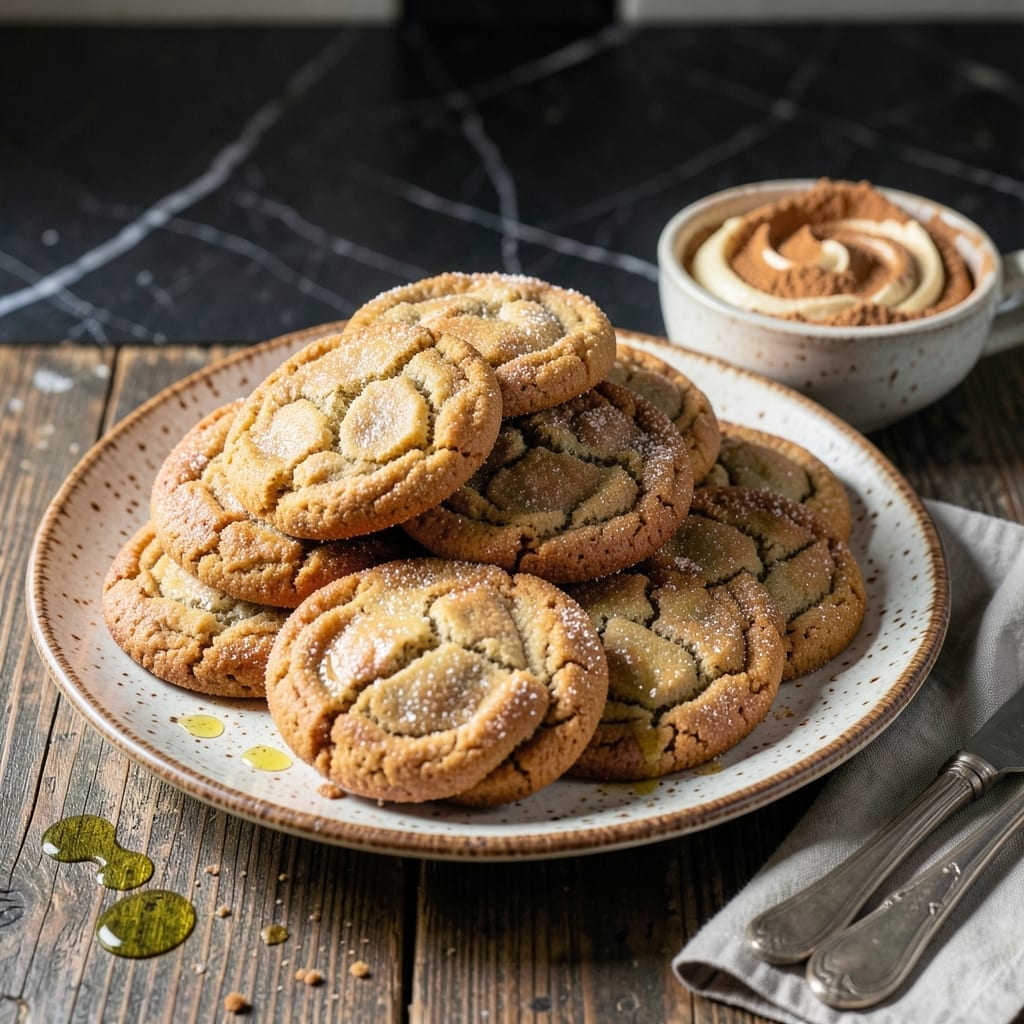
Classic snickerdoodles get a clever twist with this approachable recipe. I’ve replaced cream of tartar with a simple pantry swap that still delivers soft, chewy cookies with that signature cinnamon-sugar coating.
This method keeps all the charm of traditional snickerdoodles while making the process even more simple. The result is a batch of warm, fragrant cookies with crackly tops and a tender center.
Ingredients for Snickerdoodle Cookie Recipe Without Cream of Tartar
Pantry staples plus one clever swap deliver soft, chewy cookies with crackly tops.
| Ingredient | Amount | Notes |
|---|---|---|
| All-Purpose Flour 🌾 | 2 ¾ cups | Spoon and level for accuracy |
| Baking Soda 🧂 | 1 tsp | Replaces cream of tartar |
| Unsalted Butter 🧈 | 1 cup | Softened to room temperature |
| Granulated Sugar 🍚 | 1 ½ cups | Divided for dough and coating |
| Large Eggs 🥚 | 2 whole | Room temperature preferred |
| Vanilla Extract 🌿 | 2 tsp | Pure extract for best flavor |
| Ground Cinnamon 🌶️ | 2 tsp | Divided for dough and coating |
| Salt 🧂 | ½ tsp | Fine sea salt or table salt |
| Lemon Juice 🍋 | 1 tbsp | Substitutes for cream of tartar acidity |
| Plain Greek Yogurt 🥛 | 2 tbsp | Adds moisture and tang |
The butter is critical here—Land O’Lakes or Kerrygold for consistent results. Look for unsalted so you control the salt content precisely. The flour should be all-purpose, not bread flour (too much gluten) or cake flour (too delicate). King Arthur is my go-to brand. For the cinnamon, Ceylon gives a milder flavor, but regular cassia works perfectly fine for this recipe.
No Greek yogurt? Sour cream at the same amount works as a 1:1 substitute. Fresh out of lemon juice? White vinegar at half the quantity provides the needed acidity. For gluten-free versions, Bob’s Red Mill 1-to-1 blend yields excellent results. The sugar can be replaced with coconut sugar, though the texture will be slightly different.
Store dough in an airtight container in the fridge for up to 3 days, or freeze for 2 months. Baked cookies keep 1 week at room temperature in a sealed container. The cinnamon-sugar coating is best applied just before baking for maximum crackle effect.
Why You’ll Love This Recipe
- No Cream Needed: I finally found a way to make snickerdoodles without hunting down cream of tartar—baking soda does the trick just fine.
- Buttery Sweetness: The unsalted butter and sugar create that melt-in-your-mouth texture with just the right amount of cinnamon sugar crunch.
- Weeknight Friendly: I can mix the dough, chill it for 20 minutes, and bake while dinner cooks—no fancy timing required.
- Budget Baker: Honestly, all-purpose flour and basic pantry staples keep this recipe cheap, and one batch makes enough to share (or not).
Step-by-Step Instructions for Snickerdoodle Cookies Without Cream of Tartar
Here’s the method. Straightforward, tested, works every time.
Step 1: Cream Butter and Sugar for Optimal Texture
In a stand mixer fitted with the paddle attachment, beat the 1 cup Unsalted Butter with 1 cup of the 1.5 cups Granulated Sugar on medium speed for 3-4 minutes. The mixture should become pale and fluffy, nearly doubling in volume.
This creaming process incorporates air, which is crucial for achieving the characteristic soft yet chewy texture of snickerdoodles. Under-creaming results in dense cookies, so don’t rush this step.
Step 2: Incorporate Wet Ingredients and Acid Substitute
Add the 2 whole Large Eggs, one at a time, mixing on low speed for 30 seconds after each addition. Then add the 2 tsp Vanilla Extract, 1 tbsp Lemon Juice, and 2 tbsp Plain Greek Yogurt, mixing until just combined.
The Lemon Juice replaces cream of tartar, providing the necessary acidity for the signature tang. The Plain Greek Yogurt adds moisture and a subtle richness. Ensure all wet ingredients are fully incorporated before proceeding.
Step 3: Combine Dry Ingredients and Form Dough
In a separate bowl, whisk together the 2.75 cups All-Purpose Flour, 1 tsp Baking Soda, 1 tsp of the 2 tsp Ground Cinnamon, and 0.5 tsp Salt. Gradually add this to the wet ingredients, mixing on low speed until just combined.
Avoid over-mixing to prevent developing excess gluten, which can make the cookies tough. The dough should be soft but manageable. If it’s too sticky, chill it for 15-20 minutes to firm up.
Step 4: Prepare Cinnamon-Sugar Coating and Shape Dough
In a small bowl, combine the remaining 0.5 cups Granulated Sugar and 1 tsp Ground Cinnamon. Roll the dough into 1.5-inch balls (about 2 tablespoons each), then roll each ball in the cinnamon-sugar mixture until fully coated.
Place the coated dough balls 2 inches apart on parchment-lined baking sheets. The coating should be thick and even, ensuring a crackly, cinnamon-sugar crust after baking.
Step 5: Bake to Golden Perfection
Preheat the oven to 375°F. Bake the cookies for 9-11 minutes, or until the edges are set and the centers are slightly puffed. They should not be fully set in the middle—they’ll continue to cook slightly on the baking sheet.
Let the cookies cool on the baking sheet for 5 minutes before transferring to a wire rack. The edges should be light golden brown, while the centers remain soft. This ensures the perfect snickerdoodle texture: crisp edges with a tender, slightly chewy interior.
Pro Tips For Making Snickerdoodle Cookie Recipe Without Cream Of Tartar
- Chill the Dough: After mixing, refrigerate the dough for at least 30 minutes—I learned this the hard way when my first batch spread into flat, sad pancakes. Cold butter in the dough keeps the cookies thick and chewy.
- Use Extra Baking Soda: Since we’re skipping cream of tartar, add ½ teaspoon extra baking soda to the dry ingredients. This mimics the tang and helps the cookies rise properly, just like my grandmother’s version.
- Roll Evenly in Cinnamon Sugar: Press the dough balls firmly into the cinnamon-sugar mix and coat them completely. Sounds obvious, but I used to rush this and end up with bare spots—now every bite has that crackly, sweet crust.
- Pull at 325°F: Bake at 375°F but take them out when edges are just set (around 9-10 minutes). They’ll look underdone, but they firm up as they cool—I burned two trays before I figured this out.
Regional Styles of This Dish
Midwest Classic
In the Midwest, snickerdoodles are a staple at church potlucks and family gatherings. I remember my grandma using buttermilk powder instead of cream of tartar, which adds a subtle tang. She’d always chill the dough for 30 minutes before baking to prevent spreading. 💛
Southern Comfort
Down South, bakers often add a touch of brown sugar to the dough for extra moisture and a deeper caramel note. They also prefer a thicker cookie, so they roll the dough balls slightly larger—about 2 inches in diameter. The cinnamon-sugar coating is sometimes mixed with a pinch of nutmeg for warmth.
Texas Twist
Everything’s bigger in Texas, including the snickerdoodles! Lone Star bakers make theirs with shortening instead of butter for a sturdier cookie that holds up in care packages. They also add an extra ½ tsp cinnamon to the dough itself for a more pronounced spice flavor.
Pacific Northwest
In the PNW, snickerdoodles often get a health-conscious update with whole wheat flour or coconut oil. The cookies tend to be slightly smaller, about 1-inch balls, and baked at a lower 350°F for a softer texture. I love the earthy flavor whole wheat adds.
Amish Tradition
The Amish community makes snickerdoodles without any modern substitutions, but they use lard instead of butter and cream of tartar. Their version is denser and has a distinctive old-fashioned taste. They roll the dough in cinnamon-sugar twice for an extra-thick coating. 🔥
Frequently Asked Questions
Why use lemon juice in this recipe?
Lemon juice replaces cream of tartar by providing the needed acidity for the classic snickerdoodle tang. It balances the sweetness perfectly.
Can I use a different acid substitute?
White vinegar works at half the amount (use 1.5 tsp), or buttermilk powder (2 tbsp) adds tang while keeping the dough tender.
How do I prevent my cookies from spreading too much?
Chill the dough for 15-20 minutes before baking. Also, ensure your oven is preheated to 375°F for proper structure.
What if my dough is too sticky to handle?
Add 1-2 tbsp more flour until manageable. Avoid overworking the dough to maintain a soft texture.
Nutrition Facts

- BBQ Sausage Recipe Oven: Smoky Depth Without the Grill - September 28, 2026
- BBQ Chicken Bowl Recipe Rice: Smoky Sweetness Over Fluffy Grains - September 28, 2026
- Beef Cutlet Recipe Ideas: Crispy Breaded Patties With Bold Seasonings - September 28, 2026