
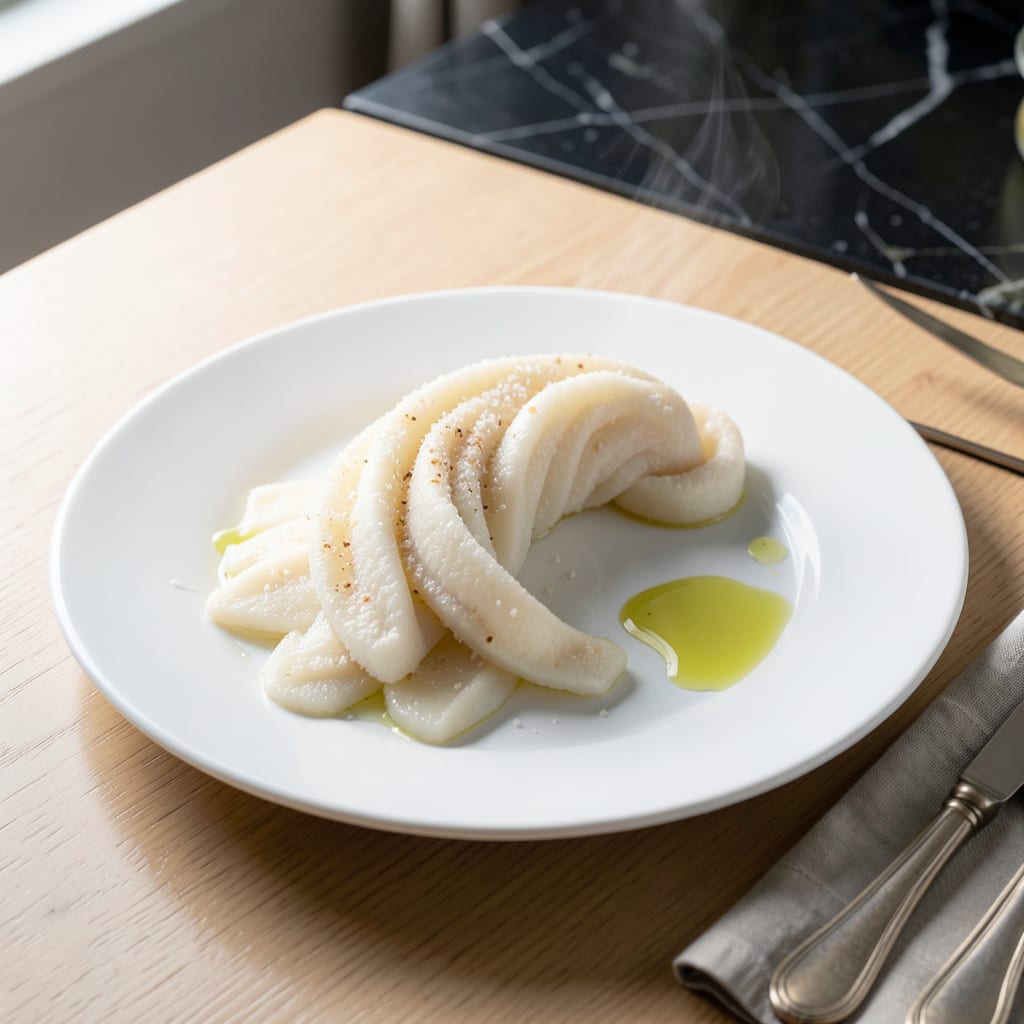
This snow leg surimi recipe delivers flaky, delicate imitation crab with a texture that rivals fresh seafood. The key lies in gentle handling and precise steaming to maintain its signature tenderness.
Transform simple ingredients into a versatile protein that works in salads, sushi, or hot dishes. The process is straightforward yet yields professional-quality results every time.
Ingredients for Snow Leg Surimi
Transform simple seafood into delicate snow leg surimi with professional flair.
| Ingredient | Amount | Notes |
|---|---|---|
| Alaska Pollock Fillets 🐟 | 1 lb | Fresh or thawed, skinless |
| Egg Whites 🥚 | 2 whole | Lightly beaten for binding |
| Wheat Starch 🌾 | ½ cup | Essential for texture |
| Potato Starch 🥔 | ¼ cup | Adds elasticity to mixture |
| Sugar 🧂 | 1 tbsp | Balances savory flavors |
| Salt 🧂 | 1 ½ tsp | Fine sea salt preferred |
| Monosodium Glutamate 🧂 | ½ tsp | Optional umami enhancer |
| Crab Flavoring 🦀 | 1 tsp | Natural or artificial |
| Mirin 🍶 | 2 tbsp | Sweet rice wine for shine |
| Soy Sauce 🫒 | 1 tbsp | Low-sodium preferred |
| Vegetable Oil 🫒 | 2 tbsp | For greasing molds |
| Red Food Coloring 🎨 | ¼ tsp | Optional for pink hue |
| Water 💧 | ½ cup | Ice cold for binding |
The fish quality is paramount. Alaska pollock is the industry standard for surimi—look for wild-caught, skinless fillets at Whole Foods or Asian specialty markets. Freshness is non-negotiable; thaw frozen fillets in the refrigerator overnight. The starches (wheat and potato) are critical for achieving that signature bouncy texture. Bob’s Red Mill carries both if your local store doesn’t.
For dietary restrictions, egg whites can be replaced with aquafaba at a 1:1 ratio. If avoiding MSG (though it’s naturally occurring in seaweed), increase salt slightly. White wine works in place of mirin, though the flavor profile will shift slightly. The crab flavoring is synthetic but essential—find it at H Mart or online at Amazon. Skip the food coloring if you prefer a natural look (the final product will be ivory).
Surimi paste must be kept ice-cold during preparation to prevent premature setting. Use within 24 hours of making, or freeze the shaped sticks for up to 3 months. Thaw in the refrigerator before steaming. The steamed surimi keeps 5 days refrigerated in an airtight container.
Why You’ll Love This Recipe
- Minimal Effort: I just mix pollock, egg whites, and starches, then steam—no fancy techniques required.
- Sweet & Bouncy: The sugar and starch combo gives that classic surimi snap with a subtle sweetness I crave.
- Budget Stretch: Alaska pollock is affordable, and a small batch makes enough for multiple meals.
Step-by-Step Instructions for Snow Leg Surimi
This refined process ensures the signature flaky texture and delicate crab-like flavor in every bite.
Step 1: Prepare the Alaska Pollock
Begin by processing the 1 lb Alaska Pollock Fillets into a smooth paste. I recommend using a food processor and pulsing in 30-second intervals to prevent overheating. The fillets should be completely broken down into a fine, sticky mass—this is the foundation for the surimi’s characteristic texture.
If your processor struggles, scrape down the sides and continue. The goal is a uniform consistency without any visible chunks. This step is critical for achieving the smooth, elastic texture that defines quality surimi.
Step 2: Create the Starch and Seasoning Mixture
In a separate bowl, whisk together the 0.5 cup Wheat Starch, 0.25 cup Potato Starch, 1 tbsp Sugar, 1.5 tsp Salt, 0.5 tsp Monosodium Glutamate, and 1 tsp Crab Flavoring. The combination of wheat and potato starch provides the dual texture—wheat for structure, potato for elasticity—that gives surimi its signature flakiness.
Add the 2 whole Egg Whites, 2 tbsp Mirin, 1 tbsp Soy Sauce, 0.25 tsp Red Food Coloring, and 0.5 cup Water to the dry mixture. Whisk until completely smooth—no lumps should remain. The egg whites act as a binder, while the mirin and soy sauce contribute depth of flavor.
Step 3: Combine and Develop the Surimi Paste
Transfer the seasoned starch mixture to the food processor with the pollock paste. Process continuously for 5-7 minutes until the mixture becomes extremely sticky and elastic. You’ll notice the paste pulling away from the sides of the bowl and forming a smooth, glossy ball—this indicates proper gluten development.
Stop occasionally to scrape down the sides and ensure even mixing. The paste should be cohesive enough to hold its shape when pressed between your fingers. This extended processing is what creates the characteristic chewy, flaky texture when cooked.
Step 4: Shape and Steam the Surimi
Divide the paste into 4 equal portions (for consistent servings). Shape each into a log about 6 inches long and 1.5 inches thick, resembling a crab leg. Wrap each log tightly in plastic wrap, twisting the ends to seal completely. This prevents water from seeping in during steaming, which would dilute the flavor and texture.
Bring a pot of water to a gentle simmer—just below boiling. Place the wrapped surimi logs on a steaming rack, ensuring they don’t touch each other or the water. Steam for 20-25 minutes until the logs are firm to the touch and opaque throughout. The internal temperature should reach 160°F for food safety.
Step 5: Cool and Finish
Remove the surimi from the steamer and let cool at room temperature for 10 minutes. Then, transfer to the refrigerator and chill for at least 2 hours before unwrapping. This cooling period allows the structure to set completely, making it easier to handle and slice.
Once cooled, unwrap and brush lightly with vegetable oil for shine if desired. Slice into thin strips or serve whole. The finished surimi should have a firm yet tender texture with a clean, flaky separation when pulled apart—just like high-quality crab leg meat.
Pro Tips For Making Snow Leg Surimi
- Chill the Fish First: I learned this the hard way—start with Alaska Pollock fillets straight from the fridge or even briefly iced. It firms up the flesh so it binds better with the starches without turning to mush when you process it.
- Whip Egg Whites Stiff: Don’t just beat them—whip those egg whites to firm peaks before folding in. Sounds fussy, but it traps air for that signature light, bouncy surimi texture.
- Skip the Overmixing: After adding wheat and potato starch, mix just until combined. Overworking the paste makes it dense and gummy, and your snow leg will lose that delicate, flaky finish.
- Use Ice Water: When shaping the surimi, keep your hands and the work surface damp with ice water. It prevents sticking and helps the mixture hold its shape without warming up too fast.
Common Mistakes When Making This Dish
Overprocessing the Fish
Processing the Alaska pollock too long or at high speed generates heat, which starts cooking the protein prematurely. I pulse in 30-second bursts, scraping the bowl between each, to maintain a cold, raw paste. This prevents a rubbery final texture. 🌡️
Skipping the Chill
The surimi paste must stay ice-cold during shaping. If it warms above 40°F, the proteins begin to set, making it impossible to achieve the signature flaky layers. Keep your workspace chilled and work quickly.
Incorrect Steaming Temperature
A rolling boil ruins the delicate texture. I maintain a gentle simmer—just below 212°F—with the lid slightly ajar. This slow, even heat ensures the logs cook through without becoming tough or dry.
Underwrapping the Logs
Loose plastic wrap allows water to seep in, diluting flavor and creating a mushy exterior. I wrap each log tightly, twisting the ends like a candy wrapper. This creates a seal that protects the texture during steaming.
Rushing the Cooling
Slicing too soon causes the logs to crumble. After steaming, I let them cool at room temperature for 10 minutes, then refrigerate for at least 2 hours. This sets the structure for clean, restaurant-quality flakes.
Ignoring the Starch Ratio
Swapping or omitting the wheat starch and potato starch alters the texture dramatically. Wheat starch provides structure, while potato starch adds elasticity. Measure precisely—this balance is non-negotiable for authentic results.
Nutrition Facts
Frequently Asked Questions
Can I use a different type of fish?
Stick with Alaska pollock for authentic texture. Other white fish like cod may work but yield less elastic results. The mild flavor and low fat content of pollock are ideal for surimi.
Why do I need two types of starch?
Wheat starch builds structure while potato starch adds elasticity. This combo creates the signature flaky yet chewy texture. Omitting either changes the final product dramatically.
How do I store leftover surimi?
Keep wrapped logs refrigerated for up to 5 days or freeze for 3 months. Thaw overnight in the fridge before use. Always store in airtight containers to prevent drying.
Can I bake instead of steam?
Steaming is essential for maintaining moisture. Baking would dry it out and create a tough texture. For best results, use a gentle simmer with the lid slightly ajar.

- BBQ Sausage Recipe Oven: Smoky Depth Without the Grill - September 28, 2026
- BBQ Chicken Bowl Recipe Rice: Smoky Sweetness Over Fluffy Grains - September 28, 2026
- Beef Cutlet Recipe Ideas: Crispy Breaded Patties With Bold Seasonings - September 28, 2026