
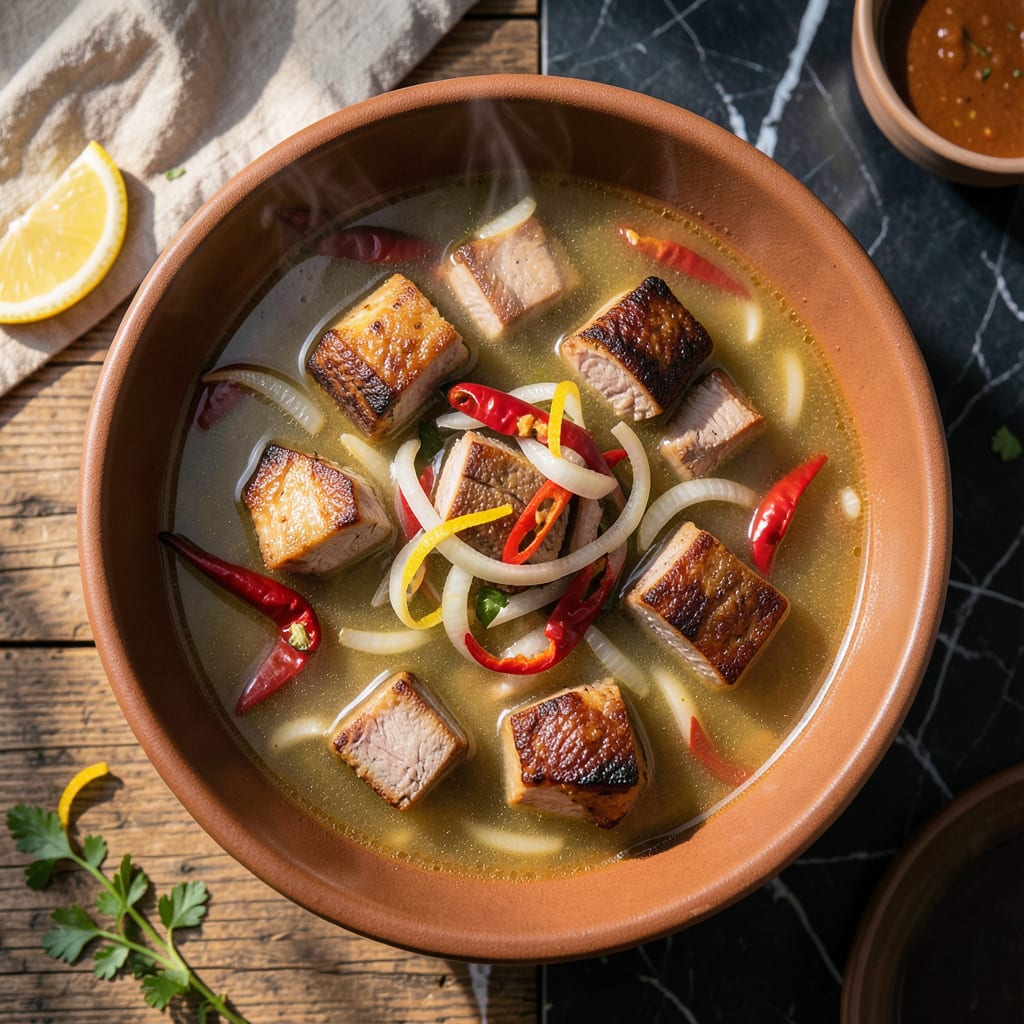
This Caribbean-inspired pork souse delivers perfect balance of tangy, spiced, and refreshing flavors in every bite.
Traditional soul food technique transforms humble ingredients into a dish that’s as vibrant as it is satisfying. The pickling process creates a texture that’s tender yet firm, with a bright, zesty finish.
Ingredients for Soul Food Pork Souse
Caribbean soul food meets pickling perfection with these vibrant, tangy ingredients.
| Ingredient | Amount | Notes |
|---|---|---|
| Pork Shoulder 🐖 | 2 lb | Cut into 1-inch cubes, bone-in preferred |
| White Vinegar 🧪 | 2 cups | 5% acidity for proper pickling |
| Water 💧 | 1 cup | Filtered or distilled preferred |
| Lime Juice 🍈 | ½ cup | Freshly squeezed for brightness |
| Yellow Onion 🧅 | 1 whole | Medium-sized, thinly sliced |
| Scotch Bonnet Pepper 🌶️ | 1 whole | Seeds removed, finely minced |
| Garlic Cloves 🧄 | 6 cloves | Peeled and smashed |
| Fresh Thyme Sprigs 🌿 | 4 whole | Leaves stripped from stems |
| Allspice Berries 🍃 | 10 whole | Lightly crushed for release |
| Bay Leaves 🍃 | 2 whole | Dried, not fresh |
| Kosher Salt 🧂 | 2 tbsp | Diamond Crystal preferred for consistency |
| Black Peppercorns 🌶️ | 1 tbsp | Whole, not pre-ground |
| Brown Sugar 🧈 | 1 tbsp | Light or dark, packed |
| Carrots 🥕 | 2 whole | Peeled and sliced into rounds |
| Cucumber 🥒 | 1 whole | Peeled, seeded, sliced |
The pork shoulder is non-negotiable for authentic texture—bone-in pieces from Whole Foods or a trusted butcher ensure proper marbling. Look for vibrant green thyme and firm Scotch bonnet peppers at Caribbean markets or Trader Joe’s. Allspice berries and bay leaves should be whole, not ground, for controlled infusion. The vinegar acidity (5%) directly impacts preservation and flavor balance.
Short on time? Pre-cut pork stew meat works, though texture suffers slightly. No Scotch bonnet? Habanero at half the quantity (trust me on the heat adjustment). Fresh lime can be swapped with bottled in a pinch, but reduce by one-third to avoid bitterness. Brown sugar substitutes: coconut sugar or turbino for depth.
The souse develops flavor over 24-48 hours in the fridge. Store in glass jars (not metal) to prevent corrosion. Keeps for 1 week refrigerated, though best consumed within 5 days. Freezing not recommended—texture degrades.
Why You’ll Love This Recipe
- One Pot Wonder: I toss everything in a single pot—pork shoulder, vinegar, lime, onion—and let it simmer while I do other things.
- Tangy Perfection: That vinegar and lime combo gives the pork a bright, zesty kick that’s honestly addictive.
- Weekend or Weeknight: I’ve served this at Sunday dinners and rushed weeknight suppers—it works for both.
- Stretches the Budget: Pork shoulder is affordable, and this recipe turns it into a meal that feeds my whole family for days.
Step-by-Step Instructions for Soul Food Pork Souse
This traditional pickling method ensures tender meat with bright, balanced Caribbean flavors.
Step 1: Prepare and Season the Pork Shoulder
Cut the 2 lb Pork Shoulder into 1-inch cubes, keeping bone-in pieces intact if possible. Place the pork in a large bowl and add the 2 tbsp Kosher Salt and 1 tbsp Brown Sugar. Massage the mixture into the meat until fully coated.
This step draws out moisture while beginning the curing process. The sugar balances the salt and vinegar, creating that signature sweet-and-sour profile. Let the seasoned pork sit at room temperature for 30 minutes while you prepare the remaining ingredients.
Step 2: Toast the Whole Spices
In a dry skillet over medium heat, lightly toast the 10 whole Allspice Berries and 1 tbsp Black Peppercorns for 1-2 minutes until fragrant. Stir constantly to prevent burning. Remove from heat and add the 2 whole Bay Leaves to the warm spices.
Toasting the whole spices releases their essential oils, deepening their flavor in the brine. The allspice provides warmth, while the peppercorns add subtle heat. Transfer these to a large pot along with the 4 whole Fresh Thyme Sprigs (with leaves stripped from stems).
Step 3: Build the Pickling Brine
To the pot with spices, add the 2 cups White Vinegar, 1 cup Water, and 0.5 cup Lime Juice. Bring to a gentle boil over medium-high heat, then reduce to medium-low and simmer for 5 minutes.
Add the 1 whole Yellow Onion (thinly sliced), 1 whole Scotch Bonnet Pepper (seeds removed, finely minced), and 6 cloves Garlic Cloves (peeled and smashed) to the brine. Simmer for an additional 5 minutes to meld the flavors before adding the pork.
Step 4: Simmer the Pork in Brine
Add the seasoned pork to the pot, ensuring it is fully submerged in the brine. If needed, add a splash of water to cover. Return to a simmer over medium heat and cook for 45-60 minutes, until the pork is tender but not falling apart.
The meat should be fork-tender when done. Avoid boiling vigorously, as this can toughen the pork. Instead, maintain a gentle simmer to allow the flavors to penetrate evenly.
Step 5: Add Vegetables and Finish
Stir in the 2 whole Carrots (peeled and sliced into rounds) and 1 whole Cucumber (peeled, seeded, and sliced). Simmer for an additional 10-15 minutes until the vegetables are tender-crisp.
Remove from heat and let the souse cool to room temperature in the brine, then refrigerate for at least 4 hours (or overnight) to allow the flavors to fully develop. The pork will continue to absorb the tangy, spiced liquid as it chills, resulting in a perfectly balanced dish.
Pro Tips For Making Soul Food Pork Souse
- Simmer Low and Slow: I learned this the hard way—boiling the pork toughens it. Keep the heat just high enough to maintain a gentle simmer, about 180-200°F, for fall-apart tender meat.
- Balance the Acid: Sounds weird, but it works: taste as you add vinegar and lime. Start with 1 cup vinegar to 4 cups water, then adjust—too much acid can overpower the pork’s richness.
- Skim the Foam: My grandmother swore by this, and she was right: skim the scum that rises in the first 10 minutes of cooking. It keeps the broth clean and the flavor pure.
- Rest Before Serving: After burning my tongue too many times, I now let the souse sit off heat for 15 minutes before serving. The flavors meld, and the pork soaks up that tangy broth.
Dietary Considerations for This Recipe
Gluten-Free Friendly
This dish is naturally gluten-free since it contains no wheat, barley, or rye ingredients. The pickling brine uses white vinegar and natural spices, making it safe for most gluten-sensitive diets. Always verify your vinegar brand for potential cross-contamination. 💪
Low-Carb Adaptation
For a keto-friendly version, reduce the brown sugar to 1 tsp or substitute with erythritol. The pork and vegetables are naturally low-carb, with the main carbs coming from the 2 carrots and 1 cucumber.
Sodium Considerations
The recipe calls for 2 tbsp Kosher Salt, which can be reduced by 25% without affecting preservation. For those watching sodium intake, I recommend using low-sodium pork broth to partially replace the water in the brine.
Spice Heat Adjustments
The Scotch Bonnet Pepper brings significant heat. For milder versions, substitute with ½ jalapeño or omit entirely. Remember that the vinegar in the brine will mellow some of the pepper’s intensity over time.
Dairy-Free Naturally
This traditional souse contains no dairy products, making it suitable for lactose-intolerant diets. The pickling process preserves the meat without any milk-based ingredients, and all flavor comes from the vinegar, citrus, and spices.
Allergen Information
The primary allergens to consider are the allspice berries and Scotch Bonnet Pepper for those with spice allergies. The recipe contains no nuts, soy, or common allergens, but always check your spice sources for processing contaminants. 🌟
Nutrition Facts
Frequently Asked Questions
How long should I marinate the pork?
Let it rest in the brine for at least 4 hours, but overnight is ideal. This ensures the flavors fully penetrate the meat for that signature tangy taste.
Can I use a different type of vinegar?
Stick with white vinegar for the classic taste. Apple cider vinegar works in a pinch but may alter the flavor profile slightly.
What if my pork turns out tough?
Simmer it longer at a lower temperature. The pork should be fork-tender after 45-60 minutes. Avoid boiling, as this can make the meat chewy.
How do I adjust the spice level?
Remove seeds from the Scotch bonnet for milder heat, or swap it for ½ jalapeño. The vinegar will mellow the spice over time.

- BBQ Sausage Recipe Oven: Smoky Depth Without the Grill - September 28, 2026
- BBQ Chicken Bowl Recipe Rice: Smoky Sweetness Over Fluffy Grains - September 28, 2026
- Beef Cutlet Recipe Ideas: Crispy Breaded Patties With Bold Seasonings - September 28, 2026