
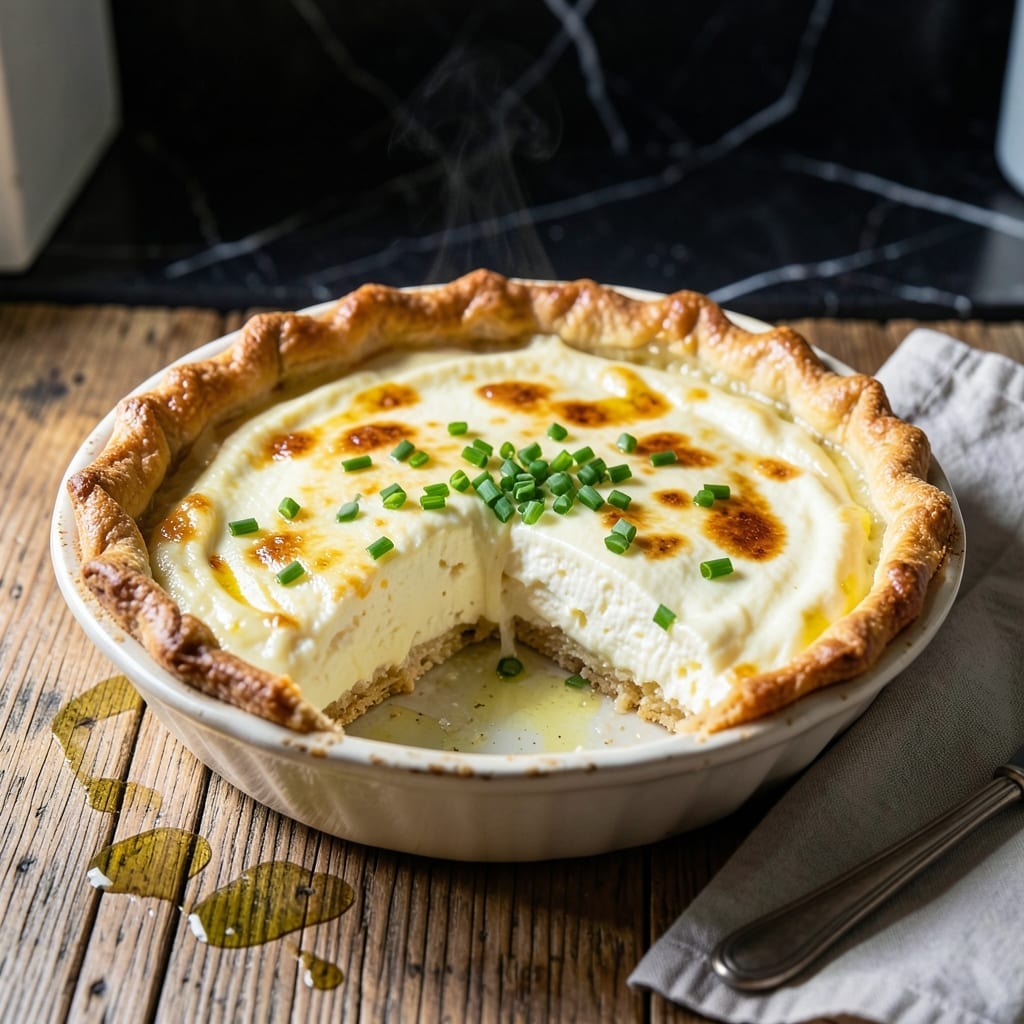
This sour cream quiche delivers a flaky crust that shatters with every bite, encasing a custard so rich it redefines brunch expectations.
I developed this recipe after testing dozens of custard ratios, and the sour cream addition creates an unmatched velvety texture that holds its shape beautifully when sliced.
The secret lies in blind-baking the crust to prevent sogginess, then filling it with a simple egg-sour cream mixture that bakes into a creamy, golden perfection.
Serve warm or at room temperature for a dish that’s equally impressive for company or a quiet Sunday morning.
Ingredients for Sour Cream Quiche
Flaky crust meets rich custard with just a handful of quality ingredients.
| Ingredient | Amount | Notes |
|---|---|---|
| All-Purpose Flour 🌾 | 1 ½ cups | Plus extra for dusting |
| Unsalted Butter 🧈 | ½ cup | Cold, cubed for crust |
| Salt 🧂 | ½ tsp | Divided for crust and filling |
| Large Eggs 🥚 | 4 whole | Room temperature preferred |
| Sour Cream 🥛 | 1 ½ cups | Full-fat for creaminess |
| Whole Milk 🥛 | ½ cup | Or half-and-half for richness |
| Shredded Gruyere Cheese 🧀 | 1 ½ cups | Or Swiss cheese substitute |
| Shredded Parmesan Cheese 🧀 | ¼ cup | Freshly grated preferred |
| Black Pepper 🌶️ | ¼ tsp | Freshly ground |
| Nutmeg 🌰 | 0.125 tsp | Freshly grated if possible |
| Dijon Mustard 🟡 | 1 tsp | For depth of flavor |
| Chopped Fresh Chives 🌿 | 2 tbsp | For garnish and filling |
The butter for the crust must be ice cold—European-style from Trader Joe’s or Plugrá gives the best flakiness. Use all-purpose flour with a protein content around 10-12% for the right texture. For the Gruyère, look for imported Swiss at Whole Foods—it melts beautifully and has that nutty depth the recipe needs. Don’t skip the blind-baking; it’s what keeps the crust crisp.
Need a swap for Gruyère? Emmental or sharp cheddar work well, though the flavor changes slightly. No sour cream? Full-fat Greek yogurt at one-to-one ratio is your best bet. For milk, half-and-half makes it even richer. The Dijon can be regular mustard in a pinch, but the Dijon adds that subtle tang. Fresh chives are ideal, but green onions work too.
The crust dough can rest overnight in the fridge, or freeze for up to 3 months. Baked quiche keeps 4-5 days in the fridge and reheats beautifully. Leftovers taste great cold too—perfect for picnics or quick breakfasts.
Why You’ll Love This Recipe
- One Bowl Wonder: I just dump flour, butter, eggs, and sour cream in one bowl, mix, and pour—no fancy steps.
- Rich and Tangy: The sour cream gives it this creamy depth that plain custard quiche just can’t match.
- Brunch to Dinner: I serve it warm for brunch or cold for picnics, and it works every single time.
- Stretches Two Days: Leftovers taste even better the next day, and it feeds my family of four without breaking the bank.
Step-by-Step Instructions for Sour Cream Quiche
Here’s the method to achieve a flaky crust and rich custard that never fails.
Step 1: Prepare the Flaky Crust
In a food processor, pulse the 1.5 cups all-purpose flour with 0.5 tsp salt to combine. Add the 0.5 cup cold unsalted butter, cubed, and pulse in 1-second bursts until the mixture resembles coarse crumbs with pea-sized butter pieces visible.
Transfer to a bowl, sprinkle with 2-3 tablespoons ice water, and mix with a fork until the dough just comes together. Press into a disk, wrap in plastic, and chill for 30 minutes. This resting period allows the gluten to relax, ensuring a tender, flaky crust.
On a lightly floured surface, roll the dough into a 12-inch circle. Transfer to a 9-inch pie dish, press into the bottom and sides, then trim the excess. Crimp the edges and prick the bottom all over with a fork. Freeze for 15 minutes before blind baking.
Step 2: Blind Bake the Crust
Preheat your oven to 375°F. Line the chilled crust with parchment paper and fill with pie weights or dried beans. Bake for 15 minutes until the edges start to turn light golden brown.
Carefully remove the parchment and weights, then return the crust to the oven for another 5-7 minutes until the bottom is lightly golden and dry to the touch. This two-stage baking prevents a soggy bottom once the filling is added.
Let the crust cool slightly while you prepare the filling. The crust should be firm enough to hold its shape but still warm when you add the custard mixture.
Step 3: Whisk Together the Rich Custard
In a large bowl, whisk the 4 whole large eggs until frothy. Add the 1.5 cups sour cream, 0.5 cup whole milk, 1 tsp Dijon mustard, 0.25 tsp black pepper, and 0.125 tsp nutmeg. Whisk until completely smooth with no streaks remaining.
Stir in 1.5 cups shredded Gruyere cheese and 0.25 cup shredded Parmesan cheese until evenly distributed. The mixture will be thick but pourable. Fold in 1 tbsp of the chopped fresh chives, reserving the rest for garnish.
Step 4: Assemble and Bake the Quiche
Pour the custard mixture into the pre-baked crust, spreading it evenly. The filling should come about ¾ of the way up the crust—don’t overfill or it may spill during baking.
Bake at 375°F for 35-40 minutes until the center is just set with a slight jiggle and the top is golden brown. If the crust edges brown too quickly, cover them loosely with foil.
Remove from the oven and let rest for 10 minutes before slicing. This allows the custard to set completely. Garnish with the remaining 1 tbsp chopped fresh chives and serve warm or at room temperature.
Pro Tips For Making Sour Cream Quiche
- Blind Bake First: Par-bake your crust for 8-10 minutes before adding the filling—this prevents that sad, soggy bottom that ruins a good quiche.
- Use Full-Fat Sour Cream: I learned this the hard way: low-fat versions can make the filling curdle or turn watery. Stick with full-fat for that rich, creamy texture.
- Skip Overmixing Eggs: Whisk the eggs just until combined with the sour cream, not into a frenzy. Overmixing adds air and can make the quiche puff up, then collapse.
- Let It Rest: Give the quiche a good 10-15 minutes out of the oven before slicing—it sets up better and won’t ooze all over the plate.
Wine and Beer Pairings for These Flavors
Crisp White Wines
A Sauvignon Blanc from New Zealand cuts through the richness with its bright acidity and citrus notes. I also love Chablis—its mineral quality and crisp finish complement the creamy custard beautifully. Serve chilled at 45-50°F for best results.
Rich White Options
For a fuller-bodied pairing, try a Chardonnay from Burgundy or California. The buttery notes mirror the quiche’s richness while the acidity balances it. Look for bottles with oaked or unoaked labels based on your preference.
Light Red Wines
A lightly chilled Pinot Noir from Oregon offers red fruit flavors that don’t overpower the dish. Its earthy undertones pair especially well with the Gruyère. Serve at 55°F for optimal flavor release. 🍷
Beer Pairings
A Belgian Witbier like Hoegaarden or Allagash White brings citrus and spice notes that refresh your palate. The carbonation cuts through the custard’s richness, while the wheat base complements the flaky crust.
Non-Alcoholic Options
For a booze-free pairing, try a sparkling apple cider with its crisp, sweet-tart profile. I also enjoy a chilled hibiscus iced tea—its floral acidity balances the quiche’s richness perfectly. 💫
Coffee Pairing
A light breakfast blend coffee with a splash of cream mirrors the custard’s creaminess. The acidity in a well-brewed cup cuts through the fat, making each bite taste fresher. Serve black or with minimal sweetener.
Nutrition Facts
Frequently Asked Questions
Can I make this ahead of time?
Yes! Bake the quiche up to 1 day ahead and store it in the fridge. Reheat at 350°F for 10-15 minutes before serving.
Why did my crust get soggy?
This usually happens if the crust wasn’t blind-baked long enough. Ensure it’s light golden brown and dry to the touch before adding the filling. A hot oven at 375°F helps too.
Can I substitute the Gruyère?
Try sharp cheddar or Emmental for similar melt and flavor. Avoid pre-shredded cheese, as it often contains anti-caking agents.
How do I know when it’s done?
Look for a golden brown top with a slight jiggle in the center. The custard will set completely as it cools for 10 minutes.

- BBQ Oysters Recipe Grill: Smoky Garlic Butter Bliss - September 28, 2026
- Crock Pot Mac and Cheese Recipe Paula Deen: Ultra Creamy Southern-Style Comfort - September 28, 2026
- Beyond Burger Recipe Ideas: Plant-Based Creativity for Every Meal - September 28, 2026