
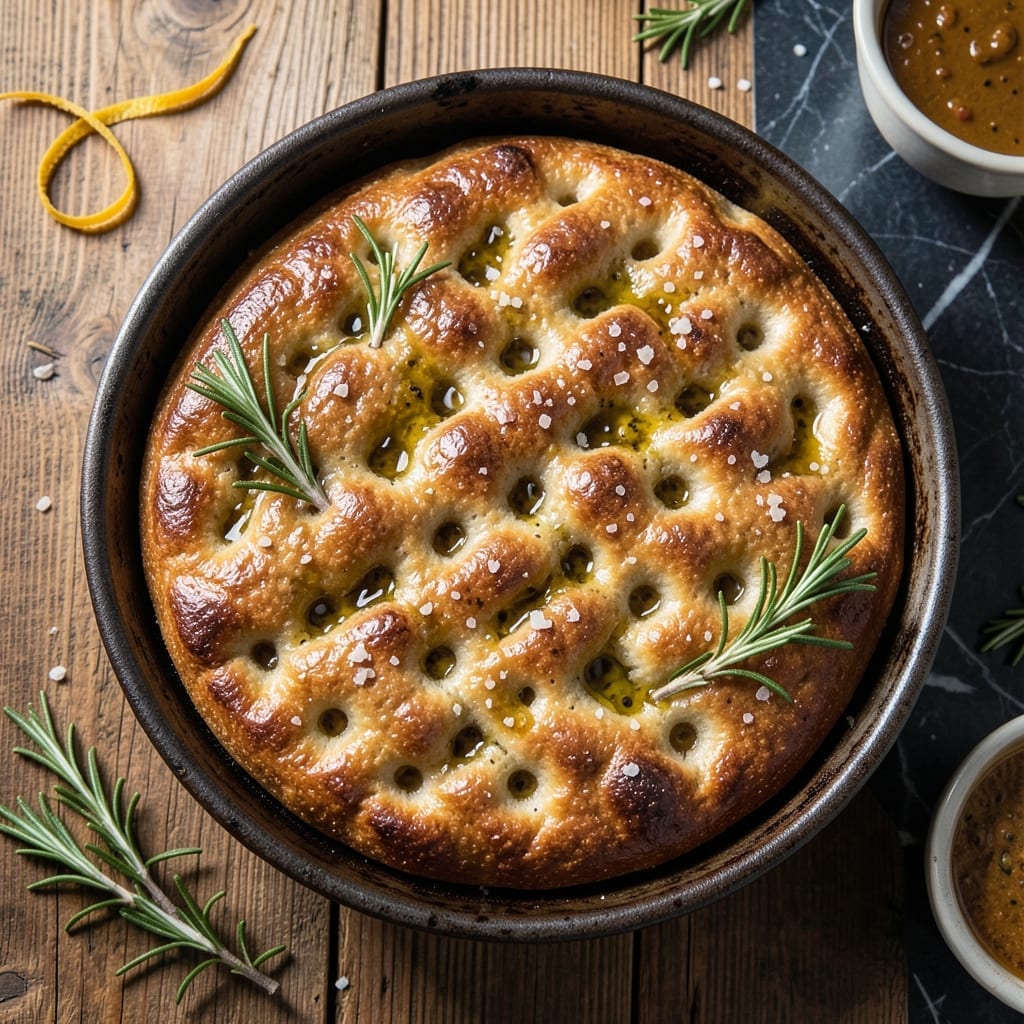
Making sourdough focaccia at home delivers bakery-quality results with a pillowy texture and rich olive oil flavor.
This recipe uses a slow fermentation process to develop complex flavors, resulting in a light, airy bread with a crisp golden crust.
Ingredients for Sourdough Focaccia Bread Recipe Alexandra’s Kitchen
Simple ingredients transform into bakery-style focaccia with minimal effort and maximum flavor.
| Ingredient | Amount | Notes |
|---|---|---|
| Active Sourdough Starter 🍞 | ½ cup | Unfed, bubbly and active |
| Bread Flour 🌾 | 4 cups | High-protein for structure |
| Extra-Virgin Olive Oil 🫒 | ¾ cup | Plus extra for greasing |
| Warm Water 💧 | 1 ½ cups | About 100-105°F |
| Fine Sea Salt 🧂 | 2 tsp | Diamond Crystal preferred |
| Honey 🍯 | 1 tsp | Optional, aids fermentation |
| Fresh Rosemary Sprigs 🌿 | 3 pieces | For topping, optional |
| Cherry Tomatoes 🍅 | ½ cup | Halved, for topping |
| Flaky Sea Salt 🧂 | ½ tsp | For finishing, Maldon preferred |
| Coarse Black Pepper 🌶️ | ¼ tsp | Freshly ground for topping |
The sourdough starter is non-negotiable here. Alexandra’s Kitchen emphasizes using an active, bubbly starter—it should float in water when tested. King Arthur Bread Flour is my go-to for its consistent high protein content, which gives the focaccia its signature chew. For olive oil, California Olive Ranch or any high-quality extra-virgin works beautifully. The honey is optional but helps kickstart fermentation if your starter is sluggish.
No sourdough starter? Commercial yeast at 0.25 tsp can substitute in a pinch, though the flavor won’t be as complex. Bread flour can be swapped for all-purpose, but reduce water by 2 tbsp. For the topping, any fresh herb (thyme, oregano) works—just avoid dried, which lack the punch. The tomatoes are optional but add a bright contrast to the rich olive oil.
This dough needs time—let it ferment 12-18 hours at room temperature. Once baked, focaccia is best day-of but keeps for 2 days wrapped in foil. Reheat in a 350°F oven for 10 minutes to revive the crust. The olive oil in the pan can be reused once for another batch.
Why You’ll Love This Recipe
- No-Knead Magic: Most of the work happens while you sleep—just mix, fold a few times, and let the sourdough starter do its thing overnight.
- Olive Oil Luxe: That generous pour of extra-virgin olive oil creates a crisp, golden crust with a rich, buttery flavor that’s hard to resist.
- Endless Toppings: I’ve loaded it with rosemary, cherry tomatoes, or just flaky salt—it’s a blank canvas for whatever I’m craving.
- Stretches for Days: Honestly, it tastes even better the next day, toasted and drizzled with more olive oil for a quick lunch.
Step-by-Step Instructions for Sourdough Focaccia Bread
This method delivers a light, airy crumb with a crisp, olive oil-rich crust every time.
Step 1: Prepare the Dough and Initiate Fermentation
In a large mixing bowl, combine the 0.5 cup Active Sourdough Starter, 1.5 cups Warm Water, and 1 tsp Honey. Whisk until the starter is fully dissolved. The water should be 100-105°F to activate the yeast without killing it.
Add 4 cups Bread Flour and 2 tsp Fine Sea Salt. Mix with a wooden spoon or your hands until no dry bits remain. The dough will be shaggy and sticky—that’s normal. Cover the bowl with a damp towel and let it rest at room temperature for 30 minutes to begin the autolyse process.
Step 2: Incorporate the Olive Oil and Perform Stretch-and-Folds
After the initial rest, drizzle 0.75 cup Extra-Virgin Olive Oil over the dough. Use your hands to dimple the dough and work the oil in evenly. The dough will be slippery and loose, but resist the urge to add more flour.
Over the next 2 hours, perform a series of stretch-and-folds every 30 minutes. Wet your hands, grab one side of the dough, stretch it upward, and fold it over itself. Rotate the bowl and repeat on all sides. This builds structure and strengthens the gluten without overworking the dough.
You’ll notice the dough becoming smoother and more elastic with each fold. By the end of the 2 hours, it should have risen by about 50% and look puffy with small bubbles forming at the surface.
Step 3: Bulk Ferment and Prepare the Pan
Cover the bowl again and let the dough undergo bulk fermentation at room temperature for 8-12 hours. The exact time depends on your kitchen temperature—I find 10 hours works well in a 70°F environment. The dough should roughly double in volume and be dotted with large, irregular bubbles.
While the dough ferments, generously coat a 9×13-inch baking pan with Extra-Virgin Olive Oil (use about 2 tablespoons from the measured 0.75 cup). Ensure every surface, including the sides, is well-oiled. This prevents sticking and creates a crisp, golden crust.
Step 4: Shape, Proof, and Add Toppings
Once the dough has finished bulk fermentation, transfer it to the prepared pan. Use your oiled hands to gently stretch and dimple the dough to fit the pan. If it resists, let it rest for 10 minutes and try again. The dough should spread to fill the pan after a final proof.
Cover the pan with a damp towel and let it proof at room temperature for 1-2 hours, or until the dough has risen to the top of the pan and is jiggly when shaken. Preheat your oven to 425°F during the last 30 minutes of proofing.
Just before baking, use your fingertips to create deep dimples all over the surface. Press the halved 0.5 cup Cherry Tomatoes and 3 pieces Fresh Rosemary Sprigs into the dimples. Drizzle with the remaining Extra-Virgin Olive Oil and sprinkle with 0.5 tsp Flaky Sea Salt and 0.25 tsp Coarse Black Pepper.
Step 5: Bake to Golden Perfection
Bake on the center rack for 25-30 minutes, rotating the pan halfway through for even browning. The focaccia is done when the edges are deep golden brown and the center is puffed and set. The top should be crisp and blistered in spots.
Remove from the oven and let it cool in the pan for 10 minutes before transferring to a wire rack. For the best texture, allow it to cool for at least 20 minutes before slicing. This resting period lets the olive oil reabsorb into the crumb, enhancing the richness and moisture.
Pro Tips For Making Sourdough Focaccia Bread Recipe Alexandra’S Kitchen
- Use Room-Temp Starter: Pull your sourdough starter out of the fridge 8-12 hours before mixing the dough. I learned this the hard way—cold starter slows fermentation and gives you dense, flat focaccia.
- Go Heavy on Olive Oil: Alexandra’s recipe calls for a lot of olive oil—don’t skimp. Coat the bowl, the dough, and the pan generously; it’s what makes the crust golden and the crumb tender.
- Don’t Rush the Rise: Let the dough rise at room temp for at least 12 hours, or until it’s nearly doubled. After burning through a few batches, I finally figured out that patience is the thing that matters most here.
- Dimple Deeply Before Baking: Press your fingers all the way to the bottom of the pan when dimpling the dough—sounds weird, but it works. This prevents thick, doughy spots and guarantees those signature focaccia pockets.
Troubleshooting Great sourdough focaccia bread recipe alexandras kitchen
Dense or Flat Bread
If your focaccia isn’t rising properly, your starter might be inactive. Test it first—it should float in water. Also, ensure your kitchen is warm enough (70-75°F). I keep mine near the oven with the light on. 💡
Soggy Bottom
This usually means insufficient oil in the pan. Use 2 tablespoons of Extra-Virgin Olive Oil to thoroughly coat your 9×13-inch pan, including the sides. Don’t skimp—this creates the crisp crust.
Overly Salty Top
If the Flaky Sea Salt overpowers, use less next time. I suggest starting with ¼ tsp and adjusting. Remember, the dough already contains 2 tsp Fine Sea Salt, so go easy on the finish.
Dough Too Sticky
Resist adding more flour. Instead, wet your hands with warm water when handling. The dough should be loose and sticky—that’s how it develops those beautiful air pockets. Trust the process.
Baking Unevenly
Rotate your pan halfway through baking for even browning. Also, ensure your oven is fully preheated to 425°F. I use an oven thermometer to verify the temperature. 🔥
Lacking Flavor
For more depth, extend the bulk fermentation to 12 hours. Also, use high-quality Extra-Virgin Olive Oil—I recommend California Olive Ranch for its robust flavor. The longer ferment develops complex notes.
Frequently Asked Questions
Can I use all-purpose flour instead of bread flour?
Yes, but reduce water by 2 tablespoons since all-purpose absorbs less liquid. Bread flour’s higher protein gives better structure and chew, but all-purpose will still work.
How do I know when the dough is ready to bake?
It should be jiggly when shaken and risen to the top of the pan. Look for large, irregular bubbles on the surface. This indicates proper fermentation.
Can I make this without a sourdough starter?
Yes, substitute with 0.25 tsp commercial yeast, but expect less complex flavor. The texture will be similar, though the sourdough’s tang will be missing.
How long does it stay fresh?
Best eaten day-of, but keeps for 2 days wrapped in foil. Reheat in a 350°F oven for 10 minutes to revive the crust.
Nutrition Facts

- BBQ Sausage Recipe Oven: Smoky Depth Without the Grill - September 28, 2026
- BBQ Chicken Bowl Recipe Rice: Smoky Sweetness Over Fluffy Grains - September 28, 2026
- Beef Cutlet Recipe Ideas: Crispy Breaded Patties With Bold Seasonings - September 28, 2026